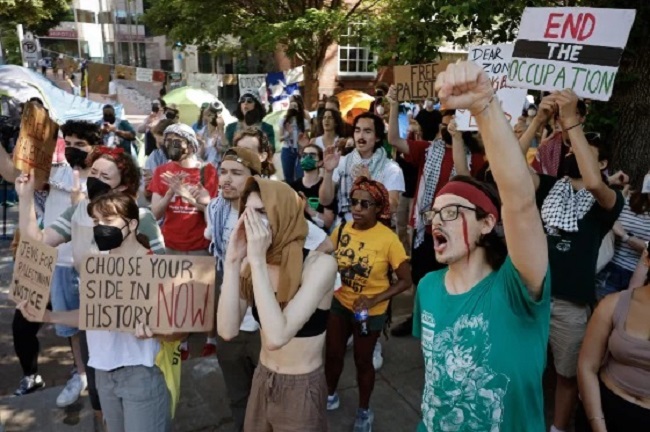
“Most of the economic benefit of colleges and universities, and especially of elite ones, is distributional in nature — that is, wealth flows toward people who have the credentials they offer, but the credentials don’t actually promote wealth, they just get you past the gatekeepers.”
—-Conservative law professor and pundit Glenn Reynolds on his substack essay, “What is College Good For?”
Essentially Reynolds, who is the Beauchamp Brogan Distinguished Professor of Law at the University of Tennessee College of Law can be fairly called a representative of our system of higher education himself, so his searing critique deserves some attention an thought. I appreciate the essay because I have long held the conviction that college itself is a fraud on the American people, distorts our power and economic structure away from merit and talent and toward wealth, elitism and purchased credentials that don’t mean what they pretend to mean, and a lifetime of experience as a student, graduate, employer and organization creator and leader supports and continues to confirm that conclusion.
Reynold is right. His analysis would have been right 40 years ago, when I stood up at a D.C. conference of “educators” and asked why all the discussion had focused on secondary school and college diplomas being essential to get “well-paying jobs”and none of it—literally none—about making our rising generations curious, competent, diligent, literate, analytical, creative, erudite, better thinkers and better citizens. The whole conference room booed me! It’s one of my most cherished memories. It also was signature significance regarding the fraudulent nature of the American education system.
Prof. Reynold gets it, and, not to diminish his essay, but it shouldn’t be so hard to get. The scam continues to thrive because the people who haven’t been to college don’t realize what a waste of time, resources and money it is in so many ways, and those who use the degrees as golden ticket credentials don’t have the integrity to admit the truth.
Reynold begins,
Over the years, we’ve seen a lot of justifications for sending people to college — by which I actually mean, for subsidizing people’s attendance at college, and for maintaining a taxpayer-funded higher education apparatus. Probably the most important are:
Creating wealth. College graduates earn more, so creating more college graduates will create more high-earners. A related argument suggests that rich societies have more higher education, so more higher education will make a society richer.
Promoting public values. Higher education is supposed to be a place where our society’s highest values are nurtured and taught, ensuring that they are propagated to future generations.
Encouraging critical thinking: Teaching people to think for themselves, not to accept what they’re told or to go along with the crowd.
Maintain intellectual capital — like knowledge of history, ancient languages, philosophy, etc. — that is valuable for society as a whole, but not readily supported outside of an academic environment.
Okay, so how are we doing in serving those purposes?
His answer: We’re not. Reynold was apparently moved to write the memo when he saw the extent to which New York City’s future communist mayor won the Democratic primary with the overwhelming support of college students…”you know, morons.”
A few samples:
-
“It’s an open secret that the pressure to produce a constant flood of papers that are publishable and, better yet, interesting enough to spark headlines leads to corner-cutting, “data torture” and overclaiming — or, sometimes, outright fraud. The result is an expensive self-licking ice cream cone of grant applications and publications, but the actual contribution to human knowledge is often lacking.”
-
“In a recent study, Richard Arum and Josipa Aroksa found there’s not a lot of learning going on: 45% of students “did not demonstrate any significant improvement in learning” over the first two years of college; 36% failed to show any improvement over four years. The reason: Courses aren’t very rigorous, and not much is required of students.”
-
“Higher education is supposed to be a place where our society’s highest values are nurtured and taught, ensuring that they are propagated to future generations. Does anyone think that’s what higher education is about nowadays?”
-
“An overriding theme at elite colleges — and by no means limited to them — is that Western culture is uniquely evil, white people are uniquely awful, and pretty much any crime is justifiable so long as the hands committing it are suitably brown and “oppressed.” Meanwhile, numerous universities face federal civil-rights investigations for allowing and in some cases promoting antisemitism and violence against Jewish students.”
Read it all. My own college experience was very valuable in that it gave me opportunities to further develop interests, talents and abilities I already had while meeting and learning from varied and fascinating human beings who have enriched my life ever since. Nonetheless, the value of the academic end of my college years was minimal, and the major benefit of my degree in American Government was to get me to law school, where I did learn a lot. I can honestly say that my Harvard diploma never helped me get a single job; I could talk my way into anything by the time I was in high school (Thanks, Dad!). Its best use was to brandish like a gun when some smug jerk was boasting about his Brown degree.
 Ethics Alarms
“…credentials don’t actually promote wealth, they just get you past the gatekeepers.” Glenn Reynolds
I really like the way he put that.
And he’s right. Credentials don’t prove you can do anything. At one point, they might have represented something but, now, they only show you can wait out two to four years in one place.
And the gatekeeping becomes more stringent as it becomes more useless. Now a bachelor’s degree is usually the base expectation for anything outside of blue-collar work. As more people get these worthless degrees, then post-graduate degrees will become the norm, until everyone’s in school until they’re 30 years old with enough debt to saddle them for life.
I can speak only of the health care industry:
Just some obswervations on what i call “degree infusions ” whixh indeed “benefit the degree grantors,”
As I understand the timeline, my mother took a year off after high school to earn the money to attend nursing school (none of her surviving relatives were willing to help). She attended nursing school for a year and graduated. Then she joined the US Army as a nurse and went off to England to fight the Nazis.
She took care of some of the boys from D-Day, and I believe she also worked on a burn unit, which had to be absolutely dreadful duty. Along the way she met my Dad, who was an Army quartermaster. They ended up getting married in England about a month after VE Day.
She was an RN — I can’t say for sure, but I assume that was what she got for the year in nursing school. Today, I don’t know if that would be enough to get you to be a CNA, let alone anything else. But she put Dad through med school as a nurse and through his residency.
She was out for about 10 years, but started working again after Dad got cataracts and joined the VA. As far as I know she never got any further formal education. But the last hospital she worked for in Lubbock thought the world of her, wanting her to be the nursing supervisor for the hospital, as I recall. She was a nurse, but I believe that when she told the doctors to hop, they’d just ask ‘How high?’
Different times, to be sure, but Dad’s family were pretty much university educated (his father was a professor). His mother, when she was a young woman, went with her mother to South Dakota to homestead. But my folks were believers in higher education and scrimped and sacrificed for the four of us to go to college.
We all turned out decently and I think we would have even in today’s environment — but it would be a lot tougher, especially if you’re not willing to follow the herd.
Jack, I need to read Reynolds’ entire piece, but your summary is searing.
This is more anecdotal than revelatory, but when I graduated from college almost 35 years ago, getting a good job in my field (software development) almost 100% required a degree in Computer Science, Computer Engineering, or Information Systems.
I’m still a software developer (with 2-3 years left before retiring) and last month, our team hired – for the first time in my career – a developer with no college degree and no formal training. He’s completely self-motivated and self-taught, with five years experience. We interviewed four other candidates and this individual was head-and-shoulders above them in his knowledge and his ability to communicate and relate to the members of our team.
And even three decades ago, we joked that some professors were only there “because of the money they could bring the school, not because they could teach worth a lick.” That’s probably a far greater problem now. We’ve told our kids to not pressure our grandkids in any way to go to college…it’s hard to imagine what that environment could look like in another fifteen years.
Our son graduates this December from the Texas A & M Mays Business School with a degree in finance. Numbers dance in his head. It’s almost terrifying. He is teaching himself Python and some other coding systems. This Summer he is doing an energy trading internship with a multinational bigass bank where they assigned him the task of developing program to track historical data about energy markets to make future predictions on oil and natural gas . . . erm . . . futures (I am surprised that a trading company of its size and market setting doesn’t have this sort of program and would assign it to a lowly 21 year old with absolutely no on-the-job experience but . . .). He has worked hard on it, turned it in yesterday (early – it’s due tomorrow) and his overlord supervisor reviewed it, suggesting a couple of tweaks but told him he is on the right track).
The Boy was offered a swimming scholarship on the Texas A&M swim team but he turned it down because the school didn’t have scholarship money so he would be swimming/training 50 to 60 hours a week with no real post-college future in sight (while an elite level athlete he knew he was not at the caliber of a Ryan Lockte or Michael Phelps or Katy Ledecky). He, instead, concentrated on his school work. To him, the Aggie degree is not about the education (which is pretty good, if a displaced Ohio boy can say that about a Texas public university) but about the connections he will make out in the real world. To him, it is a means to an end. He is not interested in Descartes or Locke. He is, though, interested in the market makers (his favorite professor is an adjunct energy trader guy who has taken quite a liking to The Boy, offering him a TA spot this coming fall and has put him in touch with other movers and shakers in the energy markets). The Boy seems to live and breath that stuff. Good on him.
So, I understand the Good Professor’s points. But, really, does one attend Harvard, Yale, Brown becasue the professors offer new insights into Plato, republican government strategies, or nobel approaches to algebra? Or, more likely, does one attend those elite schools because they offer meeting future captains of industry? Methinks the latter.
jvb
I’ve pretty much come to the conclusion we acquire critical thinking skills no later than high school. Having been to my fiftieth college reunion two Junes ago, I’ve pretty much come to the conclusion my aspired to and managed to teach us little more than how to drink and remain able to converse and remain standing. Valuable skills but hardly requiring four years of work.
my college
Grr.
There’s a remark Glenn made 15 years that was deemed Reynold’s Law, summarized as “Subsidizing the markers of status doesn’t produce the character traits that result in that status; it undermines them”. I’m surprised it didn’t come up, but maybe it never took off in general, just stuck in my mind.
Very interesting. I’d be reluctant at labeling this a law, as it’s very difficult to infer a direct causation.
There are several direct causations that when combined have an overall negative cumulative effect–subsidizing increases the proportion of buyers, demand increases, proportion of students who don’t complete the degree increase, cost of education increases, bureaucratic drain increases to capture and administer the subsidy, etc.