Four EA commenters took up my challenge to fisk the possibly AI bot written screed explaining why liberals/progressives are the salt of the earth and are completely reasonable as well as thoughtful and compassionate. “Ron Howard’s” name was attached to the thing though it is well-established that he didn’t write it. As promised, I am posting all four, each of which is persuasive and effective in its own way.
I was hoping that at least one of the lurking progressives out there, maybe even AWOL Curmie, would enter the fray to try to rebut one or more of them, but so far, no takers.
If you missed it, Fake Ron’s manifesto is here. Fisking #1 is here, and #2 is here. Below is #3, an epic take-down of the”renewable energy” obsession so dear to the Left. The fisker is Sarah B, and she leaves fake Ron, the fiskee, in shreds as you will shortly see…
***
To no one’s surprise, I’m sure, I’m going to pick apart #15. If I find extra time in my schedule, I’ll work on some others, but 15 is in my area of expertise and my favorite soapbox.
I will also note that the reason people throw out lists like this is to make attacking the ideas difficult as it takes a lot of time and effort to debunk even one point, and 16 points is a lot to get to. I believe the term for a verbal list like this is a Gish Gallop, but I could be wrong. However, I have to spend as much time and paper, or more on one item than they did on all 16. Sorry, it’s long, but you asked us to fisk this.
15. I believe in funding sustainable energy, including offering education to people currently working in coal or oil so that they can change jobs. There are too many sustainable options available for us to continue with coal and oil. Sorry billionaires. Maybe try investing in something else.
“Ron,” you say that you want to fund sustainable energy. Now, part of the definition of sustainable is that it can sustain itself. Dumping a few billion or trillion dollars into something is great, but only if it starts paying for (sustaining) itself. We will discuss that in more detail below.
I also will assume, given other items on your list, that you are concerned that the poor who can’t afford healthcare should not have to pay more for their electricity. That means that anything that increases the prices of electricity should be very carefully considered, as the poor are the one hurt the most by increased electricity prices, as those not only decrease your ability to light, heat, and cool your house, but also increase the prices of all goods and services, sometimes dramatically. This means that any replacement power needs to be economically equivalent to coal, or your choices are directly harming the very people you proclaimed you wanted to help in points above.
Funding something is nice and all, but where is this money coming from? The national debt is reaching such a point that we are risking complete economic collapse. If you want the government to have money to fund this, we are going to have to cut government spending somewhere. Trillions of dollars don’t just magically appear out of thin air. Extreme government spending causes inflation, and if it goes too far, you replicate the issues of the Weimer Republic.
I should define some terms. Baseload power is what we need at all times. This is the power that your hospitals, police stations, fire departments, fridges, freezers, and medical devices need. If baseload power is not maintained, people die. Then there is variable and peak power. This is the power we like to use. I like to have a house with heat, which requires power, as even my pellet stove needs electricity. I like to have lights and a stove/oven and maybe my computer and all my lovely other electric devices. This power can be lived without, but our quality of life will fall greatly.
I believe the first item is to determine WHAT sustainable options are available for us if we are kicking out coal and oil. So let’s look at options for coal first. Coal is primarily used for electricity, and that’s what we’ll focus on. All other uses for coal, I will assume you are ok with as they are not first and foremost in the energy category.
- Natural Gas is an option. This is probably the best option. It is affordable, though usually a little more expensive than coal, but only by a small bit, so we’ll ignore that. It is reliable. It is available. It is…a fossil fuel and you probably didn’t mean it. If you did, good for you. This is our best option.
- Nuclear is an option and people are trying to get more nuclear happening. However, the permitting process for nuclear is ugly and the reactors are expensive. It also takes a VERY long time (8 years is the fastest I have ever seen, with 15-20 being more common) to build safe nuclear reactors and to make nuclear slightly more affordable and faster, the Trump administration is trying to remove a lot of red tape. This does have the effect of making nuclear have a few less safeguards. Also, even with all the work that has gone on with the Trump administration trying to speed things up, the current numbers are not working out to have this ever make money. Funding sustainable nuclear is looking less and less likely, given the high costs of nuclear energy. The initial investment, even if handled by the government, which is likely to put us further in debt, is not all that needs to be handled. Currently people are looking into small modular reactors. These reactors have a better economic outlook, and are theoretically equivalent in safety, but they have a high need for enriched feed and a high output of nuclear waste, both of which are causes for high ongoing costs. These ongoing costs are unable to be met by current electricity prices. INL is looking into ways to do this, but there is no current option that does not greatly increase electricity prices. Also, the number of nuclear plants that will be ready in the next ten years have no chance of replacing coal without a significant number of people going without power and thus some of those people are going to die. If we are looking into the future for 50 years, perhaps, this is a viable solution, but only by increasing costs, and doing so dramatically. So much for your care for the poor.
- Hydroelectric could be an option. There are places that subsist totally off of hydroelectric. However, they are small, and really, in the US at least, and most of the developed world, hydroelectric is tapped out, unless we want to start destroying communities and the environment. We have to dam rivers and then slowly release the waters. This is a great way to make electricity (but it does increase the emissions of methane, a more potent greenhouse gas than CO2). However, if we dam any more rivers in the US, we will be destroying low lying communities around the rivers. If you have any concern with rising waters harming people’s lives and livelihoods, this is right out.
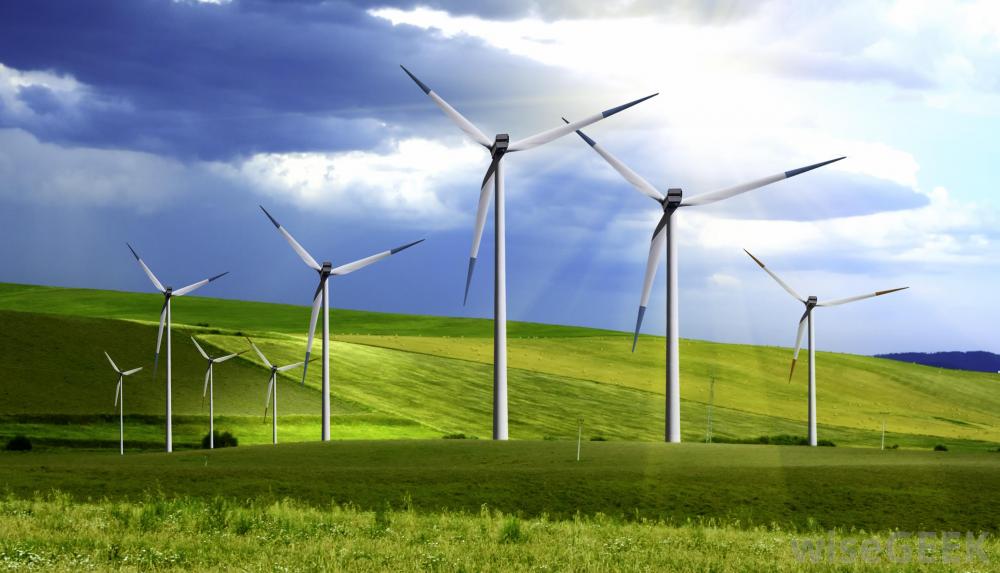
- Wind is one that everyone likes to tout. Wind energy is quite a problem. It is more expensive by far than coal. An MIT study put it at least at double cost to coal, with some estimates in the study ranging to 6 times as high in cost, depending on location and supply. It is not capable of providing baseload power. Wind is too variable. Therefore, it is only good for peak power, but is not appropriately timed for it, risking electricity grid instability, which can lead to far more black and brown outs, and in dramatic cases, can actually destroy the grid for long periods of time in places with too much wind in the mix. The wind blows when it blows, and just because you think it is windy, that does not mean the wind is of a good quality to make adequate power. For nameplate power generation (a field rated for 50 GW for example), the wind must constantly blow at 42 miles an hour. Now, if the wind blows too fast, it can destroy the turbines, so they have a safety device that stop the energy production at those speeds. If the wind is gusting, this becomes a huge issue with the maintenance of the turbines. Wind turbines are also a problem with PM 2.5, a pollutant that exacerbates asthma and causes diseases like black lung and asbestos. We also should consider another major problems with wind energy. To make these incredibly tall structures, they require an underground concrete and steel platform. These platforms differ in size depending on the size of the turbine, but for modern higher capacity turbines are around 50ft in diameter and 20ft thick, buried in the ground. This causes harm to animals who use the ground for habitat. We also have the killing of the animals around the turbine to consider. The turbine blades, though seeming slow moving, have a high rotational speed and the tips of the blades travel at over 100 mph. This kills insects, bats, and birds. Migratory birds and endangered birds like eagles are killed at a much higher rate by wind turbine farms than by fossil fuel plants, who are held to a much higher standard, in part because with extra funding, the fossil fuels plants can achieve it, where as the wind turbine farms cannot. So I hope you are considering further decreasing endangered species, like bald eagles, in your “funding” calcs. The land use, itself, is a major concern. It takes many acres to make power with wind, more acres by far than equivalent power by coal. This means that we have more land being polluted, more wildlife being displaced, and more natural beauty ruined compared to coal. Finally, there is the problem of disposal of wind turbine products. The blades cannot be recycled, so if there is ever a need for a new blade (a routine maintenance issue) the blade must be landfilled, and guess what, they are big and fill landfills very quickly. Also, it is extremely expensive to take down a wind turbine at end of life, so the vast majority of wind turbines are abandoned in place, ruining natural beauty. And that huge steel and concrete platform remains for a very long time. We haven’t really studied how long it can remain, but as we have roman cement still existing more than a thousand years after it was poured above ground, our current steel and concrete in an oxygen deficient environment covered in tons of soil should probably last even longs without breaking down.
- Solar power is the next option. Solar panels work with the weather, which means we have no baseload power. They also don’t work after dark, when the power need peaks. Boy I hope no one needs power at night. (Hospitals, people on medical equipment in their own homes, refrigerators and freezers, etc) Depending on your climate, solar panels may be useful for most of the year, or not. My dad has solar panels on his house and they provide all his power in the summer and are nearly useless in the winter and on bad weather days (a large portion of the year out here), they provide barely anything. Solar panels are also expensive. Look at the cost of solar for your own home. For SOME of your energy, it will likely be $25,000. Payback periods on small solar projects range from 20-30 years, with solar panels having an expected life of 30-45 years. The payback on larger fields is usually longer than the life of the panels, due to damage from weather and human elements. This means the cost of electricity is going up dramatically. Also, what land are you using for this solar? You need a lot of land for this to have any impact, and all of that land is no longer useful for many animals’ habitation. Solar panels are also made of incredibly rare and damaging chemicals. Entire villages in China have been killed off because of the chemicals needed for these panels. Is the death of strangers worth it? There are safe ways to make solar panels, but most of those double to triple the cost, again, and there are still issues with safe treatment of those chemicals. They are also hard on the electricity grid, as they do not provide power according to need. Places that rely on solar have had to pay extreme costs to other places without solar to have them take the energy before their grid blows up.
- Geothermal/Tidal/Etc. There are a lot of other ideas people have. Geothermal works fairly well, in the places where it works. Iceland has a lot of geothermal opportunities and can replace most if not all of their coal usage. However, unless you have a geyesr on tap, there is only so much you can do. There is also a concern of how much can be pulled before wrecking the stability of the volcano nearby. This is one reason, aside from land protection, why we haven’t put in significant geothermal energy in Yellowstone. We don’t want to awaken the sleeping giant volcano that could wipe out most of the USA and harm the world. We also don’t want to get rid of the natural beauty of Yellowstone. Tidal has similar location and beauty problems. While it works, it only works on certain coves and beaches. Most of those locations are where people like to vacation, and once you start using tidal energy, the beach can’t safely be used by humans. It also isn’t great for the wildlife.
- While this isn’t a type of energy, I’ll also address batteries. We need battery backup for most types of non-fossil fuel energy. The problem is that we do not have the technology to have batteries that will work, nor do we have the ability to regulate our electricity in such a way that batteries can fix the problem. We need to make so much extra energy to fill the batteries to keep us going ever single night, that we would need double to triple (some estimates are even higher) the production. However, if there is a day where our production exceeds expectation, we will destroy the batteries. The best energy storage we have is insanely expensive on these levels and is made of a great many minerals that are rare. Most estimates say that there is not enough of some of these elements on earth to handle current electric needs. These rare materials also require significant strip mining. Some of them can only be gotten by one of two means, human sacrifice in terms of child labor, or by causing significant environmental damage to the land.
You also want to replace oil. Now as you simply said energy, we will agree that oil can still be used for the chemical industries, including plastics, lubricants, pharmaceuticals, etc. We will focus on the main usage of oil as a transportation fuel.
So, what do we replace oil with? Bueller?
The common answer is electricity. Electric cars cannot handle the needs of our nation. I live in a part of the country where I have to travel 100 miles between towns. Literally, it is 99.4 miles! I am expecting a baby here soon and my husband will have to drive me those hundred miles to see the nearest midwife/OB. If we need a NICU, it is closer to 250. Electric car batteries are only good for 300 miles, and that is from 0-100%, which you should never count upon. Electric cars are really only designed to run from 20-80%, which means that you just lost 40% of those 300 miles. That is 120 miles. They also have issues running in mountainous terrain, high winds, and temperatures below 32F. Each of those can drop the mileage by up to 50%. If you live in mountainous terrain with high winds and cold temperatures (like I do), getting those 100 miles in the winter is iffy. Most families who have electric cars have them as a second vehicle, rather than as their primary and only vehicle because of range and reliability issues. Even if this were not an issue, there is also the problem of airplanes, helicopters, and semis. These cannot be run for the long distances needed on electricity. There was a test of an electrically powered semi traveling around 400 miles on one of the most used interstates in the US. The short answer to how that worked was it didn’t, even when they planned for the best conditions possible. The semi couldn’t handle the terrain. But even without that, we have other major issues with electric cars. Electric vehicles need batteries. I mentioned the problem with batteries earlier, but I didn’t handle what we do with the batteries when they reach end of life. We toss them in landfills because they are too hard to clean up. They are a fire hazard, above that of a gasoline powered car. Also, the tremendous weight of an small electric car causes significant damage to roads and highways, closer to the damage caused by semi-trucks. This means a significantly greater demand for asphalt which is…oil and particularly bad off-gassing oil at that.
What about ethanol, methane to gasoline, or biodiesel? Well, ethanol is very hard on cars, causing significant damage to all the steel. It is also less energy dense, so your fuel cost goes up and your repair costs go up, and the amount you can haul across the nation in semis goes WAY down. Semis use diesel for a reason. Guess where we get the methane…fossil fuels. And again, doesn’t solve the diesel problem. Biodiesel is only able to be used in this country at the low percentages it is used because of massive government subsides. To make it take over more of the market would take a huge jump in transportation prices (so all your goods go up in price) or a large jump in government debt. Also, we make biodiesel out of food stocks, like soy and corn. Do you really want to compete with the transportation industry for your food? That will dramatically increase food prices and transportation prices. There is a way around it, but it would require increasing our cattle herds exponentially and killing huge amounts of cattle each day for their fat. Our current tallow industry could supply one small biodiesel operation, about 80,000 BPD. We need (according to the EIA) around 3,000,000 BPD. So, I guess we multiply our cow herds by approximately 38 times, which has land use, water use, and other concerns.
Of course, nothing covered here dealt with the chemical industries. This comment would be a lot longer if I did that, but suffice to say, if we really wanted to get rid of fossil fuels, which is what most “moderate leftists” I have spoken to seem to mean with discussing the decrease in oil and coal, we’d get rid of plastic(bye bye phones and computers), single use medical equipment (how do you like sharing catheters with someone), pharmaceuticals (hope you don’t have a medical condition), paint/varnish (say goodbye to your wood furniture), synthetic fabrics (clothes, furniture) varnish, lubricants (those wind turbines sure need them), and more.
 Ethics Alarms
Another tour-de-force response from Sarah. Fantastic!! Thank you for sharing your expertise with us.
Thank you for this tour de force! Things I agree on (I think!)
Questions for you:
Dem talking points. You’re basically lying about Britain. See this: Britain’s Industrial Disaster And check out this from Francis Menton on the ridiculous Obama/Biden era EPA Endangerment Finding. Comment Filed In Support Of EPA’s Repeal Of The 2009 Endangerment Finding — Manhattan Contrarian The entire idea of “decarbonization” is based on a bunch of lies. You want to destroy the world to reduce a naturally occurring trace element comprising .04 percent of the atmosphere. Buzz off.
A tad cranky today, are we?
Happy talk about “sustainability” and “net zero,” and even “all of the above,” sets me off the way “Imagine” does you. These people will gleefully take us back to the Stone Age.
“Happy talk about ‘sustainability’ and ‘net zero,’ and even ‘all of the above,’ sets me off the way ‘Imagine’ does you.“
Methinks picking up a copy of Robert Bryce’s Power Hungry: The Myths of “Green” Energy and the Real Fuels of the Future won’t make you feel any better…
PWS
Hi Old Bill!
I read through the “Britain’s industrial disaster” link and was unable to discover (based on this source, in any case) what you think I am “lying” about (or perhaps, I am simply misinformed)?
Re closing their last coal-fired plant in 2024: This was Ratcliffe-on-Soar, decommissioned in September 2024. If you search for stories on this they mention this as a “last coal plant” milestone.
40% not the correct percentage for their reliance on natural gas? I was focusing on power generation (as did Sarah B) not on vehicles. Did another little romp through the Interwebs and this did NOT indicate that the 40% was way off (do you have a different number)?
“How does the UK produce its electricity?
Electricity generation accounted for around a third of the UK’s total fuel usage in 2022.
Of the electricity generated in the UK in 2022:
Are you perhaps suspicious of the statement that the UK has increasingly been relying on wind power? Double-checked that and according to the The Energy Institute’s Statistical Review of World Energy, UK generated 80 TWh hours of wind energy in 2022 (couldn’t find a more recent analysis), which put it 5 among nations at that time (China first, US second, then Germany, Brazil, and UK).
Or maybe …..you think I am inventing a childhood spent in part living in Europe? Well, you are free to think that, though I don’t know based on what….
If you could zero in on what seems inaccurate to me in my comment, I’d be happy to research further to see what I may have gotten wrong.
And … a lovely Sunday to you, too!
Read the article. His point is simply the UK is marching off a power generation cliff and if they don’t reverse course, their industry will be destroyed. Their current course is, wait for it, unsustainable.
And aren’t you the little cosmopolite. Mrs. OB and I lived in The Netherlands for three years, 2013 to 2017. On my way to my piano lessons in Amsterdam, I’d walk past the GASPROM office. I once stopped to take a picture of it to send to a friend. A Soviet Era looking guy sitting at a desk on the second floor shook his finger at me through the window as if I was taking a picture of a KGB facility. How was that for a brilliant way for a country to source its natural gas? From Vladimir Putin. What could ever go wrong with that? Those Europeans are just so darned superior and smart.
Hope you enjoyed Amsterdam!
I lived in Nederland from 1966 to 1973, in Vilsteren (little village in Overijssel), Driebergen (not too far from Utrecht) and then the Hague.
“Cosmopolite” does indeed fit me both in the widely traveled sense and the “comfortable anywhere in the world” sense.
So it’s a much better fit than some other labels you have tried out for me. 🙂
I did read the article (as I mentioned–perhaps you overlooked that detail when you read my comment?) and extracted the same main point that you just articulated.
What I failed to find was any evidence to support your assertion that I am “basically lying about Britain.” I think of lying as a deliberate falsehood about a matter of fact (which is not about one’s FEELINGS about this or that fact).
I am still waiting to discover what lies about Britain you believe you detected (or, perhaps what your alternative meaning for “lying” is?)
Holly,
Sorry this took so long, but I have four sick kids.
As a quick couple of notes, Great Britain, having dropped down the amount of coal and increased their renewables, is having a great deal of trouble with their electricity grid. (We are also cutting down huge amounts of trees in the Carolinas to keep up with their pellet demand.) Of course, look at Germany and all the electricity troubles they are having, which they hid when they had cheap Russian natural gas, but when that got curtailed, that really started to impact their economy. Spain, who also went a little far with renewables, had that huge energy shortage because of their reliance on renewables.
I hope they do figure out the nuclear waste issue, but regardless of the technical feasibility, it does increase cost, significantly at this point. Increasing costs of electricity really is a major force for price increases around the board. I know that many families are already having trouble with costs. Increasing the price of electricity will not make things better for anyone and will cause more deaths than potential unproven climate catastrophes.
You are absolutely right that location is the determining factor for what you can do with some of the renewable options, and I totally support local initiatives to make the most of the renewable options that make the most sense for you. My objection is that you cannot base a national or global energy policy on extremely localized phenomena. Hawaii does have good luck with some geothermal, and there are a lot of coastlines in Washington and Oregon that would benefit from tidal energy. Of course, the biggest issue with any renewable (or not) energy is the NIMBY-ism that comes with the energy generation. Energy generation is rarely pretty, all energy generation has significant issues with SOME type of pollution, be it particulate matter, sulfur, carbon dioxide, or the many, many others that those of us in the energy industry have to worry about. There is also the problem of balancing the electricity grid, especially with unreliable renewables like wind and solar. You are not wrong that politics wrecks so much too.
I am also going to give you a bit of my background, because it gives you an idea of where I’m coming from and shows my biases. I have my bachelors in chemical engineering, and I got an internship with INL to look into Coal to Liquids with a focus on the Fischer-Tropsch process going into my final year of undergrad. That summer I worked on syngas cleanup and refining the FT liquids. I performed well enough that they agreed to pay for my graduate degree if I continued on this route. During my time in grad school, since we were focusing on CTL, we had to compare it to the renewable options, and see if we could justify our project. I took a decent number of classes and read hundreds of papers on renewables and anthropogenic carbonification of the atmosphere. Part of the work for my doctorate focused on mathematical modeling of refining equipment. Because we were not working on renewables, people were VERY critical of our modeling techniques, so I had to learn all of the best practices, as well as being able to defend every single piece of work we did. Eventually, our work, which only accepted proven technology and had no room for renewables (we were working to make fossil fuels more environmentally friendly and economical for long term energy reliability and security) was considered inappropriate, despite no one finding a single error in our work, so we were denied funding and encouraged to leave the university, all because we looked at fossil fuels. I do not have a degree in climate science, or anything but a BS in ChE, but I have extensive experience in both large- and small-scale modeling techniques and energy technologies beyond what my paperwork says. A hobby of mine is reading research papers in these (and other) fields when I can find the time, though as an expectant mother with four children, time is precious.
In answer to your questions:
I do support tax breaks for the power and fuels industry, but I do not think that subsidies are an appropriate usage of the federal government’s power. I will make a point here that most oil companies “tax breaks” should not be labeled as such. The main “tax break” they get is the ability to claim depreciation of assets. This is something that is allowed for most industries in general, and very common in ANY chemical industry. We had a whole dang semester in my chemical engineering undergrad degree on how to financially analyze a chemical project’s monetary feasibility and spent over a month on depreciation of assets and how to use those in tax calculations when calculating ROIs.
That being said, tax breaks, within reason, are valid. The federal government tends to use fines as addition taxes. For years, there has been a fine for any oil company who did not make a certain percentage of their diesel from renewable sources. For a long time, it was not technologically possible to make that diesel. When I was forced out of college, there were a bunch of colleges working on that problem and had managed to get it working at the bench scale, but the technology was unable to be scaled up yet. The technology was still too new when I quit working. So the government fined all oil companies, which everyone knew was a fancy way to tax the companies further.
Subsidies on the other hand, warp the market and force technology before we are ready to implement it, usually with significant negative effects that no one has forseen. Today, the technology for refineries to make biodiesel on a large scale exists, but is VERY expensive. If market forces were the driver, no refinery on earth would use it, as it would bankrupt them very quickly. However, the federal government gives subsidies, not tax breaks, to refineries who sell this fancy biodiesel, and that is now their most valuable product. Many refineries have decided to cancel normal diesel or gasoline products, which has increased the cost of gasoline and diesel for all of us.
Another area that has seen warping due to subsidies has been wind energy. If one removes the subsidies, wind energy costs double to triple that of fossil fuel energy. In addition, where do these wind subsidies come from? Most of that money is forced from fossil fuel companies, in taxes and fines designed to fund these subsidies. If you had a restaurant, you would be pretty mad if money was taken from you to pay for the food truck next door. That is essentially where a lot of the wind subsidies come from. This is a gross injustice, and another reason why I think subsides are bad.
DOE loan guarantees are, generally, something I have little opinion either way on. I think that the federal government should get out of banking generally, and either DOE (energy or education) should be ripped down, the soil salted, and eradicated from our government. However, I do appreciate the need for energy companies to know that the change in politicians every two and especially four years will not destroy their relationship with the banks and crash projects, leaving them in huge amounts of debt that can never be repaid. Certainly under Biden and even somewhat under Obama, fossil fuel companies risked being debanked. This has in no small way made our energy situation increasingly perilous. My husband’s company was debanked by the largest bank in town under Obama and his recommendations. The banks left that would take their money were all little banks, or banks in other towns/cities. Federal guarantees that you can get the loan and the terms won’t change is not a bad use of federal funds, if it is fairly handled. I’m not sure I trust the federal government under ANY president, though the Dems get my special brand of dislike, to be impartial.
I am absolutely ok with states taking an active role in shaping their own energy strategies and this is what I would encourage. I am also ok with the federal government working on research and exploration as a part of nation energy policies. If we know where we have coal, natural gas, oil, high quality wind, better locations for solar, good tidal basins, etc, that is absolutely a decent use of federal and state money. If states want to decrease taxes for companies to come, whether that’s Amazon or an energy company, GREAT! If states want to make it better for one type of energy than another, again great! If states want to spend their money on biodiesel subsidies (looking at you CA), sure, go for it. Of course, when your gas prices and other prices get out of hand, be prepared for people to walk. There is a reason we joke about Newsom being the U-Haul salesman of the year.
I think we WILL see a decrease in coal, a little extra natural gas, some more wind, some more solar, one or two nuclear reactors, max (with very little energy output), and more rolling blackouts and brown outs. I think we are walking into a catastrophe. I also think that ten years is too short to really get anything going as permitting for electricity is usually around a 10-year process, which means that every time we get something going, the other party (usually Dems, but Reps do it too) will wreck it as soon as they get into power.
What I think we SHOULD do, is work on increasing natural gas and coal plants. The major problem with relying on natural gas is that unless there is a new resource analysis out, we have WAY more coal reserves and resources available than natural gas, and we should focus on using the plentiful option. We should look into nuclear, but not have the government pay for it so that it has the ability to become viable on its own merits. I think that we should encourage private sources to pay for solar panels on car parks, apartment buildings, and other locations, without the government paying for it, outside of tax breaks. I think that we should allow people to build wind turbines if they wish, on their own dime, and I think we should talk to river communities about including water wheels where they can safely do so. Teaching people how to safely harness the energy of their private creeks/lakes/waterfalls is another great option. I think that we really need the federal government to reduce the permitting process so that we can increase energy production. However, I am a firm believer that as we go forward, until we get better options, coal is still our best source of cheap and dependable electricity.
AI is a bugger. Wyoming is trying to bring in a huge AI project. That center will take more energy than the entire population of our state. While we make huge amounts of electricity, without significant generation increases, we will not be able to export energy to other states, or our population will go without, perhaps both, depending on how accurate the estimates of the AI project are, and they usually under report rather than over report expected energy needs. Our prices will go up significantly as well. I think that AI power needs are dangerous to the safety of the energy grid in this nation. I do not know how to solve that problem, but we need a lot more power and we need it fast. Ideally, we’d put in a lot of big coal plants (which are not nearly as dirty as people think), so that we could have the most constant and reliable sources of power available. We would also make AI pay for putting in their own power and if those pockets aren’t that deep, then they aren’t ready to expand yet.
The electricity grid in the US is generally old and in bad shape. Of all our infrastructure, it scares me the most. It is the least understood and the weakest link. Also, if it goes down, water, sewer, and transportation go down too. I can drive 100 miles to get water (been there, done that). I can detour a couple hundred miles if a bridge or tunnel goes out (been there too). I have never tried, but bet I could even dig an outhouse if I really had too. I cannot power my needs without the grid. One transformer failure in the wrong place at the wrong time can wipe out electricity for thousands. Electricity is not something that can be stored well, and needs to be used as it is produced, so we need a good strong source for baseload. We need proper management of power surges, and we need to handle huge power draws. This is probably handled as well as it can be, mostly privately, right now, but we have significant need for better and more lines, transformers, and all other parts of the power grid. We NEED more power generation before we close any more power plants. Renewables put strain on the grid as they give power when they can, not when it is needed. If that power is not used up as it occurs parts of the grid will blow, which causes black and brown outs. This is much the same as lightning hitting a transformer and putting too much power into the system at once.
In my opinion, the federal government should require AI to fund most of its own power, reduce permitting time, fix up old power lines/transformers/etc, and helping power companies secure their networks to be less prone to attacks, especially from foreign powers (which is more common than we want to think). This, along with encouraging more competition by getting out of the subsidies business, allowing equal tax breaks (depreciate for all or none, per megawatt, etc) and keeping the same rules for everyone (if I get fined several million dollars for 12 ducks with oil on their feathers who got cleaned up and flew away to someday have babies, the wind farm better get fined for killing four bald eagles who will never reproduce again).
I know I sound negative and skeptical, but I truly believe that we should have people, potentially including the federal government, working on researching how to better utilize the natural resources we have. I think that sunlight could be an awesome way to power our world, but the technology isn’t there yet and forcing us to use solar and wind, when it has so many downsides really is hampering our future. We will figure out better ways, if we stop playing politics and start letting scientists do what they want without silencing dissent and punishing “wrong think”. I like the ideas of having more than fossil fuels, but we just aren’t ready. We need to come up with healthier, safer, and more economically viable alternatives before we push fossil fuels out, and perhaps we should look into the Russian study that showed that fossil fuels are actually renewable, instead of declaring it off limits. I also want more studies on clathrates, methane hydrates, algae, and other options I haven’t heard of.
Ooh, my sympathy with 4 sick kids that’s brutal.
And what a maddening experience with your graduate work (I just went and read up a little on the FT process — I had no idea this dates back to the 20s!)
To me your story illustrates the distorting effects of the serial demonization of different energy options (my dad worked on nuclear power plants, my stepdad for Shell, both mostly BEFORE the demonization so they actually felt they were providing a resource people needed). In my local community I’m observing the demonization of agrivoltaics, because (according to those most vocal on social media) farmers attempting to increase their income in a tough farming economy are going to cause some (usually unspecified or completely scientifically fanciful) armageddon.
Amen on the unwelcome costs of how shifts between political parties yanks around the regulatory and permitting and tax structures so that it becomes really hard to plan ahead and follow any sort of sensible long-term strategy. Before he retired my stepdad did some work in Shell’s branch looking at how to become more environmentally friendly and was very frustrated by the expectation that the oil industry was supposed to somehow magically solve the problem of dependency on fossil fuels overnight while continuing to operate as a fossil fuel company.
What path is there toward some kind of sound, consistent policy based more solidly on science and data and less on ideology, hopium, and fear-mongering? Alas, I don’t see it. But humans do have the capacity to change when confronted by crisis… I’m afraid that’s what it will take.
Thank you for all the time you spent sharing your background in energy and the detailed answers to my questions. Really appreciate it!
May your kids all be healthy again SOON!
Geez…another brilliant, detailed, and highly readable response.
Thank you yet again!!!
Thanks, Sarah. Nice work, as always. And thorough. And much more serious and definitive and exhaustive than the item deserves. Here’s my typical spitball/drive by response to item 15.
15. I believe in funding Funding is never a problem. As AOC says, “we can just print more money.” sustainable Sustainability is achievable. People study it in college and corporations say they’re for it. It’s just a matter of time before everything is sustainable. Smart people are on it. energy, including offering education to people currently working in coal or oil so that they can change jobs. Did you go to school? Did you notice lots of people don’t particularly like sitting in a classroom? Did you know half the world is below the fiftieth percentile? I attended nineteen years of formal education, not including kindergarten. No one could ever train me to code. There are too many sustainable There’s that magic word. All you have to do is say it and everything is fine. options available for us to continue with coal and oil. You have no idea. Have you ever seen a coal train? Sorry billionaires. Maybe try investing in something else. Maybe you’ve never been around people with money. They didn’t get it by being stupid. They also tend to be loath to part with it. It’s why it’s called “capitalism.” People make money from their money, i.e., their CAPITAL.
And just for good measure, I’ll add a good, Kevin Klein in “A Fish Called Wanda,” “ASSHOLES!”
Wouldn’t it be something if controversial issues always were addressed with the level of detail and depth of knowledge shown here by Sarah B.? Unfortunately, that is too much to expect.
But, analyses like this are well worth saving, re-reading, and studying. And, they would be more so, should a knowledgeable proponent of sustainable energy address each of the points made here.
I don’t think those proponents would view sustainable in the way set out at the top; I think they are thinking about the ‘fuel’ source (wind, sun, etc.) not being used up in the way coal or oil are. But, they mostly ignore the associated materials that are used up.
And, I’m not optimistic that a proponent will pop up here and make the attempt to prove Sarah wrong. Too bad. We’ll have to work through that ourselves, to the extent that even is doable.
True, true, true, true,and too true.
H’sJ wrote “Wouldn’t it be something if controversial issues always were addressed with the level of detail and depth of knowledge shown here by Sarah B.?”
Amen to that!
This sort of discourse is what attracted me to science in the first place–people disagreeing by arguing about matters of fact and methods and interpretation, with sources. AND willing to back down (at least provisionally) if it turned out the basis of their argument was shown to be factually or methodologically weak — back to the lab to do more studies! Watch me prove my point by… generating better data… and I’ll see you at the next conference.
Appeals to authority viewed with suspicion unless said authority was backed up by plenty of sound research.
What a profoundly different world we would be living in, indeed…..
My good friend got his PhD in some type of engineering and focused on solar energy for his thesis. I do not remember the specifics, but he came to the conclusion that using solar panels (i.e., staying away from the solar farms that use mirrors to focus solar energy, which come with a host of problems) was a no-go based purely on space–that there was not enough physical space to place solar panels to generate the electricity needed for our current needs, much less the increased need we’ll be seeing in the future.
My own experience with delving into the math about solar power and electric cars exposes the lie that solar and electric cars are our future.
My (relatively) large roof has the space to generate about 10 MWh’s per year. My family uses about 10 MWh’s per year for our house, with air conditioning probably representing a good third of that electricity.
The average car drives 12-15k miles per year. Assuming the average family has two cars, that’s 25-30k miles driven per year. A larger EV probably averages 350-450 Wh/m, while efficient smaller cars can average 200-230 Wh/m. Simple math tells us that my electric needs would increase by at least 50% if I went fully electric in my vehicles, and that I could not physically generate enough electricity on my home. And that’s excluding the elephant in the room mentioned by Sarah above–batteries. I would need to be able to store upwards of 4 MWh’s of energy to get through the winter to be self-sufficient.
I’m not sure anyone seriously believes wind or hydro can ever contribute more than a symbolic chunk of our total energy needs, so it feels like solar is the most realistic “sustainable” source of energy, but it simply doesn’t work on a mass scale.
An awesome breakdown! Whole books have been written about each of Fake Ron’s points, and one of things that bugged me about the whole screed is that it didn’t acknowledge any of the common counterpoints. In my own response I wanted to get in more detail about a lot of them, but I figured others would who had more time. Speaking of which, I think “Gish Gallop” is a fitting term, but it’s more applicable to live debates. At least in this format we can take the time for these measured responses, though it does take a lot of effort. That’s why I really hated the statement “Got another opinion? Put it on your page, not mine.” If I’m gonna take the time to read your stuff, you’re gonna take the time to read mine.
Just wanted to mention that your responses were all very good, gamereg, even if they didn’t generate the number of responses that Sarah’s did.
Fake Ron’s screed is all about what “liberals” believe, and apparently those beliefs are a matter of faith and “discovered truth.” New data and facts are irrelevant.
And all my socialist, communist, anti-Capitalist friends suffer from this. All the evidnece is that these systems don’t work like they are supposed to an unacceptably interfere with individual rights and liberties, but gee, wouldn’t it be cool if they did? And that’s enough for them.
Nicely done, Sarah. Nicely done, indeed.
jvb
That’s a great rundown on that issue, Sarah; I’m saving it.
If you have the inclination, I’d like to know your opinion on a minor related issue.
Recently, we spent a bit over a week in Alberta, CA, along with one daughter and two grands. We rented a hybrid Toyota Sienna minivan (which uses NiMH batteries, and regenerative braking) and I was really impressed with its overall fuel efficiency as we went through various parks in the Canadian Rockies. As I understand it, NiMH’s are less damaging both in mining and recycling, and safer in a collision than lithiums. This setup would rarely, if ever, need independent charging from the grid. We live in an area of rolling terrain, which supposedly favors this setup.
We’re considering replacing our own older (third, nothing wrong with it…wife just thinks she wants a new one) Sienna soon, and this seems like a possible candidate.
Do you have any thoughts (and the time to share them) on this type of setup relative to your assessment on the issues you’ve touched on already?
First, I have to say that my nearly ten year old Toyota Sienna is loved. I think it’s a great car! That being said, mine is an ICE (internal combustion engine), not a hybrid.
I have to admit that I am not as fully studied up on hybrids as I am on other items of energy policy, so please take this with a grain, or perhaps shaker, of salt. I cannot go into the level of detail on this that I find appropriate but I’ll do my best, assuming my kids are done puking today.
The numbers on hybrids are significantly better than numbers on EVs on about every measure. They really do a much better job than EVs at decreasing gasoline usage overall, while having a lesser impact on the grid, and I would certainly consider buying a hybrid over an EV for myself, though I am still leaning towards the ICE over the standard hybrid.
Plug-in hybrids still have a significant draw on the grid, which is one of the issues of electric vehicles. For this reason alone, I know that I would not wish for a plug-in hybrid for myself and would prefer the standard hybrid.
Both hybrids have issues with batteries. You are right that nickel batteries are better than lithium for the reasons you mentioned. However, one of the things that is a concern with hybrids is that the batteries, while there is a small bit of metal reclaiming, still aren’t very well recycled. These batteries are often just thrown away in most places, with only a few places trying the recycling. Of course these batteries should not be in a normal landfill, so either they are illegally dumped (a very high portion seem to end up in landfills that should not allow them) or you have to pay a significant fee to dispose of them properly. Often, given the amount of issues in recycling centers, you have both. The life of the batteries is generally rated between 7.5 to fifteen years with all the caveats we find on any car part imaginable. The cost of a battery for a hybrid vehicle is significant, often $5K-15K, which leads to the average hybrid owner selling their car as the cost of a battery replacement is often more than the used car is worth.
There are a couple other factors to consider. If you are a person who likes to sell their used car, the used car prices of hybrids have been dropping, though not at the same rates as EVs. People are wising up to the cost of replacement batteries, and it is not helping the used car market. You don’t know if people drove their hybrids well and how much life that 5 year old hybrid battery has left, which means a lot of people do not care to purchase those cars, driving down the prices.
The other big factor is that the price of a hybrid tends not to justify the gas money saved for a long time. My dad loved his standard hybrid, which died in a slow-motion crash with a semi. When he got the money back from the company for his crash, it didn’t pay for much, but he wanted to get another hybrid. For the vehicle he decided would fit his needs best, he was looking at $20,000 for a new ICE or around $30,000-$35,000 for a new hybrid. For the easier math, we won’t go into the used car market and I’ll use the lower value for the hybrid. $10,000, give or take is a lot of gas. For a car that routinely makes 35 mpg (the low end of the gas model of this particular car) as an ICE or 55 as a hybrid (the midrange of the hybrid model), and $3/gallon gasoline, we are looking at a break even of about 50,000 miles, which is approximately half the lifespan of the average car.
You know your needs more than I do, so you will have to do the math to see if the hybrid will pay itself back. But removing the factor of charging from the grid really helps. If you have to charge from the grid, you need to check your laws and electricity prices as some states have some pretty insane rules about charging EVs and hybrids. Certainly, if you live somewhere where they can draw from your battery to stabilize the grid, you may want to approach this with caution.
Best of luck in your car hunt.
Much belated thanks to you, Sarah, for taking the time to lay that out for me. It more or less helps confirm my impression that as much as the hybrid might be an efficient vehicle to operate in our location (as I understand it, it might only need grid power if left unused for long stretches, due to the higher self-discharge tendencies of NiMHs vs lithiums.), but would be a loser in long-term cost. The Siennas, like most Toyotas, seem to have very high useful lifespans, given regular standard maintenance. The only reason we have the current one is that some silly girl thought having a green light (not an arrow) meant she could turn in front of oncoming traffic, which included my wife, driving our second Sienna.
Still, if she starts insisting, we might have to look and seriously run the numbers…they may be better than it seems. There are several independent hybrid battery replacement outfits nearby, but they don’t list prices for Siennas…(probably too new, and have 10yr/100k mile factory warranties, including the battery). Some current prices for Highlander batts are around $2500 installed w/ 3 yr warranties (though they claim likely 10 yr lifespan…but who knows). They also do mobile replacement, which must mean the swap isn’t all that difficult.
In any case, at our age 10 years out might be near the end of our driving careers. Maybe voice-activated self-drivers aren’t so far off 😉