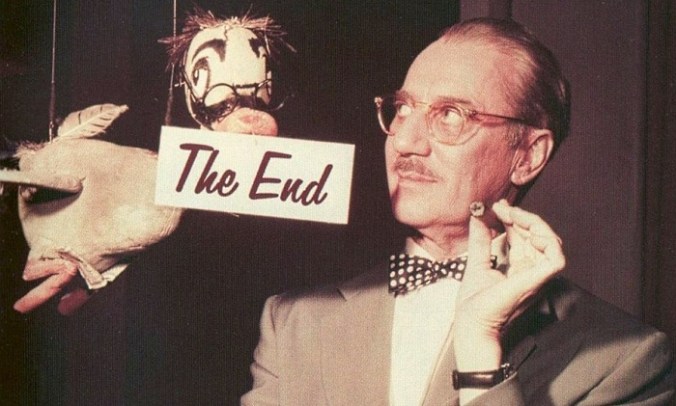
When ” Dilbert” cartoonist Scott Adams, in his last days before dying, announced that he had converted to Christianity, my immediate thought was that it was either a final joke by the “cancelled” wit and iconoclast or a classic deathbed conversion that lowered my opinion of him. It may have been both based on his final tweet, which said in part,
“Many of my Christian friends have asked me to find Jesus before I go. I’m not a believer, but I have to admit the risk-reward calculation… for doing so looks so attractive to me. So here I go. I accept Jesus Christ as my Lord and Savior and look forward to spending an eternity with Him. The part about me not being a believer should be quite quickly resolved; if I wake up in heaven, I won’t need any more convincing than that. I hope I’m still qualified for entry.”
Ann Althouse, for some strange reason (but she was always a big Scott Adams fan) finds this announcement astute and charming, rating it “an impressive mix of intelligence, respect, humor, and honesty. I have read many Christians cheering for Adams as well.
This is demeaning to God and Christianity, and I say this as a life-time agnostic. What kind of silly religion holds that you will reach paradise for eternity as long as you say the magic words, whether they are true or not, just before shuffling off these mortal coils?
After his film career, Groucho Marx hosted an iconic early TV game show called, appropriately for this post, “You Bet Your Life.” If a contestant said the “secret word” while chatting with the comedian, a marionette duck that resembled Groucho dropped down from the ceiling holding a card with the winning word in its bill, and the lucky contestant won some money, usually $50. In the Christian game show “You Bet Eternity,” it’s a magic phrase that wins the prize: “I accept Jesus Christ as my Lord and Savior.” And it doesn’t matter if you do or not, as long as you say so. As far as I know, there is no duck, but who can tell? The Lord works in mysterious ways.
Adams has some distinguished company for this cynical attitude. In their famous correspondence when both Founders were in their dotage, John Adams and Thomas Jefferson had an exchange in which Adams asked his friend, in effect, “Do you really believe in God?” Jefferson wrote back that, in all honesty, he didn’t but that it seemed prudent to him to formally “believe” if there was the slightest chance that doing so would get him into heaven.
In Jefferson’s case the course was particularly prudent, as Tom continued to be a slave-holder after stating quite eloquently that the practice was a moral outrage, and there was that keeping his dead wife’s half-sister as a concubine problem.
My mother, who was always playing the angles, once said outright that her pretenses of being religious were, like Jefferson’s, a hedge against ending up in Hell. This always seemed wrong to me, but I also realized that probably a majority of so-called Christians embrace the faith out of fear and prudence rather than genuine belief. After all, it’s the canny thing to do in risk-reward terms, as the two Founders agreed.
It is profoundly disturbing to me, as an ethicist, to wonder whether the Supreme Being has no regard for core ethical values like honesty and integrity, or having the courage of one’s convictions.
 Ethics Alarms
It isn’t magic words. The words are just an expression of one’s willingness to accept oneself for who they are (fallen) and God for who He is (our only savior).
Christianity asks for nothing else. Luke 23:40-43
If you don’t mean it and the words still “work,” then they are magic words, like “Presto Chango!”
It’s out of our hands now, but as a Catholic I believe in salvation by faith and works. Faith alone is just noise. Religion also isn’t a joke, although some might think otherwise (and I’d appreciate those folks keeping their thoughts to themselves), and I don’t think God doesn’t see this cynic’s cynicism for what it is. At a bare minimum Adams is due for a LONG stay in purgatory before being admitted to Heaven.
As I said, Jack, it is not the words that work. It is the intention/belief/conviction behind them.
Did you just make an ethical case for Calvanism?
Sounds like Pascal’s Wager.
Exactly. Or as my copy of the St. Joseph’s Baltimore Catechism describes it, “baptism by desire.” The Babylon Bee referenced Pascal’s Wager at the conclusion of its post about the passing of Scott Adams: St. Peter Shows Scott Adams To His Glorious Heavenly Cubicle | Babylon Bee
Exactly! I came here to comment Pascal’s Wager but you beat me to it.
Interestingly (having just read a little more about Jansenism, the sect that Pascal belonged to) it appears (unless I am misunderstanding something) that this system of thought, following Augustine and Aquinas asserted that human acceptance of grace is not necessary. That would seemingly render the Wager (along with free will) irrelevant — you are either saved or not and there’s nothing you can do about it…
“Jansenism asserts that God’s role in the infusion of grace cannot be resisted and does not require human assent.”
Jack,
I think the important thing to consider is that, from the Christian perspective, God wants every single one of us with him in Heaven (cf 1 Tim 2:4-7). As some theologians have stated, God is crazy in love with us. He’s so in love with us that the Second Person in the Blessed Trinity became incarnate as a man and suffered and died for us while we were still in enmity with God. God goes to unbelievable, unimaginable lengths to draw us to him. If we are on fire with love for him, perfect. If we simply would prefer to live with him rather than burn in Hell, he’ll accept that. (See what Catholics teach on contrition and attrition for a deeper discussion on that.) What separates us from God, ultimately, is our own unwillingness to spend eternity with him.
Someone who spends a lifetime running away from God and who desires to do everything according to his own principles, will probably have a difficult time finding the willingness, even at death, to submit himself to God. But someone who on his deathbed has a genuine conversion will be saved. If that seems abhorrent, one need look at Jesus parable of the workers who were called at various times during the day. Even the ones called at the very end of the day received a day’s wage in the parable.
There’s no guarantee that Scott Adams will be in paradise because of his deathbed willingness to speak the words, “I accept Jesus Christ as my personal lord and savior.” That’s a formula used in some Protestant circles, and some Reformed communities within that umbrella truly believe if you speak those words, you’re done, and nothing you do, no sin you could commit in the future, will separate you from God. But most Christians believe that simply making such a profession is not sufficient, that there does have to be an interior conversion that accompanies such a profession. Most believe that baptism is necessary, either directly or a baptism of desire if direct baptism is truly unavailable before the convert dies. In the case of Scott Adams, I’m not aware of him receiving or even seeking out baptism. That leaves him, at the very end, needing a genuine, perfect desire to know, love, and server God in order to attain salvation. But again, only God knows what is truly in in our hearts, and if there’s a speck of willingness in Scott Adam’s soul to love God, God can work with that.
Personally, I’m hopeful that Adams, being willing to engage in Pascal’s Wager, could be saved, and I’m praying for his soul.
Pascal’s Wager: https://en.wikipedia.org/wiki/Pascal%27s_wager
The History of Philosophy without any gaps podcast coincidentally covered it recently: https://historyofphilosophy.net/pascals-wager
He frequently stated that while he was not a believer, he respected religion and envied those who were. My impression was he said it to comfort his Christian friends who were concerned for him.
“What kind of silly religion holds that you will reach paradise for eternity as long as you say the magic words, whether they are true or not, just before shuffling off these mortal coils?”
Not Christianity. Faith comes from believing and not seeing. If Scott Adams didn’t believe in Christ prior to his death, saying the words didn’t make a difference. If he’d been baptized, he would have only gotten wet.
God is not a petty Greek or Roman deity, a mythical reward elf like Santa Claus or a mercurial Star Trek alien messing around with us because He can. He is the only omnipotent, omniscient and omnipresent being in the entire universe (What about Satan, you ask? Satan is not omnipotent, omniscient or omnipresent. He is not God’s opposite because that would make him God’s equal. God has no equal).
God knows if you mean it or not. It’s as simple as that. There is no such thing as gaming the system with Him.
The problem is, of course, that we humans do not know what is in the mind of a dying person. American Christians tend to generally try to give the benefit of the doubt to someone who says he or she has become a Christian. This sometimes backfires because we are not always “wise as serpents and harmless as doves” (Matt. 10:16). A large number of people who call themselves Christians in this country are theologically ignorant. Instead, in our celebrity-driven culture, we tend to put well-known people on pedestals when they announce a conversion to Christianity, immediately adding them to speaking rosters as if these new believers have the wisdom of those who’ve followed Christ for decades. It’s no different from granting expertise on Climate Change or other issues to a celebrity with no particular education in such an area. We don’t appraise the new believer to determine if the conversion is genuine or if he or she has sufficient understanding to lead or teach others. This has happened again and again to the point that there are articles and commentaries in Christian publications urging believers to trust but verify when a celebrity proclaims Christ as Savior.
Scott Adams knows the truth now. For his sake, I hope he really did believe. The flippancy of his statement doesn’t bode well.
If he’d been baptized, he would have only gotten wet.
Great line, AM.
Well said!
It is profoundly disturbing to me, as an ethicist, to wonder whether the Supreme Being has no regard for core ethical values like honesty and integrity, or having the courage of one’s convictions.
I think the idea would be God knows if you mean it or not.
Ephesians 2:8-9 teaches: For by grace you have been saved through faith. And this is not your own doing; it is the gift of God, not a result of works, so that no one may boast.”
It is faith in the Almighty that leads to salvation. Faith is more than a belief, but a conviction. James even argues that demons believe. As a minister, I am skeptical of deathbed confessions. Part of it doesn’t seem fair, but Jesus demonstrates that it shouldn’t matter in the parable of the Labors of the Vineyard. The other part is argued here. As a Christian, I would take his confession and baptize him, but there are no things I can do to save him. Without faith, they are just words spoken, and the body gets wet.
Theologians would argue how much faith you need (Jesus himself would criticize his disciples for having “little faith”), but at least for me, I would say hedging your bets isn’t faith at all. I’m glad I don’t have to be the one to make that decision.
I would say hedging your bets isn’t faith at all.
Exactly.
It is admirable that you have the bravery to broach a controversial topic like this. Given that numerous or many of your contributors are ‘believers’. Defining our metaphysical reality, defining what ‘soul’ is and what ‘spirit’ is and indeed what ‘God’ is — are topics of perennial confusion.
From an Evangelical (Protestant) position his decision will be a very good one for him. From a traditional Catholic position he would likely have to spend a good deal of time in a purgatorial space, but then there is the issue of just how ‘transactional’ was his (so-called) ‘conversion’. Didn’t sound very convincing to me.
But then you never know what goes on inside someone. And then you never know what goes on in a person when they begin to transition out of ‘material existence’ and into a different type of awareness. Like perhaps in the liminal state between awoken consciousness and sleep all sorts of things can happen.
If the life we have here is understood, as it is by some, to be God’s dream in which we participate (more often than not as dreamers), and yet if the soul is eternal (as most mystery schools assert and agree), then in a sense there is no need for such ‘conversions’. You are what you are and what you are does not change in one moment. The dreamer continues the dream but no longer within the frame of the dream that is Earth existence.
“From a traditional Catholic position he would likely have to spend a good deal of time in a purgatorial space, but then there is the issue of just how ‘transactional’ was his (so-called) ‘conversion’. “
I’m not a Catholic. I don’t know enough about the Catholic belief in purgatory. As an evangelical Christian, I don’t think there’s a place between death and Heaven. It reminds me of an episode of “Benson” I saw once when Jessica Tate – Benson’s former employer from “Soap” (I was 12 and easily impressed) – showed up as a ghost, spirit, apparition or something – and told Benson how she’d been killed and ended up in Heaven.
Jessica: “Actually, I was in a waiting area outside of Heaven.”
Benson: “You were in Heaven’s lobby?”
AM,
Here’s the ultra condensed Cliff Notes of the the Reader’s Digest version on purgatory, since you said you didn’t know much about it. If you care to learn about it, I can give you some source material, but if not, perhaps this will at least clear a little up.
Catholics believe that only that which is perfect can enter Heaven (Rev 21:27). We also believe that there are sins that separate us from God (by our choice) and sins that wound our friendship with God, but do not fully separate us from him. An example of the difference would be like telling your sister she is a bitch when you are angry at her verses killing your sister. One is not good, the other is dreadful. If we die in friendship with God, but still having unrepented little sins, there is a dilemma. Friendship with God means we should be Heaven bound, but not being perfect means we can’t enter.
In addition, most sin causes unhealthy attachments to creatures and things. If we are attached to our sin, we cannot enter heaven. Think of a man who is accustomed to saying “fuck” every time he is surprised, even if the surprise is a good thing. Heaven is a place of all good, and vulgarities have no part in that. Therefore, even if he is the salt of the earth in all other aspects of life, he could not be in heaven if that is how he responds to something. Therefore, that must be changed. A bad habit takes time to overcome, so we speak of time, because that is something we humans understand. Purgatory, however you picture it, is the place/process/state of purification so that we can enter heaven, as flawed as humans are.
“As an evangelical Christian, I don’t think there’s a place between death and Heaven.”
Purgatory (as I think Sarah describes well) is a necessary pre-condition. Some Catholic theologians, and some Saints, say that the soul itself would choose purgatorial purification.
I think that life is purgatorial. Yet I don’t hold to strict, defined doctrines.
My basic understanding at this point goes like this: all that God wants to do is to give us absolutely everything. But that is not material stuff. It is of other orders. It is exactly what we need however. Yet we refuse to take it. The meaning? We can turn everything around “on a dime” if we instead choose to accept.
Speaking for myself of course. 😉
As Dismas (the thief who scolded the other thief for dissing Christ while the 3 of them were being crucified) asked, “Lord, remember me when you come into your kingdom.” Jesus responded by telling Dismas that “today you shall be with Me in Paradise.” Another deathbed conversion, and Catholics believe that St. Dismas did indeed go straight to Heaven.
But he truly believed Jesus was the Messiah. Deathbed confessions are not impossible, but they can and are highly dubious. Those who hedge their bets and are lucky enough to go through the ritual (whether verbal or by baptism) prior to death may fool those left behind…they cannot fool God.
More accurately, Dismas would have been another example of “baptism by desire.” Although when he scolded the other thief, he did confess “we are being punished justly (but this man has done nothing wrong).” Of course, it’s far better when one repents long before the end of one’s life, and from better motives than “because I dread the loss of Heaven and the pains of Hell” (as the Act of Contrition my kids learned in CCD phrases it). But better that one turn to God just before death than not turn to God at all.
The ideas I have are likely counter-doctrinal, yet I see Bible and religion stories as Stories. They are performances for an audience. I completely understand the message of the story, yet a Story is not reality. They are anchors for faith however and must be respected.
There are other spiritual narratives that offer Pictures that seem more complete, better reasoned through.
Consider the similarity.
Adams: “…I’m not a believer… and I look forward to spending an eternity with him. The part about me not being a believer should be quickly resolved if I wake up in heaven…'”
Mark 9:24: Immediately the boy’s father exclaimed, “I do believe; help me overcome my unbelief!”
Salvation doesn’t come from chanting magic words, payment of alms, subjecting yourself to suffering, becoming a famous historic figure, baptism, or anything else.
Christianity, at least some forms of it, define salvation from John 3:16–coming from acknowledging what Jesus has already done for you.
It’s not up to us to decide for Scott and God if he’s attained salvation, I think that’s what he conveyed in one of his last tweets–it’s between him and Jesus.
“…I’m not a believer… and I look forward to spending an eternity with him.”
There is another perspective: You are part-and-parcel of eternity, and everyone is spending eternity (with God). There is no other place to go. There is simply no way around this. That does not save you from consequences however, yet the notion of ‘eternal hell-realms’ cannot, when examined (ethically!) be true.
That’s Good News!
But it’s not because you will be out of the presence of God.
None of us living know what it’s like to be out of God’s presence. Whether we acknowledge His existence or not, He is there every moment of every day of our lives. If we choose not to have anything to do with Him while we are alive, we will not spent spend eternity with Him. Hell is separation from God forever.
When Jesus died on the cross, He cried, “My God! My God! Why have You forsaken me?” This wasn’t just because Jesus was dying. God turned His back on the sin Christ took upon Himself. Jesus was out of the presence of God. It’s a terrible thing and not to be desired.
“None of us living know what it’s like to be out of God’s presence. Whether we acknowledge His existence or not, He is there every moment of every day of our lives. If we choose not to have anything to do with Him while we are alive, we will not spent spend eternity with Him. Hell is separation from God forever.”
My view? It would be utterly cruel for eternal punishment to exist. Temporal trials, ok. The idea of eternal punishment is contrary to God’s nature.
The idea of eternal punishment is contrary to God’s nature?…a God who is eternal? You could be correct that eternal punishment is not a thing (though that’s not the case), but it’s NOT because it’s contrary to God’s nature.
I would suggest that the idea of eternal punishment is contrary to your nature and your desires.
Well, it is a bit hard to know and to finally decide. However you are right on a main point: because I am rational and ethical (at least this week) the notion if a Divine Intelligence that could or would allow a soul to suffer eternity for a small error is intolerable to my sensibilities. I am forced to demand that God change his ways. If I see this clearly then God surely can — and will!
“Let them all go, God. There is nothing to be gained holding anyone in eternal prisons.
Alizia,
Your mistake here is thinking that the eternal suffering is directly imposed by God against the will of some unfortunate soul who now faces an eternal injustice. Rather, the eternal punishment comes about because the damned soul refuses to accept any other outcome. Have you ever met someone who refuses to be happy? The kind of person who, no matter how hard you try to engage him or cheer him up (or drug him), refuses to be happy and wallows in his own misery? That’s the state of the damned. They are so dead set against God they would rather suffer eternal torment than allow God to do anything to make them happy.
Have you ever read C.S. Lewis’ “The Great Divorce”? He portrays some of the damned as absolutely refusing to compromise on their own principles, so much so that they’d rather languish in Hell than bend on any of those particular points. One such instance is someone who would not, could not abide the thought of eternal paradise if someone who had wrong him in life was also there.
“Your mistake here is thinking that the eternal suffering is directly imposed by God against the will of some unfortunate soul who now faces an eternal injustice. Rather, the eternal punishment comes about because the damned soul refuses to accept any other outcome.”
OK but if I suppose that what you say is true, that a given soul finds themselves in a state of “punishment” and it was that soul’s choice, then it stands to reason that the soul can, and certainly would, have a change of mind.
The way that theology sets this up is ‘human, all too human”. It is as if one imagines that God would demand such terrible revenge.
Eternal punishment is non-productive. Temporary punishment is something else. Eternal punishment implies that the soul is eternally lost, and that idea itself is human, not godly.’
I would argue that notion is neither rational nor ethical, because we as humans tend to overlook one vital aspect of our “small errors”…and it’s best illustrated by example.
If I walk up to a donkey and slap it across the face, what will happen to me? The donkey might look at me, say “hee haw”, maybe think “why did you slap me across the face, Joel?”…or maybe just walk away. But that’s about it.
If I walk up to a police officer and slap him across the face, what will happen to me? The officer will spin me around, put cuffs on me, and arrest me for assault. I’ll spend at least a night in jail and could possibly have a criminal record.
If I walk up to President Trump and slap him across the face – or I slap former President Biden across the face – what will happen to me? The Secret Service will throw me to the ground and I’m headed for prison. I’ll do significant time in a place with some very bad people.
In 90 seconds, I have committed the same “small error” three times, but the consequences are vastly different…why is that?
…because of the one thing you’ve overlooked: the victim of the “small error”. I slap a donkey?…I’m not very guilty. I slap the President?…I’m pretty guilty.
Ok, so now I walk up to the Holy, infinite God of the universe, the God who made all things and holds everything together, and I slap Him across the face, what will happen to me? Infinite justice, infinite punishment.
When we shrink God down to the size of a man, we fall into false thinking that God is like us. We tend to treat His righteousness and justice like our court system treats them, and that’s a decision that’s fraught with peril. God said, “You thought I was like you…I will reprove you, and state the case against you.”
When we begin to right-size God, we begin to understand the gravity of our depravity. Small errors against an infinite God are serious on a cosmic.
Oops…dropped the last word…a cosmic “scale”.
“Ok, so now I walk up to the Holy, infinite God of the universe, the God who made all things and holds everything together, and I slap Him across the face, what will happen to me? Infinite justice, infinite punishment.“
You are presenting me with a Story and so I will go along with the Story. There are numerous answers depending on what the story-teller is attempting to demonstrate. One, that you have insulted what cannot, should not and must not be insulted. And you get punished.
But there is another: Your ‘hand’ goes right through God and God laughs in your face. The you get furious and try it again and again but all you receive is God’s mocking laughter.
And going further into your Story: everyone ‘slaps God in the face’ to one degree or another.
A deathbed conversion like this troubles me as well, and would be questioned as legitimate under the Catholic understanding of these conversions. That being said, we hope for all to attain the glory of Heaven, and so the church has NEVER declared that even one human person is in Hell. Only the Fallen Angels have that infamy. Christian charity demands I hope his flippancy was just a defense mechanism, and that he truly believed in God at the end. I’m going to go into a little more theology than typical, but I think it answers most of the deathbed conversion questions and without it, it becomes hard to discuss this situation. I also will state that theology has at least one thing in common with law. The language used in this, especially in the official documents, has very specific meanings, and often a person must be familiar with previous documents and usages to truly understand the words used. One who is unstudied in this will have trouble understanding the nuances, as they are using the vernacular of the day, rather than the specific usage determined by years (in the case of theology, millenia) of precedent and tradition. Also, we have to take phrases used as part of the time that they were written. If you are reading ancient history, you cannot read it as modern court transcripts or modern history, for that matter. There were very different standards, and so understanding what is presented requires an understanding of ancient writings, ancient cultures, and even to a degree, ancient vernacular.
Heaven is not a reward, per se, but a state of supreme eternal happiness that is attained by the choice of the person in question by them choosing the supreme good, that is, God. There are many goods we can choose, but by choosing what is best, we choose God. Our fallen nature means that we sometimes have a hard time identifying what is the best out of all options. Hell, conversely, is attained by denying the supreme good. God is all good. This means that when you deny him, you deny that which is good. The state of being where there is no God is the state of being where there is no good. Thus, Hell is the state of evil, since there is no God, and thus no good there. The eternal destination (which again is more a state than a place) is not a set of balances, nor is it necessarily a reward, though that language is often used. This is a more eternal sense of choosing to feel good tomorrow by eating well and exercising rather than choosing to feel good today by doing crystal meth. Even if I do not fully comprehend the consequences, I choose which outcome I get by my beliefs and my behavior.
Now, that discussion of Heaven and Hell is all well and good, but what about deathbed conversions? Deathbed conversions are something we Catholics believe in, but there are a lot of caveats involved with a deathbed conversion. So even someone as bad as Hitler, Stalin, Mao, or Pol Pot, for example, could convert on their deathbed, but not simply by saying some words. You have to mean what you say.
When you convert, it isn’t a set of magic words. The words matter less than your intent. I can intend to hedge my bets, but not actually believe. This probably won’t get me anywhere. Or I can repudiate my previous unbelief, my poor choices (called sins) and declare that I want to be a changed person. This is really hard to do at any stage of life, and even more so on ones deathbed as you’ve had a whole life to calcify in your ways. Because you must mean what you say, Catholics put such an emphasis on good works. It is not that we are buying our way anywhere, but more that we are putting our money where our mouth is. We also have a more AA type philosophy of “fake it ‘til you make it”, where we insist on the good works before you have the interior disposition as a way of helping you get that interior disposition. Think of it as studying before a test. There may be some folks who can pass the bar exam or the FE/PE without studying, but most people have a much higher success rate if they have studied. So it is with faith, good works, good life, and meaning your conversion. Everyone has the ultimate exam at the end of their life, and only those who ace it make the cut. Working for that exam by persevering in their belief in and love of God over the years is the study session that makes that final pass easier to attain.
That being said, fear of hell, or the fear of being denied all that is good is a real and valid fear. Catholics call avoiding, repudiating, and repenting sin for this fear, attrition. There is also the desire to do good and love God for its own sake. If one avoids, repudiates, and repents of sin for this reason, it is called contrition. Contrition is superior to attrition, but attrition is enough. Someone who truly fears hell and wishes to avoid it by being truly sorry for what they have done is no less repentant, even if their intent is not as noble. Someone who fears shame for not putting their cart away at the grocery store still put the cart away, no matter the motivation. So it is with contrition and attrition. Deathbed conversions based on the fear of hell are no less real than those that truly understand the horror of their own actions, as long as they truly repent and believe.
I guess this is a long explanation of why deathbed conversions are valid, but I find them suspect. I have no intention of judging the destination of his eternal soul, as that is WAY above my paygrade. As a Catholic Christian, I hope for his eternal salvation, rejoice that he may have turned to God in his last moments, but do not wish others to take Adams’s path and instead repent and turn to God much sooner, as well as to turn to God for the sake of God’s goodness, not merely from fear, or hedging bets.
Thank you Sarah B.! This explication of how good works and faith can be linked in the opposite direction from what is usually discussed is the best articulation I have ever read. Makes me think (on a much more superficial level) of the neurology of resolving to smile more. Noticing when you are frowning and then intentionally rearranging your facial muscles actually affects your emotional state.
We also have a more AA type philosophy of “fake it ‘til you make it”, where we insist on the good works before you have the interior disposition as a way of helping you get that interior disposition.
I am surprised no one mentioned Matthew 7.
Matthew 7:21-23. “Not everyone who says to me, ‘Lord, Lord’ will enter the kingdom of heaven, but only the one who does the will of my Father who is in heaven. Many will say to me that day ‘Lord, Lord, did we not prophesy in your name and in your name drive out demons and in your name perform many miracles?’ Then I will tell them plainly, ‘I never knew you. Away from me, you evildoers!'”
Michael,
In the line of asking whether a deathbed conversion might lead to salvation, the focus has been on the possibility, and much less on the probability of such a positive result. But you are absolutely right, and Jesus admonition in Mt 7:21-23 is an important lesson against complacency. Just because you said you believe Jesus is Lord, and just because you even did some miracles in his name, it does not follow that you are assured salvation.
C.S. Lewis had a famous saying: “There are only two kinds of people in the end: those who say to God, ‘Thy will be done,’ and those to whom God says, in the end, ‘Thy will be done.'” Jesus is making clear that some will call him Lord and even perform great works, but ultimately it was about their own wills, not God’s will. A seemingly good person who ultimately says to God, “I cannot accept the way you run things” will of his own will depart from God forever. The question though, especially as being posed by Hans Urs von Balthasar and Bishop Robert Barron, is whether we can reasonably hope that even the worst of us might have some seed within us that allows God to save us. Is it possible that even the most militant atheist will, upon seeing God, exclaim “So that’s what you are! I never knew!” and will be admitted into Heaven?
I was directly addressing the deathbed confession. In Matthew 7, someone who claims to follow Jesus, but isn’t sincere about it, will be cast out. This strongly indicates that a bad-faith deathbed conversion is not valid. A ‘It can’t hurt to ask” confession is not valid. In Matthew 7, it is not clear if the petitioner actually cast out demons or prophesied, or is just claiming to have done so.
Michael,
In the context of deathbed conversions, I find it hard to apply Mt 7:21-23. The passage really seems directed at people who have at least outwardly followed Christ, who either fell away or never actually had any interior conversion. I’ll agree that in a broad sense, insincerity will not bring salvation. But for a deathbed conversion, the dying person wouldn’t be saying “Look at all the things I did in your name,” which the hypothetical damned in Mt 7:21-23 were claiming.
Would you state that no deathbed conversion could possibly be genuine? Or is your concern mainly that Jesus does have pretty severe things to say about people who are not sincere in their conversion, whenever it happens to occur?
When they die, I hope all 5 of the commenters at EA make it into heaven.
And if that is not immediately achievable at least to Purgatory! 😉
To Jack’s comment, you, and the vast majority of us, even believers, make the mistake of thinking God is akin to us.
His ways are above our ways, and His thoughts are not our thoughts.
Best I can give you as to how and why God even remotely being like us is not true is Job 38 and following. Job asks God the why’s, but he doesn’t give the answer that Job, and me, frankly!, would like. Some people take comfort at God’s answer to Job, and others, like me, are aggravated by it. We’re stubborn creatures, bent on doing our own thing regardless of what God has said or why he said it. See my brother Jonah.
But from Genesis through Revelation, God wants our heart and our trust and our love. And He knows how to bring us to the end of ourselves, to the point where we say “only you can deliver me, so why aren’t you?” (And we’re in good company, read the Psalms). And when we’ve gone beyond what we can bear, he’ll deliver us in ways we wouldn’t think.
That’s when you see the miracle.
I’m fond of saying God does things upside-down and backwards to how WE think it should be done.
I am SO grateful that He has SUCH great patience with me. But whether I’m right side up, or upside-down, pleased with God, or angry with Him, I never give up believing that He is exactly who He says He is. If you look at all the patriarchs of the Old Testament, you’ll see it. They make some choices as dumb as I have, yet God lifts them up.
We’ll ask questions like “did Scott Adam’s really get in trying to make a bargain?”, but maybe the question to ask is “do I accept what Jesus has done for me, complete there, nothing at all that I can add, or do I think I can or should or am required to add my part?
I’ve spent decades thinking the latter only to realize it’s the former. Living under grace is SO much better. His mercies are new every day. It’s so foolish of me to turn them aside, and I have, but I do it less and less.
May I encourage all to accept His grace daily.
We hope that’s what Mr. Adam’s did, lest he hear the scripture from Matthew.
God is not mocked.
His ways are above our ways, and His thoughts are not our thoughts.
Thank Heaven for that …
Theologians often speak of a three-part progression to faith in Christ for salvation. The first part is knowing (notitia) that Christ saves. The second is agreeing (consensus) that Christ saves. But without the third, there is no salvation: The third is trusting in (fiducia) Christ for salvation. It is possible for someone to progress through all three in the last days of one’s life, but I am skeptical of deathbed conversions in general.