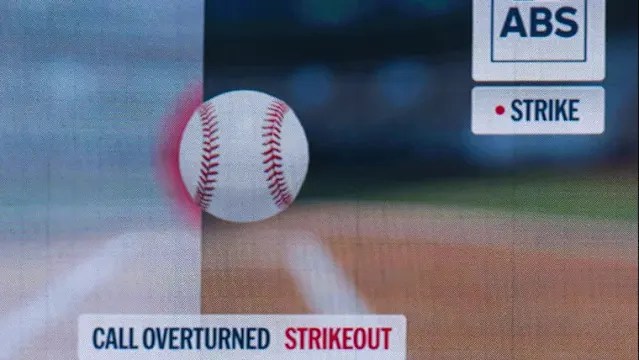
The major ethics issues animating discussion early in the baseball season are arising from the new computer ball and strike calling system, or ABS. Each team begins with two challenges. A batter, pitcher or catcher may challenge any strike or ball call at home plate, but must do it immediately by announcing “Challenge!” and touching his cap. Challenges that are made after two seconds elapse may be disallowed by the umpire. If a challenge results in a changed call, that challenge is preserved. If not, it is lost.
Already, game results have been affected by the rule. That’s not a surprise at all. Major League Baseball (MLB) umpires miss an average of about 10 to 15 calls per game; the overall accuracy rate was around 92%. in 2025. Every game generally includes at least one incorrect call, and it is estimated that 8.5% of all games have bad calls that alter the score. The accuracy of the umpires has increased since computers started double-checking them, but umpires still made 26,567 incorrect ball and strike calls during the 2025 MLB regular season, and any one of them might have altered a game’s outcome. Some early results:
1. The younger players are better at challenging than the veterans, because the system was used in the minor leagues the last couple of years. Red Sox player Trevor Story was called out on strikes on a pitch that looked well out of the strike zone, but didn’t challenge. Sox TV color man Lou Merloni, an ex-player, said that after a career of thinking that an umpire’s call was final, veteran players are likely not to remember that they could challenge until the two seconds have passed. Now players are being criticized for their strike-challenging skills.
 Ethics Alarms