Olympics Ethics, Fair Competition and Ick

Try as I might, I can’t find anything unethical about  the U.S. basketball team throttling Nigeria by the humiliating score of 156-73, the worst wipe-out in Olympic history.

Was the U.S. running up the score, which would be poor sportsmanship? No. As USA coach Mike Krzyzewski pointed out, he held back his best players once the outcome was certain. Every player he put in was hitting the basket with frightening consistency. Should the team have let up, gone through the motions, or allowed the Nigerian players some easy hoops? No. That would be an insult, and a breach of the integrity of the game. The U.S. Olympians had a duty to play their best. Continue reading

Nomination For Enshrinement in the Hall Of Bad Ethics Ideas: A Hippocratic Oath For Scientists

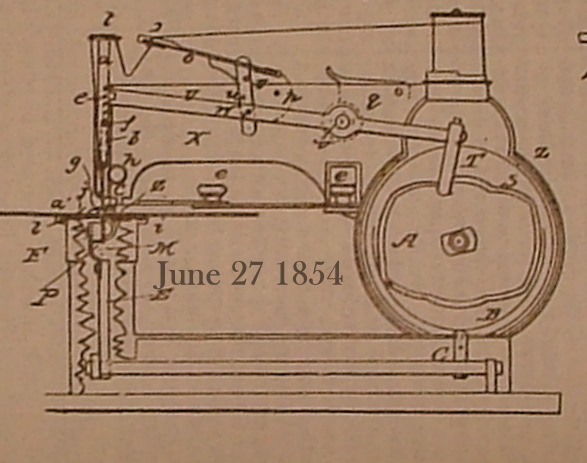
Nope. No sewing machine. It will cause too much “harm.”

A blogger for the Lindau Nobel community asks, as a follow-up to a discussion raised in one of the august group’s recent meetings, whether scientists should have to take an oath similar to that traditionally (but not universally, by the way) taken by physicians, a pledge to “do no harm.”

No. Next question!

This is not merely a bad idea, but an arrogant and ignorant one. The medical profession is dedicated to healing, without regard to who is being healed. “First, do no harm” is a rational and excellent absolute principle, one that relieves the profession of the burden of many (but not all) complex utilitarian dilemmas that doctors and other health professionals may not be equipped to solve. Medicine is much narrower than science, and its limitations more clear. Most people would agree with doctors on what constitutes “harm” in 99% of the situations where the issue would be raised. Not so science, where one man’s monstrosity is another’s giant step for mankind. Continue reading

Remember, Things Are Better Than They Seem…There’s Photographic Proof!

Much gratitude is due to Buzzfeed for this lovely and timely sequence of  “21 Pictures That Will Restore Your Faith in Humanity,” of which the photo above is one. Yes, I’m sure one or more may be photoshopped. At this point, I really do not care.

I don’t know about you, but I need a little reinforcement today.

Funny, Clever, Convenient, And Wrong: Housebites

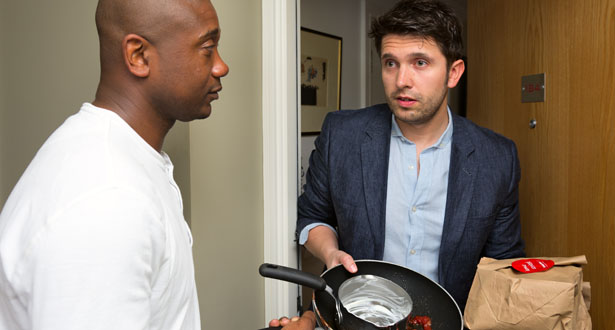
“Your dirty pans, sir…just as you ordered them!”

Normally I wouldn’t post about the practices of a U.K. company, since there are already too many U.S. stories involving ethics for me to keep up with. The innovation added to the world of deception by Housebites, however, has United States written all over it, and I predict it will travel across the pond in about a minute and a half.

The British company will not only cook and deliver a gourmet meal to order for your dinner party or romantic evening…it will deliver dirty pots and pans, to give your claims of hard labor in the kitchen that extra believability. From the company’s press release:

“Housebites.com, the takeaway service that delivers restaurant quality food has today announced a service called ‘pretend you cooked’ that allows customers to pretend they have slaved away at a hot stove more convincingly by delivering dirty pans alongside the food. Cooked by a professional chef and delivered to your door, Housebites main courses cost on average between £10 and £12, and now for an additional £5, customers can request the pans used to cook them for added authenticity. Collection of the pans is then arranged as easily as the original delivery slot.”

How nice. Continue reading

Unappreciated Ethics Hero: Facebook? Oh, Yes!

Unlike more primitive methods of mind control, Facebook is painless!

I think perhaps we have not been giving Facebook its due, and now, as the social networking monster is still reeling from its botched IPO, is a good time to right that wrong. We’ve been looking so hard at Facebook’s privacy settings, dadta collection, layouts and pointless games that we’ve missed the most important feature of it—magic. Like Wonder Woman’s golden lasso, but  a really, really big one, Facebook magically persuades people to not only tell the truth about the rotten things they are doing (like going dancing or golfing after persuading an employer to pay them disability because they are permanently unable to work), will do (like planning, in advance of the hearing the evidence, to vote guilty on a jury) or did (we’re getting to that), but to tell it to millions of people, potentially, so that they get punished.  Facebook’s power to compel confessions causes users to post videos or photographs of themselves in the process of doing incriminating things, so they can be then used as evidence in court. You have to admit, this is a wonderful thing. I don’t know how Mark Zuckerberg and his pals figured out how to do it, or what book of spells they stumbled across at Harvard, but they have performed a boon for humanity, and we ought to stop giving them grief.

Take the case of Michael Ruse, a charming Brit standing trial, accused of helping a friend beat up his father using a baseball bat. Micheal’s trial was going well for him, until Facebook took over his mind, such as it is, and flooded it with virtue. Suddenly, he was sending out a the message to his friends—and everyone else, for it was a public message—that he thought he would “get away with it.” An anonymous observer of the post—it could have been Wonder Woman, come to think of it, or at least Linda Carter— printed it his incriminating words and brought them to the court’s attention.

Under the advice of his barrister, Ruse changed his plea to guilty. The judge was not impressed, telling Ruse, “You pleaded guilty part way through the trial only really because you were stupid enough to put on Facebook what amounted to a full confession.” Well, yes, but as usual, he’s not giving Facebook credit for its uncanny ability to compel the truth. (Ruse’s lawyer replied to the judge, “He needs help with regards to thinking skills.” Perhaps. )

Ruse was  sentenced to 46 weeks in jail, another example of justice through Facebook magic. But apparently Zuckerberg’s magic lasso isn’t finished with him yet, for after sentencing Ruse got back on his Facebook account and insulted the judge.

Thank you, Facebook!

________________________________________

Pointer: Fark

Facts: Gawker

Graphic: Mind Control Blog

Ethics Alarms attempts to give proper attribution and credit to all sources of facts, analysis and other assistance that go into its blog posts. If you are aware of one I missed, or believe your own work was used in any way without proper attribution, please contact me, Jack Marshall, at  jamproethics@verizon.net.

Justice Is Served: Torry Hansen Gets The Bill

Look out for that sword!

Two years ago, Ethics Alarms featured the story of Torry Hansen, the Tennessee adoptive mother who couldn’t handle her adopted Russian child, so she pinned a note on him and sent him back to Russia, alone, on an airplane. I wrote:

“Sending an innocent child back to the orphanage, like he was a defective toaster returned to Walmart, is the ultimate betrayal, as unforgivable as treason, and far, far worse than adultery. A child who, in Justin’s case (his Russian name had been Artyom), was neglected by his alcoholic mother and taken by the state, sent to an orphanage and given to an American mother, has been rejected again and abandoned. I cannot imagine what this would do to a child. I cannot imagine allowing anyone’s child to endure this, least of all my own.

“Her son was making her life impossible. She couldn’t handle the stress; she looked into the future and saw only problems. Check: I understand. I empathize with Mrs. Hanson completely, for we knew when we adopted our son that this was a possible scenario. Again, it doesn’t matter. Sending an adopted child back to Russia is not an option, because it is absolutely wrong, like murder, like torture, like sacrificing one human being to save another. Never. Absolutely never. Nothing can ever justify treating a child—your own child— like that.”

Now CBS has reported that Hanson will have some consequences of her actions in addition to being roundly detested by every adoptive parent in the world (like me) and being a permanent member of the Bad Mothers Hall of Infamy. Continue reading

Occupy Eduardo Saverin

Too bad for Severin that they don’t make students read this any more.

You use the culture, markets, resources and freedom of the United States to turn your innovation into a fortune, and when your nation needs you, more than ever, to contribute your fair share to address its serious economic crisis, you decide to flee to foreign shores.

 That’s Facebook co-founder Eduardo Saverin.

Despicable.

Occupy Wall Street and its offspring engage in slander and bigotry by characterizing all wealthy, successful individuals as selfish leeches, but their stereotype fits Saverin like a wetsuit. As his company is poised for a public offering and his shares in it are about to lay golden eggs, he has decided to give up his citizenship, and his tax obligations, to live in luxury in Singapore. This will save him at least 67 million dollars in taxes, and probably more. His lawyer-spokesman says that the timing of Saverin’s exodus is coincidental; he just had an overpowering desire to live in Singapore.

Right.

Well, good riddance. The U.S. needs his money, and had a right to it, but it doesn’t need him. He is an ungrateful, greedy and selfish wretch, and richly deserves to be remembered as this generation’s Philip Nolan, “The Man Without A Country.”

__________________________

Facts: Bloomberg

Graphic: Barnes and Noble

Ethics Alarms attempts to give proper attribution and credit to all sources of facts, analysis and other assistance that go into its blog posts. If you are aware of one I missed, or believe your own work was used in any way without proper attribution, please contact me, Jack Marshall, at  jamproethics@verizon.net.

Ethics Dunce: France

France

France doesn’t seem to comprehend it yet, but it is embarking on an uncharted and dangerous journey by installing a leader whose lifestyle argues for the irrelevance of marriage.

Valérie Trierweiler, the partner of France’s newly-elected president François Hollande, is being referred to world-wide as France’s new, and unmarried, “First Lady.” She seems like a serious, admirable professional, and there are certainly benefits to any nation by having a woman of substance, intelligence and talent at or near the top of that country’s public figures. I know very little about Hollande, but I am assuming that he is qualified for the difficult job he is undertaking, and that he, like Trierweiler, are mature adults who have every right to structure their personal relationships however they please. That assumption, however, requires the omission of the duties of leadership from the calculation. Leaders cannot make personal decisions based only on their own needs, but must make those decisions while acknowledging an immutable and long-proven fact: leaders have a disproportional, almost frightening power to influence, shape and change a culture, and the more successful and popular  leaders are, the greater that power is. Continue reading

Ethics Dunce: The Daily Beast

Does this look like a Panamanian fisherman to you?

The American public is cynical and mean-spirited enough, I think. It doesn’t need any more shoves in that direction from the crass hipsters at The Daily Beast.

Tina Brown’s site, recently named as the Web’s top news agregator, noted the follow-up to a story highlighted on Ethics Alarms, the stranded fishermen who were ignored by a passing cruise ship even though its passengers had alerted the crew. Two of the fishermen subsequently died; one of the survivors is suing Princess Cruises. The Beast intro to the story began this way:

“One U.S. cruise line has a litigious Robinson Crusoe on its hands.”

The story is sub-headlined: “Wilson!”, a reference to Tom Hanks’ volleyball companion in the film “Castaway,” who meets his end at sea.* Continue reading

Now THIS Is Unprofessional Conduct: The Lesson of the Jilted Dentist

No! It's NOT safe! It's not safe at ALL!

The hallmark of professionals is trust. We should be able to trust professionals to do their duty on our behalf despite their personal feelings. Lawyers often dislike or even fear their clients, for example: a defendant charged with murder who has stabbed his previous three attorneys with pencils is now back in court with a fourth, though certain precautions have been taken. When a professional finds that his or her personal feelings are so intense that they jeopardize the professional’s ability to fulfill their duties objectively, fairly and well, then that’s a conflict of interest, and it must be dealt with, usually by stepping aside.

A professional who doesn’t step aside despite an evident conflict has determined that he or she has the detachment and self-control to overcome it. A recent news story from Poland, however, suggests that it is not a good idea to risk too much trust on a professional’s determination that she can remain objective. Continue reading