Sunday Ethics Warm-Up, “Welcome July And Hope It’s Better Than June” Edition [UPDATED]

Happy July!

(On an especially dead weekend on Ethics Alarms. But ethics never sleeps…)

1. But I thought everyone wants open borders! The Harvard-Harris poll on illegal immigration, North Korea, trade and tariffs, and the Russia investigation certainly isn’t reflected in the news reports. But then, we can’t trust polls, and we certainly can’t trust Harvard.

I suppose the theory behind yesterday’s protests is that the squeaky, angry wheel gets the insane national policy. My guess is that this particularly squeaky, angry wheel  gets a Republican Congress.

2. Nah, there’s no mainstream media bias! (Cont.)  Yesterday’s New York Times op-ed page managed to contain two of the more outrageous anti-Trump screed of recent vintage. One, by Dave Eggers, attacks “the cultural vacuum in the White House.” I suggest reading this one as a template for anti-Trump propaganda, and the kind of dishonesty underlying so much of it.  He begins,

Since his inauguration in January 2017, there have been no official concerts at the White House (the Reagans had one every few weeks). No poetry readings (the Obamas regularly celebrated young poets). The Carters began a televised series, “In Performance at the White House,” which last aired in 2016, where artists as varied as Mikhail Baryshnikov and Patricia McBride performed in the East Room. The Clintons continued the series with Aretha Franklin and B. B. King, Alison Krauss and Linda Ronstadt.

But aside from occasional performances by “The President’s Own” United States Marine Band, the White House is now virtually free of music. Never have we had a president not just indifferent to the arts, but actively oppositional to artists. Mr. Trump disparaged the play “Hamilton” and a few weeks later attacked Meryl Streep.

Normally, this is where I’d quit reading—when the writer deliberately distorts the facts and employs deceit to make his case. The President disparaged the cast of “Hamilton,” not the show itself, after its performers unethically ambushed Vice President Mike Pence, who was then only another audience member, and should have been respected as one. I have launched (let’s see) three theater companies and two professional performing groups, and I disparaged that cast as well. Meryl Streep, the well-known pal of Harvey Weinstien, went on national television and gratuitously insulted the President, who does not turn the other cheek. He didn’t  attack Streep because she is an artist. He attacked her for being a grandstanding partisan shill.

He engages in this kind of deceit throughout, such as when he writes, in conclusion,

“Admittedly, at a time when Mr. Trump’s policies have forcibly separated children from their asylum-seeking parents — taking the most vulnerable children from the most vulnerable adults — the White House’s attitude toward the arts seems relatively unimportant. But with art comes empathy. It allows us to look through someone else’s eyes and know their strivings and struggles. It expands the moral imagination and makes it impossible to accept the dehumanization of others. When we are without art, we are a diminished people — myopic, unlearned and cruel.”

Funny: art hasn’t made Eggers less dishonest and deceitful. The illegal immigrants at the border were not “asylum-seeking,” because they didn’t follow the procedures for seeking asylum. They were apprehended foreign citizens trying to sneak into our country and claiming that they were seeking asylum to hamstring border enforcement,  and were using their children as human shields, placing the Trump administration into the Catch-22 of either waiving the laws or giving open-borders activists a club to beat it with—as the Times knows, since it has explained this dilemma itself. To attribute  pure law enforcement decisions to the dearth of piano and cello concerts in the White House is forced even by the Times’ standards. Mostly Eggers is just revealing the classist snobbery underlying much of the elitist attacks on President Trump.

As an artist, and someone who has worked in the arts and indeed would have made it my career if it were financially feasible, I could not care less how many concerts a President hosts, or how many artists he fetes. I want him to do his job, and I don’t particularly care to be paying for his glitterati  nights, either.

A President’s taste in art and culture doesn’t affect the public one whit. I don’t think I would pay a dime to hear any of President Obama’s hip-hop artists or rappers. Meanwhile, Clinton having “Aretha Franklin and B. B. King, Alison Krauss and Linda Ronstadt” at the White House didn’t make him empathetic enough not to exploit Monica Lewinsky. Jack Kennedy was a  stone-cold sociopath: what did he learn from dining with “Arthur Miller, Tennessee Williams, Robert Lowell, Geraldine Page and George Balanchine”?

Hitler loved fine culture so much he had his Nazis steal thousands upon thousands of invaluable works of art across Europe, because he wanted a new explosion of creativity among the German people. Boy, if that made the Germans less “cruel,” imagine what they might have been like without their art!

And Nixon played the piano! Continue reading →
Comment Of The Day: “Ethics Quiz: The Little House On The Cultural Divide”

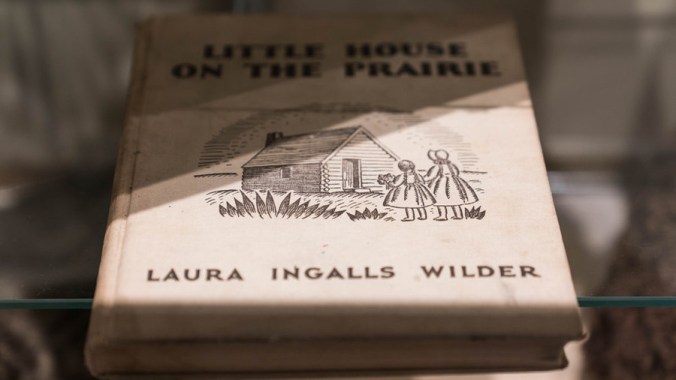
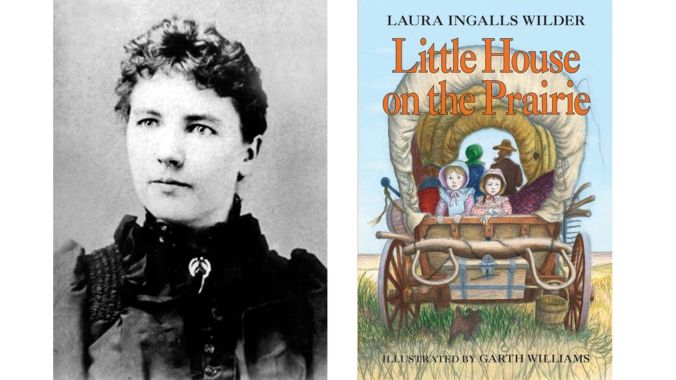
There has been a paucity of Comments of the Day lately; it’s probably my fault. This one is by a first time COTD awardee, and involves the rare Ethics Alarms topic of children’s literature, in response to the Ethics Quiz about the justness of Laura Ingalls Wilder’s name being stripped from the award created in her honor. Apparently her “Little House” books were not sufficiently prescient regarding modern sensibilities and 21st Century hindsight.

And no, I didn’t pick this comment because it includes a compliment to “The Wind in the Willows,” perhaps my favorite book of all time.

Here is Bob’s Comment of the Day on the post, Ethics Quiz: The Little House On The Cultural Divide:

“Is it fair and reasonable to remove Wilder’s’ name from the award, essentially taking away an honor despite no new information or evidence arising?”

No.

Bit of backstory: my husband and I were both inveterate readers when we were children. Oddly enough, neither of us read “children’s books” when we were kids … we went from Dick and Jane to fairly adult novels very early on.

However, when we hit our 40s-50s, we started a campaign of reading the great classics of kiddie lit. (Just a note — “Wind in the Willows” is a masterpiece, the first six [and only the first six] Oz books are spectacular, E. Nesbit rocks and the popularity of “Peter Pan” is a mystery we have never plumbed.)Among those books were the entire Little House corpus. They are quite terrific. (As with most series, some are better than others.) While the attitudes may be dated, there is nothing “hateful” about them. In order to be hateful, there should be some evidence of a clear animus against a particular group of people; Wilder has no agenda, and simply reflects the attitudes common of her era.

It is essential to note that these books are not virulent anti-Amerind screeds, but stories of the heroic pioneers who built our nation. Native Americans occasionally cross this landscape, but these books are neither about nor against them.

It does seem as if there is a concerted effort to erase (or … re-envision) American history to something more palatable to post 1960s sensibilities. This is mischievous and dangerous, and should be confronted whenever possible.

Ethics Quiz: The Little House On The Cultural Divide

From the New York Times:

The American Library Association is dropping Laura Ingalls Wilder’s name from a prestigious children’s literature award in order to distance the honor from what it described as culturally insensitive portrayals in her books.

The decision was made out of a desire to reconcile the award with the organization’s values of “inclusiveness, integrity and respect,” representatives of the association said in a statement on Monday. The award is given out by its children’s division.

“Wilder’s books are a product of her life experiences and perspective as a settler in America’s 1800s,” the association’s president, Jim Neal, and the president of the children’s division, Nina Lindsay, said in the statement. “Her works reflect dated cultural attitudes toward Indigenous people and people of color that contradict modern acceptance, celebration, and understanding of diverse communities.”

…Despite their popularity, Ms. Wilder’s books contain jarringly prejudicial portrayals of Native Americans and African Americans. In the 1935 book “Little House on the Prairie,” for example, multiple characters espoused versions of the view that “the only good Indian was a dead Indian.” In one scene, a character describes Native Americans as “wild animals” undeserving of the land they lived on.

“Little Town on the Prairie,” published in 1941, included a description of a minstrel show with “five black-faced men in raggedy-taggedy uniforms” alongside a jolting illustration of the scene.

Hmmmm.

Your Ethics Alarms Ethics Quiz for today:

Is it fair and reasonable to remove Wilder’s’ name from the award, essentially taking away an honor despite no new information or evidence arising? Continue reading →

Morning Ethics Warm-Up, 6/26/2018: Our Amazing, Evolving, Contentious Culture

Good Morning!

1. Outrageous Self-Promotion Dept.: Just in case you live in the vicinity of Washington, D.C., AND are interested in the cultural impact of the works of Gilbert and Sullivan in the U.S., AND would like to see me (and three long-time friends and colleagues who will periodically join me in performing some selections from the brilliant satirical operettas) discuss this rich and wide-ranging topic (Politics! Satire! Movie scores! Broadway musicals!) over a three-hour session that will fly like the wind, all it will take is a mere 50 dollars (just 35, if you are a Smithsonian Associates member) and your attendance. I’d love to see you. The program is Gilbert and Sullivan in the 21st Century, this Saturday, June 30, at 9:30 a.m. Here are the details.

2. Speaking of culture…If you want to feel better about the state of U.S. culture, I recommend watch a Beach Party movie. I just saw the first one all the way to the end for the first time—to realize that it was easily the best of its line (there were six—SIX!!!—more) is mind-boggling all by itself—and found it immediately uplifting. The 1963 William Asher-directed relic looks like it’s from some particularly demented parallel universe, depicting a weird place where 30-year-olds pretend to be  loitering teenagers who do nothing all day but gyrate to frenetic versions of the Twist, listen to awful surf music that makes the Jan and Dean sound like Brahms in comparison, do some surfing themselves (but just the males), and interact with B-list comics like Morey Amsterdam and Harvey Lembeck. The songs and their hackneyed lyrics make you yearn for the nuanced hip-hop musings of Kanye West; the comedy makes “Big Bang Theory” seem like Oscar Wilde, and to speculate on what kind of populace would actually enjoy such badly-conceived and sloppily-executed crap is to risk madness. If this was America in 1963, a) Good riddance, b) How did we survive? and c) No wonder the Soviet Union thought they were going to win!

No blacks are to be seen; indeed no skin color of any shade but glistening white is visible anywhere—didn’t these people even tan? Here’s a typically clueless exchange to ponder:  Annette Funicello: “The professor got his robe from the chief of the Tokyo Fire Department!” Random 30-year-old teenage beach bum: “Great! I’ll call him if my rickshaw catches fire!”  [laughter]. In the hilarious motorcycle gang, where all of the actors appear to be at least 45, the male members’ leather jackets say “Rats” on the back, and their female cohorts’ jackets say “Mice.” None of the”girls” have any function in the film, and no higher purpose, than to moon after the guys and gyrate in their faces.  Accepted conduct is for every male youth to gawk, pant, and emit some sound the equivalent of a wolf whistle every time a shapely female passes. The romantic lead (of sorts), teen idol Frankie Avalon, trying to make virginal, had-to-get Annette jealous, grabs a generic Scandinavian waitress and just starts kissing her. It’s like a magnet. Just kisses her He doesn’t  even wait. When you’re a star, they let you do it. You can do anything. Then he tells her he loves her so she’ll make out with him until Annette loosens up. This is the hero, remember.

They should show this film in every junior high school American History class. I’m very serious about this.

3. An abject lesson in how the news media uses language to manipulate public perception: Virtually every news report about the Trump administration’s actions at the Mexican border described them, and are still describing them, in headlines as “family separation.” The cumulative effect of this is to make casual, not fully-engaged readers and listeners think that family separation is the objective of the policy. The objective of the policy is to enforce current immigration laws while obeying other legal requirements, such as the one that forbids children from remaining with federally  detained parents.  This is, under the Ethics Alarms definition, fake news: deliberately deceitful reporting that conveys a false impression. The equivalent would be characterizing the imprisonment of African American men convicted of felonies as “the Trump policy of making black families into single-parent households.” Continue reading →

“Jurassic World” Ethics: Why Movie Reviewers Are Useless

I’m going to see “Jurassic World: Fallen Kingdom” just as soon as I can, as I have seen all of the other “Jurassic Park” films since Spielberg’s first. Of course I am: I love dinosaurs.

I have loved dinosaurs since I was about 4, and my dad brought me a bronze model of  a T-Rex when he returned from a business trip to Chicago. That five-inch model was the first entry into a collection that eventually reached over thirty dinosaurs, greatly abetted by my mom, who was a ceramicist. She would peruse the dinosaur books I borrowed from the library and pick out artwork that she liked. Thus I became the only kid in Arlington, Mass. with ceramic models of a gorgosaurus and a styracosaurus.When I was in the first grade, I gave a talk about my collection and the species they represented—in those days they hadn’t even discovered velocirapters yet, thought dinosaurs dragged their tails, and assumed they were cold-blooded, like reptiles—at theParmenter School sixth grade hobby show.

The more I learned about dinosaurs the more  I loved them. I still can’t get over the fact that these amazing creatures existed, when they look like the results of a fantasy artist’s bad drug trip. I must confess, I also love the fact that dinosaurs drive evolution deniers and Fundamentalists crazy. If the Earth is the only planet with life, doesn’t the fact that God filled it with dinosaurs suggest that they were his favorites too? Might it even suggest that God looks like a T-Rex? My first face to face experience with an intelligent person who simply denied facts that didn’t fit in with her ideology was a U.S. Chamber of Commerce colleague who noted the large, leather pteranodon hanging in my office and said, which a superior smirk, “You don’t really believe those things existed, do you?”

Mostly, however, dinosaurs fill me with wonder, exactly as they did when I was 4.

This was the aspect of the first film that Spielberg captured so well: It’s not a monster movie, but a pro-dinosaur movie. People forget now, but many critics dismissed “Jurassic Park” as junk: they were  enthralled with Spielberg’s other movie that year, “Schindler’s List,” an important movie. The critics didn’t get “Jurassic Park,” and still don’t.

Now they are slamming the fifth in the series, the sequel to “Jurassic World,” which they also didn’t get, because most critics equate dinosaurs with Godzilla. I thought “Jurassic World” was easily the best of the sequels. I loved the attack of the pterosaurs (accompanied by air raid sirens!)—I had models of all of them! I loved the mossasaur—Mom made me a couple of different species—and its surprise role in the film’s climax. I loved how the T-Rex, just like in the first film, became an unlikely rescuer of the human stars. And look! There’s an ankylosaurus! Mom made me one of those! Continue reading →

Morning Ethics Warm-Up, 6/20/18: Darrow, Damn Technology And Dunkin’ Donuts

Good Morning!

1. Shameless self-promotion Dept. Once again, I am presenting my three-hour Clarence Darrow and modern attorney ethics CLE program for the D.C. Bar, and later this summer, Virginia CLE will be sponsoring the same seminar in Richmond and Northern Virginia. As always, my partner and collaborator in All Things Darrow is esteemed D.C. actor (and American University law school instructor, and, I am proud to say, my friend) Paul Morella, who has been Darrowing since he premiered my one-man show about the great and flawed lawyer in 2000, for The American Century Theater. His website is here. This is Paul…

Paul is a lot taller, thinner and better looking than Darrow, and unlike Clarence, he also bathes regularly. It doesn’t matter. I can’t recommend his show, which he performs for bar associations and legal groups around the country, more highly, and would feel this way even if I hadn’t written it. Of course, any group that wants Continuing Legal Education credits can also book today’s seminar, which has many of Darrow’s greatest courtroom orations, but also legal ethics commentary from me.

2. Ah-HA! NOW I understand why I’m being sued for defamation!  This is in the “This comes as no surprise” category, but it still explains a lot. The Pew Research Center just released a survey that demonstrates that a large proportion of the public can’t distinguish facts from opinions. The main portion of the study  measured the public’s ability to distinguish between five factual statements and five opinion statements. Pew found

“…that a majority of Americans correctly identified at least three of the five statements in each set. But this result is only a little better than random guesses. Far fewer Americans got all five correct, and roughly a quarter got most or all wrong. Even more revealing is that certain Americans do far better at parsing through this content than others. Those with high political awareness, those who are very digitally savvy and those who place high levels of trust in the news media are better able than others to accurately identify news-related statements as factual or opinion.”

I challenge that last part. It may well be that those who place high levels of trust in the news media could distinguish between fact and opinion in those  ten statements, but it doesn’t change the fact (now this is my opinion, but I still believe it is demonstrably true) that the news media distorts what it represents as facts based on journalists’ biased opinions. Continue reading →

Morning Ethics Warm-Up, 6/19/2018: Double Standards And Greed

Time for a Good Morning song!

1. Life on Facebook. A lawyer friend who should know better posted a comment that began, “You wouldn’t think that posting something like ‘Taking children away from their parents and sticking them in cages is wrong’ would be controversial, but in almost every case where one of my friends has said something like this, at least one of his/her friends feels the need to argue about it…” Later he compared the statement “Taking children away from their parents and sticking them in cages is wrong” to “Torturing kittens is wrong.” I told him that as a lawyer, he should be objecting to and explaining the transparent deceit of “Taking children away from their parents and sticking them in cages is wrong”—a half-truth designed to stifle argument, not attacking those who are correctly pointing out the emotionalism and dishonesty of that tactic.

I should count up the number of lawyers whose comments on Facebook on this issue are pure “Think of the children!” with no substantive legal and policy analysis whatsoever. My friend also made the typical suggestion that only Trump voters—you know: morons—would argue with “Taking children away from their parents and sticking them in cages is wrong” as a fair and conclusive verdict on the current policy.

2. Theranos.  Elizabeth Holmes, founder and CEO of Theranos, as well as Ramesh Balwani, the company’s former president ( and Holme’s love interest, were indicted yesterday on charges of conspiracy and wire fraud. The Theranos debacle is a classic corporate fraud story on par with Enron, if not as wide-reaching.

I missed it. This is embarrassing for an ethics blog, and for someone who thinks he scours various news sources thoroughly enough to catch the major ethics stories. I blame Donald Trump, but I also blame the various news sources in 2015 that chose to report fake news, trivial news, future news and theoretical news rather than give a major corporate scandal the attention it deserved. If I missed the story, and I’m looking for it, what chance do normal people with sensible occupations have?

The civil fraud charges in the case were filed in March by the Securities and Exchange Commission, though the scandal had broken earlier, when the Wall Street Journal published its 2015 exposé.  Holmes and Balwani allegedly raised millions of dollars using false statements about how well the company’s  blood-testing device worked, while using  a contract with the Department of Defense and a partnership between Theranos and the pharmacy chain Walgreens to con pharmacies, doctors and the public. The apparent scam created a Business of Cards that, at its peak, had more than 800 employees and a paper valuation of $9 billion.

There is a book out about the Theranos scandal by the reporter who broke the story… Continue reading →

Morning Ethics Warm-Up, 6/18/2018: Moral Luck, Non-Hypocrisy, Hypocrisy, Thomas Jefferson And WKRP

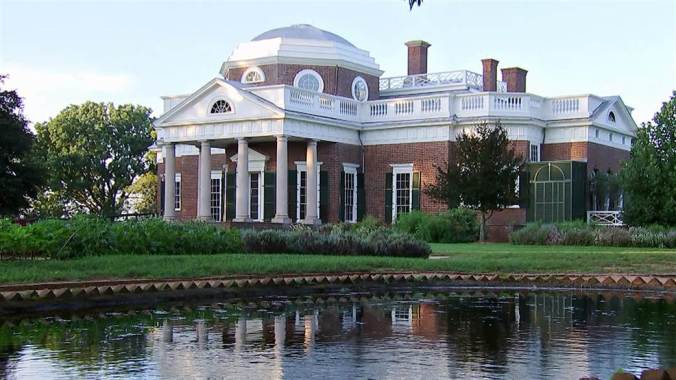
Good morning, Monticello, everyone…

1 The Inspector General’s Report and Tales of Moral Luck:  Stop me if you’ve heard this one: FBI staffer Peter Strzok, working on both the Hillary Clinton email investigation and the Russian collusion investigation, received a text from Lisa Page, Strzok’s co-worker and adulterous lover, that read, “[Trump’s] not ever going to become president, right? Right?!” Strzok replied, “No. No he won’t. We’ll stop it.”

 September of 2016, the FBI discovered that Clinton’s illicit emails had somehow ended up on the laptop of disgraced former Congressman. Anthony Weiner, who is married to Hillary’s top aide and confidante, Huma Abedin.  Strzok, we learn in Michael Horowitz’s report, was instrumental in  the decision not to pursue the lead, arguing that the Russia investigation was a “higher priority” at the time.”We found this explanation unpersuasive and concerning,” the report concluded. The laptop was available from September 29 until October 27, when “people outside the FBI” finally forced  the FBI to act on the evidence. “The FBI had all the information it needed on September 29 to obtain the search warrant that it did not seek until more than a month later,” the IG report stated. “The FBI’s neglect had potentially far-reaching consequences.”

“Comey told the OIG that, had he known about the laptop in the beginning of October and thought the email review could have been completed before the election, it may have affected his decision to notify Congress,” the IG report says, and also states,

“Under these circumstances, we did not have confidence that Strzok’s decision to prioritize the Russia investigation over follow up on the [Clinton] investigative lead discovered on the Weiner laptop was free from bias.”

Got that? The IG believes that anti-Trump, pro-Hillary bias led Strzok to delay the Weiner laptop investigation, and it may have backfired, helping Trump and hurting Clinton rather than the reverse. But the fact that moral luck took a hand and foiled his intent doesn’t change the fact that this is strong evidence that partisan bias DID infect the Clinton investigation, and probably the Russian inquiry as well. This makes the media’s spin that the IG report dispels accusations of bias even more unconscionable.

That Strzok’s biased and unethical tactics to help Hillary intimately failed spectacularly doesn’t change or mitigate the fact that a prime FBI staff member was intentionally trying yo manipulate the investigation for partisan reasons.

2. The Web thinks you’re an awful person.  A tease from a “sponsored site” in the margins of my NBC Sports baseball feed  says, “Jan Smithers starred in hit sitcom “WKRP in Cincinnati.” Try not to smile when you see what she looks like now!” Wait…what’s that’s supposed to mean? Is she a circus clown? No, these and similar come-ons apparently assume that normal people love mocking formerly beautiful young stars when they no longer look young. “Heh, heh..well, Jan Smithers, I guess you’re not so hot now, are you? What kind of person takes pleasure in the physical decay of others just because they were once gorgeous?

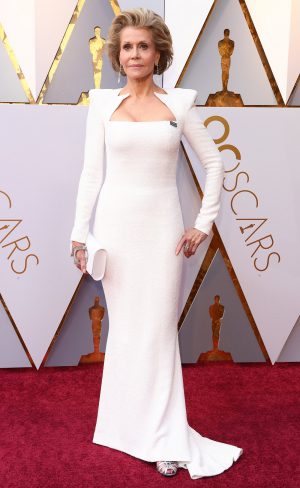
Actually, the photo of Jan Smithers did make me smile, because unlike, say, Jane Fonda,

…who at 80 has allowed plastic surgeons to make her look like one of the fragile immortal female ghouls who shatter into pieces at the end of “Death Becomes Her,” Smithers (who is younger than me and a decade and a half younger than Hanoi Jane) has allowed herself to age naturally, and by my admittedly biased lights, is lovely still: Continue reading →

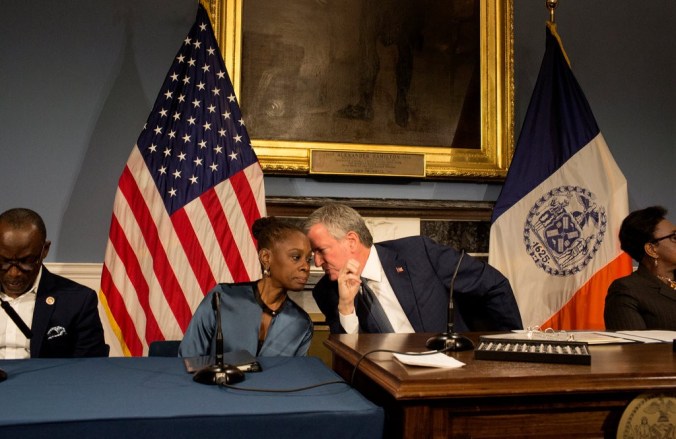
Mayor De Blasio, Mrs. De Blasio, And Rationalization #68: The Volunteer’s Dodge, Or “You Don’t Pay Me Enough To Be Ethical!”

New York City’s Mayor Bill de Blasio (D), an unapologetic social justice warrior and crypto-socialist, installed his wife, Chirlane McCray, as the executive director of  the Mayor’s Fund to Advance New York City, NYC’s nonprofit foundation. Under the previous mayor, the Fund had raised tens of millions of dollars annually for a wide range of projects, from anti-poverty initiatives to Superstorm Sandy recovery. McCray cannot receive a salary for her job, though the mayor has complained bitterly about this. Nepotism is outlawed under the City Charter in Chapter 68 which forbids public servants using their positions “to obtain any financial gain, contract, license, privilege or other private or personal advantage, direct or indirect, for the public servant or any person or firm associated with the public servant.”

Under the leadership of McCray,  fundraising for the Mayor’s Fund has stalled. In the Bloomberg years, the nonprofit raised an average of $32 million per year, while under Mrs. de Blasio’s stewardship  it has raised an average of $22 million annually, a third less. This may be explained in part by the fact that she often isn’t working at her job. She has attended fewer than half of the meetings of the Fund’s board, and spends just an hour each week on the foundation’s business. It is June, and the New York Times reports that she hasn’t  visited the Fund’s offices in 2018, and was largely absent in the latter half of 2017. As the fund’s revenues have dived, its expenses have soared 50% since she took over,  with the organization moved into bigger offices. The Fund also supports fewer projects.

Sniffs the Times in an editorial, “the Mayor’s Fund under Mr. de Blasio and Ms. McCray has done less with more.”

De Blasio, who has pretty much solidified his reputation as a jerk, defended his wife by saying that she had done “an extraordinary job,” insisting to critics that  “You’re missing what her work is about.”

Her work is about raising money, and she’s not doing that very well. As the Times says, the first rule of fund-raising is to show up.  Mrs. Mayor helpfully added,  “It’s not about who can raise the most money.” Wait, what? Has anyone explained to her what her job is?

Then de Blasio said this, thus causing the proverbial light bulb to go off in my head, as he perfectly illustrated a rationalization that has somehow missed inclusion on the Ethics Alarms Rationalizations List:

“She does all that for zero dollars a year.”

“All that” meaning “a crummy job.”

Say hello. Mr. Mayor,  to… Continue reading →

Morning Ethics Warm-Up, 6/13/2018: Everybody’s A Critic!

Good morning!

(That almost came out “good monging”…not a propitious sign)

1.  Diversity ethics:  The concept that somehow there are sinister motives and undesirable results any time an occupation settles into a demographic mix that isn’t four-square with that of the general population is one more bit of ideological cant. In London, U.K, the mayor has decreed it a crisis that the population using bicycles is disproportionately white, and has  said he is considering setting diversity targets for London’s cycling population to ensure that “progress was achieved.” I liked Amy Alkon’s disgusted reaction to this whole issue, as she asked how  gender equality would be achieved in fields where women show little interest in participating for a variety of reasons, including a greater interest in a work-life balance. How is this artificial PC “diversity goal” going to be achieved, she asks…” Force women at gunpoint to become cardiologists, oil rig workers, and garbagepersons? Force men at gunpoint to become veterinarians and kindergarten teachers?”

Reader (and volunteer Ethics Alarms proof-reading czar) Pennagain just sent me an article about the relative lack of female movie critics (minority movie critics are also under-represented among Hispanics, blacks and Asians. (I would also bet that they are disproportionately gay, but the study discussed didn’t check that, apparently.) Now unlike, say, female  “garbagepersons,” female movie critics predictably have a point of view that would make a substantive difference in film reviews, so I cannot brush aside this particular imbalance with “So what?” Instead I will ask, “What’s stopping them?” Anyone can be a movie critic now: all you need is a website, some dedication, and, one hopes, some understanding of film and culture. Now, being paid as a film critic is a little trickier.

Here is the Wikipedia entry on the New Yorker’s Pauline Kael, still perhaps the most famous U.S. film critic, whose long-lasting prominence, success and influence (I hated her reviews most of the time–overly political and biased, with whole genres she didn’t understand—“guy movies” like Westerns and horror films, that she sniffed at as beneath her) should have inspired more women to enter the field, but didn’t. I presume there is a reason for that, such as that spending your life watching multiple movies a day including many you wouldn’t be caught dead at if it wasn’t mandatory isn’t an attractive career choice, especially if you want a family.

2. From my sexual harassment files...I just rediscovered this, a sexual harassment case I discussed in program for a construction company in the 90’s. An attractive woman who worked in construction (Diversity!) was walking to work with a co-worker when some boor from an apartment window shouted at her, “Hey, show me your tits!” The women misheard the remark, and shouted back, “Sorry, I don’t have any kids!” Her colleague thought th exchange was hilarious, and told her what the guy really said, He also told everyone on the construction site about the incident, and the woman was pestered from then on with men smirking as they made comments like, “Hey, can I see pictures of your kids?” I hear you have two beautiful kids!” “Why don’t you let your kids out more?”  “Boy, I bet you’re proud of those kids of yours.” The women tried to laugh it off, but the joke never died, even though she started telling everyone to knock it off. Finally, she complained to management, and was told that she was being silly and hyper-sensitive. She sued.

Was using the word “kids”  in a coded joke creating a hostile work environment, or did the court find that since the language itself was inoffensive and not sex-related, it couldn’t be sexual harassment? Continue reading →