Unethical…But Funny! The Googly Eyes Public Art Vandal

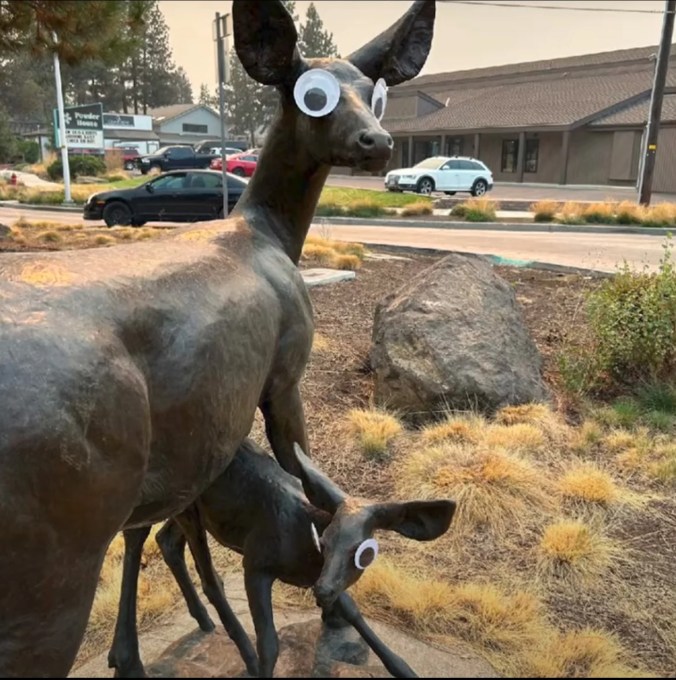
The City of Bend, near Portland, Oregon, is being plagued by a mystery vandal who has been affixing googly eyes to the public art around the city. Above is his improvement of “Big Ears” by John Halko; another is Zebold’s “Orb 1″…

You will not be surprised to learn that his enhancements are generally popular with the public. Nevertheless, the city is not amused. Eight artworks have been given eyes reminiscent of the villain in “Who Framed Roger Rabbit?” and the city announced on social media that removing the googly eyes has cost about $1,500 so far in labor and the process of removing the adhesive without harming the art. “While the googly eyes placed on the various art pieces around town might give you a chuckle, it costs money to remove them with care to not damage the art,” the City of Bend said in an Instagram post.

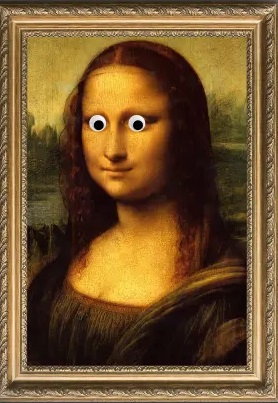
Now, some cities regard what could be called vandalism as itself art, as in the cases of urban paintings of walls and and buildings by graffiti artists. True, the googly eyes do unjustly interfere with the artist’s intent, and this is unfair as well as a Golden Rule breach. After all, what would Leonardo think if this..

… was the fate of his masterpiece?

Still, most public art is hideous, and there is no question that googly eyes would improve a lot of it. You may recall that the statue of the defiant little girl secretly placed in front of the angry bull sculpture on Wall Street was allowed to remain because the public appreciated the image of the bull being confronted by the saucy child more than it did the bull by itself.

If the purpose of public art is to please the public, maybe the googly eyes should be put to a vote. Maybe googly eyes present a palatable compromise with the statue topplers! Instead of tearing down Robert E. Lee’s statues, why not give him googly eyes instead?

OK, it was just a thought….

So It’s Come To This…The Great Stupid Still Reigns!

A trigger warning for “The Pirates of Penzance”! I suppose we should be grateful that the weenification of Britannia has advanced so far, as we Colonists can now witness what lies ahead if we don’t get control over the culture and rescue it from the maw of The Great Stupid but quick.

“The Pirates of Penzance” is, of course, one of Gilbert and Sullivan’s most popular operettas, written during the Victorian era when almost everything was considered a justification for pearl-clutching. I have directed the show twice, performed it once, and seen it, oh, maybe 15 times not counting the mostly excellent film version starring Kevin Kline and Linda Ronstadt. A child above the age of three showing alarm at this silly, satirical musical comedy about tender-hearted pirates who kidnap young maidens to marry them with the assistance of a “doctor of divinity” and the conflicted buccaneer apprentice who is the victim of a legal technicality ought to provoke a visit to the kid’s home by child services. An adult traumatized by the show belongs in a rest home.

If “The Pirates of Penzance” gets a trigger warning of even two sentences, the average Shakespeare tragedy must require a brochure. “Titus Andronicus” would need a recitation of possible PTSD side effect like at the end of a TV drug commercial.

Seeing symptoms like this makes me despair of ever freeing Western civilization from The Great Stupid. I fear that it is now embedded in the human species’ DNA, just as perfluorooctanoic acid (PFOA), the chemical found in Teflon, is believed to be contaminating every American’s blood.

“Wicked”: A Review (Part 2: Politics and Propaganda)

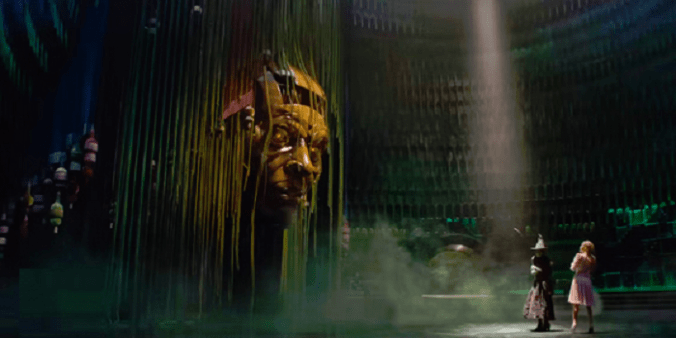
Gregory Maguire’s “Wicked: The Life and Times of the Wicked Witch of the West” became a critical and financial success by merging the Frank L. Baum children’s series with contemporary issues and values, notably discrimination, prejudice, the abuse of power, and corruption. The still-running Broadway musical “Wicked” softened the preaching and propaganda a bit, but it has come back with full force in the movie adaptation now playing at inflated prices in theater near you. (I purchased a box of Junior Mints and regular size coke. They cost 15 bucks.)

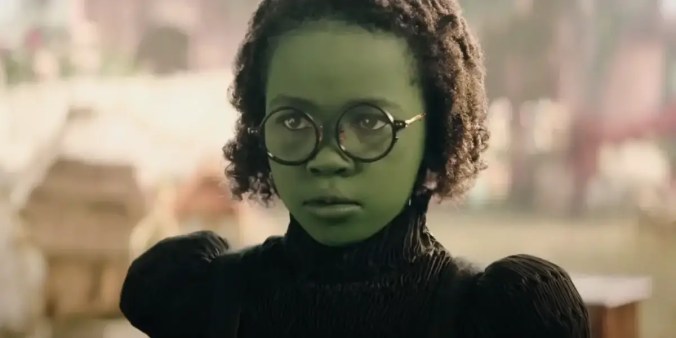
In the novel and the musical, the witch-to-be is born green, leading to a life of being the victim of hate and discrimination. The movie cast not just a black woman in the role, but one with pronounced African features (in contrast to, say, Halle Berry) making it nearly impossible not to experience the plot as a thinly veiled Critical Race Theory brief. Though there are black actors and actresses in Oz here and there, only the white characters are seen to be repulsed or frightened by Elphaba (Maguire gave her a name), because the director correctly calculated that in his film, the character is as much black as green. We see her rejected and cast aside (to be raised by a bear) by her father the moment he sees her skin shade, so it is clear where this is going: Elphaba is going to be forced to fight against the cruel culture that rejected her. Thus we know that she is a personification of the Black Lives Matter riots within the first ten minutes of the movie.

Just as early in the movie we know we are in the grip of sensitive wokism obsessions when we we find ourselves in Munchkinland and the Munchkins pretty much look like anyone you know. The movie “Wicked” is obsessed with, the 1939 classic “The Wizard of Oz,” had the Munchkins played by the Singer Midgets, a little people performing group. In the Baum book that started it all, they are described as being about the same size as Dorothy, who is about 10, but one way or the other, we know the Munchkins are small. Ah, but Disney’s endlessly delayed “Snow White” movie got into trouble after the most famous acting dwarf, Peter Dinklage, declared that the whole idea of portraying the Little People of the familiar fairy tale was offensive, so Disney eliminated the dwarfs entirely. That was also attacked by Little People activists—erasing them, you know. Similarly, Peter Jackson got in trouble for using computer magic to make a full size actor look like he was a a yard or so tall in the “Lord of the Rings series.” So “Wicked” director Jon M. Chu punted and just made the Muchkins normal size and boring. And that wasn’t all: to make sure Dinklage didn’t find some reason to take shots at his movie, the Little Actor was hired to provide the voice of a talking goat.

This is DEI at its silliest. The film gets credit for hiring an “under-represented minority” who was personally responsible for the film not hiring many more members of the same minority. Furthermore, while I like Dinklage (who became famous in “Game of Thrones”) as much as anybody, the only reason he’s a star is because he’s so short. Sure, he plays lawyers, doctors, gangsters, but no matter what he plays, he plays it as a dwarf. That’s the only thing that distinguishes him from hundreds of other equally able actors. It makes no sense at all to hire Peter Dinklage as a voice actor. His unique feature can add nothing to such a gig. The film took away another talented vocal actor’s job so it could be “inclusive” and hire a dwarf for his voice alone.

Continue reading

“Wicked”: A Review (Part I)

Trust me on this: the rave reviews you may have read about how wonderful the film version of “Wicked” is are the result of pure cognitive dissonance scale manipulation in action. It was cleverly engineered to be a love note to “Wizard of Oz” cultists, social justice warriors, Trump-Deranged fanatics and woke warriors, adding in the kind of people who listen to the Sirius-XM Broadway channel. It is not a great movie musical and arguably not even a good one. I wonder if its Hollywood architects and cast even realizes that the thing hoists itself on its own petard?

Allow me to get the artistic end out of the way before discussing the political and ethics mess in Part 2, Above all else, the movie is inexcusably bloated and long, and I say this as someone who has no problem with long movies if the time is necessary to tell a story, it is told well, and the director understands pacing. At two hours and 40 minutes, a film that covers the first act of the Broadway hit (“Wicked” is coming up on its 22nd year on Broadway) is just five minutes shorter than the entire stage musical. It is literally stuffed with gratuitous and pedestrian dialogue, extended scenes, CGI and show-off special effects.

Continue reading

On Art, Conspicuous Consumption, Bananas and More

I missed this pre-Great Stupid story in 2019, when it was a harbinger of stupid things to come, and so missed it again this year, when it was back in the news a few days ago. It wasn’t too long ago that Fred and Pennagain reliably alerted me to ethics stories around the web that I otherwise might have missed. A few of you do send me story ideas regularly, but something like this shouldn’t slip through the cracks.

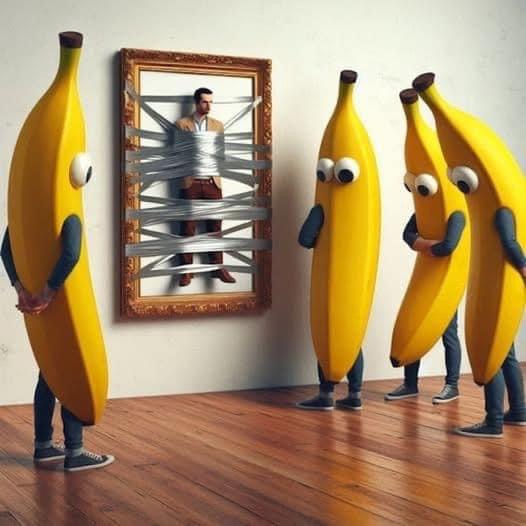
“This” is this (Source of that movie quote?): Absurdist artist Maurizio Cattelan taped a banana to a wall at an art show in 2019 and called it “Comedian. He claimed that it was intended to force critics to consider how modern “art” is defined, but it just as easily have been a publicity stunt or a con. My wige considered Jackson Pollock paintings no more “art” than bananas taped to a wall. Performance artist David Datuna ripped the banana off the wall and ate it, so Cattalan just taped another banana to another wall. The New York Post recreated “Comedian” for just $5.75, but, see, because the Post isn’t an “artist,” that didn’t count.

Continue reading

A Non-Ethics Note For An Absurd Day

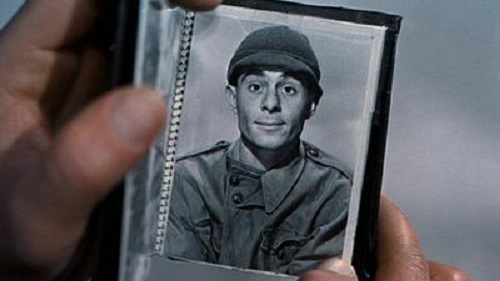
Since yesterday’s trivia quiz was so well received, I’m also going to begin today with more non-ethics light-heartedness, sort of. [The answer to that trivia question is Carl Switzer, better known by his “Our Gang” character’s name, “Alfalfa.” It was a trick question in that I deliberately asked about what actor “appeared” in two of the Ethics Alarms Christmas classics that have a viewers guide published annually here (the third is “Miracle on 34th Street). Switzer, his career as an adult actor sinking fast, is the high school student who makes George Bailey and Mary fall into a gym swimming pool while they are doing the Charleston in “IAWL” It’s also his face in the photo (above) of the Haines Sister’s brother, “the Dog-Faced Boy” who served with Bing and Danny in the army. Switzer wasn’t credited for that “appearance.” A couple of commenters alluded to the answer by saying that they were sure “our gang” at Ethics Alarms could come up with the answer, and that there was “a grain of truth in that.” Grain, alfalafa…get it?

Continue reading

No Wonder Today’s Great Britain Is Choking With Woke Insanity, Censorship and Weeny-ism…

The Hollywood version of the Broadway cult musical “Wicked” appears to be a holiday box office smash. I suppose I’m going to have to see it, though “Wizard of Oz” worship alienated me long ago and how they can justify making a two hour, 45 minute film of just Act I of a three hour musical mystifies me. However, there is something to be learned from the nanny state’s British Board of Film Classifications (BBFC) felt that it had to put out these ridiculous trigger warnings for what is essentially a family movie:

Continue reading

Comment of the Day: “Stupid Thanksgiving Tricks” [Item #1]

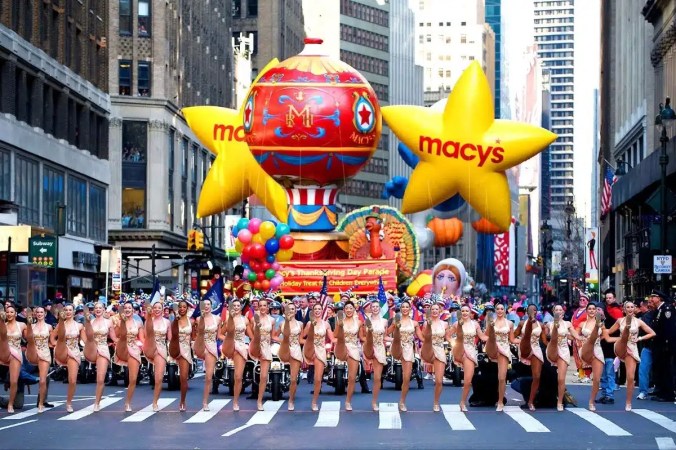
Gregg Wiggins, an old friend and frequent theater production colleague, issued this Comment of the Day in explanation of the reasons for my complaint yesterday about NBC’s crack staff repeatedly mispronouncing the name of the Radio City Musical Hall Rockettes during the Macy’s Thanksgiving Day Parade broadcast yesterday…. three different ways!

Not very related to Gregg’s post but related to the parade: The New York Tines reported yesterday that the parade became “the most-watched entertainment show in the United States only over the past three years.” Theories for the reasons this has happened vary. One is that the event is still completely apolitical (unlike almost every other form of entertainment programming); another is that the public increasingly longs for a simpler time, remembering that their families watched the parade when they were children and the holidays seemed magical. Yet another holds that a lot of people can’t afford to go to see shows in New York City any more, and the parade’s (lip-synced) street performances of current Broadway fare is the closest they will ever get. I think the development may be an encouraging example of how the culture can still be unified and brought together by shared traditions and experiences. The closest thing to a consensus that the New York Times found is that everyone agrees about the parade remaining essentially the same decade after decade, unlike almost everything else.

Except that the network broadcasters no longer know how to pronounce “Rockettes.”

Here’s Gregg Wiggins on the post, “Stupid Thanksgiving Tricks”

***

Continue reading

Stupid Thanksgiving Tricks [Repaired]

“It’s The Great Stupid, Charlie Brown!”

1. I saw that meme on Facebook today. Is that the kind of misinformation social media platforms are supposed to censor, or is there value in learning that one’s Facebook friend is a moron?

2. On today’s Macy’s Thanksgiving Day Parade broadcast on NBC, three separate hosts mispronounced “Rockettes.” One called them the “Rockets,” another said “Rockeets,” and a third said “ROCK-ettes, with the accent on the first syllable. The Radio City Music Hall iconic kick-line dancers have been part of the parade for decades, and NBC has had broadcast rights for the event all year. Yet their “journalists” couldn’t bother to check to see what the perennial act is called? (Or learn to read?)

Continue reading

The Ethics Alarms 2024 “It’s A Wonderful Life” Ethics Guide, Revised, Expanded, With A New Introduction

2024 INTRODUCTION

Last year I concluded that “It’s A Wonderful Life” really belonged in the Thanksgiving movie canon, not Christmas, but I still waited until the pre-Christmas madness to post the 2023 version. This year, I’m finally putting the classic where it belongs. I have always identified with George Bailey, though this year it is for different reasons. Like George, I often feel like I didn’t achieve and experience what I could and should have, that my choices too often didn’t pan out, that I barely missed some breaks (but not all) that I needed when I most needed them. This year, which has been clouded since Leap Year by the sudden death of my wife, best friend, business partner and #1 fan—that’s Grace Elizabeth Bowen Marshall in all categories—I have never felt the lesson of “It’s A Wonderful Life” more powerfully: “No man is a failure who has friends.” I don’t believe that, frankly, but my friends, neighbors, clients, colleagues and blog readers have sustained me generously in this difficult period, and I will always be grateful for that.

Last year I wrote, “This is a tough time for my business and my family, and a lot of the problems are the result of my own selfish choices and mistakes as well as my hard-wired proclivity to cause trouble and not back down after the consequences start becoming clear. I’m seriously considering not celebrating Christmas this year, and we have always been a big Christmas family, because several recent disasters  require the money to go elsewhere.” In retrospect, this reminds me of a joke my father was fond of: “One day as I sat musing, sad and lonely without a friend, a voice came to me from out of the gloom saying, ‘Cheer up. Things could be worse.’ So I cheered up and sure enough—things got worse.” Everything got much worse after I wrote that last year.

I re-watched the movie last night in preparation for revising the Guide. It made me cry at the end, because Grace so loved the final scene, and would tear up at Harry Bailey’s toast, “To my big brother George, the luckiest man on earth.”

Frank Capra must have felt that the movie was bitterly ironic. It was a huge flop, and destroyed his infant project with some other prominent directors to launch a production company called “Liberty” because it would give directors the liberty to put their artistic visions on the screen without interference from the studios. “It’s A Wonderful Life” was the first and last film produced by Liberty: it not only killed the partnership, it just about ended Capra’s career.

James Stewart was, by all accounts, miserable during the shooting. He suffered from PTSD after his extensive combat experience, and the stress he was under shows in many of the scenes, though to the benefit of the film. It is interesting that the movie is scored by Dmitri Tiompkin, a Russian expatriate who is best known for scoring Westerns like “Red River” and “High Noon.” He wasn’t exactly an expert in small town America, but his trademark, using familiar tunes and folk melodies, is certainly on display. Clarence, George’s Guardian Angel (Second Class), is frequently underscored with the nursery rhyme “Twinkle Twinkle Little Star” because he is represented by a star in the opening scene in Heaven. The old bawdy tune “Buffalo Girls” is another recurring theme, an odd one for a wholesome film since the buffalo girls were prostitutes.

As usual, I noticed details in the film this time that escaped me in earlier viewings, and for better or worse, I have appended the Guide accordingly. I also must say that although I wrote the Guide, I enjoyed reading it, and, amazingly, some of my own words made me feel a little better at a time when my spirits are near an all-time low. In particular, the section on regret resonated with me. Good point, Jack!

Now let’s go to Bedford Falls…but first, a stop in Heaven…

1. A Religious Movie Where There Is No Religion

Continue reading