Major League Baseball, Forgivability, and List Ethics

Unforgivable?*

Bleacher Reports is an enjoyable sports website, and it gives opportunities to aspiring writers and bloggers, some of whom are quite talented.  In addition to typical opinion pieces and reporting, the site has a fondness for lists, often trivial to the extreme, like “The 50 Ugliest Athletes of All Time.” The titles are all misnomers, because there is almost never any criteria given for the choices or their relative ranking. An accurate title would be, “The Fifty Athletes I Think Are The Ugliest.”  And of course, who cares? (Don Mossi, by the way, was the ugliest athlete ever, no matter what anybody says.)

A recent list, however did bother me. It is called “The Fifty Most Unforgivable Acts in Baseball History,“ and much of the problem with it lies in the title itself. If you are going to write about history, there is a duty perform diligent research, even for a silly online list. Misrepresentations online have a large probability of misleading people.  The title is a misrepresentation, like “The 50 Ugliest Athletes,” but unlike that list, there is some harm done. The list isn’t close to complete; it isn’t consistent; it isn’t well-researched. I’d bet that the author, Robert Knapel, wrote it off the top of his head.  Anyone who looked at the list and assumed, as the author represents, that these are truly the low points—“the dark side,” as the author puts it—of major league baseball would be seriously misinformed.

There are unequivocally, probably universally recognized incidents and events that are infinitely worse that most of the items on the list.  Just a  few samples: Continue reading

What’s the Matter With Paul Gust?

Oh-oh...now I'VE searched for her too!

Combine the Anthony Weiner debacle and the Naked Teacher Principle (in reverse), and you get the travails of 45-year-old Paul Gust, the computer teacher at the Saugatuck Public Schools in Michigan. He has been fired, and I would fire him too. But which of his actions were a firing offense?

1. Storing photos of naked women on his school computer?
2. Being such a klutz that he accidentally flashed some of the photos on the screen in the middle of a presentation on computer technology?
3. Having the FBI find photographs of underage girls on that same computer, though not photos that constituted child-porn?
4. Having the FBI also discover that he had searched for photos of Miley Cyrus braless, when she was under 18?
5. Having personal e-mails on his computer—beyond dispute involving personal discussions, off hours, on his own time, using his own accounts—that included discussions of sexual fantasies involving teen-age girls? Continue reading

The Saga of Heidi Montag and Spencer Pratt: Life in a Culture That Values Lies

Post-surgery Montag, trying to stay famous

If you have taste, a job, and a brain, or don’t read a lot of “Us” and “People” in doctors’ offices, you may never have heard of Spencer Pratt and Heidi Montag. They were stars of the once popular TV reality show “The Hills,” and despite being two vacuous and shallow individuals of minimal common sense, talent or education, they presumed that they could ride the “famous for being famous” gravy train in celebrity-and-media obsessed America indefinitely. They couldn’t.

The Daily Beast features a horrifying interview with the pair, which is worth reading for its ethics lessons on several levels. For one thing, the degree to which the culture of dishonesty has progressed in America  surprises even me. Allowing yourself to be presented to the public as a completely manufactured personality in exchange for fame and fortune has always been part of the celebrity experience, but the reality show phenomenon has removed it from everything else—now the lie is all there is. And there are thousands upon thousands of attractive, young dimwits who actually aspire to such ersatz enshrinement in the culture as their life’s pursuit. Paris Hilton and the Kardashian sisters are these deluded individuals’ goddesses, despite the fact that 1) there are not 500 IQ points among the four of them and 2) they all have the benefit of rich trust funds to fall back on, so their jaunts as pop culture comets are more like diversions than careers, though profitable ones. Continue reading

Ethics Quiz: Is Bunting to Break Up a No-Hitter Unethical?

I want to get this on the record for all time, because the controversy comes up almost ever baseball season. it came up again yesterday.

In Sunday’s baseball game between the Detroit Tigers and Los Angeles Angels, Tiger pitcher Justin Verlander was six outs from joining Bob Feller, Sandy Koufax, and Nolan Ryan as the only pitchers since 1900 with three or more no-hitters in their careers. But the Angels’ Erick Aybar tried to end the no-hitter with a bunt single leading off the eighth against Verlander. He got it, too, except that the home town scorer attempted to preserve Verlander’s historic bid by charging an error instead. (Unethical. But I digress.) Continue reading

Comment of the Day: “Scent Branding, Mind-Control, and Ethics”

Elizabeth was the first one to dive into this murky, interesting, science fiction/ “Brave New World” issue that I examined in  “Scent Branding, Mind-Control, and Ethics,” on a topic that confused me more the longer I considered it. What resulted was unusually long, perhaps accounting for the lack of comments, and Elizabeth’s reaction is long as well, but worth reading. There is something potentially sinister here, or perhaps around the corner—or just in our imagination and fears. Scent manipulation, and all it implies, is in the wilderness of ethics, where human nature, science and commerce meet.

Here is the “Comment of the Day”:

“I agree this is a complicated issue.  As you said, restaurant smells (natural, I assume) tend to make people hungry (or more hungry than they really are), as do waiters with large platters of beautiful food which often encourage patrons order more, different, and perhaps more expensive food than what they may have had in mind.  The goal of the restaurant is to sell food:  if memory serves, it’s only been in the last 20 years or so that restaurants had at least parts of their kitchens open to the dining area so “good smells” could waft out from them.  My memory from childhood of elegant restaurants were the multiple green baize doors that completely closed the kitchen off from the dining room.  So was this change intentional or simply simpler and cheaper as restaurant designs?  I don’t know, but it’s different. Continue reading

Scent Branding, Mind-Control, and Ethics

Agreed: this is scary. We're not there yet. We don't even know if "there" exists.

A recent article on the web that purported to explore the ethics of “scent branding” was fascinating for two reasons.

First, “scent branding” is a term I had never encountered before, for a practice that I had not focused on. About five seconds of thought, however, made me realize that indeed I was aware of the phenomenon, and had been for quite a while. “Scent branding”—using fragrances in a commercial environment to create a desired atmosphere and to prompt positive feelings, recollections and emotions from patrons—has been around a long, long time, though not under that label. When funeral parlors made sure that their premises smelled of flowers rather than formaldehyde, that was a form of scent branding. Progress in the science of scent allowed other businesses to get into the act: I was first conscious of the intentional use of smell when I spent a vacation at the Walt Disney World Polynesian Villages Resort. The lobby and the rooms had a powerful “tropical paradise” scent, a mixture of beach smells, torches and exotic fauna. It was obviously fake, like much in Disney World; also like much in Disney World, I found it effective, pleasant, and fun. I certainly didn’t think of it as unethical. I was normal in those days, however.

Well, more normal.

The second aspect of the article, entitled “Is it Ethical to Scent Brand Public Places?”, that caught my attention was that it had an obvious agenda. The piece was opposed to scent branding, and set out to find the practice unethical in order to justify condemning it. Continue reading

Ethics Hero: Meat Loaf

Bravo.

I’m sure many of you will react to this with a hardy, “What an idiot!” That’s all right. You don’t understand.

In the grandest tradition of “The show must go on!”, 70’s rock legend Meat Loaf, now 63, finished a concert in Pittsburgh after he fainted on stage and lay unconscious for a full ten minutes. He got up, apologized, explained (obscenely) that it was his asthma, and continued to sing his old hits for a cheering crowd. “Kept suckin’ on his inhaler & singing his ass off,” one fan tweeted from the scene.

Grand. I love it.

In these times when rock acts are often hours late or severely shortened by the artist’s physical or pharmaceutical maladies, and when performers in general often consider it too much of a sacrifice to give their best efforts when healthy, not to mention when they have the sniffles, Meat Loaf’s dedication to his craft and particularly his audience is impressive, although not surprising. Continue reading

Ethics Dunce: Larry Flynt

BLECHHHH!

I know, I know. “In other news, the Earth spins, and the Atlantic ocean is wet!” Nevertheless, it is occasionally worth the trouble to remind ourselves what an unprincipled sleaze Larry Flynt is, especially with people still around who argue that he’s a hero.

Flynt announced on Nancy Grace’s show last night that talks are ongoing with Casey Anthony to have her nude and tattooed bod featured in Hustler magazine for $500,000 up front plus 10% of all profits. Flynt said he decided to make the offer after concluding there was a big market for seeing the acquitted child murder suspect in the buff. Continue reading

MSNBC Hires Al Sharpton, As “Network” Becomes Reality

Satire no more.

Noting that MSNBC has given Rev. Al Sharpton his own show, I am compelled to ask: What is broadcast journalism’s accepted criteria now that justifies an individual’s enshrinement as a cable news commentator?

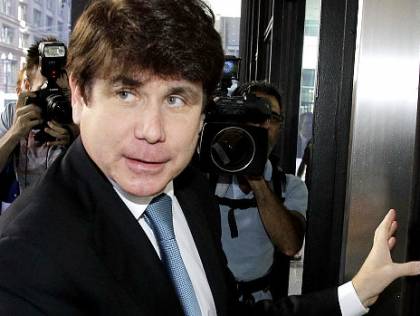
Is it name recognition? The “right” political orientation, in this case, knee-jerk liberal? A ready-made fan base?  Theatrical presence? If these are the criteria, by all means, hire Al Sharpton. Hire Alec Baldwin, Donald Trump, Rod Blagojevich and Jane Fonda, too. Gary Busey. Manny Ramirez. Hulk Hogan. Bozo the Clown.

Or is the proper and responsible criteria credibility, integrity, honesty, fairness, and journalistic credentials? If those archaic standards are still in place, or if MSNBC wants to pretend that they are, then the hiring of Sharpton marks a new low in broadcast news coverage cynicism and recklessness. Continue reading

Cheater’s Remorse: ABC News Gets Ethical Without Knowing What “Ethical” Means

"Right now, cheating doesn't pay, so we're committed to ethics."

If you think ABC News is going to get any credit here for officially (sort of) banning the practice of paying so-called “licensing fees” to get exclusive interviews, I’m going to disappoint you. For there is nothing admirable about….

1….. engaging in the discredited practice of paying big money to central figures in news stories in order to gain access to them, and

2….disguising the practice by technically paying them inflated fees for the rights to photographs, even though the real reason for the pay-off is #1 above, then…

3….rejecting the practice when it leads to questions about how the network got an interview when it didn’t pay “licensing fees,” but…

4…noting that it might still go back to the unethical practice “perhaps once every couple of years,” since…

5….the other networks do it.

Yuck, pooie, ichhhh, petah!  ABC’s decision, outlined in a report by media watchdog Howard Kurtz, tells you everything you need to know about the state of ethics in broadcast journalism in general and ABC in particular, and I have seen prettier sights floating in an unflushed toilet bowl. Continue reading