Curmie’s Conjectures: Court Storming and the Absence of ‘Sprezzatura’

by Curmie

After the Wake Forest Demon Deacons beat the Duke Blue Devils 83-79 in basketball Saturday afternoon in Winston-Salem, hordes of Deac fans stormed the court .  Actually, the previous sentence isn’t quite accurate.  Video footage shows that several fans who had gathered under one of the baskets ran onto the court and were already at the free throw line before the game even ended.

These incidents are increasingly commonplace, abetted by television coverage of the events, even as the networks pretend to be appalled by the potential for injuries resulting from the practice.  Court-storming may be part of the culture of the sport, but there are—or at the very least should be—limits.  I have no problem with displays of post-adolescent exuberance, but the safety of players, coaches, and officials must be paramount.

The inevitable finally happened, and Duke star Kyle Filipowski was not merely jostled, but injured, in the melee, seriously enough that he had to be helped off the court.  As the recipient of a degree from the University of Kansas, I am morally and ethically obligated to despise all things related to Duke basketball 😉, but whereas I want them to lose every game, I don’t really want anyone to get hurt.

The exact extent of Filipowski’s injury is still unclear, but it certainly could affect both the Blue Devils’ chances for the rest of the season and post-season, and, importantly, Filipowski’s future.  He’s projected as a first-round draft choice, possibly even a lottery pick, in the upcoming NBA draft.  He stands to make tens of millions of dollars over the course of his career… assuming he can play.  There is such a thing as a career-ending injury, especially when we’re talking about knees, and that’s what this is; if this injury wasn’t severe, that’s only because of what Jack would call “moral luck.” 

The video shows that at least three different Wake Forest fans made contact with Filipowski as he was trying to leave the court.  Whether or not the bumping was “intentional” and “personal,” as Filipowski alleges, it was at best reckless and at worst criminal.  Let’s face it: the man is seven feet tall; it’s not like he couldn’t be seen.  The ethics of the situation, of course, would be the same if it had been a bench player, a student manager, a coach, or a referee who was injured.  The incident attracts more headlines because it was Kyle Filipowski who needed to be helped off the court, but the rationale for banning court storming would be the same. 

At least two other visiting players have been bumped into by opposing fans in court stormings this season.  One of them is Iowa’s Caitlin Clark , probably the most famous women’s basketball player in the country—even more so than WNBA stars.  She was “blind-sided” and actually knocked to the floor by an Ohio State fan in a court storming in Columbus. 

Imagine if she’d been seriously injured.  She wouldn’t have broken the NCAA scoring record for the women’s game, and she wouldn’t be closing in on the real record, held by Lynette Woodard.  (The NCAA wasn’t the organization in charge of the women’s game when Woodard played, and they’re being predictably petty, narcissistic, and anal retentive about recognizing Woodard.)

Oops.  Once again, I indulged in a little inaccuracy.  What I referred to above as “the inevitable” had long since happened, as ESPN’s William Weinbaum reports:

 In a 2004 court storm, Tucson H.S. star Joe Kay suffered a stroke & was partially paralyzed. “It’s way too long that we’ve been putting up with this,” Kay told ESPN Sat. after Duke’s Kyle Filipowski got hurt. “I’m completely in favor of banning court storms & field storms.”  Now 38, Kay said, “The police should arrest people for going places they are not allowed to go… enforce the rules as they do at other places. It’s exactly the same thing.” “Hopefully people will now come to their senses.”

The only thing that’s changed is that Filipowski is known by virtually all college basketball fans across the country, whereas Kay may have been a local celebrity, but folks like me in East Texas weren’t saying “OMG, Joe Kay got hurt in a court storm.”  Now, maybe, something will happen… but not unless the powers-that-be actually want it to, and that, despite the copious tut-tutting from the NCAA, conferences, universities, and the media, doesn’t seem to be the case.  Indeed, statements of concern and promises of future action from the likes of ACC commissioner Jim Phillips seem very much to be what my mom would call “balloon juice.”

Among those who have engaged in court storming this season, both in games in which their team beat Kentucky, were LSU women’s star Angel Reese and South Carolina President emeritus Harris Pastides, who even took to social media to boast about his participation.  The problem isn’t going to go away, even in the wake of an injury to a star player, unless there are real, enforceable, guidelines designed both to allow celebrations and to protect the visiting team.  And by “enforceable,” I mean sanctions that will be felt, not petty fines of a few thousand dollars to multimillion-dollar programs.

Jay Bilas, probably ESPN’s best analyst (and a former star big man for Duke himself), is outspoken about this issue:

“It’s got to stop but it’s not going to.  There’s no appetite in college basketball to stop it. The SEC has a rule against it but the institutions are happy to pay the fine because they like the visual. And the truth is, we in the media like the visual too.  We put it at the end of every highlight. Years ago, when people used to run out on the field or on the floor, we wouldn’t show it. That was our policy. We don’t have that kind of policies with court stormings. We like it. It’s not stopping and it’s a shame.

Duke coach Jon Scheyer said after the game that when he played, “at least it was 10 seconds and then you could storm the court. Now, it’s the buzzer doesn’t even go off and they’re running on the floor.” 

Ten seconds isn’t enough, but 30 probably is.  It wouldn’t be difficult to institute a rule that no fans are allowed onto the court, ever, until 30 seconds after the final buzzer.  The mechanism already exists in the 30-second clock; let it serve another purpose.  The home university can forbid court storming altogether, but they must enforce the ban for 30 seconds.  If fans want to celebrate on the court and the home team doesn’t object, so be it, but not until the officials and the opposing team are out of harm’s way.

And if fans are on the court before the game clock has expired, that should be a technical foul on the home team in addition to the other penalties.  Would it have mattered this weekend?  Duke would have had two free throws and the ball with about a second left in the game.  Could they have forced overtime or even won in regulation?  It’s extremely unlikely, but the chances wouldn’t have been quite zero.

Whatever the exact rules become, violations must be punished severely.  At present, neither the NCAA nor the ACC (in which Wake Forest and Duke play) have any specific sanctions at all in place for court storming.  The home university must be responsible for enforcing the rules; failure to do so should be punishable by a significant fine even for the first offense.  I’d suggest $500,000 for the first offense, with half paid to the NCAA or the conference and the other half to the opposing school.  Subsequent offenses within a 36-month period would involve stiffer fines, loss of scholarships, and perhaps a prohibition against post-season play.
Continue reading

Now, Both Sides of Joni Mitchell’s “Both Sides Now” Performance at the Grammys

I had decided, after exchanging views with EA columnist Curmie, that I would let this one go, but alas, I cannot. I have waited a long while to try to talk myself out of posting, but I won the argument with myself. Or lost.

There are few TV productions that interest me less than the Grammys, even in the narrow category of awards shows, which I abandoned for good after the quality of Broadway fare approached rock bottom (no more Tonys for me) and the Academy Awards decided to prioritize infantile politics over movies (Bye-bye Oscars!). The Emmys were always boring and terrible, and the Grammys interested me not one bit, ever. After the fact, however, two events at this year’s Grammys broadcast two weeks ago pinged my ethics alarms. First was the spectacle of a triple winner being arrested at the ceremony and hauled off in cuffs: silly me, I thought the police only set out to arrest people in the most embarrassing manner possible on “Law and Order.” The second was superannuated stroke victim singer/song-writer Joni Mitchell singing at the Grammys for the first time and getting an ovation for staggering through a mournful rendition of her most famous composition, “Both Sides Now.”

Continue reading

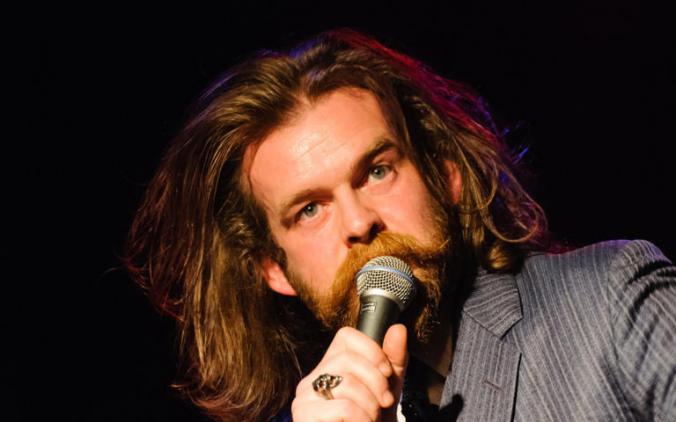
When Ethics Alarms Don’t Sound (or Were Never Installed): Comedian Paul Currie Emulates Michael Richards

What was this guy thinking?

It is decidedly strange for any stand-up comic to decide to emulate Michael Richards, the talented physical comic who played “Kramer” on “Seinfeld.” Richards inexplicably blew up his career and reputation during a stand-up appearance on November 17, 2006, at the Laugh Factory in Hollywood. Richards was annoyed by some heckling from a group of black and Hispanic audience members, and lost his mind, screaming “Nigger!” several times and making other racist references as the audience sat stunned and unamused. His career never recovered, nor should it have. Richards has never adequately explained the incident.

Australian comedian Paul Currie, however, must have been impressed, or something. For his finale to a stand-up show at London’s Soho Theatre, the comedian placed a Ukrainian and a Palestinian flag on the stage and invited audience members to stand and applaud. Hilarious! Wait, no, it had to be a set-up for a gag, right?

Continue reading

My Annual Boycott the Super Bowl Edition…[Corrected]

Feb. 9th was the 60th anniversary of the Beatles appearing on the Ed Sullivan Show, leading me to muse on what other momentous cultural (as opposed to political and international) events American society has shared in caring about and observing since. There haven’t been many. I remember that the first Super Bowl, when the AFL and the NFL agreed on a championship game between the upstart rebel league and the establishment attracted such intense interest and coverage (two networks covered the game—when has that happened since?) which was a wipe-out by the NFL’s Green Bay Packers. I didn’t know any families that didn’t watch that first one. Once upon a time, everybody tuned in to the Academy Awards: it was a unifying ritual, but no more. It is disturbing to think that there can’t be a unifying cultural event in the U.S. today, but I’m coming to that depressing conclusion.

Meanwhile, I hope you are boycotting the annual hoop-de-doo by the evil NFL, which happily kills its player for profit. This NFL season I didn’t catch a second of a single game, and wrote less about the cynical, ethics-free league than I have in years. The most recently discussed incident when an NFL head coach was pilloried for trying to inspire his players by extolling the teamwork of the plane hijackers who brought down the Twin Towers and bombed the Pentagon. I didn’t write about, but should have, a study from almost exactly a year ago that found chronic traumatic encephalopathy (CTE) in the brains of 345 former NFL players among 376 former players studied. That’s 91.7% compared to the normal incidence of CTE in the general public, which is in the vicinity of .4% I didn’t write about it because, as far as I can tell, none of the sources, ethics and news, that I usually check for ethics stories bothered to treat the study as newsworthy. I assume that’s because they chose not to issue a buzzkill on Super Bowl week.

Think about that for a while, assuming that you haven’t played professional football and can think.

Continue reading

From the “Rules Are Rules” Files: The Matchstick Eiffel Tower

47-year-old Richard Plaud of France spent the past eight years assembling a model of the Eiffel Tower out of matchsticks in order to become the Guinness Book of Records record-holder in that cherished category, “World’s Tallest Eiffel Tower Model Made Out of Matchsticks.”

Aside: How many parts of that sentence justify a “What? For God’s sake, why, and who cares?” Why is there a published record for matchstick models of anything? Does the Guinness Book of Records include records for matchstick Chrysler Buildings, Pentagons, Statues of Liberty, Golden Gate Bridges? Big Ben, the London Eye? What’s special about the Eiffel Tower? Why should holding an obscure record in a book few people read or care about matter to anyone except pathetic losers desperate to give meaning to their empty lives? How shallow must a man be to devote eight years to assembling something with no utility whatsoever other than to win him mention in that silly tome?

Back to poor Richard: after he completed his project, he discovered that even though his model, at 7.19 meters, is easily taller than the current record holder for matchstick Eiffel Towers, the 6.53-meter-tall model built by Toufic Daher in 2009, his opus was ineligible for the honor. Why, you ask? 

Continue reading

Ethics Hero Elon Musk vs. Ethics Villain Disney

Elon Musk is weird, impulsive, sometimes hypocritical and often infuriating. He is also a national treasure: a true Ethics Hero in the culture wars.

Back in 2021, Disney fired Gina Carano, one of the stars of the Disney+ series “The Mandalorian” because her social media posts were insufficiently supportive of the progressive cant Disney is obsessed with (to its financial and cultural sorrow). The triggering tweet was one in which Carano, a conservative (can’t have that in Hollywood!) compared Nazi Germany’s anti-Jewish propaganda to efforts by the political left to demonize people based on their political beliefs. Proving her point, Disney canned her, explaining, falsely, that her “social media posts denigrating people based on their cultural and religious identities are abhorrent and unacceptable.”

Carano is now suing Disney and Lucasfilms. Her complaint can be read here. She is suing under California law, which states that
“No employer shall make, adopt, or enforce any rule, regulation, or policy: (a) Forbidding or preventing employees from engaging or participating in politics or from becoming candidates for public office. (b) Controlling or directing, or tending to control or direct the political activities or affiliations of employees.”

Continue reading

Unethical Headline of the Week: The LA Times

“How throwing soup at the Mona Lisa can help fight climate change”

You can read this opinion piece if you want, but the headline accurately conveys all you need to know by itself, I hope. The author, an associate professor of environmental studies at USC (so you know the quality of critical thinking and ethical analysis they are teaching there), essentially is making an argument for terrorism, because sometimes it works.

“Objections to acts of climate activism such as the latest food fight at the Louvre are understandable but might miss the point. Protesters’ perceived madness is indeed method,” Shannon Gibson writes. And the method is attracting attention to a cause by disruptive, selfish and destructive acts having no relationship to the goals of the activists. In some respects, violent acts of terrorism are easier to rationalize: at least those seeking a Palestinian state are directing their “method” at those with some direct relationship to the entity the terrorist blame for their plight. Throwing tomato soup at Van Gogh’s “Sunflowers” or the Mona Lisa has no such relevance.

Continue reading

UPenn’s Anti-Semitic Lecturer

That cartoon above, showing apparent Zionists (as in “Jews”) sipping Gazan blood like wine, is probably the most outrageous of political cartoonist Dwayne Booth’s works…I don’t know, maybe this one is..

All a matter of taste, I guess. The ethics question is, now what, if anything?

Booth is a lecturer at the University of Pennsylvania’s Annenberg School of Communication having joined the school as an adjunct faculty member in 2015. Political cartooning is certainly a valid courss of study. He currently teaches two classes, but since Hamas’s October 7 terror attack, his off-campus cartooning has become especially controversial.

Booth publishes political cartoons under the pen name “Mr. Fish.” One of his classes teaches students the political cartooning art by exploring “the purpose and significance of image-based communication as an unparalleled propagator of both noble and nefarious ideas,” according to Penn’s website. “Work presented will be chosen for its unique ability to demonstrate the inflammatory effect of weaponized visual jokes, uncensored commentary, and critical thinking on a society so often perplexed by artistic free expression and radicalized creative candor.”

You can see more of Booth’s anti-Israel cartoons here. As far as I can determine, there is not sufficient basis for disciplining him or ending his association with the school. Political cartooning, though I personally view it as a crude, over-rated and deceitful form of editorial, is by nature extreme in device and approach. Booth’s own political opinions and obvious anger at Israel that he expresses as “Mr. Fish” or on social media are not relevant to his value teaching the political cartooning craft, and would seem to be squarely within the margins of both academic freedom and the first Amendment, provided that his commentary in class and on campus are not directed at Jewish students.

However, if a school, like the University of Pennsylvania, decided that, at a time when there are unusual tensions around the Gaza-Israel conflict its lecturer should cool his public fervor or consider another teaching position elsewhere, that would be a fully ethically defensible position. He’s right at the line now.

He might even have crossed it.

R.I.P. Chita Rivera, an Ethical Star

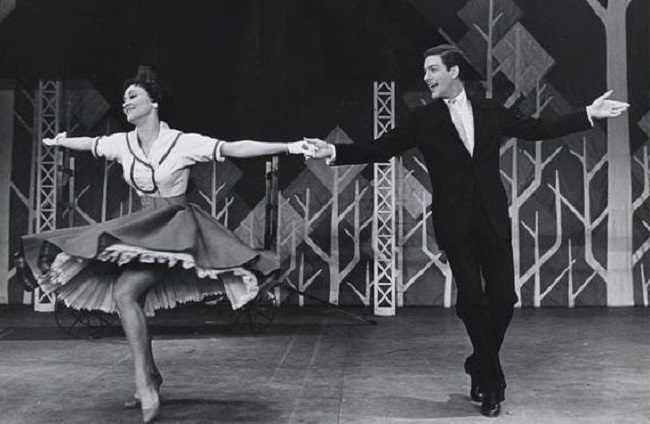
Chita Rivera, veteran musical comedy star, actress and dancer extraordinaire, has died at 91. She had a remarkable career and an unusually long one. I saw Chita perform live but once, long after her prime in a West End production of “The Kiss of the Spider Woman,” a not-so-great and over-hyped musical. Rivera had major roles in the hit Broadway productions of ”West Side Story,” “Bye Bye Birdie” and “Chicago,” among others. The Times obituary is full of information, though it skirts over what I recall as being a particularly cruel career blow, when Rivera was passed over for the role of Anita in the film version of “West Side Story” for Rita Moreno, even though Rivera had won a Tony for her performance in the role on stage. It also doesn’t mention an unusual altruistic act by Rivera when she was co-starring with Dick Van Dyke and Paul Lynde in the 1960 musical, “Bye Bye Birdie.”

Continue reading

“Indictment: The McMartin Trial,” An Ethics Movie That Seems Disturbingly Relevant Today

How I missed the 1995 HBO film “Indictment: the McMartin Trial” for almost 30 years, I don’t know, but I did. The Oliver Stone produced legal drama about the insane events surrounding what turned out to be the start of a nation-wide freak-out over supposed Satan worship and widespread child abuse at day-care centers is unusually accurate for a docudrama. For this reason it is also infuriating. How could this have happened even once?

In August of 1983, the mother of a 2-year-old boy phoned the Manhattan Beach (California) Police Dept. claiming that her son had been sexually abused at the family-run McMartin Pre-School. That accusation prompted a series of sensational and inflammatory reports from an unscrupulous broadcast journalist (or “journalist,” for short) at WABC-TV. It also prompted the police to contact other parents with children at the school to ask if their children had been molested. Those children were, in turn, interviewed by a crusading social worker named Kee MacFarlane, who used controversial techniques to persuade the young children that they had seen and experienced terrible things, escalating from sexual abuse to having to witness ritual rapes and human sacrifices. (This was one of the seminal cases in the psychiatry profession’s “implanted memories” scandal.)

Continue reading