The 2023 Ethics Companion To “Miracle On 34th Street” [Updated and Expanded]

2023 Introduction

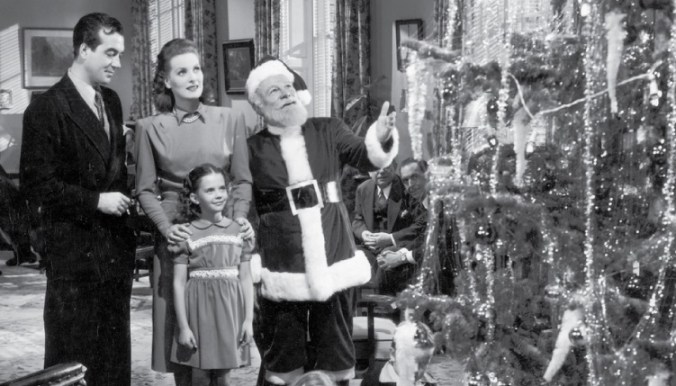
What makes “Miracle on 34th Street” the most appropriate classic Christmas film for 2023 is its theme: the importance of conquering cynicism and  pessimism, and always keeping one’s mind and heart open to hope. This has been a truly awful year, not one of the worst in our history but to a lot of Americans it seems that way (because they “don’t know much about history,” like Sam Cooke), but bad enough that we should be glad to see it go. I know my year has been especially miserable on multiple fronts. Nonetheless, I remain, at heart, about 12 years old. The same things make me laugh; my level of optimism remains high; I believe in this nation’s miraculous ability to somehow get out of the fixes it gets itself into; I’m still a romantic, and, yes, I think with a little luck and one more starting pitcher, the Boston Red Sox can make it to the World Series next year. I am being constantly confronted with old friends, some much younger than me, who have suddenly decided to be old: they think old, they act old, and they seem to have given up the future as irrelevant. The Santa Claus myth represents faith in the possible, or rather the impossible. Yes, its easier when you are a child, but it is worth the fight to never lose the part of you that still believes in magic and miracles. Kris Kringle really isn’t Santa Clause: he’s nuts, basically. But somehow that tiny wisp of a hope that he might be the real Santa is alive at the end of the movie. It’s really quite wonderful. It’s also important.

The production of “Miracle on 34th Street” itself epitomizes the ethical values of competence and integrity. Watch any of the attempts to remake the film over the years; some aren’t bad, but none equal the original, or even justify a remake that places the story in contemporary times.There have been four remakes starring, as Kris Kringle, Thomas Mitchell, Ed Wynn, Sebastian Cabot, and Richard Attenborough. That’s a distinguished crew to be sure. Mitchell was one of the greatest character actors in Hollywood history. Wynn was nominated for an Academy Award (for “The Diary of Ann Frank”) and Attenborough won one, Best Supporting Actor Award in 1967 for “The Sand Pebbles.” Cabot wasn’t quite in their class, but he was a solid pro, and looked more like Santa Clause than Mitchell,  Wynn, or Attenborough.

None of them, however, were as convincing as Edmund Gwenn. He made many movies—all without a white beard— and had a distinguished career in films and on stage, but even audience members who knew his work had a hard time reminding themselves that he wasn’t Kris Kringle while they watched the movie. I still have a hard time.

 The film is one more example of the special, unappreciated talent of Maureen O’Hara, who never was quite regarded as a top rank a movie star, as lovely and strong an on-screen presence as she was. Her ability to anchor great movies while never dominating them is the epitome of the “collaborative art” they always blather about during the Oscars, but which is seldom truly honored.  O’Hara was the female lead in four genuine classics: “The Hunchback of Notre Dame,” “The Quiet Man,” “How Green Was My Valley,” and “Miracle on 34th Street.” She also starred in the original “The Parent Trap” for Disney.

“Miracle on 34th Street” is an ethics movie in part because its artists committed to telling a magical story and charming audiences by working as an ensemble selflessly and  efficiently. John Payne, as the idealistic lawyer in love with Maureen, is never flashy, just completely convincing. One reason may have been that, as he told an interviewer once, the role of Fred Gaily perfectly matched his own ideals and beliefs.  This is the magic of performing talent: they make audiences suspend disbelief because they seem to believe in the story and characters too. The director,  George Seaton (who also directed “Airport,” which is NOT an ethics movie), also wrote the script that won him an Oscar. He cast his movie brilliantly, and making the correct but bold decision to stick with a matter-of-fact, realistic, unadorned style that keeps the story grounded. There are none of the corny features or inexplicable gaffes in this film that make other holiday-themed classics inherently unbelievable, like the cheesy battlefield sets in “White Christmas” or the heavenly dialogues in “It’s a Wonderful Life.”

“Miracle on 34th Street” is, as I said at the start, about the importance of believing in good things, hopeful things, even impossible things. Today many of my friends, colleagues and associates are depressed and fearful of the future—their future, the future of the nation, even the future of the planet. (The planet will be fine…the rest? As Samuel L. Jackson says in “Jurassic Park, “Hold on to your butts.”) “Miracle on 34th Street” reminds us that wonderful things can happen even when they seem impossible, and that life is better when we believe that every day of our lives. Of course, some days are easier than others.

Never mind. As the Fairy Godmother in the musical version of “Cinderella” sings, “Impossible things are happening every day.” Continue reading

Unethical Tweet Of The Week: Barbra Streisand

I thought Barbra was smarter than Alyssa Milano, Rob Reiner and Joy Behar.

I’m sure she is, or once was; dementia creeps up on you. I really don’t know how to explain this.

Is she being cleverly deceitful? Yes, some prices are falling, like gas, but prices as a whole are not. They are still rising, the effects of Biden’s inflationary policies are still hurting the middle class and the poor, and the Democrats’ “Inflation Reduction” Act: has had slightly more salutary effects than Gerald Ford’s W.I.N. button, but nothing to boast about. Inflation “coming down” means that the rate of prices going up is lessening, not that prices are actually less than they were. Does Streisand really not know that?

The claim about Trump is definitely deceit. The mainstream media helped with that one,using the pandemic lockdown results that savaged the American economy to conclude that, as CNN, that scrupulously unbiased news source, wrote in September 2020 as part of the media’s push to elect a mentally-declining President because the public thinks he’s a nice guy, “Trump’s job losses are the worst of any American president on record.”

Continue reading

Politics Doesn’t Have To Ruin Everything: Netflix’s “The Fall Of The House Of Usher”

Ideologues and perpetual political warriors do get tiresome, and both ends of the ideological divide are guilty. On Newsbusters, the conservative media watchdog, Stephanie Hamill goes after the latest Netflix horror series by Mike Flanagan (not to be confused with the Baltimore Orioles ace of the late Sixties and Seventies). Her indictment: a liberal agenda “is both overtly and subtly promoted throughout the show’s eight episodes, starting with the incredible amount of LGBTQ characters.” My defense: Oh, lighten up. All Stephanie has is a hammer, so a clever and complex Edgar Alan Poe mash-up that only brushes up against political issues—and, I would say, in a tongue-in-cheek manner—seems like a progressive screed to her. That’s too bad: she can’t enjoy a quality show because she’s so intent on finding signs of Hollywood wokism.

Flanagan is a genuine horror auteur, and he has found his metier in the streamed, multi-episode series. “The Fall of the House of Usher” is his fourth (and last, apparently, for Netflix: he is moving over to Amazon). Nothing is likely to top the writer/director’s re-imagining of Shirley Jackson’s “The Haunting of Hill House,” which might be the best horror movie ever made, but “Usher” is still a blast. Using almost all of Flanagan’s large rep company (which includes Henry Thomas of “E.T.” fame), the series is an Edgar Allen Poe fan’s dream, challenging us to recognize the myriad references familiar and obscure. which range from names to plots to poems. Since the conceit of the show is to make the Usher family the thinly disguised avatars for the infamous Sackler clan that brought us the opioid crisis, Flanagan is naturally hard on the corporate mentality….and the Sacklers deserve the abuse if anyone does. In addition, his greed-busting results in some of Flanagan’s best writing: I already highlighted the instant classic monologue by Bruce Greenwood as the dying, damned family progenitor.

Continue reading

The Complete “White Christmas” Ethics Companion, With A New Introduction For 2023

White-Christmas

2023 Introduction

In last year’s introduction, which I recommend if you are seeing this Guide for the first time—it’s longer and more informative than what I’m offering this year— I concluded by writing, “The movie works (even I get choked up at the end); you just have to turn off your brain to fully enjoy it the way it was meant to be enjoyed.” That’s all that matters right now for me. I’m posting the second of the ethics guides to classic Christmas movies tonight because, to quote Jerry Herman’s one Christmas song, I “need a little Christmas” about now, and as flawed as it is in so many ways, “White Christmas” does bring back memories of happier holidays. My Dad, Army through and through, was a sucker for the climax of the film when the old general (Dean Jagger) sees his former company assembled to give him tribute just as he was feeling useless. Bing Crosby is forever associated with my many happy Christmases as a child, and Christmas itself evokes warm memories of my mother, who treated every December 25th as the challenge of a lifetime: it had to be “the best Christmas ever for her family,” whereupon she would worry that the next Christmas wouldn’t be as good, and that would depress her. My mother thought every Christmas was going to be her last.

So in a year when the Marshalls are not going to have their usual spectacular Christmas tree that takes me five hours to decorate, when as with Thanksgiving, there will be no festive banquet at a table surrounded by family and friends, there will be no stockings or presents because choosing ethics as a pursuit has its disadvantages and being destitute at the end of the year is sometimes one of them, a sappy Christmas movie that ends with two happy couples, an old man being reassured that his life had meaning and Bing singing “White Christmas” is just what the psych ward ordered. I’m going to watch the movie tonight, and then I’ll “go to sleep, counting my blessings.”

1. The First Scene

Continue reading

Look! Another Racial Casting Controversy!

I love this one: it involves one of my favorite actors and one of my favorite historical figures.

Denzel Washington has lapped Sydney Poitier as the most successful and, in my view, most versatile and best black Hollywood star in film history, so one would think his casting to portray any historical figure would be seen as a boon to that figure’s fans. In this case, you would be wrong. Denzel is playing the Carthaginian general Hannibal in a Netflix historical epic, and Le Monde reports that in Tunisia, Hannibal’s old stomping ground, Hannibal’s admirers are furious. The casting has even been debated in the Tunisian parliament. Tunisian MP Yassine Mami railed about “the risk of falsification of history” while calling on members to join him in “defending Tunisian identity”.

Continue reading

The Story Of “Do You Hear What I Hear?”….And The Christmas Kick-Off Open Forum!

Last week’s forum was the deadest ever, so I’m hoping that injecting some holiday cheer into this one will spark more dialogue. After all, if the wind, a lamb, a shepherd boy, a mighty king and people everywhere can have a productive conversation, Ethics Alarms readers should be able to bring some Goodness and Light too.

As some inspiration, I’m reposting below the Ethics Alarms entry about the origins of my favorite of the modern—“modern” as in “post World War II”—Christmas songs, first sung by my favorite Christmas minstrel.

*** Continue reading

Ethics Quiz: Christmas Dancing At The White House

Relax…today’s ethics quiz has nothing to do with whether Jill Biden’s Christmas video featuring the modern ballet troupe Dorrance Dance is your cup of eggnog.

Rather it is this…

Is it responsible and ethical for the White House to use the holidays to promote a politically radical, anti-police, anti-white, Marxist organization like Dorrance Dance?

For Dorrance Dance is an overtly and outspokenly Marxist dance company that even prominently displays a quote from Angela Davis on its website: “You have to act as if it were possible to radically transform the world. And you have to do it all the time.” The group advocates defunding the police across the country, and prominently endorses Black Lives Matters, another Marxist organization.

The group’s radical politics are a bit buried on its website behind standard aspirational artistic blather like “Our goal is to engage with audiences on a musical and emotional level, and to share the complex history and powerful legacy of this American art form throughout the country and the world.” Well, yes, that, and ending capitalism and the United States of America as we know it in order to achieve “racial justice.”

My answer to the quiz is that as long as the group keeps its politics out of its work for the White House, good luck to them. They were engaged—I hope—because of their dance artistry rather than their contempt for the United States. I wouldn’t be surprised if the Bidens had no idea what the group advocates.

Yes, it’s annoying that Dorrance Dance will undoubtedly use its White House gig as cognitive dissonance helium to elevate their public image into more positive territory than any organization connected to Angela Davis, Black Lives Matter and Karl Marx deserves. But if we chose our art based on the political sophistication and delusions of artists, we’d just end up with bad art.

Ethics And The 700 Million Dollar Baseball Player

In Mike Flanagan’s latest horror epic, the Poe mash-up in which “The Fall of the House of Usher” is repurposed into a nightmare scenario for the Sackler family of Oxycontin infamy, the avenging demon named Verna, who sometimes appears as a raven, lectures a soon-to-be victim on the evils of greed:

So much money. One of my favorite things about human beings. Starvation, poverty, disease, you could fix all that, just with money. And you don’t. I mean, if you took just a little bit of time off the vanity voyages, pleasure cruising, billionaire space race, hell, you stopped making movies and TV for one year and you spent that money on what you really need, you could solve it all. With some to spare.

Yes, Verna is a communist and deluded, but it was impossible to read about the $700 million ten-year contract the Los Angeles Dodgers just gave baseball free agent Shohei Ohtani without that speech creeping into my thoughts. $700 million dollars?

Continue reading

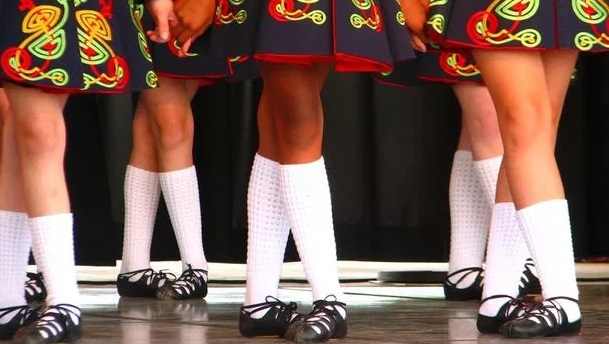
A Boy Who Identifies As A Girl Won An Irish Dancing Competition…Now What?

I was thinking of making this an ethics quiz, but I couldn’t decide what to ask.

The Daily Signal reports—an exclusive!—that a teenage boy who identifies as a girl is heading to the Irish Dancing World Championships after placing first in the U14 2023 Southern Region Oireachtas competitions. The conservative website tells us that the winner competed as a boy and placed 11th in the world in the Coimisiún Le Rincí Gaelacha (CLRG) World Championships just eight months ago, in April 2023. (These kids just grow up and change sex so darn fast these days!). In the meantime, a “non-binary” contestant won another Irish dancing competition in August.

Irish dancing competitions are typically divided by gender. The Daily Signal reports, “Parents of girls competing in Irish dance are frustrated and outraged, saying that they cannot understand why a boy with physical advantages is allowed to dance against their daughters.” Huh? I would think a male would have only physical disadvantages in competing against girls in a dancing competition, just as a male dancer would be at a disadvantage trying to win the part of the Sugarplum Fairy in “The Nutcracker.” I assume female Irish dancers are supposed to appear, well, feminine while wowing judges with their footwork. If not, why is the competition restricted to girls?

Continue reading

“Dr. Who” Ethics: Isaac Newton Was Indian? I Did Not Know That!

In the latest “Dr. Who” adventure on the BBC (if you don’t know about this long-running cult scifi show, google it), Sir Isaac Newton is played by an actor of Indian heritage:

This raises several issues, most of which Ethics Alarms has delved into before:

1. Does it matter? As Curmie declared in his Comment of the Day regarding my post about another BBC production in which Anne Boleyn was played by a black actress…yes, it does, but it depends on the context and the objective of the casting. The major consideration in any non-traditional casting is whether it works, meaning that the casting isn’t distracting, that it adds something to the work beyond being just a gimmick. (The black Anne Boleyn was a gimmick.) In Curmie’s opinion, almost nobody was likely to see the black actress in the role and think, ““I didn’t know Anne Boleyn was black.” I am less certain of that assumption in the case of a brown Isaac Newton.

Continue reading