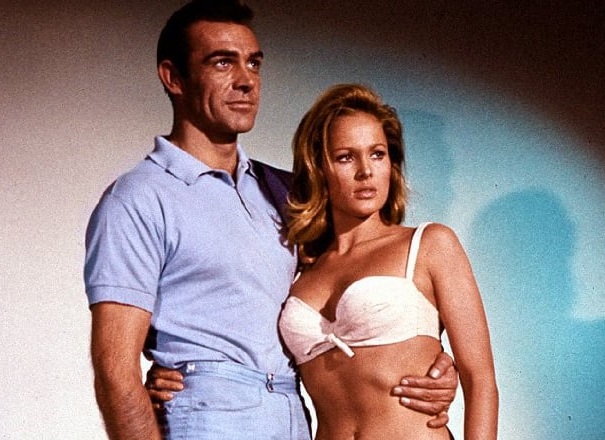
And now for something completely stupid…The British Film Institute, which screens classic films in its Southbank location in London and has the mission of preserving British cinema, has slapped a ridiculous trigger warning on the early James Bond movies, along with some others from the same period. It reads,
“Please note that many of these films contain language, images or other content that reflect views prevalent in its time, but will cause offence today (as they did then). The titles are included here for historical, cultural or aesthetic reasons and these views are in no way endorsed by the BFI or its partners.“
The “Look out! You’re going to be offended if you are right-thinking Brit!” is offensive itself for many reasons, as that description might suggest. The BFI is for adults, not children; there’s no need to warn grown-ups about characters smoking, naughty bits, violence and the terminology of the time. The date should be enough: “Oh, right, this film is six decades old! Things were different then!” The BFI is treating viewers like idiots, as well as imposing its woke, nanny sensibilities on others.
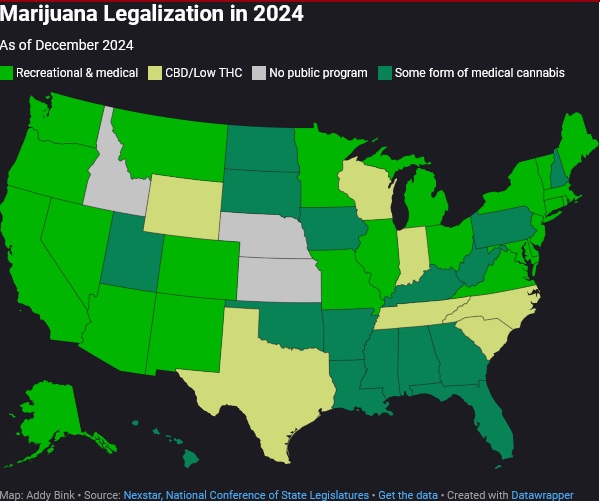
The status of marijuana in the U.S. is a mess, with the drug still being illegal under federal law and the states slowly sliding down the slippery slope to legalization, because they see revenue in it. The confusion is going to get worse before it gets better. Ohio was the only state to legalize marijuana for “recreational use” last year. The Kentucky General Assembly legalized medical marijuana this year, but patients will have to wait until 2025 for the program to kick in. Voters in Oklahoma rejected the legalization of recreational marijuana in last March, and Hoosiers voted against legal marijuana in Indiana in early April.
The Department of Health and Human Services sent its latest findings on marijuana to the Drug Enforcement Administration, recommending that it be reclassified as a Schedule III drug. That classification would mean that the substance has a “moderate to low potential for physical and psychological dependence.” However, I wouldn’t trust the now thoroughly woke HHS to do an unbiased study on the topic, since the most stoned American are progressives and Democrats. Throughout the last few years, there have been various studies suggesting that the drug is not as harmless as its proponents have been claiming it is, and there is enough evidence of heavy use of pot causing long-term cognitive problems to tell me that we still don’t know what lurks in the genie’s bottle.
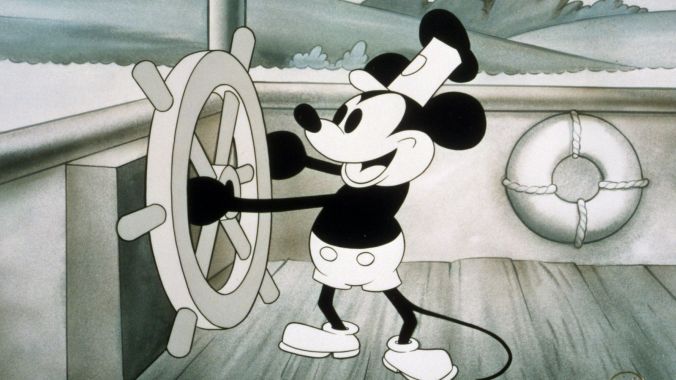
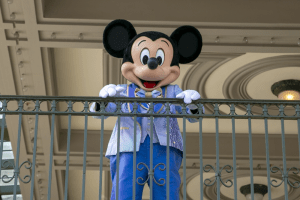
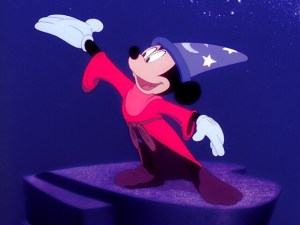
As the capper on a really bad year for Disney, Mickey Mouse finally loses its copyright protection on Jan. 1, 2024, and goes into the public domain. Disney unethically used its lobbying power to use its iconic founding rodent to persuade the U.S. Congress to extend copyright protection beyond all reason. Disney’s monopoly over Mickey will end95 years after his debut in the short film “Steamboat Willie,” long, long after the original copyright protection would have expired based on the correct theory thatonce an artist has gleaned a reasonable benefit and profit from a creation, it benefits the culture and society to be able to use the work to spark innovation and new uses for the original work.
As Carnac the Great would say, “Wrong, Ethics-Breath!”
Disney still has its hooks into Mickey, as the company continues to warp U.S. intellectual property law, setting the precedents for other properties to avoid the public domain far longer than is healthy for the culture. Yes, the original Mickey of 1928’s trailblazing Disney cartoon “Steamboat Willie” (above) has lost its copyright, but not this Mickey,
New Year’s is the one holiday that has a single ethics song permanently associated with it: “Auld Lang Syne,” despite the fact that almost nobody knows what the words mean if they know all the words at all. One problem is the title and the phrase, which is best translated as “old time’s sake.” The other is that it shares a text-setting flaw with the National Anthem, beginning with a question. Nothing in the music makes the line “Should old acquaintance be forgot and never brought to mind?” resonate as a question; if fact, I’m ashamed to admit, for a long time I thought “should” was used in the sense of “if.”
I was stunned to learn recently that singing the song on New Year’s Eve is not an ancient tradition. In fact, the practice as a tradition began in 1929, when bandleader Guy Lombardo needed something to play at the stroke of midnight and chose “Auld Lang Syne” because it had a sentimental vibe and the band knew it. Then Lombardo’s (somewhat whiney, annoying version) continued to be a staple on New Year’s Eve TV broadcast as long as Guy was still kicking.
The full poem, usually attributed to the Scottish poet Robert Burns (1759–1796) but probably with other contributors, reads,
1. Should old acquaintance be forgot, and never brought to mind?
Should old acquaintance be forgot, and auld lang syne?
For old times since, my dear, for auld lang syne,
We’ll drink a cup of kindness yet, for auld lang syne.
Chorus:
For old times since, my dear, for auld lang syne,
We’ll drink a cup of kindness yet, for auld lang syne.
2. And surely you’ll have your pint cup! and surely I’ll have mine!
And we’ll drink a cup o’ kindness yet, for auld lang syne.
Chorus:
For old times since, my dear, for auld lang syne,
We’ll drink a cup of kindness yet, for auld lang syne.
3. We two have run about the slopes, and picked the daisies fine;
But we’ve wandered many a weary foot, since auld lang syne.
Chorus:
For old times since, my dear, for auld lang syne,
We’ll drink a cup of kindness yet, for auld lang syne.
4. We two have paddled in the stream, from morning sun till dine;
But seas between us broad have roared since auld lang syne.
Chorus:
For old times since, my dear, for auld lang syne,
We’ll drink a cup of kindness yet, for auld lang syne.
5. And there’s a hand my trusty friend! And give us a hand o’ thine!
And we’ll take a right good-will draught, for auld lang syne.
Chorus:
For old times since, my dear, for auld lang syne,
We’ll drink a cup of kindness yet, for auld lang syne.
6. Should old acquaintance be forgot, and never brought to mind?
Should old acquaintance be forgot, And auld lang syne!
The song tells us to remember the good times and not to forget that in the end it is human relationships, good will and kindness that matter most. We should sing in the new year with confidence that whatever happens and whatever it brings, we can endure if only we can keep our priorities straight.
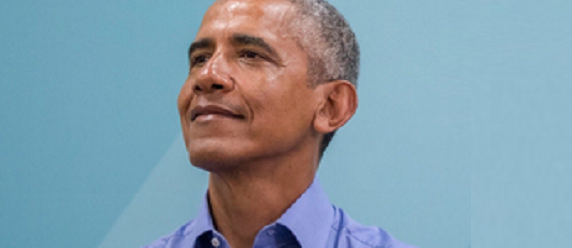
Among the Ethics Alarms long-promised essays that have yet to be posted (you never know when one will finally pop up!) is the Ethics Alarms Fake News Directory. A story that has ended up on many MSM news sources reminded me of why what I thought it would be an easy list to compile turned into a chore. It has appeared in the Washington Post, USA Today, Rolling Stone, Variety, CNN, the Hill, the Chicago Sun -Times, Yahoo!, AOL and dozens—yes dozens— more. The breathlessly urgent story: Barack Obama shared his list of favorite songs for 2023, or, as the Post put it, “Obama’s 2023 bangers include Beyoncé, Burna Boy and Blondshell.”
There was real news about Obama recently: several conservative-leaning news sources like the New York Post and Fox News reported that the ex-President had lobbied Harvard’s governing body to keep unqualified serial plagiarist Claudine Gay as president of Obama’s alma mater. Of course, the “good” media didn’t see that as newsworthy, or felt that the public didn’t need to know about it. Instead, many of them chose to treat Obama’s annual favorite music list as worthy of breaking news treatment.
This is favoritism and propaganda by innuendo. Only a celebrity presumed to be deserving of top of the cognitive dissonance scale status can get such treatment. The publications that printed this non-news as news are pushing readers to adopt their position: this is an inarguably good and great man of iconic stature, and so attention should be paid to his every thought, statement and opinion. It is a familiar media propaganda tactic and was one of the ways the news media propped up Obama during his mediocre terms as President (and I’m being kind) when they treated his college basketball tournament bracket choices as worthy of attention. These same news sources didn’t think the Hunter Biden laptop discovery was news in the middle of a hotly-contested election, nor did it rush to cover an accusation by a former Biden Senate staffer that he had raped her, but the music playlist of a politician with no special expertise in music at all—at least Bill Clinton played the saxophone—warranted coverage.
I shouldn’t even be writing about this completely silly and worthless story. It exemplifies, however, the cesspool that we are going to be dunked in for all of the next year. Here’s how it goes:
ACT I
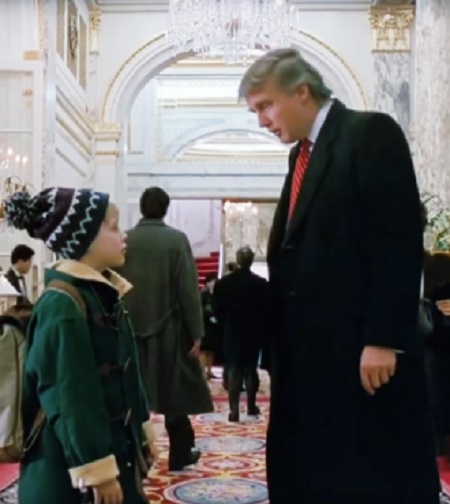
The mainstream news media decided to exploit the Christmas season as an opportunity to take a cheap shot at Donald Trump, since that is considered the patriotic duty of anyone who has ever had contact with him, and because he is a threat to democracy. So, as Columbus’s twin “Home Alone” movies were au courrant once again, Rolling Stone and some other enterprising Trump-bashers dredged up a three-year old Business Insider interview in which has-been movie director Chris Columbus, apparently looking to curry favor with the monolithic woke Hollywood community, revealed that Trump had “bullied” his way into the cameo he performed during “Home Alone 2.”
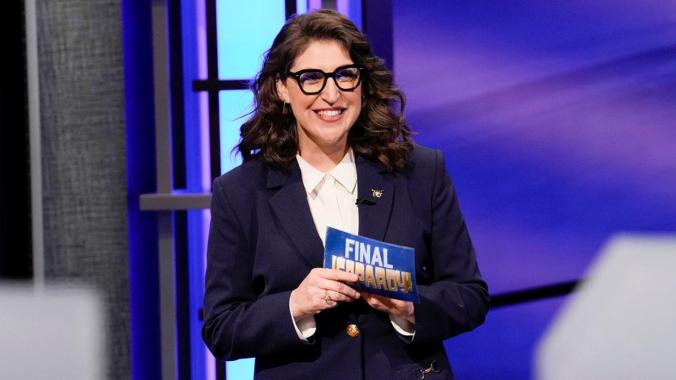
“Jeopardy!,” the apparently eternal TV game show that has persevered even as its once difficult questions have become increasingly pitched to the less-than-astute, ended its 2023 with a surprise. Mayim Bialik, the actress who is also (for an actress) unusually credentialed educationally, announced this month that she has been let go as a host of “Jeopardy!” Since 2021, Bialik, who had previously portrayed “Big Bang Theory” head nerd Sheldon’s girlfriend on the series, had shared the role of host with legendary “Jeopardy!” champ Ken Jennings. Bialik was the more reliable and professional of the two, perhaps because of her long performing background. Jennings was at the center of far more gaffes and controversies, though Bialik had her share. This season, for example, she disallowed all three contestants’ answers of ”Aleksandr Solzhenitsyn” because she found their pronunciations of the Russian writer and dissident’s name insufficiently accurate.
For this continuing series examining the biases that make me stupid (or not), on the one month anniversary of the last installment, I want to take up the matter of drivers who slow to a crawl or even stop their vehicles entirely when they encounter a “speed hump” in the road.
This past week two such drivers almost caused my car to run into them. In recent years Northern Virginia has gone speed hump mad, putting the things virtually everywhere that isn’t a highway or a main thoroughfare. I don’t mind them, however, nearly as much as I mind the way some drivers seem to regard them as explosive devices. You can safely drive over a speed hump at a moderate velocity; your transmission or axles aren’t going to fall off if your car doesn’t slow down into single digits.
I confess: I regard drivers who freak out at speed humps as emblematic of creeping weenie-ism in the nation. I imagine such drivers as still wearing masks alone in their cars, spending nights shivering in terror over the certain doom that the world faces if we don’t start living like prehistoric cave dwellers, fearing to allow their kids to walk unaccompanied a few blocks home from school, and who want the U.S. to minimize the deployment of its military to tasks involving expanding LGBTQ rights and advancing the cause of diversity, equity and inclusion. I envision them applauding when some anti-gun fanatic shouts that it would be worth eliminating the Second Amendment “if it saved one life” and crippling the First so no feelings are ever hurt by unwelcome opinions.
...Trump might blow the race to Joe By acting crazily. Christmas Eve found Donald Roasting no chestnut Trump’s deranged for Christmas He’s in a nasty rut!
Here is what the man who wants to be trusted to hold the most powerful job on earth sends out to the public…
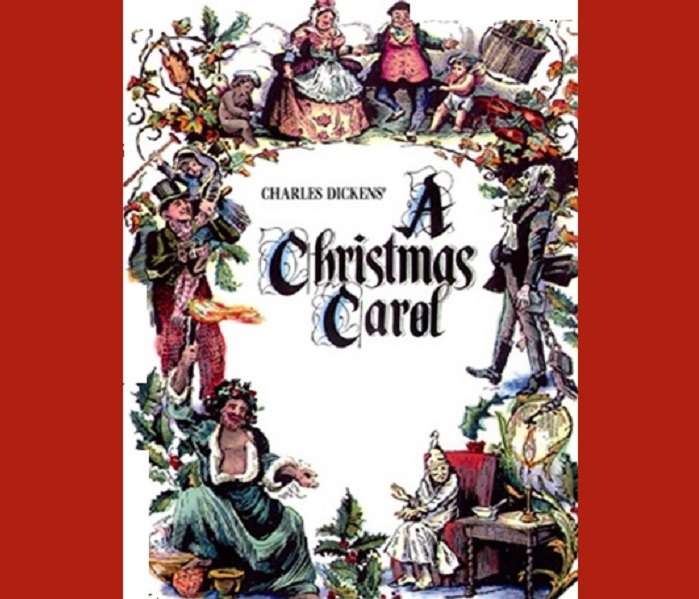
The entire text of “A Christmas Carol” is and has been for a long time listed under Inspirations on the Ethics Alarms homepage. If you haven’t read it (preferably out loud, to your family) recently, I urge you to do so. It is wonderful, and still, after all the movies and TV specials and songs and rival Christmas-themed stories, the best of the genre. It is also delightful literature, and, because I am an incurable romantic, a sap, and a Christmas addict, the story and Dickens’ telling of it gets to me every time.
I just realized that the last time I directed a production that wasn’t my own, it was a staged reading of “A Christmas Carol.” I miss directing greatly—no one has been clamoring for my comeback—so it that was my last hurrah, I can live with that. “A Christmas Carol” is, after all, one of the greatest ethics tales of all.
The first version of the film adaptations of “A Christmas Carol” I saw when I was knee-high to Robert Reich was the version starring Alistair Sim. Many aficionados of “A Christmas Carol” movies think it is still the best, and I won’t argue with them. Because the movie is in black and white and has been superseded by so many other versions, it is hard to find it on TV now except for the streaming services. Even the much inferior version starring Reginald Owen (with the entire Lockhart family, including young pre-“Lassie,” pre-“Lost in Space” June, as the Cratchits) is shown more than the classic Sim film. In these cynical times, the version of “A Christmas Carol” most likely to be available, sort of, is Bill Murray’s “Scooged.” It’s not the worst version—the musical starring Albert Finney wins that booby prize (“Thank you very much! Thank you very much!” Yecchh.)—but cynicism and dark humor really don’t belong in this story
My personal choice for the best adaptation goes to the 1984 George C. Scott version, if you don’t count “Mr. Magoo’s Christmas Carol,” and you probably shouldn’t, though I love it. The 1984 film has David Warner as Bob; Edward Woodward is the best (and tallest) Ghost of Christmas Present ever; and I think this is the scariest version of Marley.


 Ethics Alarms