Ethics Quote Of The Week: Actor Richard Dreyfuss

“Am I being told that I will never have a chance to play a black man? Is someone else being told that if they’re not Jewish, they shouldn’t play the Merchant of Venice? Are we crazy? Do we not know that art is art?…This is so patronizing. It’s so thoughtless and treating people like children.”

—-Actor Richard Dreyfuss, Academy Award-winner, lamenting the successful invasion of “diversity, equity and inclusion” into his profession and the movie industry.

Dreyfuss’s outburst was provoked when he was asked in an interview with PBS’s Firing Line about his opinion of the Academy of Motion Picture Sciences’ new DEI mandates, which will kick in for the 2025 Oscars. “They make me vomit,” the famously outspoken Hollywood liberal said. “No one should be telling me as an artist that I have to give in to the latest, most current idea of what morality is. What are we risking? Are we really risking hurting people’s feelings? You can’t legislate that. You have to let life be life and I’m sorry, I don’t think there is a minority or majority in the country that has to be catered to like that.”

The answers to Dreyfuss’s queries are, in order,

Continue reading

If You Need Additional Evidence That Paying Attention To Celebrities’ Political Posturing Is Evidence of Crippling Gullibility—And You Shouldn’t—Here It Is

That’s Kim Kardashian above, the perfect embodiment of empty celebrity. She was one of many “glitterati” who attended the 2023 Met Gala on May 1, and willingly participated in the theme, “Karl Lagerfeld: A Line of Beauty.” The whole event was billed as a tribute to the late fashion icon one of the all-time great designers, who was also indisputably a terrible person, at least according to the public pronouncements and signaled values of Hollywood’s, New York’s, cosmopolitan and the fashion world’s stars.

Piers Morgan, who, like a stopped clock, occasionally is spot-on accurate, was outraged by the event’s hypocrisy, writing,

Continue reading

Hollywood Writers Fear That AI Might Replace Them. Tough!

The first Hollywood strike in 15 years began today, as talks with the studios broke down and the economic pressures of the streaming era sent unionized TV and film writers to picket for better pay. The strike has shut down most late-night talk shows, so it is already benefiting society. “No contracts, no content!” sign-carrying members of the Writers Guild of America chant outside various office buildings in Manhattan and L.A. The last writer’s strike shut down the industry for 100 days and helped send California into a recession.

As usual, the strike is about money. But far down the list of objectives for its contract negotiations under a section titled “Professional Standards and Protection in the Employment of Writers,” the union says it wants to “regulate use of material produced using artificial intelligence or similar technologies.”

Continue reading

In Spain, Putting Little People Out Of Work In Order To Save Them

The cognitive dissonance created by the use of little people, aka. dwarfs and midgets, to make normal size people laugh has bothered me for a very long time. I remember attending the final game of Baltimore Orioles great Brooks Robinson in 1977 (he retired when he decided he could no longer play up to his standards, rather than hanging on and collecting his contract salary to the bitter end. Those were the days…). As a part of the ceremony, the crowd was treated to the spectacle of a 3’8″ man wearing Robinson’s number re-enacting some of his most famous fielding plays at third base.

The audience roared; my family and I were appalled, but then, that was Baltimore. I decided, after pondering the matter, that eventually the bad taste of such performances would make them obsolete, which would be a boon to civilization, but if height-challenged individuals consented to participating in the acts and were paid, the “entertainment” was at least arguably ethical. It wasn’t unethical. And sure enough, when the Orioles franchise was sold a few years later, the use of Little People as gags and mascots ended.

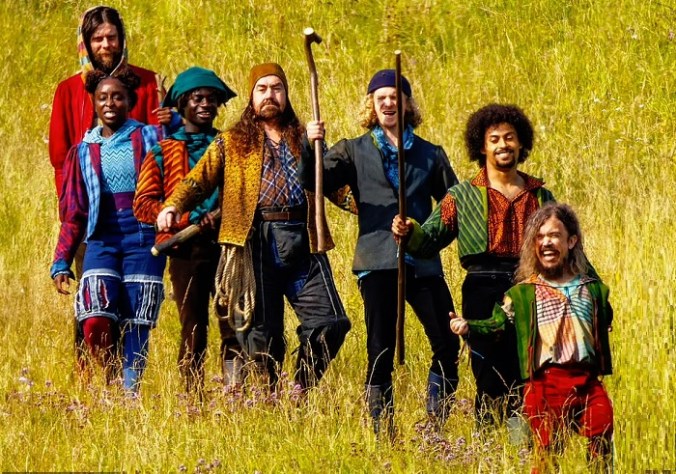
Now comes the news that Spain’s parliament last week banned bullfighting featuring dwarfs in costumes, including routines where the the Little People pretended to be bull-fighters. In those instances, they “fought” small bulls and calves but didn’t hurt them, unlike the full-size matadors who stab and kill the full-size bulls. Little People also have entertained bull-fight crowds in Spain for decades by performing like American rodeo clowns, chasing and being chased by the bulls. As with the Baltimore Orioles’ small performers, the practice is slowly losing support and popularity.

Continue reading

“Phantom” And Lyrical Integrity

“The Phantom of the Opera” finally closed on Broadway last month after running more than 35 years and a record-setting 13,981 performances. Most of the musicals on the list of the longest-running shows are junk between “Phantom” and #17, “Fiddler on the Roof” (though not #7, “A Chorus Line”), but “The Phantom of the Opera” isn’t, though more for its staging and atmospherics than its music. I saw the show long ago at the West End in London, prepared to find it over-rated, but it really isn’t.

However, before it passes into history (and you’re not going to see a lot of high school, college and community theater productions of this monster), I have to mention something about the lyrics (by Charles Hart; Andrew Lloyd Webber composed the music) that bothered me the first time I heard the score, when I saw the show, and now. The ethics issue is integrity, and I know some readers are going to decide that the topic of cheating in hit Broadway show lyrics is too trivial to think about. Au contraire, as the Phantom might say (the show does take place in Paris, after all). Nothing involving ethics is too trivial to think about: that’s been the operating principle here from the beginning. Besides, I write song lyrics as part of what is laughingly called my job. I care about doing it right.

In the title song of “The Phantom of the Opera” (called, as I bet you could guess, “The Phantom of the Opera”) the rather central word “opera” is pronounced two different ways to fit with the music. “Opera” is generally pronounced in English as a two-syllable word (“op-ra”), and indeed it is in part of the song, as you will note in the ridiculous music video made with the show’s original “Christine,” Sarah Brightman, above. However, through most of the song, opera is sung as three-syllable word, “op-er-a.”

Continue reading

Jerry Springer (RIP) Was An Ethics Corrupter

Jerry Springer has died at 79. I’m not glad he’s dead, but when someone has as damaging an effect on the culture as he did, the fact belongs in his obituary. Attention should be paid.

Springer was the epitome of an ethics corrupter. He held the poor, uneducated, non-too-bright and badly socialized up to public ridicule. He encouraged foolish people to embarrass themselves on TV. He also sent the message to many of his less civilized, socialized and mature viewers that the best way to deal with conflict is a punch in the chops.

Continue reading

Comment Of The Day: “If Cleopatra Was Black, Maybe I Am Too!”

Once again I am confronted with the phenomenon of a Comment of the Day that is better written than the Ethics Alarms post at issue. This happens a lot (Curmie, today’s author, is a repeat offender). I am torn about it, actually: the comments here contribute greatly to the value of the blog, and my original concept was to create a colloquy of articulate readers interested in ethics who also bring different backgrounds and perspectives to the issues. The high quality of commentary obviously validates that mission; it’s only my fragile ego that suffers. Curmie, like several others who participate regularly here, is an experienced blogger himself. He’s also a better proof-reader than I am (though I found one typo this time, making my day).

But I digress. The topic of Curmie’s Comment of the Day is the controversy over Netflix suggesting that Cleopatra was black in a new series, a matter Ethics Alarms raised in the post, “If Cleopatra Was Black, Maybe I Am Too!”

From here on, it’s all Curmie; I’m just going to sit by quietly feeling inadequate…

***

There are several differences, I think, between this story and the brouhaha over the black Anne Boleyn a couple of years ago.

First is a fundamental difference in the way the casting of a major role was presented. The BBC would have us believe that race doesn’t matter in the casting of the title character in the “Anne Boleyn” mini-series so long as it’s “surprising.” (As you noted, Jack, a block of cheese would also have been surprising in the role.) The forthcoming Netflix series is at least honest that being black (or mixed race and appearing black, in this case) was a prerequisite for an actress being considered for the role of Cleopatra, who almost certainly was, shall we say, significantly lighter-complected.

This is apparent in the nonsensical utterances in the promotional video, in which anonymous voices are treated as authorities. If they had a legitimate historian who supported the cause, that person would be identified as such. That omission is more than a little telling.

Continue reading

If Cleopatra Was Black, Maybe I Am Too!

Netflix is telling its subscribers that Cleopatra was black, but both Cleopatra and I come from Greek stock, so if she was black, I must be too. This is just the break I have been waiting for after seeing my legal ethics training business torn to pieces by the stupid Wuhan virus lockdown, and income reduced to trickle that cannot be restored to its previous whoosh! Now that I can market my services as one of the very few blacks in the field, whole new vistas are open to me. Thanks, Netflix!

But I’m getting ahead of myself. Sorry, I’m just giddy.

A new Netflix new docu-series, “African Queens: Queen Cleopatra,” stars black British actress Adele James as the fabled Egyptian ruler. Producer Jada Pinkett Smith (yes, she’s the one her husband slapped Chis Rock over) has said that “she wanted to tell the story because ‘”we don’t often get to see or hear stories about black queens.” Somebody should tell Jada that one reason for that is that they prefer to tell the stories of white queens and pretend they are black, as when the very white second wife of King Henry the VIII was cast as being black in 2021 British mini-series. As I pointed out in the linked post, this kind of fantasy revisionism is considered benign—DEI, man!—-while casting a white women to play a black one would be “whitewashing” and racist. Similarly, casting a black actress to play the red-haired, fishy-white Little Mermaid in Disney’s life action version of the animated classic is hunky-dory, but using computer magic to make the black version of whitefish Ariel white again is racist. Clear?

I sure hope not.

Continue reading

More Big Brother “Whack-A-Mole”: The Woke Censors Come For Jeeves And Bertie

The good news is, as we are periodically reminded, this isn’t the U.K. (Thank-you, George, Tom, John, Paul and Ben!). The bad news is that the totalitarian virus embedded in The Great Stupid is contagious, and far greater threat to civilization than any pandemic. Great Britain has reached a level of unethical literary censorship—for the greater good, to eradicate “WrongThink,” you know—that would have been unimaginable just a few years ago.

I thought the effort by British publishers to re-write the works of Roald Dahl and Ian Fleming was just a temporary outbreak, and that the miscreants had received so much ridicule and criticism that the madness had been contained. As is so often the case, I was tragically wrong. Now these ethics villains have come for…I can’t believe I am writing this…P.G. Wodehouse.

Continue reading

Lyric Political Correctness In “The Little Mermaid”: Not Unethical, Just “The Great Stupid” Doing What It Does…

From the Ethics Alarms mailbag came an inquiry about the latest kerfuffle over the upcoming live action version of “The Little Mermaid.” There are two great production numbers in the original, both sung by a crab: the Academy Award-winning “Under the Sea” and the more sedate “Kiss the Girl,” in which Ariel’s devoted crustacean friend urges Prince Eric, Ariel’s secret love, to take the plunge and kiss the magically land-bound fish-woman.

Here are the original lyrics:

There you see her
Sitting there across the way
She don’t got a lot to say
But there’s something about her
And you don’t know why
But you’re dying to try
You wanna kiss the girl

Yes, you want her
Look at her, you know you do
Possible she wants you too
There is one way to ask her
It don’t take a word
Not a single word
Go on and kiss the girl

Sing with me now
Sha-la-la-la-la-la
My oh my
Look like the boy too shy
Ain’t gonna kiss the girl
Sha-la-la-la-la-la
Ain’t that sad?
Ain’t it a shame?
Too bad, he gonna miss the girl

Now’s your moment (ya, ya, ya)
Floating in a blue lagoon (ya, ya, ya)
Boy, you better do it soon
No time will be better (ya, ya, ya, ya, ya, ya)
She don’t say a word
And she won’t say a word
Until you kiss the girl

Sha-la-la-la-la-la
Don’t be scared (sha-la, sha-la-la ya, ya, ya)
You got the mood prepared (woah, woah)
Go on and kiss the girl
Sha-la-la-la-la-la
Don’t stop now (sha-la, sha-la-la ya, ya, ya)
Don’t try to hide it how
You want to kiss the girl (woah, woah)
Sha-la-la-la-la-la
Float along (sha-la, sha-la-la)
And listen to the song
The song say kiss the girl (woah, woah)
Sha-la-la-la-la-la
The music play (ya, ya, ya, ya, ya, ya)
Do what the music say
You got to kiss the girl
You’ve got to kiss the girl
Oh, don’t you wanna kiss the girl
You’ve gotta kiss the girl
Go on and kiss the girl

Via the surviving member of the team that wrote the songs in “Mermaid” (and better yet, “Little Shop of Horrors”), Alan Menken, we learned this week that Disney, which is too woke for its own good these days (and ours), ordered up some lyric changes in the song because “people have gotten very sensitive about the idea that [Prince Eric] would, in any way, force himself on [Ariel].”

Oh, please.

Continue reading