From The Ethics Alarms “It’s About Time!” Files: Iowa Strikes Down A “Dangerous Animal” Ordinance

Pinky was a happy, healthy pet dog  until March 2016, when a friend visiting Pinky’s owner let her into the yard unsupervised. The neighbor’s cat, Rebel, had wondered into the yard, and Pinky had the feline in his maw until her owner ran out and commanded her to drop it.  Rebel survived the trauma, but needed three dozen staples for her wounds.

Pinky was impounded after the city’s humane officer declared her a dangerous animal under the city ordinance. Of course, Pinky is a pit bull mix, so bias was already working against her. The Des Moines ordinance that bans the keeping of “dangerous animals” includes banning any animal “that has exhibited vicious propensities in present or past conduct, including such that the animal … has bitten another animal or human that causes a fracture, muscle tear, disfiguring lacerations or injury requiring corrective or cosmetic surgery.”

Such an ordinance could only be written by someone willfully ignorant of the behaviors of dogs as well as the vicissitudes of moral luck. Our wonderful and gentle English Mastiff, Patience, for example, once caused a bloody wound to my wife’s scalp when she gave the dog an unexpected buss on the muzzle. The dog jerked her head in surprise, nicking my wife’s head with a tooth. The wound bled profusely, and required stitches—and it was 100% my wife’s fault. Patience literally wouldn’t hurt a fly…indeed, she was afraid of flies.

As for Rebel, any cat that invades a dog’s home turf is asking for trouble. Continue reading →

Morning Ethics Warm-Up, 4/6/2018: The Good, The Bad, And The Ugly

Gooooood Morning!

1. From the Moral Luck files:

What you just saw is a bald eagle landing on Seattle Mariners starter James Paxton’s shoulder during the National Anthem before yesterday’s Mariners-Twins game.  Here’s a closer look…

The eagle got confused: it is supposed to go to his trainer, in one of the more spectacular Anthem displays that has ever been devised: I’ve seen this performance several times.  After the game, Paxton was asked why he didn’t try to escape. His answer:

“I’m not gonna outrun an eagle, so just thought, we’ll see what happens.”

Heck, he had already endured the horror of Dessa’s incredibly off-key rendition of “The Star Spangled Banner,” what’s a mere bald eagle attack? Seriously, Paxton’s quote is an ethics guide: Don’t panic, don’t act on emotion, assess the situation, see what happens, and act accordingly. Of course, the fact that this strategy worked out well helps: if the eagle had ripped his eyes out, everyone would be saying Paxton was an idiot not to run.

How I would have loved to see this happen to Colin Kaepernick!

2. How the President gets himself into ethics trouble. I just watched a clip of Trump speaking yesterday about California’s sanctuary cities. “The thing is that these cities are protecting bad people,” he said, with emphasis. Naturally, this will be characterized as racism. It’s not racism, however. The statement is just overly simplistic, and exacerbated in its inflammatory elements by the President’s rudimentary vocabulary, in which the only operable adjectives appear to be great, bad, horrible, wonderful, terrible, sad, and a few more. It is impossible to communicate about complex issues competently and fairly with such meager tools. Illegal immigrants have broken our laws and willfully so. That is not good, but it does not make all of them bad people….though many are. Continue reading →

Morning Ethics Warm-Up, 4/2/2018: The Unreliable Authorities Edition

Good morning!

1.  Another baseball ethics dispute! This is an exciting time of changes in the traditional wisdom of how to play Major League Baseball, all sparked by that new ethics bugaboo, Big Data. Now that so many aspects of the game can be measured and analyzed, tradition and assumptions rarely challenged are now under fire. One massive shift is, ironically, in the matter of shifts, radical defensive alignments in which players are not fielding their normal positions, but rather are places where computer spray charts for each batter suggest that the likelihood of fielding a ball is highest.  This can mean anything from one lonely fielder on the left side of the infield, or four outfielders.

Shifts are not new, but they used to be used on a handful of super-sluggers with dead-pull propensities, notably Ted Williams, who famously refused to bunt for easy hits to the unoccupied side of the field, and instead usually tried to hit through or over the shift. It has been estimated that the Williams Shift, combined with the player’s infamous stubbornness, cost him many points off of his lifetime batting average, especially since Williams defeating the shift by bunting might have discouraged its use.

But he was Ted Williams, the second greatest hitter of all time.  The question of whether lesser batters should bunt against shifts, for now many teams shift against everyone, has an easy answer: Of course they should.

In yesterday’s Twins-Orioles game, Twins starter Jose Berrios had  a one-hit shutout in the ninth inning. leading with one out and no runners on base. O’s rookie catcher Chance Sisco came to the plate—he has my favorite baseball name this season–and the Twins put on a shift like the one Ted Williams despised:

So, knowing he wasn’t Ted Williams and also knowing that in baseball even seven run leads aren’t a sure thing, Chance dropped down a bunt to the left side for a single. Berrios then walked two batter Davis and Manny Machado to load the bases, but finished his shutout by getting the next two outs without further disruptions.

After the game, the Twins players questioned the ethics of Sisco’s hit. Berrios said, “I just know it’s not good for baseball [to bunt] in that situation. That’s it.” Twins outfielder Eddie Rosario said, “Nobody liked that. No, no, no. That’s not a good play.” Second baseman Brian Dozier added, “Obviously, we’re not a fan of it. He’s a young kid. I could’ve said something at second base but they have tremendous veteran leadership over there. I’m sure they’ll address that. It’s all about learning. You learn up here.”

When do you “learn” not to try to win the game and get on base? For Sisco, a rookie, sending the message that shifting against him is a bad risk also is a wise career move. There is a long-standing, and stupid, unwritten rule in baseball that it is “bush league” to try to break up a no-hitter with a bunt, but extending that dubious logic to a mere shutout breaks the Stupid Meter.

2. Coffee is good for you, but be worried when you drink it. Continuing its rapid devolution into Bizarro World, just as increasing scientific evidence suggest that coffee is good for you, California is demanding that it carry a tobacco-like warning label. Last week a judge ruled that Starbucks and  other coffee companies in California must carry a cancer warning label because of a chemical produced while beans roast has been shown to cause cancer in high doses. California’s Safe Drinking Water and Toxic Enforcement Act  requires companies with more than 10 employees to warn their customers about the presence of carcinogenic and toxic chemicals in their products, even in tiny amounts. Acrylamide, a chemical compound that is produced naturally during the roasting of coffee beans, is on the state’s list of chemicals known to cause cancer or reproductive toxicity. The judge ruled that the coffee company had the burden of proof  to show that acrylamide posed no significant health risk to coffee drinkers, even though there is no evidence that coffee does pose a risk. Continue reading →

An Ethics Alarms Challenge: Defend Criticism Of The Brooklyn Museum’s Hiring Of Two White Curators Of Its African Art Collections Without Endorsing Racism

The Ethics Alarms verdict is that such a defense is impossible. Asks the Huffington Post in its “Black Voices” section, “People Want To Know Why Brooklyn Museum’s New African Art Curator Is White.” Why are they asking this? The answer is obvious and backed by the curriculum vitae of the two (not one) scholars hired, Drew Sawyer and Kristen Windmuller-Luna. They are eminently qualified for their new jobs, and the color of job applicants is not, and never should be considered “a credential.”

From the museum’s release:

Windmuller-Luna will rethink the Brooklyn Museum’s extensive collection of African art, which is comprised of more than 6,000 objects, and organize a freshly conceived temporary installation showcasing the depth of the collection. Her focus will be to create a dialogue between the African art collection and other works within the museum’s holdings while also helping to develop educational programming.

As a curator and historian of African arts and architecture, with a specialization in the early modern period and Christian Ethiopia, her work counters myths about African civilizations and artistic production by focusing on cultural specificity, artistic diversity and global historical context. Windmuller-Luna received her Ph.D. and M.A. in Art and Archaeology from Princeton University and her B.A. in the History of Art from Yale University.

Drew Sawyer will reimagine the role of photography collection within the museum and explore ways to integrate it with other collection galleries and exhibitions.

Sawyer is currently Head of Exhibitions and the William J. and Sarah Ross Soter Associate Curator of Photography at the Columbus Museum of Art in Ohio. He is also a co-organizer of the upcoming historical survey Art after Stonewall, 1969 to 1989 which will tour during the 50th anniversary of the Stonewall Riots in 2019. Sawyer holds a Ph.D. in Art History and Archaeology from Columbia University, specializing in North American art and visual culture of the nineteenth and twentieth centuries.

“Kristen’s vision for a new permanent collection installation that transforms how viewers relate to the arts of Africa is tremendously exciting for us as we near the 100th anniversary of the Brooklyn Museum’s pioneering exhibition of African art in 1923, ”said Deputy Director and Chief Curator Jennifer Chi. “Drew’s deep expertise in social and experimental documentary practices during the twentieth and twenty-first centuries will significantly augment our strong collection and will contribute to our history of championing contemporary artists who continue in this vein.”

Continue reading →

Morning Ethics Warm-Up, 4/1/2018: The Easter-April Fools Edition [UPDATED]

Happy Easter, or April Fools Day,

…whichever you chose, or both.

[My family celebrated Greek Easter (next Sunday, this year), or not, depending on how Greek my mother was feeling. The whole thing left me thoroughly confused. And why no Greek April Fool’s?]

1 Hey, it’s only the Pope carelessly allowing centuries of Catholic teachings to be declared, if informally, null and void. What’s everyone so upset about? Recipe for a fiasco:

  • The Pope inexplicably has a meeting with a 93-year-old atheist reporter, Eugenio Scalfari, who has reported on the alleged contents of their private meetings before.
  • Scalfari has admitted “on more than one occasion” that he doesn’t take notes or record his conversations with the Pope.
  • The Pope either opines, or doesn’t, or sort of does depending on your interpretation, and if you are an atheist confirmation bias comes into play, opine that Hell doesn’t exist, saying, according to his pal, “Hell does not exist…The disappearance of sinful souls exists.”
  • Scalfari, presumably without permission or consent, but he’s a journalist, so he’s going to report the news, and the Pope saying that all that stuff in the Bible about Satan is a lot of hooey is, you have to admit, news (although who knows if Matt Pearce would report it as news; I guess it would depend on whether he wanted the public to know there was no Hell, right?), naturally lets the world know that the Pope doesn’t believe what his predecessors and follower have been using to scare the Hell out of sinners all this time.
  • The Vatican issued a statement saying:

“What is reported by the author in today’s article is the fruit of his reconstruction, in which the precise words uttered by the Pope are not cited. No quotations in the aforementioned article, then, should be considered as a faithful transcription of the words of the Holy Father.”

That’s called “spin.” Why do we trust these people?

2. Why is NPR taxpayer-funded again? This “correction” actually appeared in the NPR story about the Pope’s Hell problems:

Correction March 30, 2018: An earlier version of this post incorrectly described Easter as “the day celebrating the idea that Jesus did not die and go to hell or purgatory or anywhere at all, but rather arose into heaven.”

Competence? Editors? Basic education? Respect for people’s faith? Knowing something about the predominant religion ins the nation you are reporting on? Hello? Continue reading →

Morning Ethics Warm-Up, 3/31/2018: The Baseball-Trained Rifleman, The Hockey Hero Accountant, And Some Other Stuff That’s Just Annoying…

Good morning!

1. “The Rifleman” and “Fix the problem.” I recently was interviewed by a graduate student in organizational leadership and ethics. One thing we discussed was how popular culture in America once dedicated itself to teaching ethical values and ethics problem-solving, especially in shows aimed at young audiences. This is not so true any more; indeed, popular culture models unethical conduct at least as often today.

I told my interviewer about recently watching an episode of “The Rifleman,” the early ’60s TV Western about a single father raising his young son while being called upon to use his skill with a rifle to fight for civilization in the harsh frontier.  In the episode, hero Lucas McCain (played by the under-rated Chuck Connors) had to deal with an old friend, now an infamous outlaw, who had come to town. (The ethical conflict between personal loyalty and an individual’s  duty to society was a frequent theme in Westerns.) Lucas was a part-time deputy, and at the climax of the episode, his friend-gone-bad is prepared to ride out of town to escape arrest for his latest crime. Lucas tells him not to leave, and that if he tries to escape, Lucas will have to let his custom-made rifle settle the matter, as usual. (Peace-loving Lucas somehow managed to kill over a hundred men during the run of the series.)  Smirking, his friend (Richard Anderson, later known as the genius behind “The Six Million Dollar Man”), says that he knows his old friend is bluffing. For Lucas owes him a lifetime debt: he once saved “The Rifleman’s” life.  You’re a good man and a fair man, the villain says. “You won’t shoot me. I know you.” Then he mounts his horse , and with a smiling glance back at “The Rifleman,” who is seemingly paralyzed by the ethical conflict, starts to depart. Now his back is all Lucas has to shoot at, doubling the dilemma.  You never shoot a man in the back, an ethical principle that the two officers who killed Stephon Clark somehow missed. We see McCain look at his deadly rifle, then again at the receding horseman. Then, suddenly, he hurls his rifle, knocking his friend off his horse. The stunned man is arrested by the sheriff, and says, lamely, as he’s led away. “I knew you wouldn’t shoot me.”

I love this episode. It teaches that we have to seek the best solution available when we face ethics conflicts, and that this often requires rejecting the binary option presented to us, and finding a way to fix the problem.

Of course, it helped that Chuck Connors used to play for the Dodgers, and could hurl that rifle with the accuracy of Sandy Koufax.

2. Here we go again! Now that anti-gun hysteria is again “in,” thanks to the cynical use of some Parkland students to carry the anti-Second Amendment message without having to accept the accountability adults do when they make ignorant, dishonest, and illogical arguments in public, teachers and school administrators are back to chilling free speech and expression by abusing their students with absurd “no-tolerance” enforcement. At North Carolina’s Roseboro-Salemburg Middle School, for example, a 13-year-old boy in the seventh grade was suspended for two days for drawing  a stick figure holding a gun.

I drew pictures like this—well, I was little better at it—well into my teens. It’s a picture. It isn’t a threat. It isn’t anything sinister, except to hysterics and fanatics without a sense of perspective or proportion—you know, the kind of people who shouldn’t be trusted to mold young minds. “Due to everything happening in the nation, we’re just being extra vigilant about all issues of safety,” said Sampson County Schools’ Superintendent Eric Bracy, an idiot. How does punishing a boy for a drawing make anyone safer? It makes all of us less safe, by pushing  us one step closer to government censorship of speech and thought.

Then we have Zach Cassidento, a high school senior at Amity High Regional School in Connecticut who was suspended and arrested —arrested!—for posting a picture of his birthday gift, an Airsoft gun, on Snapchat. He was not charged, but was suspended for a day from school….for posting, outside of school, on his personal account, the picture of an entirely legal toy gun (It shoots plastic pellets: my son has several of them).

The people who do this kind of thing to children in violation of their rights as Americans are the same people who cheer on David Hogg while signing factually and legally ridiculous petitions. They should not be permitted to teach, and this kind of conduct ought to be punished.

Where is the ACLU? For the organization not to attack these abuses is an abdication of the organization’s mission. Continue reading →

Comment Of The Day: “Unethical Quote Of The Month: Journalist Matt Pearce”

I thought a bit of rancor was appropriate for a Comment of the Day on this topic, which I’m sure some Ethics Alarms readers are getting sick to death of, the collapse of journalism ethics. I fight every day to find a balance between posting more evidence of this corrosive and wholly avoidable infection within our society, for more evidence appears daily, and leaving the issue alone for another day in order to examine different topics. But while in other areas of professional ethics I see sincere and genuine efforts to identify unethical conduct, address it, and reform it…Yes, even in politics…I see none  in journalism. To the contrary, I see obstinate denial that there is a problem, especially from those who perceive themselves and their ideological agendas as benefiting from the increasingly egregious mainstream media bias. Until there is an acknowledgment of this problem and its seriousness within journalism itself, it will only continue to get worse, and our society and nation will get even sicker as a result.

Here is Steve-O-in NJ’s Comment of the Day on the post, Unethical Quote Of The Month: Journalist Matt Pearce:

CAN journalists legitimately try to hide their agendas from anyone with a functioning brain and ethical compass after they “cut loose” in 2016? The evidence of media bias has been getting bigger and bigger since 1992. The media’s running interference for Bill, attempt to swindle the voters in 2004 with a lie, and industry-wide push for Obama were all pretty damning pieces of evidence, but the open abandonment of objectivity in 2016 in an attempt to save this nation from itself irrevocably broke the scale. I think for a while they even had you [ Host’s note: That is, me] persuaded, though not consciously so, since your thinking moved through the idea that Hillary would do less damage than Trump before you decided that Hillary was also unworthy of your support.

It’s frankly time for the mainstream media to own up to the fact that it isn’t objective anymore and hasn’t been for some time, and that its job is to push the progressive agenda any way it can. It won’t though. Continue reading →

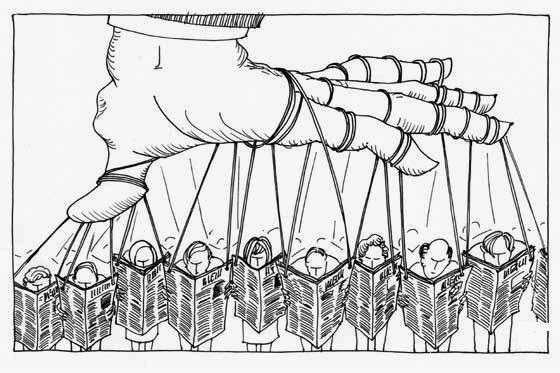
Unethical Quote Of The Month: Journalist Matt Pearce

“Journalism *is* activism in its most basic form. The entire basis for its ethical practice is the idea that a democracy requires an informed citizenry in order to function. Choosing what you want people to know is a form of activism, even if it’s not the march-and-protest kind.”

—-Matt Pearce, national correspondent for the LA Times, tweeting his support for the definition of journalism endorsed by Rebecca Schneid, co-editor in chief of the Marjory Stoneman Douglas High School newspaper, as Brian Stelter, CNN’s fake broadcast journalism ethicist, silently stood by, since it is mean and bad form to tell teenagers dictating national policy that they don’t know what they are talking about.

Choosing what you want people to know.

Choosing what you want people to know.

Choosing what you want people to know.

Choosing what you want people to know.

Nah, there’s no media bias!

Yup…

“Enemy of the people.”

Res ipsa loquitur.

Morning Ethics Warm-Up, 3/28/18: Ad-block, Rights-block, Deportation-block, and Stupid-block

Good Morning!

1 Different rights, same unethical tactics. Debbie Wasserman Schultz (D-Fla.), whose very existence as a power in the Democratic Party is an indictment of the party’s integrity and trustworthiness, proved it again by proposing a bill that would require background checks for ammunition purchases. “You do not have the right to bear bullets,” she  proclaimed Monday at a news conference at the Pembroke Pines Police Department in Florida.

Progressives, honest observers, and the courts have rightly expressed disgust at various cynical efforts to circumvent other Constitutional rights by similar tactics. In Whole Woman’s Health v. Hellerstedt, for example, decided on June 27, 2016, the Supreme Court held in a 5-3 majority that two provisions of a Texas law, one requiring physicians who perform abortions to have admitting privileges at a nearby hospital and another requiring abortion clinics in the state to have facilities comparable to an ambulatory surgical center,  places a substantial and unconstitutional obstacle in the path of women seeking an abortion, because they constituted an undue burden on abortion access.

I wrote at the time,

“Life would be so much simpler if our elected officials and activists employed an adaptation of the Golden Rule, and looked objectively at issues from the other side’s point of view. This is especially true in the realm of rights.  Second Amendment absolutists insist that virtually any laws regulating who can purchase guns… have the ultimate goal of  eliminating that right entirely, which, in many instances is the case, especially if you listen carefully to the rhetoric of the legislators proposing such measures. There is little difference from this and what anti-abortion advocates are attempting to do with laws like House Bill 2 (H. B. 2).”

In fact there was no difference at all, and now Wasserman-Schultz is using the same unethical tactic. (Imagine: Debbie Wasserman-Schultz using an unethical tactic!)  The ethical principle is the same in both matters: a right isn’t a right if legal obstacles make it difficult to exercise that right. Any regulation imposed on a constitutional right must not create “a substantial obstacle” and must be reasonably related to “a legitimate state interest.” Wasserman-Schultz’s statement—I know she’s an idiot, but she is also a member of Congress and is supposed to know something—directly contradicts settled and core Constitutional principles. There is indeed a “right to bear bullets,” because without ammunition, the right to bear arms is an illusion.
Continue reading →

Morning Ethics Warm-Up, 3/27/18: Redux And Déjà Vu!

Good Morning.

1 Yes, “enemy of the people” is accurate. I searched all over cable and network news this morning to find an outlet that wasn’t dominated by the breaking news that a President-to-be had an adulterous affair with a porn star 12 years ago. I couldn’t find one. The media-wide effort to undermine an elected President and his respect in the nation and the world at a time of great challenges and peril on all fronts is irresponsible, destructive, and demonstrates the collapse of journalism as a bulwark of American democracy.

Journalists don’t have to behave like this: they have chosen to, because they discern that a critical mass of citizens–bad ones–would rather see the President of the United States humiliated and weakened nationally and internationally based on his past than to permit him the same crucial advantage  that every other President since George Washington has been conceded and used. That is the inherent dignity and honor of the office itself. As I wrote here before, almost every President could have been embarrassed in this way, and some far more.  In the past, the public wouldn’t have tolerated it. A full year of “the resistance” and non-stop media attacks made this President uniquely vulnerable to ad hominem attacks, and the only protection left intact between sensational smears and responsible journalism were ethical standards, which is to say, with today’s journalism, nothing at all.

This is no less than a ruthless, ratings- and bias-driven attack on American institutions, and every future President, and the nation, and our democracy, and the world itself, will suffer for it. Ironically, Trump may suffer from it least of all, since no one who supported his candidacy cared about traditional standards regarding who was fit to inherit the legacy of Washington, Lincoln and the rest. Still, this concerted effort to reduce his tenure to endless character assassination does undermine him, and us.

I don’t know what the President meant when he dubbed the news media the “enemy of the people;” he does not use words with anything approaching precision or consistency. I do know what I mean by the phrase, however: an institution that exists to strengthen American democracy has been deliberately engaging in conduct designed to weaken it. That is the conduct of enemies of the people, and that is what the mainstream news media has become.

2. The next Black Lives Matter bandwagon. The news media was also playing tabloid in the Stephon Clark shooting controversy this morning, showing the dead man’s grandmother weeping, asking why he had to die, and asking why the officers couldn’t have shot him “in the arm.” We won’t see a resolution of this case for a long time, but that hasn’t stopped the NAACP, Al Sharpton, Clark’s family and the large number of police-haters on the left from concluding, before any investigation, that he was “murdered.” The family has also hired the same lawyer, Ben Crump, who represented the families of Trayvon Martin and Michael Brown, neither of whom were murdered, and both of whom are still referred to a murder victims on the Black Lives Matter website.

Déjà vu.

In Sacramento, California, on March 18, two officers responded to a radio call regarding a man who was breaking car windows.  The uniformed officers were checking the area on foot when a Sacramento County Sheriff’s Department helicopter pointed them in the direction of a possible suspect, Clark.

He was seen running through a back yard, jumping over a fence, then looking into a car parked in the driveway of what was later revealed to be his grandmother’s house. The officers approached Clark, guns drawn, and ordered him to show them his hands,  a standard command.  Instead Clark ran, with the officers in pursuit. They ordered  Clark to stop, but he ran around the corner of the house and out of the officers’ view. Again the officers followed, then ducked back behind the house, shouting “Show me your hands! Gun!”, then “Show me your hands!” followed immediately by “Gun, gun, gun!” Both officers opened fire, emptying their guns, killing Clark.

Clark had no gun, just a cell phone. The video is inconclusive. Continue reading →