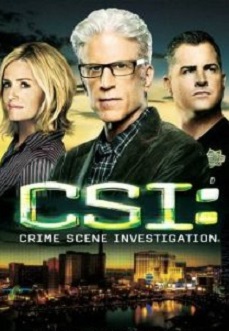
“CSI” Ethics: Now THAT Was An Unethical Fictional Lawyer…

CSIWow. That was one unethical lawyer on CBS’s “CSI” last night, and I mean even before we found out that he had stolen a vile of an Ebola-like virus and used it to murder a doctor, almost setting off a viral epidemic in Las Vegas. (Gee, I wonder where the writers got the idea for that story? See, we don’t have to argue about politicians causing panic over Ebola: the entertainment media is way, way ahead of them.) Among the lawyer’s ethical transgressions:

1. He set out to use his law degree to gain access, through employment, to a company he blamed for allowing a deadly virus to wipe out his family in South America. Needless to say, this is a blatant conflict of interest, indeed, the worst one for a lawyer I have ever heard of in fact or fiction. He wanted to represent a corporate client so he could destroy it.  This is a clear breach of Model Rule 1.7:

(b), a lawyer shall not represent a client if the representation involves a concurrent conflict of interest. A concurrent conflict of interest exists if:

(2) there is a significant risk that the representation of one or more clients will be materially limited by… a personal interest of the lawyer.

Now, that conflict could be waived if the client were fully informed of the fact that its lawyer wanted to destroy it, and the client didn’t mind. That seems unlikely to me.

2. When it looked like his murder was going to set off a deadly epidemic, the lawyer decided to let CSI know that his client the biotech firm had lied about none of its supply of the virus being missing. He knew it was missing, because he had stolen it. The failure of a lawyer to remedy a client’s lie to police about a crime isn’t unethical in a criminal defense setting, but it is unethical if the lawyer would be aiding in another crime by doing so, which was the case here. Moreover, he is involved in the crime, unknown to his client. This would be a disqualifying conflict even if the one described above didn’t exist.

3, He also has an obligation under the ethics rules (Model Rule 1.4) to inform his client about matters relevant to the representation that the client needs to know, like “By the way, about that missing vial of deadly hemorrhagic virus you don’t want to tell the police about? I took it.”

4. THEN, he surreptitiously taped an employee and representative of the company who thought he was also representing her (if he wasn’t, he has an ethical obligation to make that clear—it’s called a “corporate Miranda warning.”) While it is legal in Nevada to secretly tape a conversation you are participating in, it is virtually never ethical for  a lawyer to do this with a client (That’s misrepresentation, violating Rule 8.4 in Nevada) , who is assured that her communications with her lawyer will be privileged, and held in strictest confidence under the attorney-client relationship.

5. Now, if the reason for the lawyer making the recording and handing it over to Ted Danson had been what CSI first assumed it was—that he was trying to save lives in imminent danger and deemed the revelation of a client confidence the only way to prevent it—he would have some support in the ethics rules, for there is an exception to the duty of confidentiality that can justify that.*  That wasn’t his motive, however, at least not all of it. He was also trying to make sure that the company—his client, which he was trying to destroy in revenge for his family’s deaths—was blamed for the virus that he had released. He had no justification for violating Rule 1.6, which says that a lawyer must keep client confidences.

6. Also, since he was representing both the employee he secretly taped and the company itself, he would have been obligated to report what she told him—evidence of a crime implicating the company–to his corporate client before reporting it to authorities, so the corporate client could report the lost vial itself, or at least have that option. If the attorney was going to exercise the “death or serious bodily injury” exception, he needed to tell the client that, too.

Yes, this was a very unethical lawyer.

Then there was that killing part…

* There was no reason to make the recording at all. This was a lame plot manipulation by “CSI.” Danson and his team used the biological residue on the recorder to prove that the same person who made the recording also stole the vial. But the lawyer could have just told the police about what his client admitted regarding the missing vial. No recording was necessary.

Three Breasted Ethics

Three_breasted_woman

UPDATE: Snopes, the urban legend and hoax website, now thinks that this is a scam. As I noted in the post, that would not be a surprise and in fact would be a relief. In such cases, I suggest that the post be read as a hypothetical, since the ethics issues raised by the three-breasted woman remain interesting, even if the story itself turns out to be fiction.

A 21-year-old woman being identified with the alias Jasmine Tridevil ( don’t over-think it) says she paid $20,000 to a plastic surgeon to  give her a realistic third breast. She wants to  become a TV reality show star. Jasmine has hired a camera crew to follow her around Tampa, Florida, documenting the challenges she faces as a three-breasted woman.

I know what you are thinking.

I HOPE this is a hoax.

“Jasmine” was rejected by more than 50 doctors who believed they would be violating professional ethical codes. Scot Glasberg, president-elect of the American Society of Plastic Surgeons, condemned the surgery as ‘worse than unethical’ and ‘harmful to society’. ‘This violates every ethical principle not just in surgery but in medicine as well. We look to enhance the norm. This is not the norm. Nothing speaks louder than the fact that the surgeon required the patient to sign a non-disclosure form.” Continue reading

Presenting Rationalization #45: The Abuser’s License, or “It’s Complicated”

complexity

I owe Carol Costello for this one, which she unveiled today while explaining why it was unfair to criticize Janay Palmer for marrying Ray Rice, the pro football star who punched her lights out in a hotel elevator when they were engaged.  “It’s complicated,” Carol said, as her entire argument, as if this settled the issue.  My rationalization alarm immediately began clanging. Then I thought about all the other times I have heard that explanation used to avoid accountability or blame for wrongful action. Thus Ethics Alarms will add to its useful and always growing Rationalizations List…

45. The Abuser’s License:  “It’s Complicated”

 Costello later noted that the decision to stay with a potentially deadly partner was related to the emotion of love, as if love deserves an ethics pass that other emotions do not qualify for.  In this context, “It’s complicated” is a matched set with #23. Woody’s Excuse: “The heart wants what the heart wants.”

Love does not get a pass, or warrant one. Love is one of the most powerful of the non-ethical consideration magnets that stop ethics alarm clappers from moving when they should, and the sentimental, warm and fuzzy tradition of excusing harmful, irresponsible, clearly wrongful conduct because it might have been motivated by love is a rejection of ethics in favor of romance. Love is not the most benign of impediments to sound ethical reasoning, but rather one of the most insidious. Some of the worst crimes in human history have been rationalized by lovers. If the the coded meaning of “It’s complicated” is “it’s love, and we can never plumb the mysteries of the heart!”, the sentiment should be received with exactly the same contempt as “It’s greed,” It’s hate,” or “It’s revenge.”  Continue reading

Ice Bucket Challenge Ethics

Ice Bucket Challenge

The “Ice Bucket Challenge” is a silly, brilliant fund-raising device that has simultaneously increased public awareness of Amyotrophic lateral sclerosis (ALS), better known as Lou Gehrig’s disease, brought over 14 million more dollars of donated funds into the ALS Association than last year for research, and provided some priceless YouTube fare, ranging from celebrity drenchings to this…

Entertainment! Celebrities! Medical research! Charity! Public Education! How could there be anything unethical about such a phenomenon? Well, ethics often throw cold water on all manner of activities human beings crave, so it should not be too great a surprise that the “Ice Bucket Challenge” has generated quite a few ethics-based objections. Let’s examine the potential, alleged and actual ethical flaws of the current fad, and rate them on an Ethics Foul Scale from zero (No ethical concerns at all) to ten ( Very Unethical).

1. It’s dangerous.

Anything can be dangerous if you are not sufficiently careful, and the Ice Bucket Challenge had its consequentialist moment when four firefighters were injured, one very seriously, trying to help the marching band at Campbellsville University get dumped with ice water this week. Two firefighters were in the bucket of their truck’s ladder preparing to douse the students using a firehose when a surge of electricity jumped from nearby power lines and electrucuted them and two colleagues. This was just a freak accident, however. Unlike the so-called Facebook Fire Challenge, the ALS fundraisng stunt shouldn’t be perilous to anyone, as long as practitioners don’t get too grandiose or creative.

Ethics Foul Score:

0

2. It wastes water.

Continue reading

The Unethical Opposition To Tennessee’s Fetal Drug Abuse Protection Law

200439961-001Tennessee is one of the most activist states that it comes to protecting children; for example, it has the among most stringent laws in the nation regarding the mandatory reporting of suspected child abuse. It also has a new law that just went into effect this month that allows officials to arrest mothers for assault who illegally use narcotics while they are pregnant if the child is born with symptoms indicating that the drug use impaired the child’s condition.

Predictable and tiresomely, the media and “war on women” scolds are attacking this is yet another incursion on the rights of women to have dominion over their own bodies. Think Progress, dishonestly, calls it a “pregnancy criminalization law.”  This is intentional misrepresentation, a TP specialty. The law doesn’t criminalize pregnancy in any way, by even the most distorted interpretation.  The knee-jerk opposition to the law highlights the problems of consistency and integrity that the women’s rights and pro-abortion forces have in all the areas relating to childbirth. Essentially, their position is that if conduct is related to child birth—or preventing it—in any way, anything they say, want or do must be accepted, and asserting otherwise, no matter what the justification, makes the government an oppressor of women. Continue reading

Update: “The Kidneys of Orlac”

He will die, not with his boots on, but with his kidneys in...

He will die, not with his boots on, but with his kidneys in…

One of the best threads Ethics Alarms has ever hosted occurred in response to the November 2013 post, “The Kidneys of Orlac,” which discussed the strange case of the Ohio death row resident who wanted to donate his organs to ill relatives. The issue generated an Ethics Quiz, a follow-up poll (“The Amityville Kidney”) involving the related issue of whether the recipient of a murderer’s organs had a right to know their creepy origin, and a terrific Comment of the Day, which was just one of the COTD-worthy submissions.

I had forgotten about the story until Mark Draughn raised it again at Windy Pundit in the context of criticizing bioethicists, one of whom had what Mark considered a particularly misbegotten argument against the transplants (I agree with Mark about that argument, but I also oppose giving condemned prisoners the privilege of donating organs to loved ones, or anyone at all.) This led me to review original post, which led me to re-read the comments.

I also discovered the resolution of the dilemma, which occurred at the end of last month. Ronald Phillips will not be allowed to donate his organs, because he wouldn’t have enough time to recover from the operation before his execution.  Ah, yes, the old “You have to be in tip-top shape before we can kill you, or it isn’t really punishment”  Catch 22! Ethics, you see, had nothing to do with the bureaucratic resolution here, just the letter of the law, rules, and bureacrats refusing to look for the best solution in an anomalous situation, rather than the one they could reach on auto-pilot. As a result, nobody made a reasoned determination about what is right, or what capital punishment really signifies, or apparently even tried. That is how so many government decisions are made, and that, my friends, is far scarier than having the kidneys of a killer.


Autonomy: The Ethics Alarm That Obamacare Should Be Setting Off, But Isn’t

fire_alarm

Autonomy. This is the ethical value, a sub-set of the “respect” section of the Josephson Institute’s Six Pillars of Character, that is suddenly absent from the value set of the New American Left. This is cause for concern to say the least, because autonomy is the very value that was the impetus for the nation’s founding, and that is at the core of the Bill of Rights as well as the “inalienable rights” that introduce Mr. Jefferson’s mission statement for our strange experiment in self-governance. Beginning back in Bill Clinton’s administration, advocates of a nationalized health care system, including President Clinton himself, began floating the historical and logical nonsense that Jefferson and the Founders would have enthusiastically supported national health care. This is, of course, a cynical lie if one is educated (as it was in Clinton’s case) or proof positive of complete unfamiliarity with, oh, everything about the Founders, their political philosophy, and political philosophy generally. Whatever the value of a national health care program, the idea that the government would presume to dictate how one managed something so personal and intimate as one’s own health would have horrified  every signer of the Declaration, from its author to Button Gwinett.

That Mr. Jefferson’s supposed followers—he is the Original Democrat, by most lights, would reach the point of maintaining that the public’s beliefs, opinions and attitudes must be bent to their will is a development that threatens the existence of United States society and culture as we know it. The recent flare in this emergency arrived via the mugging of Brandon Eich, ex-CEO of Mozilla, who was deemed by the liberal elite as unworthy of keeping his job (though Mozilla is an internet company and he is an innovator in the field) because he was not convinced of the rightness of same-sex marriage by the elite’s newly determined, and well past,  deadline—a deadline that such progressive icons as Barack Obama and Hillary Clinton also missed, but never mind. Conformity to Progressive Truth has become the order of the day, and woe be to any good citizen who dares to oppose it. Does this sound like freedom to you? “Choice,” to use a popular rallying cry in the protest against the “War against Women?” It doesn’t sound like freedom to me. Continue reading

Ethics Blindness: The Pro-Abortion Ethical Disconnect

To anyone who is capable of compassion and objectivity, the abortion controversy represents a classic ethics conflict: two ethically defensible positions based upon undeniable ethical principles that are in opposition. Both factions have their absolutist wings which would deny the other side’s interests, holding that either the life of the unborn ( abortion opponents) or a woman’s autonomy (abortion advocates)  is such a societal priority  that nothing should be permitted to compromise its primacy in any way. Yet the best solution to most ethics conflicts, if possible, is balancing, resulting in acceptance of a  reasonable middle position that acknowledges the validity of both interests.

Recent comments from prominent pro-abortion advocates are ethically troubling, because they suggest a complete denial that any valid interests on the other side exist at all. This signals a retreat from reason and fairness into zealotry and fanaticism, and it makes balancing not merely more difficult, but unimaginable.
In an interview on the cable station Fusion, Planned Parenthood president Cecile Richards had this revealing exchange (video above): Continue reading

The Science Guy, Debating Faith, and the Ethical Duty Not To Engage

creationism

Thanks for nothing, Science Guy.

You know, back when I was in college (stop me if I’ve told this story here before), a call-in show on one of the local TV talk shows (called “Cracker Barrel”)  staged a debate on the existence of God. On the “God exists” side was a religious fanatic named Mrs. Warren who had achieved Boston notoriety by picketing local banks for some reason; my father, in fact, had a confrontation with her in his capacity as a savings bank executive. On the atheist side was none other than Madeline Murray O’Hair, she of the Supreme Court case knocking down school prayer.

The “debate” was idiotic, unfair from the start since Mrs. Warren was a prattling dolt who also spoke in what sounded like a fake Italian accent, like Chico Marx, making it even harder to take her seriously. Mostly it was idiotic, though, because such debates can’t be anything but idiotic—the adversaries are not using the same assumptions, definitions, or modes of analysis. O’Hair would mention a scientific study, and Mrs. Warren would quote the Bible, which had to be true because God dictated it. As will always happen when one is debating a fool, O’Hair was dragged into the depths of stupid argument—and whatever she was, she was not stupid—by recounting that she realized that there was no God when her son was lost on a jungle expedition, and though she prayed for his return, he never came back. After being barely restrained by my roommates from calling into the show and shouting “MOM! I’m back! It’s a miracle!” (for some reason they thought it would be in bad taste), I got a toilet paper roll, put it up to the receiver and called into the show’s call-screener as “Jehovah,”from “Beyond.”

To my amazement, they put me through, and I heard the host cheerily utter the words, “Our next caller is Jehovah. Welcome to Cracker Barrel, Jehovah!” Echoing into my cardboard megaphone in my best Burning Bush voice, I told Madeline that I was the Lord God, and that I appreciated her testing the faith of the righteous with her blasphemy, and that despite the consensus among my archangel advisors in Heaven, I would not turn her into a pillar of salt.” Then the host said, “Thank you for your call, God!” and I was done. O’Hare was laughing.

The much-hyped debate over evolution between Bill Nye, a kids show performer with a legitimate science background, and Ken Ham, an extreme creationist whose views are ridiculous even by creationist standards, was just as foolish as the Cracker Barrel fiasco but far more harmful. Continue reading

Ethics Dunce (Again): Washington Post Columnist Richard Cohen

No danger of an innocent being unjustly executed here...

No danger of an innocent being unjustly executed here, Richard…Now what?

Most Ethics Dunces named on Ethics Alarms are being chided for one, possibly anomalous, instance of ethics cluelessness, but not Richard Cohen. He is a lifetime, career-long ethics dunce. It is noteworthy when he writes something that doesn’t reek of ethics confusion.

Today he is blogging about the death penalty. There are coherent, powerful arguments that have been and can be made against the death penalty, but Cohen doesn’t bother with any of them, which, as a reflex old-school liberal, he should at least know by heart. No, he attacks the decision of Eric Holder to approve his Massachusetts U.S. Attorney’s request to seek the death penalty for Dzhokhar Tsarnaev, the surviving Boston Marathon bomber as “political cowardice using one invalid argument after another, and by the way, curse you, Richard Cohen, for forcing me to defend Attorney General Holder.

Here are Cohen’s “arguments”:

  • The death penalty is a horrible crime on par with Tsarnaev and his brother intentionally killing and maiming innocent spectators of the Boston Marathon. Such an absurd statement carries a high burden of proof, which Cohen doesn’t even attempt to meet.
  • “[The death penalty] is the sine qua non of lack of thought, a medieval tick of the political right, a murder in the name of murder that does absolutely no good, unless it is to validate the killers’ belief in killing.” Ironically, Cohen’s post is the sine qua non of lack of thought. Since the death penalty has been around continuously since well before Medieval times, calling it a medieval tick is about as fair and accurate as calling religion, warfare, and property laws  medieval tics. Of course it does good: the fact that a vicious anti-social murderer is permanently removed from society and no longer uses up resources, space and oxygen that can be better employed in the furtherance of humanity is an absolute good, and that those contemplating similarly heinous acts are on notice that the same fate awaits them is also good. Continue reading