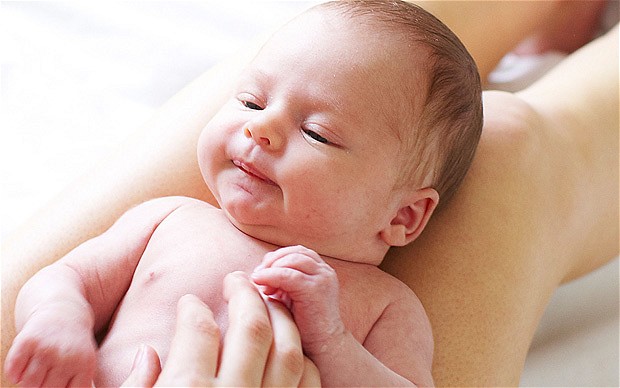
When Is Human Cloning Unethical? When You Do THIS, For Starters…

Coming attraction at the San Diego Zoo.

Coming attraction at the San Diego Zoo.

Much of the ethics debate over cloning is and has always been pure “ick factor” confusion. Cloning is strange and unnatural, and to many people, that means it is immoral and wrong, as in, “If God had wanted us to be created from nose hairs, he wouldn’t have given us sex organs!” But there is nothing intrinsically unethical about cloning. The problem is that there are many theoretical applications of cloning that are monstrous (See: “The Island”), and too many scientists whose attitude is, “Why not?”

It is difficult to imagine a more perfect example of this than the news that Harvard Medical School geneticist George Church is plotting to create a Neanderthal human, if he can find, in his words, “an adventurous female human” willing to be Mommy to Alley Oop. Continue reading

Ethics Mess In Kansas: The Lesbians and the Sperm Donor

The parents in happier days

The parents in happier days

Auto mechanic William Marotta must rue the day he responded to a Craigslist ad placed by Angela Bauer and her life partner Jennifer Schreiner. They were seeking a sperm donor, for the obvious reasons, and he had sperm to donate. The trio then signed a contract in which all agreed that Marotta would have no rights to any child his sperm spawned, nor future responsibilities regarding the child’s care. Schreiner was artificially inseminated and conceived, making her the child’s mother, as Bauer stepped into the role of the child’s father. Exit Marotta forever, with thanks.

Or so he thought. Continue reading

Untrustworthy NIH

This is what the horror movie outbreak looked like. The real one? We don’t know.

In Barry Levinson’s (terrific, scary) eco-horror movie “The Bay,” slug-like sea creatures mutated by toxic waste eat their way through the faces and bodies of the residents of a Chesapeake Bay community, as medical authorities carefully keep the story under wraps from the rest of Maryland and the nation. At the National Institutes of Health Clinical Center in Bethesda last year, a different kind of monster bug was on the loose: the antibiotic-resistant bacteria known as Klebsiella pneumoniae.  For six months the bacteria spread, eventually infecting 17  NIH patients, killing at least six of them. Doctors took extraordinary precautions to keep the so-called “superbug” from getting out into the population, but such measures didn’t include telling the city, county or state what was happening, or informing non-physician staff, many of whom were at risk of infection, about the bacteria outbreak. The full story didn’t come to light until August of this year, when NIH researchers published a scientific paper describing the advanced genetic technology they used to trace the outbreak. Continue reading

Unethical Mindsets: “You Can’t Be A Feminist If You’re Anti-Abortion”

Oxymoron?

I don’t know how I ended up on the Bea Magazine site, but I did, and I made the mistake of reading an article and a comment thread on the topic of whether feminists can be “pro-life,” or anti-abortion, if you aren’t a fan of euphemisms. As I expected, but not as I hoped, the consensus was that indeed, opposing abortion requires one’s ejection from the feminist tent, at least in the view of this particular cadre of feminists.

“Brillliant Nora Ephron,” the post by Diane notes, wrote that “You can’t call yourself a feminist if you don’t believe in the right to abortion.”  Well, Nora wasn’t so brilliant that day, because this is classic backward reasoning. It is framing reality by using ideology, the crystallization of confirmation bias into its most dangerous, poisonous and historically destructive form. It embraces the statement, “my mind’s made up, don’t confuse me with facts.” Indeed, it requires that facts be seen, filtered and interpreted through a pre-existing template that requires and then dictates a given result. Continue reading

Ethics Quiz: The Jenny McCarthy Body Count

Sure, bet your kid’s life on the wisdom of Jenny McCarthy. Makes sense to me!

From The Jenny McCarthy Body Count:

“In June 2007 Jenny McCarthy began promoting anti-vaccination rhetoric. Because of her celebrity status she has appeared on several television shows and has published multiple books advising parents not to vaccinate their children. This has led to an increase in the number of vaccine preventable illnesses as well as an increase in the number of vaccine preventable deaths. Jenny McCarthy has a body count attached to her name. This website will publish the total number of vaccine preventable illnesses and vaccine preventable deaths that have happened in the United States since June 2007 when she began publicly speaking out against vaccines.

“Is Jenny McCarthy directly responsible for every vaccine preventable illness and every vaccine preventable death listed here? No. However, as the unofficial spokesperson for the United States anti-vaccination movement she may be indirectly responsible for at least some of these illnesses and deaths and even one vaccine preventable illness or vaccine preventable death is too many.”

You can visit the Jenny McCarthy Body Count, which stands at 888 preventable deaths as of May 31, 2012, here.

Your Ethics Quiz is simple: Is the website fair?

My answer: sure.

McCarthy is an engaging, attractive, well-meaning woman and semi-talented comic actress who has misused her celebrity, as many celebrities do and have, to exert more influence over the public and media than her experience, education, intelligence, wisdom and expertise justify. Are the various television programs, media outlets and hysteria-peddlers also accountable for giving someone with McCarthy’s thin credentials and outsize influence a platform to frighten and mislead the many members of the public who are even more ignorant than she is? Absolutely. Does that reduce McCarthy’s culpability for spreading misinformation that leads to potentially deadly neglect of the health needs of children? Not one bit.

Using the Jenny McCarthy Body Count to call attention to the foolishness of anti- vaccine hysteria is a clever idea, and if it keeps even one parent from being misled by the medical nonsense pushed McCarthy and her allies. it is performing a public service.

_____________________________________

Pointer: Instapundit

Facts: Jenny McCarthy Body Count

Ethics Alarms attempts to give proper attribution and credit to all sources of facts, analysis and other assistance that go into its blog posts. If you are aware of one I missed, or believe your own work was used in any way without proper attribution, please contact me, Jack Marshall, at  jamproethics@verizon.net.

Anderson Cooper vs. “Human Barbie”: A Double-cross Masquerading As Integrity

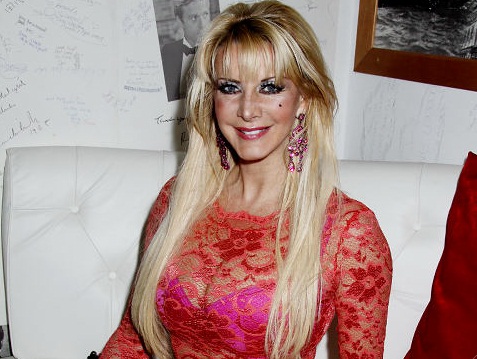
Sarah Burge, a.k.a “Human Barbie,” who actually contains more plastic than Plastic Barbie, who, come to think of it,  is quite possibly a better human being than “Human Barbie.” It’s complicated.

One of the wonderful things about the Internet is that somewhere out there is always someone who has seen through the fog of lies, spin, misrepresentations and conventional wisdom, and is writing about it. The first trick, of course, is finding such individuals, who may be part of the spin and confusion the very next day. The next one is getting the truth to as many people as possible.

When I heard that Anderson Cooper had kicked the plastic-surgery mutant named Sarah Burge off his show on the air, I was ready to give him an Ethics Hero award. Not only has Burge, who is known as “Human Barbie”, * indulged her pathological obsession with plastic surgery to spend almost a half-million dollars making herself look like the iconic Mattel doll, she is trying to make sure her daughters are similarly afflicted. She told Cooper she wants to botox her 15-year-old daughter, and she is setting up a trust for her 7-year-old so she can start mutilating herself when she turns 18.

Suddenly Cooper stopped the interview, saying, “I gotta be honest, I gotta just stop. I’m sorry. I try to be really polite to all my guests, but I just think you’re dreadful. I honestly don’t want to talk to you anymore.” Continue reading

Ethics Article of the Week: George Will On His Son’s Birthday

Happy birthday, Jon.

Conservative columnist George Will has only occasionally mentioned his Down Syndrome-inflicted son Jon in his columns, but when he has, it has provided an extra dimension to Jon’s father, who usually comes across in print and on TV as cynical, dour, and archly intellectual. Today is Jon’s birthday, so Will devotes the full column to him, his challenges, and, when all is said and done, ethics.

It’s a beautifully written piece, as Will’s columns often are, and a tender one. More importantly, however, it is an essay that should provoke thought, beginning with the fact that the only reason Will wrote this column is that he and his wife chose, 40 years ago, to do what 90% of all parents informed that their gestating child has Down Syndrome refuse to do: allow the child to be born.

The column is here

__________________________________________________

Graphics: Richmond Times-Dispatch

Comment of the Day: “Ethics Chess Lesson: The Tale of the Kidney and the Ungrateful Boss”

New commenter Christine has a valuable personal experience to relate, as an individual who donated a kidney to a stranger herself.  The main thrust of her post covers a topic that I have written on before but did not mention in this case, though I should have. Someone who performs a kind and generous act counting on rewards, copious thanks and gratitude, is  doing it for the wrong reasons. The act itself is all that matters. Certainly, gratitude is the right way to respond to generosity, but an act done in anticipation of personal benefits isn’t really altruistic. It is opportunistic. This is a cliché to be sure, but true nonetheless: the generous act must be its own reward.

Here is Christine’s Comment of the Day on the post, Ethics Chess Lesson: The Tale of the Kidney and the Ungrateful Boss.

I want to also commend Christine for following the comment policies, which many of the new visitors here who commented on this post did not do. I prefer full named on posts, but I only require that I am informed of  every commenter’s real name and have a valid e-mail address within a reasonable time of their first submitted comment. One way or the other virtually all of the regular commenters here have managed to do this, and it makes a difference, even in my responses. I regard such commenters as collaborators , not just marauders, and most of the time, I treat them accordingly:  tgt, Steven, Lianne, Margy, Glenn, Tim, both Michaels, Karl, Neil, Karla, Rick, blameblakeart, Barry, gregory, Eric, Curmudgeon, Eeyore, Julian, King Kool, Joshua, Jay, Tom, Bill, Danielle, Elizabeth, Patrice, Ed, Bob, The Ethics Sage and Jeff…I know there are others.   Thanks to all of you for letting me know who you are.

Now, Christine: Continue reading

“Baby-Killing” Ethics

No "moral right to life"?

Aided by Rick Santorum’s over-heated rhetoric, the concept of infanticide (I’m against it, by the way) has been hot in the marketplace of ideas lately.

A group of medical ethicists at Oxford made headlines by arguing that parents ought to have the option of killing their newborns because they are “morally irrelevant” and thus ending their lives is no different from abortion. After some recent examples of the press mangling the real message of scholarly papers, I was dubious about the news reports, but son of a gun, that’s what these ethicists wrote.

The article, entitled “After-birth abortion: Why should the baby live?”, was authored by Alberto Giubilini and Francesca Minerva, who argue, Continue reading

Weekend Ethics Catch-Up

If you took an ethics break this last weekend of February, here’s your Ethics Alarms make-up assignment: