Afternoon Ethics Jolt, 8/3/2018: A Lawyer Finds A New Way To Be Unethical, Verizon Makes Our Kids Obnoxious And Ignorant, And The Times Decides To Show Its Colors…


Good…afternoon.

Yes, I couldn’t get this up before noon again. Mornings have been crazy lately. And no, I’m not at the beach…I just WISH I was at the beach.

1. A legal ethics “Kaboom! From the New York Times account of the litigation surrounding New York Yankee great Thurmon Munson’s death when his private plane crashed in 1979:

James Wiles, one of FlightSafety International’s lawyers at the time, still contends there was no culpability in Munson’s death on the part of either company. But a trial, he said, was just too risky…. Wiles, who was present for all the depositions…said that when Yogi Berra testified, he put a box of 24 baseballs in front of him and requested he sign them. Berra, who was a Yankees coach when Munson died, grudgingly obliged, but at one point asked if Wiles was authorized to make such a demand.

“It’s my deposition,” Wiles said he told Berra.

My head exploded after reading that. There is no rule I can find that declares such a blatant professional abuse unethical, unless it is the deceitful “It’s my deposition” response, which is literally true but falsely implies that the lawyer has the power to force a witness in a deposition to do something completely unrelated to the case for the lawyer’s personal benefit. Rule or no rule, this was incredibly unethical, and a perfect example of how lawyers will come up with ways to be unethical that they can’t be sanctioned for.

2. More on the New York Times’ new editor: Yesterday, I covered the astounding—but maybe not so astounding—appointment of far-left journalist Sarah Jeong as its technology editor despite a huge archive of explicitly racist and sexist tweets. The Times’ defiant explanation, a rationalization, really, stated:

“We hired Sarah Jeong because of the exceptional work she has done … her journalism and the fact that she is a young Asian woman have made her a subject of frequent online harassment. For a period of time she responded to that harassment by imitating the rhetoric of her harassers. She regrets it, and The Times does not condone it.”

Jeong’s statement was simply dishonest:

“I engaged in what I thought of at the time as counter-trolling. While it was intended as satire, I deeply regret that I mimicked the language of my harassers. These comments were not aimed at a general audience, because general audiences do not engage in harassment campaigns. I can understand how hurtful these posts are out of context, and would not do it again.”

The issue is not whether she will “do it again”—presumably even the Times wouldn’t stand for that, but whether her many racist outbursts online do not raise the rebuttable presumption that she is, in fact, a racist. Nothing in her statement tells us that she doesn’t believe such things as “white men are fucking bullshit,” only that she didn’t aim these comments at the general public.

I find it hard to believe that the even Times is so stupid and arrogant that it will dig in its metaphorical heels and refuse to admit its gross mistake. As Glenn Reynolds writes today, Continue reading


Morning Ethics Warm-Up, 8/2/18: Those Tricky Things Called “Standards” [Updated]

Goooood MORNING, Cape Cod!

(I miss you, but I miss your clams more.)

1. It is amazing the amount of publicity the Manafort trial is getting. I actually heard a Fox News correspondent argue that Manafort’s indictment proves that the Mueller investigation isn’t a “witch hunt.” I see my anti-Trump Facebook friends making the same claim. Bias makes you stupid. No aspect of the charges against Manafort relate to “Russian collusion,” and if the news media were not determined to convince the public that proof of impeachable offenses were just over the horizon and that Mueller was getting closer, closer, CLOSER, this would be a minor news event, if a news event at all. In fact, the Manafort trial is evidence that the Mueller investigation, whether the special prosecutor intends it to be or not, is functioning like a witch hunt. Any associate of the President past, present or future is on notice that he or she is a potential target, involving potential expense, embarrassment, and smears by the media. The political objective of the investigation is to make governing impossible, by causing widespread fear of guilt by association among those who might assist the President.

Virtually any past President you name had shady friends and associates who would be at risk from a Mueller-style “see-what-dirt-we-can-dig-up” operation. The GOP planted the seeds for this tactic with Whitewater. Republicans have no standing to complain, but Trump does.

2. THIS must be impeachable, somehow. CNN headline: “Donald Trump has no earthly clue about how real people buy groceries.”

The crux of the complaint is that the President used buying groceries as an example of basic requirements of life that involve the uses of IDs, as part of a riff on the need for voter identification laws. The “he doesn’t buy his own groceries!” accusation was last used against George H.W. Bush, when he expressed “what will they think of next?” amazement at computer checkout devices. “[The President] has no earthly clue what the average person, living paycheck to paycheck, making ends meet, is dealing with day to day. Going to the grocery store is not about presenting identification, but it can be about figuring out how you’re going to pay for groceries,” bleats Jen Psaki, Obama’s former communications director, so we know she’s unbiased.

Virtually NONE of our national elected officials have bought their own groceries in years, and probably decades. The significance of this is so infinitesimal that it would escape detection by the naked eye. I hate buying groceries. I admire and envy anyone who has progressed to the stage in life where they can have some compensated minion do the job for them. Meanwhile, this is one of—what, a million? Is that too many, or two few?—examples of habitual Trump critics pouncing on one of his–what, a trillion?—careless verbal gaffes and trying to make them seem more damning than they are. Trump could have, quite accurately, cited many other normal transactions less crucial to the nation than the integrity of the ballot box that require IDs, like renting a car, checking into a hotel, getting auto registration renewed, or buying a bottle of scotch. He chose, for reasons buried somewhere in his unique mind—buying groceries, which as a mistake. I don’t care. I question the priorities and intelligence of anyone who does care.

Especially someone who tries to lie to her readers with this whopper: “In 2008, when then-candidate Barack Obama was running against Sen. John McCain, a clear turning point for the campaign came when McCain could not remember how many houses he owned. ” Sure Jen. That was the turning point! I remember it well: I said to my wife, “Oh NO! This is like Gerald Ford saying that Poland wasn’t behind the Iron Curtain! McCain is doomed! Doomed, I tell you!” And when Hillary couldn’t shake her email scandal, I remember thinking, “You know, this is just like McCain not remembering how many houses he owned!”

And the fact that the economy crashed right after McCain’s gaffe was just frosting on the cake.

3. This is defend Sonny Gray Day. In addition to being ambushed by an attempted Hader Gotcha and stinking up Yankee Stadium with a terrible performance against the Baltimore Orioles, now a minor league team, Gray is being criticized in New York because he smiled as a he walked off the mound while boos, jeers and catcalls reigned down on his head by the typically classy Yankee fans.

What was he supposed to do? Weep? Rend his garments? Booing an athlete who has done nothing to indicate that he wasn’t trying, but who merely failed, is asshole behavior. Gray’s smile meant, “Boy, these fans are ridiculous. Well, what can you do? This is New York.” Indeed. The smile was about the only thing Sonny did right yesterday. Continue reading

Afternoon Ethics Jolt, 8/1/2018: When You Cross Fake News, Dishonest Journalism, Anti-Gun Hysteria, Ignorance And “The Resistance,” What Do You Get?

 A new freakout!

…and dumber than most, too. U.S. District Judge Robert Lasnik of Seattle issued a temporary restraining order that blocks the Trump administration from refusing to try to block publication of blueprints to produce guns from 3D printers. Eight states and Washington, D.C. had sought the order.  A company called Defense Distributed planned to publish the blueprints after the U.S. State Department agreed to settle a suit filed by the company in an agreement made public on July 10. The suit had claimed the State Department violated the First Amendment by warning in 2013 that publication of the blueprints violated export controls and could lead to a jail sentence for the company CEO,  Cody Wilson.

It sure sounds like prior restraint to me, and I suspect, when this gets to the Supreme Court, which it inevitably will, that will be the conclusion.

This began as one more example of the Obama Administration playing fast and loose with the Bill of Rights. Now, it may well be, as the suit by the states alleges, that the Trump Administration didn’t handle its legal U-turn properly, it being, after all, the Trump Administration.  Nonetheless, the government blocking the online publication of information, which is what a blueprint is, when no copyrights, patents or trademarks are being violated or national secrets revealed, seems like a pretty clear First Amendment violation.

Never mind, though. The story sparked a perfect storm of fake news, fear-mongering and incompetent journalism. The Times, among others, called the blueprints a “downloadable gun.” There is no such thing as a downloadable gun. You have a gun when you download a blueprint for a gun just like you have a house when you download a blueprint for a house. That term isn’t short-hand, it’s wrong: misleading, inaccurate, and really, really stupid.  Other sources blamed President Trump and his administration for the fact that 3-D printer plans for guns were available. They have been available for years. Here are some downloads in case YOU want to have the plans for weapons that you will only be able to make if you happen to have some very expensive equipment. Continue reading

Now THIS Is Ethics Zugzwang! The Unfixable Catch-22 Of Sexual Harassment Law

A recent question to the New York Times workplace column “The Workologist” perfectly illustrates a permanent flaw in sexual harassment law. Believe it or not, I have no recommendation regarding how to fix it. I don’t think it can be fixed.

Here was the question:

I work at a blue-collar job, and I am one of four women in a crew of 40. The guys never touch or harass me, or any of the women, as far as I know.They do, however, constantly hug and grab and bump each other in a friendly way. It’s not unusual for one of the guys to go through a whole short meeting (a stand-up “huddle”) with an arm around another guy’s shoulder. No one ever touches me, and it’s not that I want them to. That would be weird. But I almost feel left out. Should I let this “bro contact” bother me?

I love it. Perfect. This is what using the law to dictate ethics can result in, and does result in frequently: hypocrisy, confusion, and a double-bind.

Let’s begin with the last sentence: “Should I let this “bro contact” bother me?” The whole point of “hostile work environment” sexual harassment law is to make sure no woman has to ask this question. A boss who responds to a female employee’s complaint of a hostile work environment-creating unwanted sexual attention in the office with “Don’t let it bother you!” has breached his or her duty under the law.

So what’s going on here? The men in the company have adopted the current fad (Yechhh.) of hugging each other to express a range of things—support, congratulation, sympathy, platonic affection—and quite properly do not hug the few women in their midst, lest one of the females, reasonably or not (or perhaps intentionally, to grab some power or cash) be made “uncomfortable,” take the physical contact as unwanted and sexual in intent, complain, and perhaps sue. By not hugging them, however, the men isolate the women, exclude them from the social fabric of the “team,” and, in essence, discriminate against them by signalling that they are “the other,” thus creating a hostile work environment.

Even if some of the women announced their consent to be treated as “one of the guys,” it would not solve the dilemma. One of those bro-hugs could still turn into a copped feel, or be perceived as crossing lines by the female huggee. Then there is the looming  third party harassment problem: a woman who has not consented to being hugged might see her female colleagues being man-handled (but completely innocently, of course) and assume that consenting to unwanted physical contact was a condition of employment, or that they would be adversely affected if they did not agree to participate enthusiastically in the hug-fest. Not treating the women in the company like the men is discrimination; treating them the same is an open invitation to a sexual harassment lawsuit. Continue reading

Sunday Morning Ethics Warm-Up, 7/29/18: (Yes, #4 Should Be A Free-Standing Post, But I’m In A Hurry…)

Good Morning!

I love “Onward Christian Soldiers,” of course, but this is my favorite Arthur Sullivan-composed hymn…

1. Reminding me of the basic unethical and cynical nature of state lotteries...A middle-aged African American woman sits outside of our local 7-11 pretty much all day, seven days a week. I’ve written about her before, most recently when she let the door slam in my face despite our family occasionally giving her food, cigarettes and a ten-dollar bill now and then. This morning she bought 40 dollars worth of lottery tickets.

And if she hit the jackpot, she’d be back sitting out front and begging for money in a year or less.

2. My Facebook. theory. You noticed, I’m sure, that Facebook took a 100 billion dollar hit to its paper value in less than 48 hours last week. It all could have been avoided by honesty, transparency, humility, avoidance of virtue-signaling, and fealty to free speech.

  • Users should have been told, in automatic emails and in big, bold letters in disclaimers on the site, since too many of them are too dumb to figure it out, that anything they put on the free platform was fair game to be harvested, sliced, diced, used, sold, analyzed and exploited for any legal purpose, by any group, party, nation or organization, and if potential users didn’t like the terms, nobody was making them post.
  • Facebook should have avoided pretenses of virtue. It provides a useful means of networking and communication as well as cost-free mini-blogs to people unwilling to maintain real ones. It does so to make money, not to make a better world…especially since social media arguably makes a worse one.
  • It should have denied responsibility, in court if necessary, for “fake news” regardless of who created it. Any ad or “sponsored story” should have been so labelled, with Facebook’s position being “read and believe at your own risk. Check “facts” before you spread them around. It’s your responsibility, not ours.”
  • Facebook should have had faith and belief in the freedom of expression and speech, and not attempted to censor “hate speech” or “fake news,” neither of which are subject to precise identification and analysis without the corrupting influence of bias. Indeed, Facebook was obligated to support the First Amendment, as a major cultural force.
  • Facebook should have stayed apolitical. Instead, it joined the “resistance” freakout over Hillary Clinton’s loss, and signaled its virtue by agreeing with absurd and unsupported claims regarding the importance of fake and risible news stories on Hillary Clinton’s defeat.

Mark Zuckerberg is a classic example of a narrow, limited, juvenile savant whose one big idea gave him more power and influence than he was qualified to handle. Maybe losing all of that money will make him appropriately humble, but I doubt it. Such people almost never learn.

3. Is the U.S. State Department intentionally hassling trans women? This story makes a prima facie case that it is, and if that’s really what is going on, it is petty and wrong. It also is a classic Rashomon situation.  Government bureaucracies are inherently inefficient, incompetent, and screwed up beyond all reason or toleration. (Oddly, progressives want more such agencies, with more employees. Go figure.) The story linked appears to show the system trying to make things difficult for a particular group, but the individual targeted only sees how she is being treated, so it appears like obvious discrimination. That, however, is a very subjective assessment.

A member of my family is in jail for a few months, and had been granted work-release privileges so he could continue his job and career. However, those in charge of the program were openly hostile to his efforts to complete the paperwork and arrangements. They kept changing the rules, increasing requirements, threatening him, and delaying the process. When he contacted his lawyer, he was told, “these people can do anything they want to, and get their satisfaction from boring, low-paying jobs by abusing people like you, meaning anyone who would normally be their equals or better, but who is now under their thumbs. You have no choice. Do what they want, or you will suffer. Simple as that.”

My jailed family member is white, male, educated, well-spoken and polite. Eventually, after he grovelled enough, everything was straightened out. “You know,” he said ,”It I were black, there is no way you could have convinced me that I wasn’t the victim of racism.”

It could be the same with the alleged trans discrimination in the passport system. When one of the alleged victims says, “Make no mistake, this was an intentional action by the State Department to withhold recognizing my gender,” she is being sincere and perhaps naive. It may have been an intentional action by low level State Department employees to be assholes because they could be. [Pointer: valkgrrl] Continue reading

Saturday Morning Ethics Warm-Up, 7/28/18: Expired Ethics, Sleeping Fact-Checkers, Ghosts, The Dumbest Ethics Train Wreck Of Them All…

It’s a beautiful morning!

1. When “Everybody Does it” isn’t just a rationalization. I was asked by a law firm to render an opinion as to whether particular conduct was a violation of the legal ethics rules.  A legal ethics opinion—bar associations issue these periodically to cover gray areas– in the jurisdiction said that it was, but the opinion was over 20 years old. The reasoning given in the opinion for declaring the conduct unethical was that the practice was “new to the jurisdiction” and might mislead or confuse the public.

Today, however, my research showed, the conduct is commonplace in that jurisdiction. Many, many law firms engage in it. What was new two decades ago is new no longer, and the reasoning for the opinion’s conclusion was based on conditions that no longer exist. Moreover, no firm has been punished for the conduct, and won’t be.

The firm was concerned that the legal ethics opinion had not been over-ruled or withdrawn. I said that it didn’t have to be. “Everyone” was engaged in the conduct it forbade, the bar had allowed “everyone” to do it, and if an issue was raised now, I am 100% certain that the old opinion would be withdrawn as no longer reasonable or germane.

2. One more human feature that makes ethics harder: the ability to simultaneously hold two contradictory and mutually exclusive beliefs.

I was watching one of the apparently inexhaustible supply of cable shows about haunting and paranormal investigations with my wife. This one climaxed in a session with a Ouija board, and the love of my life uttered, within seconds of each other, these two statements:

  • “It’s amazing how many otherwise intelligent people really believe in ghosts and demons.”
  • “Ouija boards! I wouldn’t allow one of those things in the house. I’m not taking any chances.

I have heard many other friends and acquaintances endorse both of these positions as well.

3. It is the study of how one discerns the truth, after all. Who needs it? They no longer teach ethics in our education system, and now apparently philosophy is on the way out. Claremont Graduate University in California will be closing the PhD program in philosophy and terminating two tenured faculty. Apparently the move was dictated by budget and “market considerations.” The Claremont colleges in Southern California are a distinguished and growing batch consisting of Pomona, Scripps, Harvey Mudd, Claremont-McKenna, and Pitzer. They still have a philosophy faculty, but I wonder for how long.

I was tempted to check the curriculum of these schools to see what kinds of courses were deemed worthy of support while a graduate degree in philosophy was not, but I decided that it would make my head explode. Continue reading

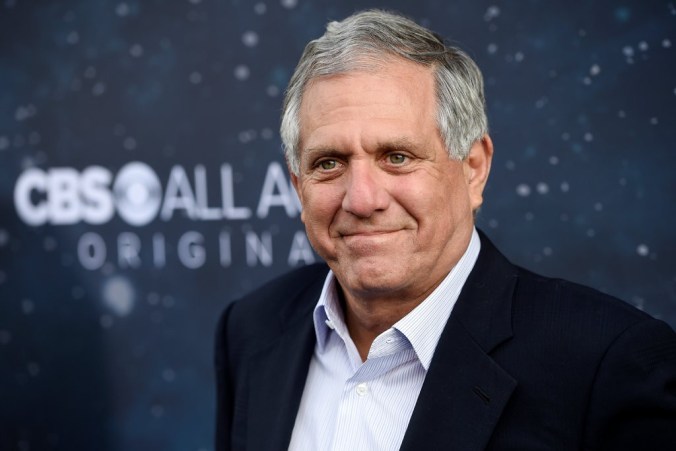
And The Harvey Weinstein Ethics Train Wreck Rolls On: CBS And Les Moonves

I’ll say this: he’s better looking than Harvey…


Ronan Farrow has struck again.

In a new investigative reporting piece, the journalist who revealed that New York State Attorney General Eric Schneiderman was a sexual abuser and who also added to the documentation of Harvey Weinstein’s horrific workplace conduct, revealed in his latest investigative article in The New Yorker that clear sexual harassment was alleged by six women in the entertainment business against Les Moonves, and that, as usual, his fish, CBS, and especially CBS News, had rotted from the head down.

Moonves is as long-established, respected and powerful a figure as there is in the media. He became the president of CBS Entertainment in 1995 and the chief executive of the company in 2006, and is paid $69.3 million a year.

You can close your eyes now and imagine everything that follows from here—it will just be a summer re-run of the Fox News debacle that eventually toppled Roger Ailes. We will need a pool to determine who will play the role of Bill O’Reilly, unless Charlie Rose qualifies. The account of actress Illeana Douglas—you know her face if not her name: she played the woman raped and mutilated by Robert DeNiro in “Cape Fear” and appears in several other Martin Scorcese films–is particularly disturbing, if familiar-sounding.

She describes Moonves grabbing her and violently kissing her during a business meeting in 1997. “What it feels like to have someone hold you down—you can’t breathe, you can’t move,” she said. “The physicality of it was horrendous.”  She made a joke and fled, she says, and soon after the episode Moonves fired Douglas from the CBS sitcom she had been cast in and told her that she would  “never work at this network again.” Continue reading

Morning Ethics Warm-Up, 7/25/18: Bricks In The Wall [UPDATED]

1. Nah, that’s not a misleading title! An op-ed in the Times yesterday had the alarming header, “Trump’s New Target: Citizenship.” In fact, the piece was about the movement to end automatic U.S. citizenship for those born here of illegal immigrant parents, and the Trump administration policy of seeking to “denaturalize” foreign-born citizens who achieved citizenship status by withholding disclosure of previous crimes.

As with many aspects of the bizarre national immigration debate, support for continuing the first principle is hard to justify. It is a remnant of a time when there were no restrictions on U.S. immigration, so the birthright rule made sense. Now, when illegal immigration is a serious concern, the same principle creates a perverse incentive to break the law, and makes immigration law enforcement complicated and difficult. The second issue is more debatable. The New York Times has another “good immigrant” story, this time one that seeks sympathy for Norma Borgoño, a Peruvian immigrant who took the oath of citizenship in 2007. The Justice Department has moved to revoke  Borgoño’s citizenship, claiming that she committed fraud when she applied for it. She apparentlyfailed to disclose that she had taken part in a serious crime several years before her application, then four years later, in 2011, pleaded guilty when she was charged for helping her employer  defraud the Export-Import Bank of the United States of $24 million.

Writes the Times, “Since President Trump took office, the number of denaturalization cases has been growing, part of a campaign of aggressive immigration enforcement that now promises to include even the most protected class of legal immigrants: naturalized citizens.” That is a deceitful sentence, full of spin, as is the entire story. For “aggressive immigration enforcement” read “enforcement.” The U.S. has every right, and in fact a duty, to assess what kind of people it wants to allow to become citizens, and criminals need not apply—after all, we have enough of them already. The Times finds it significant that Borgoño hasn’t been charged with her crime when she  applied for citizenship, but she was still a criminal, and the crime wasn’t stealing a loaf of bread, either. It also spins that her aiding a massive theft was “to no benefit of her own.” Oh! Then that’s OK, then! Presumably there was the benefit of keeping her job with her boss the felon, at very least.

The Trump administration isn’t “targeting citizenship,” but rather naturalized citizenship that was improperly granted, based on false representations.

2. The irresponsible neglect of the national infrastructure continues. I could write about this every day, and maybe I should. A microcosm of the national crisis is illustrated in the recent news that the New York City subway system is still falling apart, and even after the city spent about $333 million on emergency repairs its condition has barely improved. Waiting until transit systems, bridges, roads, railroad track, waterways, sewer and water pipes,  airports, the power grid and the rest of the structures that support civilization start crumbling, stifling commerce and killing people is an idiotic and suicidal approach to a basic  function of government, but  that has been our national policy since the 1960s. President Trump has claimed that addressing this was a priority, and maybe it will be, but recent history suggests that nothing will be done of substance until there is a lot of sickness, death, and destruction. Continue reading

“McCarthy And Witch Hunts And Fear, Oh My!” PART II: Papa John’s Pizza Founder And Chairman John Schnatter

What befell Papa John’s Pizza founder John Schnatter is even a more  direct example of current day McCarthyism and Salem’s “He’s a witch!” method of personal destruction than the fate of James Gunn, discussed in Part I.

Schnatter was already on the progressive hit list because he had been openly critical of the NFL’s addled kneelers–you know, those astute social justice athlete-activists who honest-to-Pete weren’t protesting the National Anthem when they protested during the National Anthem and never have been able to clarify what exactly they are protesting, unless it was kind of everything, and who were exercising their sacred First Amendment free speech rights, but really weren’t, though they don’t understand that, not being familiar with the nation’s founding documents? Those guys—and was ripe for race-baiting. Then he had a fateful conference call with the chain’s marketing agency Laundry Service—That’s funny: I have a laundry service called “Marketing Agency”!— that wanted to hire rapper Kanye West to represent Papa John’s in ads. The call was also intended, reportedly,  as a role-playing exercise for Schnatter to deal with sensitive race issues and to learn how to avoid future public-relations botches.

In the course of explaining that he wasn’t a racist, Schlatter told the tale of  how KFC’s Colonel Sanders reportedly used the slur “nigger” often. Schnatter said he never would use that word — but GOTCHA! He had, in order to tell the Col. Sanders story!

WIIIIITCH!!!

Although Schnatter says he intended  to convey his antipathy to racism, some on the call found his language ” offensive,” and reported that he had “used” the taboo word. Nobody, apparently, claimed he had used the word as a slur; he just refused to use the baby-talk code “N-word,” which, you may have already noticed, is an example of particularly idiotic political correctness that impedes education, journalism, public debate and competent communication that I emphatically reject in writing this blog. Talking or writing about the word “nigger” is not using the word “nigger” in the fashion that makes it rationally offensive. If anyone finds using the word to discuss the word itself offensive, that person has a problem, and it is between his or her ears.

Schnatter, who was already in trouble at his company and had stepped down as CEO in the wake of his criticism of the knee-happy NFL players, initially capitulated to the latest barrage of criticism. “News reports attributing the use of inappropriate and hurtful language to me during a media training session regarding race are true,” he said in a statement. “Regardless of the context, I apologize. Simply stated, racism has no place in our society.” Then he resigned from the company board. Here is the infantile way Forbes announced the news:

“John Schnatter—the founder and public face of pizza chain Papa John’s—used the N-word on a conference call in May. Schnatter confirmed the incident in an emailed statement to Forbes on Wednesday. He resigned as chairman of Papa John’s on Wednesday evening.”

Now Schnatter is fighting his exile, gathering a legal team and sending the following letter: Continue reading

Morning Ethics Warm-Up, 7/23/2018: Look! A Trump And Biased News Media-Free Warm-Up!

Good morning.

The three days of heavy rain wouldn’t bother me so much if it didn’t make Rugby so miserable. You do NOT want to be cooped up with an unhappy Jack Russell Terrier. Trust me on this.

1. Baseball Ethics, Jerk Division. Watch this:

Yes, that guy deliberately took a baseball away from a kid who lost hold of it after it had been tossed to him by Cubs first base coach Will Venable during yesterday’s Cubs-Cardinals game. Apparently the child was given a replacement ball by the Cubs, and this one was autographed. The gesture also took some the inevitable heat off the jerk who snatched the ball. with the Cubs telling reporters that he had helped the same boy get a ball earlier in the game and wasn’t really a monster.

A few points:

  • That the kid ended up, as some commentators put it, “better off” because the jerk stole his ball is pure moral luck, and doesn’t make what the guy did any less wrong, cruel or despicable.
  • Neither is it mitigation that the same man—claims the Cubs—helped the kid get another ball earlier. What kind of ethical principle is that? “I helped you before, so this entitles me to steal from you now: all even, right?”
  • Please save some contempt for the woman the jerk gave the purloined ball to. She should have handed the ball right back to the child, She’s as big a jerk as her friend is.

2. Now consider this: what if the jerk was a federal judge nominated to fill a Supreme Court seat? Would that video be fair game to consider in evaluating his qualifications to be a SCOTUS justice? Let’s have a poll:

Continue reading