
She needs that 20%
Here’s why you need to tip, and generously: Waiters and waitresses are screwed if you don’t. Continue reading
She needs that 20%
Here’s why you need to tip, and generously: Waiters and waitresses are screwed if you don’t. Continue reading

Charlie Sheen, The Amazing Human Ethics Train Wreck
Up until yesterday, the message CBS and Warner Bros. had been sending to the culture by its handling of the ongoing Charlie Sheen embarrassment was this: you can break laws, try to strangle your wife, publicly betray multiple spouses, neglect your children, dive drunk, use illegal drugs, generally behave like a spoiled, anti-social ass without showing any remorse or contrition, and corporations will still pay you a million dollars a week and tell America you are a terrific guy as long as you keep making them big profits. Continue reading
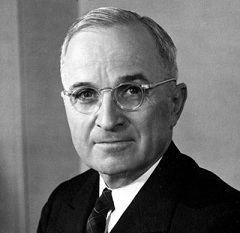
Harry gave credit for HIS slam dunks!
My favorite Harry Truman quote, and one of my favorite quotes generally, is
“It is amazing what you can accomplish if you do not care who gets the credit.”
It is a fair assumption that Los Angeles Clippers forward Blake Griffin has never heard of it, or if he has, he has no idea what Harry was talking about.
The 2011 NBA Slam Dunk Contest over the weekend featured a spectacular dunk by Griffin, jumping over the hood of a car and slamming the ball through the hoop after it was fed to him, mid-air, through the sunroof. His contest winning dunk was a sensation, and Griffin can be expected to reap both publicity and dollars from it over and above his contest prize.
But fan Michael Scrivner is calling a foul on Griffin, telling the media that he gave the star the idea for the dunk and deserves some thanks and credit. And he is 100% right. Continue reading
 David Becker, the top lawyer at the Securities and Exchange Commission, is suddenly an embarrassment to his employers. He and his two brothers inherited more than $1.5 million in phony profits from their mother’s investment in $65 billion Bernard Madoff’s Ponzi scheme. Since the S.E.C. was famously asleep at its post regarding Madoff, its negligence and incompetence allowing him to destroy individual lives, charities and more, having a key lawyer at the regulatory agency profit from Madoff’s scheme, even by inheritance, looks corrupt and unconscionable. Continue reading

"Conveys with property"
From the Boulder, Colorado real estate listings:
FOR SALE: $2,300,000
“Stunning, updated, classic Uni-Hill home. Elegance of past generations combined with modern updates make this home unique. Huge rooms, great light and an over-sized, gated lot on a fine street just a short walk from CU and Chautauqua. Beautiful high-end kitchen, a large terrace with a view and a master suite which encompasses the entire upper level and has stunning views. Nicely finished basement with high end finishes, wet bar & wine cellar. Too many features to mention in this beautiful home.”
One of those “features”: JonBenet Ramsey was found dead in that nicely finished basement, and was almost certainly murdered in the house.
Oh, that. Continue reading

"Hi! I can't answer the phone now, but please leave a message!"
Teresa Danford’s son, Lance Cpl. Mark Rhyne, is deployed in Afghanistan, where he is only able to call home once or twice a month. He has been overseas for seven months. On Valentine’s Day, Teresa, an employee of Crane Interiors in Woodbury, Tennessee, received one of her son’s precious phone calls at her job, on her personal cell phone. She was promptly suspended for three days without pay, for Crane has a no cell phone call policy for employees. Her manager informed her that she would be fired if it ever happened again. Continue reading

The battleground
The story to date: Wisconsin’s Republican Gov. Scott Walker announced a budget-repair measure to address looming budget deficits (in a state with a balanced budget mandate in its constitution) by requiring state employees to contribute a larger proportion of their pensions and health care plans, and restricting their long-standing collective bargaining rights. Wisconsin’s deficit is projected at $30 million for the remainder of the 2011, with a shortfall of $1.5 billion projected for next year. In response to Walker’s announcement and the near certainty of his plan being passed by the Republican dominated state legislature, 14 Democratic legislators fled the state to prevent a quorum and block a vote, teachers left their classes to protest in Madison, where they were joined by thousands of pro-union protesters, many of whom were organized and bused in by Organizing for America, a White House operated political group.
Let’s try to separate the ethics wheat from the chaff—amazingly, there is actually some wheat–and get an early line on the heroes, dunces, villains, and the rest as the Wisconsin budget battle threatens to become a full-fledged Ethics Train Wreck. Continue reading

Steve Jobs and friend
Back in June of 2009, when “Ethics Alarms” was but a twinkle in my eye, there was a momentary controversy when ailing Apple CEO Steve Jobs was able to use his enormous wealth to land on multiple regional organ transplant lists, thus vastly improving his chances of getting a precious liver transplant in time to save his life. The California native ultimately got a Tennessee liver, but critics cried ethics foul. The organ transplant distribution system is not supposed to be based on wealth: otherwise, why not just auction off livers to the highest bidders? Because most insurance companies won’t cover multiple listings, only the richest patients can afford to employ this strategy, meaning that a system that is supposed to be means-neutral favors the wealthy after all. Continue reading
The Anchorage Daily News has obtained a leaked (read: stolen) manuscript of an unpublished book detailing a close former aide to Sarah Palin’s discovery of the Republican star’s many character flaws. Among other items, the book suggests that she knowingly violated federal election laws.
Now what? Let’s run down the ethical docket: Continue reading
 The Obama Administration has deep-sixed a controversial Bush Administration rule that permitted a wide variety of health care workers to refuse to administer treatments they found morally repugnant, what the Bush administration termed workers’ “right of conscience.”
Hospitals and clinics faced a loss of federal funds if they failed to uphold the rule, which itself was ethically repugnant. Kudos, thanks and hosannas to President Obama for getting rid of the Federal variety; some states, regrettably, still have them.
The American Medical Association’s position on the matter, embodied in a resolution passed by its membership, is clear and well-reasoned. Its reasoning applies to health care workers though the specific subject of the resolution was pharmacist conscience clauses.
The AMA’s resolution, “Preserving Patients’ Ability To Have Legally Valid Prescriptions Filled,” states: Continue reading

