Ick, Unethical, Or “YUM!”?

Oh, settle down: this is an adult blog, after all.

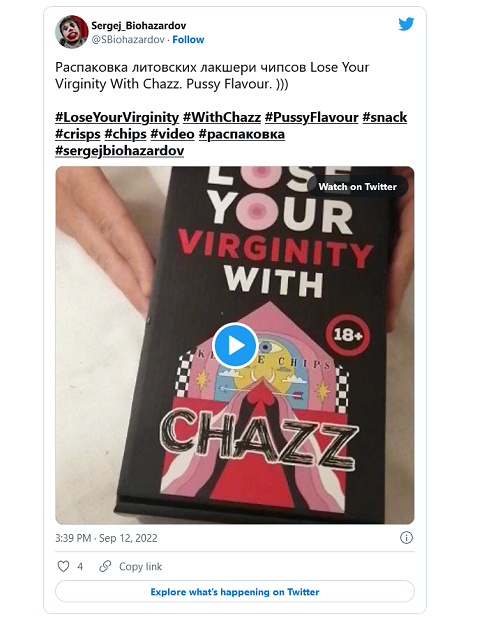
I’ve checked: that is not a gag. A Lithuanian potato chip company has launched a line of flavored chips aimed exclusively at 18-year-olds and older. CHAZZ potato chips come in flavors like mussels, white wine, and Bloody Mary, but it’s the flavor above that is stirring up controversy. I’m not kidding!

I see no reason why someone won’t launch these chips or the equivalent here. Would that be unethical, vulgarizing the culture? Corrupting the young? Nobody accused Bertie Botts’ Jelly Beans of such an offense, and they have just about every flavor except sex-related ones. I presume conservatives would flip out over this product; Ron DeSantis would probably try to get it banned in Florida. Good luck with that.

I must admit, I’m shocked…shocked that Lithuania beat the good ol’ entrepreneurial U.S.A. in coming up with this.

Unethical Euphemism Of The Month: “Anti-Racist/Anti-Oppression Layoffs”

Hmmm, why does this concept sound vaguely familiar?

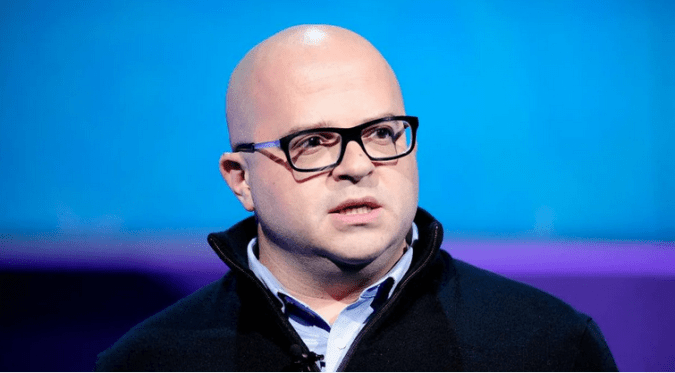
That’s Jeff Lawson above, CEO of Twilio, a “customer engagement software company,” whatever that means. He just announced that because of Joe Biden’s non-recession he’s going to have to reduce the workforce by 11%, meaning that more than 800 loyal, hardworking, not quietly -quitting Twilio employees will be put out onto the streets. But he assured employees (and progressives, and anti-white racists) that the company would make firing decisions through an “Anti-Racist/Anti-Oppression lens.”

Translation: “I’m firing whites, males and straight people first.”

Verdict:: Unethical, grandstanding, discriminating asshole.

Continue reading →

The Times Promises To Explain “How the NFL Stays So Popular, Despite Its Many Scandals”

It doesn’t. But I can.

As the football season approaches, the New York Times muses about why television viewership for the NFL last season was its strongest in six years, the television networks committed about $110 billion for the rights to show the league’s games for the next decade, and how the NFL can be on track to meet Commissioner Roger Goodell’s goal of earning $25 billion in revenue annually in 2027. After all, the game and its players were once again engulfed in scandals during the off-season:

Continue reading →

Observations On “Flight/Risk”…And Related Matters

“Flight/Risk,” an Amazon production, was released on the streaming service today. The documentary is the most recent examination of the tragedy and scandals surrounding the crashes of two Boeing 737 Max planes within a five month period in late 2018 and early 2019. The horrible and disturbing story  is narrated by Pulitzer-winning Seattle Times journalist Dominic Gates, and revealed from the perspective of the deceased passengers family members, their lawyers, and whistleblowers.

Amazon’s fatuous description of its own product, primarily designed to be a “trigger warning,” explains that the movie may be too traumatic to watch for “some” and says the planes crashed “without anyone really understanding why.” That is, to be blunt and vulgar, bullshit. Lots of people understood why, including Boeing engineers, Boeing executives, FAA officials, and anyone (like me) who knows why large organizations are almost always incompetent, unethical and untrustworthy. {Ethics Alarms has several posts about the 737 Max scandal.]

What is so infuriating about the story is that it is so familiar. This is the Challenger disaster all over again, even to the detail of a whistle-blowing engineer being punished for having the courage to speak up, and eventually killing himself. In other ways, it is like the recent Ernst and Young cheating scandal, which Ethics Alarms discussed here.

Continue reading →

Ethics Dunce: Fox Sports Radio host Doug Gottlieb

I’ve been somewhat remiss in my coverage of baseball ethics in recent months; its been like Sauce Bearnaise Syndrome: the Red Sox have been having such a nauseating season that even thinking about baseball has been painful. This story broke through my wall of pain because it also pings my legal ethics alarms.

Back on June 29 (before the Red Sox turned into mud, in fact),  Fox Sports Radio host Doug Gottlieb tweeted that LA Dodger Freddie Freeman’s agent, Casey Close, never communicated a contract offer that the Braves had made to free agent Freeman last winter before Freeman left the team he had always played on to sign with the Dodgers. Freeman was upset about the report; the Braves, and the Atlanta fans were also outraged, because Freeman was a popular and superb player for the Braves. Casey Close, however, was more upset than all of them combined. Not communicating a contract offer to a client is a throbbing neon ethics violation for a sports agent (it would lead to suspension of a law license if a lawyer did it) and Gottlieb’s claim could ruin Close’s career if it couldn’t be disproved. Close sued Gottlieb for defamation in July. Continue reading →

Comment Of The Day: “Verdict: ‘Quiet Quitting’ Is Unethical. Next Question?”

[The caption on perhaps my favorite Charles Addams cartoon reads, “We never could have done it without him.”]

I thought that the essay on “quiet quitting” would spark a good discussion, and when I think that, I’m usually wrong. This time I was right, and among the excellent comments was this Comment of the Day by Tim Hayes, who focuses on the crucial aspect of the issue that I barely touched on at all: the responsibilities of management.

Here is Tim’s Comment of the Day on the post, “Verdict: “Quiet Quitting” Is Unethical. Next Question?”…

***

So, full disclosure, I hate the terminology and discussions around “quiet quitting”, both as a manager, and as an employee. Part of this is because it is unethical – but also part of it is because a lot of current discussions seem to be about deflections and doublespeak, and they just frankly aren’t doing anyone any good.

Some instances of quiet quitting are simply laziness on the part of the employee – this shouldn’t surprise us (I can make a strong argument that laziness when possible is actually a biological predisposition, and furthermore beneficial to societies when channeled appropriately), and while performing excellently is a virtue, and should be a path to success, it is not a necessity in all things. The American experiment, and indeed all civilizations (Western and Eastern), have gotten along just fine with the majority of individuals being mediocre – the trick has historically lay in defining mediocre as still sufficiently productive to support a society when the majority of its members are at that level, while allowing those who wish to perform exceptionally to do so. So, in the situation where quiet quitting is about laziness, the only major question to be answered is what constitutes acceptable levels of performance in the role at hand, and have those been adequately defined and communicated to the person in that role.

This is why I hate hearing the discussions as a manager – they almost always ignore that there is a failure of leadership/management in these cases. If I have someone who is performing the job as I’ve described it to them, and is actually meeting my set standards for acceptable levels of performance, yet their performance of their responsibilities is insufficient in some way, then it is axiomatic that I have failed to define as acceptable the levels of performance that are sufficient to fulfill my need. If, conversely, I have described acceptable levels of performance and the person is not meeting them, and so my business needs are not being met, than I am failing to hold this person to the standards I have set. Continue reading →

Verdict: “Quiet Quitting” Is Unethical. Next Question?

I had happily never heard of the term “quiet quitting” until last week, and now it is supposedly a hotly-debated ethics topic. There’s nothing to debate about. “Quiet quitting” is not new (the term may be new), nor is there any defense for it. It is un-American to its core. But as so many American values are being eroded by revolutionary fervor of people who simply don’t like the unique history, culture and principles that make the nation the unique entity that it is, it figures that slacking at one’s job and being self-righteous about it would be on the rise.

It is, there is little doubt about that. Ethics Alarms has mentioned the trend of increasingly poor and unaccommodating service in every sector. The usual explanation is the under-staffing that the destructive pandemic lockdown facilitated, but it’s good that focus is falling on the declining belief in seeking excellence in all one does, and putting out one’s best effort at all times. The death throes of American dedication to excellence as a cultural value is what has been newly christened “quiet quitting,” the many ways in which workers reduce the time, energy, and care they commit to their jobs.

Continue reading →

If The Public Cannot Trust Accountants To Be Ethical, Who Can They Trust? Answer: Nobody

Let’s begin with a confession and an apology. On June 28, the SEC announced that it had charged Ernst & Young LLP with extensive cheating by its employees on exams required to obtain and maintain Certified Public Accountant (CPA) licenses. Moreover the Big Five firm withheld evidence of this misconduct from the Security and Exchange Commission’s Enforcement Division during the SEC’s investigation. EY admitted the facts leading to the SEC’s charges and agreed to pay a $100 million penalty. [You can read the SEC’s press release here.]

I have no idea how I missed such a major and troubling ethics story. It’s my job to keep up on such matters; I teach accounting ethics, though I haven’t had a training assignment for that profession since the pandemic hit. I apologize profusely. I will work to do better. While the various breaches of government, journalism, legal and business ethics that occupy most of my attention on Ethics Alarms are important, none are more ominous than this story. It really feels like the canary dying in the mine.

Continue reading →

Ethics Dunces: The Operators Of Detroit’s Belle Isle Park

This place should not be in business.

The Giant Slide at Belle Isle Park reopened last week after being closed for two years because of the pandemic (how this ride could possibly be a virus-spreader is beyond me, but that’s The Great Stupid for you). The 50-foot metal slide has been a  Detroit summer tradition since 1967. When it went back into operation last week, however, “the waxing was a little robust,” according to Ron Olson, the chief of parks and recreation for the Michigan Department of Natural Resources. It’s nice that he can be so cavalier about people nearly breaking their necks. As a result of that robust waxing, every bump in the slide sent fun-seekers airborne, as you can see from one of the many videos made of the thing above. One woman bumped her head and lost her phone, headphones, glasses, a shoe and even a sock on the way down.

What fun! GMAC Cash, a Detroit rapper, even put the experience to song: “You can break your back, on the Giant Slide,” he raps. “You can even break your neck, on the giant slide. You can even bump your head, on the giant slide.”

Apparently nobody connected with the park bothered to stage a few test runs to see if the slide was safe after being put back into service after two years. No state agency checked it either, though most such amusement park attractions have to be inspected before the public can use them. It gets worse. Even though the ride was obviously dangerous, over 500 sliders risked their necks before the slugs operating the park thought hard about the violence they were seeing and said, “Ya know, maybe we need to fix this.” Then they closed the ride. (It reopened last weekend.)

The ethical values on display here are competence and responsibility, or rather the lack of them. The fact that nobody was seriously injured is pure moral luck. This is how people get killed.

The episode ranks an “Otter”:

Breaking News On The Stolen Election “Lie”

I still see it almost every day: a reference to Donald Trump’s stolen election “lie.” Trump, as is his wont, makes this slur too easy by his usual sloppiness of expression. First, he employs the language of certainty to express a belief that cannot be verified, and second, he keep focusing on voter fraud. However, as Ethics Alarms had indicated on many days in in many ways, there is a substantial likelihood that Trump’s second term was stolen from him (and the nation), not by fraud but by the continuous series of deliberate and unethical acts of sabotage committed against his Presidency, administration and campaign by Democrats, progressives, the news media, social media, popular culture, Big Tech, NeverTrump Republicans and the “Deep State.” (As an aside, the denials by the Left that the Deep State exists remind me of the once commonplace denials by Italian-Americans that the Mafia existed.)

This week, two bits of evidence supporting this position emerged:

Continue reading →