Comment of the Day: “Interestingly, Being an Idiot Does Not, In The Eyes Of The Florida Bar, Make One Unfit To Practice Law”

This Comment of the Day from the stellar Harkins household—this is from Ryan Harkins–was just posted three days ago and it seems like eons. It responds to another one of my arguments that sufficient demonstrations of stupidity by lawyers even outside the practice of law should be grounds for disbarment—a suspension isn’t enough, because such a lawyer will not become smarter after a professional “time out.” I think the first time I suggested this reform to legal discipline was when “The View’s” token lawyer, racist Sunny Hostin, suggested that eclipses and earthquakes were caused by climate change. It upsets me just think about the fact that this idiot has a law degree.

Here is Ryan’s Comment of the Day on the post, “Interestingly, Being an Idiot Does Not, In The Eyes Of The Florida Bar, Make One Unfit To Practice Law”

***

A basic and important rule of gun safety, perhaps the preeminent rule, is that you should never point a gun at anything you don’t intend to shoot. Playing around with a gun in the fashion that Medina did shows a disturbing lack of gun safety in particular, but of the principal normalization of deviance in particular.

To delve into a little bit of brain science, in following the cognitive-emotive-behavioral model, we start with a desire. Perhaps in Medina’s case, it was simply to have fun. But how would he possibly conclude pulling the trigger of an unloaded gun is fun?

There are a large variety of ways we can try to satisfy our desires. In the case of hunger, we could seek satiation from a myriad of venues. In the case seeking stress relief, we could seek out a movie, a game, exercise, or any of a host of other options. But there are options we can choose from that are unhealthy, dangerous, or even illegal. When presented with all these options, our brains experience a byplay between thought and feeling. Does this option satisfy? The emotions clamor for a particular avenue, and cognition weighs the risks and benefits. If I eat a salad, I might not feel satiated, but if I eat a Hardee’s Monster Burger, I’ll be consuming far too many calories. But the salad may not be very tasty, and the Monster Burger is delicious. Whichever way I choose, my brain will record the success or failure of the endeavor, and the next time I am hungry, I will have a precedent to fall back on. They byplay between cognition and emotion in subsequent encounters proceeds much more quickly. The Monster Burger was indeed delicious, filled me up, and I didn’t seem to suffer any negative consequences. So the next time, my brain is patterned to lean toward the Monster Burger because of the positive experience.
Continue reading

“The Ethicist” Finds a Rationalization! Welcome #64 A: “It Didn’t Mean Anything”

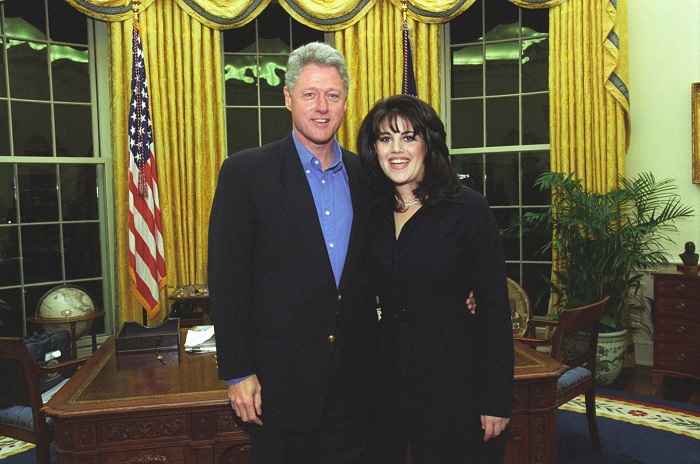
Rationalization #64 A, The Cheater’s Defense or “It Didn’t Mean Anything” is a rather narrowly applicable addition to the list: it arises when a half of a supposedly committed couple has sexual relations with a third party. I have entered it as a sub-rationalization to the infamous Yoo’s Rationalization (“It isn’t what it is”) because betraying a spouse, partner or lover does mean something, probably many things.

The Ethicist received a question from, as always, “Name Withheld,” whose partner had cheated on her and used that phrase, “It didn’t mean anything.” She asks, years after the event, “I still don’t understand why cheaters use the phrase ‘‘(She/he) didn’t mean anything to me.’ How does one even respond to a statement like that?”

Kwame Anthony Appiah, in his usual measured fashion, says that the line “is how cheaters try to reassure their partners that their infidelity wasn’t going to lead to a serious relationship and needn’t spell the end of their existing one; that a fling was ‘just sex.’’’ But that still doesn’t translate to “It didn’t mean anything.” Having sex out of one’s committed relationship probably means, among other things,

  • The cheater isn’t as committed as he or she had led the betrayed partner to believe.
  • The cheater cannot be trusted.
  • The cheater has a drinking or substance abuse problem.
  • The cheater has some apparent needs that the supposed love of his or her life isn’t supplying
  • The cheater lacks some degree of impulse control.
  • The cheater is an easy mark for an aggressive come-on from an attractive member of the opposite sex (in other words, the cheater is a typical heterosexual male.)

Of course it meant something. The statement, like many rationalizations, is a lie. “The Ethicist” concentrates on what the use of the rationalization means: that the cheater, in addition to cheating, is manipulative jerk. “Cheaters demean the people they cheated with by dismissing them as meaningless, demean their partner by implying their pain is unjustified and demean their relationship by saying that they betrayed their beloved’s trust for a liaison they insist was insignificant,” he concludes.

Yeah, that too.

Ethics Dunce: Elon Musk

I hate to throw an ethics flag on Musk while he’s doing such essential work and being attacked for it. Still, this kind of stuff doesn’t help. At all.

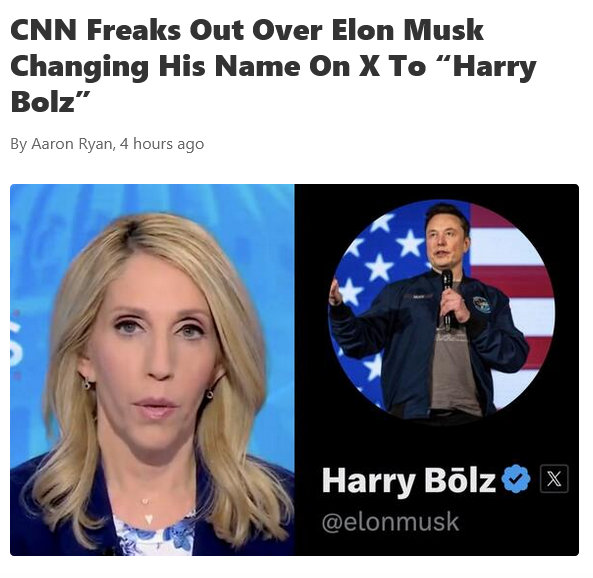
Yeah, I know, I know. Musk is one the autistic spectrum and in some respects is a bout 10 years old, and like Donald Trump, he enjoys trolling and doesn’t care who he alienates. Conservative pundits and wags were crowing about CNN’s Dana Bash saying solemnly on the air, “”Now the ‘Disruptor in Chief, Elon Musk, who apparently has adopted the alias, at least he changed his social media handle, to ‘Harry Bōlz’, tweeted this morning, ‘Democracy in America is being destroyed by judicial coup. An activist judge is not a real judge.”

Indeed this thrust us into Poe’s Law hell, where it is impossible to distinguish reality from satire. Musk was mocking the breathless doxxing of one of his fuzzy-cheeked geeks as “Big Balls” by the Axis media, and I’m sure he got a good laugh out of it; I’m sure Trump did too. Nonetheless, what he is doing with DOGE is too important to be vulnerable to the accusation that the man in charge is just fooling around, having fun, and not taking seriously decisions that effect the lives and livelihood of so many people.

It is easy to make the news media look foolish because they are foolish. Still, Elon Musk (and the President, but he’s beyond reforming) can’t afford to go after this low-hanging fruit and behave like Bart Simpson tricking Moe into calling out in his bar, “I.P. Freely ! I.P. Freely on the phone here! ” He must be seen as the serious analyst that he is if the DOGE effort is to have any chance of succeeding.

Doxxing, “Big Balls,” J.D. Vance and “The Racist Tweeter Principle”: A Tragi-Comedy With a Twist

Like my old law school roomie who left “Gone With the Wind” at the intermission thinking it was over, I almost posted on this ethics mess too early. There were three acts, and there might be a fourth. I thought the ethics show was over after Act II.

Act I. The news media’s tantrum: Upon finding that Elon Musk and DOGE were serious about uncovering government waste, that he was employing some of his young computer nerds from SpaceX to do it, and that they had brought down USAID, a foreign aid, woke slush fund icon by exposing just how profligate and irresponsible it was, Katherine Long, a progressive reporter on the Wall Street Journal, targeted the young geniuses who may all be on the autistic spectrum (like Musk). One of them, a 19-year-old, she embarrassed by revealing that his social media handle when he was in high school was “Big Balls.” She also doxxed Marko Elez, writing that he was a “25-year-old who is part of a cadre of Elon Musk lieutenants deployed by the Department of Government Efficiency to scrutinize federal spending” and had published troubling social media posts like, “Just for the record, I was racist before it was cool.” “You could not pay me to marry outside of my ethnicity,” he wrote on “Twitter/X” in September. Long revealed that his account declared, “Normalize Indian hate,” in the same month, expressing his disapproval of the large numbers of tech workers from India in Silicon Valley.

Ethics takeaway: Doxxing is unethical; so is using old social media posts to make a newly prominent figure a victim of the “cancel culture.”

Continue reading

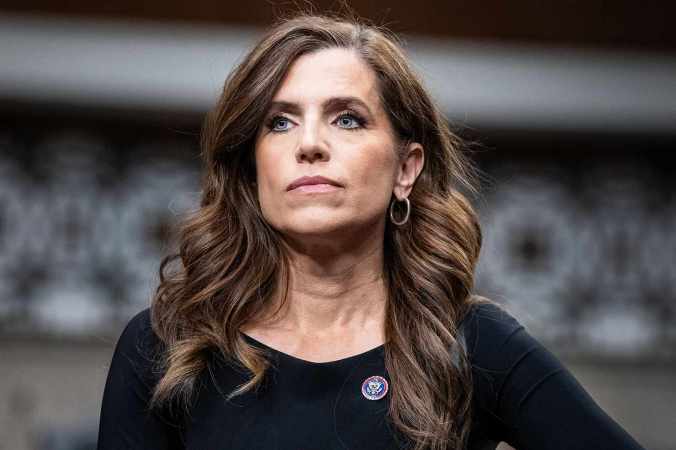
Ethics Dunce: Rep. Nancy Mace (R-SC.)

During a House Oversight Committee meeting, Rep. Nancy Mace used the derogatory term “tranny” in discussing legislation aimed at various aspects of the contentions transgender issue. Rep. Gerry Connolly (D-Va.), the ranking Democrat on the committee, objected. “The gentlelady has used a phrase that is considered a slur in the LGBTQ community and the transgender community,” he said.

That is correct. Moreover, this is not a new development: “tranny” is an old slur, and unlike some terms that have been declared slurs after once being considered acceptable (I forget: is “queer” a slur now, or isn’t it?) that term for a transexual has always been used as an insult.

Nevertheless Mace, emulating the outburst that ended Dr. Laura’s radio career (Except that she said, “Nigger, nigger, nigger!”), spat back, “Tranny, tranny, tranny! I don’t really care. You want penises in women’s bathrooms, and I’m not gonna have it. No, thank you.”

For this illogical and needlessly uncivil response, Mace has been cheered by some conservative pundits. Now that’s transphobia and bigotry. “Tranny” is in the same ugly category as nigger, spic, gook, retard, fag, dyke, cunt, and other indisputably denigrating terms that have no redeeming feature. Their purpose is to demonstrate hatred and contempt for the group or individual being described. Such a purpose is per se unethical: disrespectful, unfair, cruel and uncivil.

Connolly replied, logically enough, “To me, a slur is a slur, and here in the committee, a level of decorum requires us to try consciously to avoid slurs.” He was right.

Connelly continued, “You just heard the gentlelady actually actively, robustly repeat it; and I would just ask the chairman that she be counseled that we ought not to be engaged — we can have debate and policy discussion without offending human beings who are fellow citizens. And so, I would ask as a parliamentary inquiry whether the use of that phrase is not, in fact, a violation of the decorum rules.”

Mace, putting in her entry for Asshole of the Year, refused to submit. “Mr. Chairman, I’m not going to be counseled by a man over men and women’s spaces or men who have mental health issues dressing as women.”

That response, like her previous one, made no sense, but still, some conservative pundits applauded. Matt Margolis, for example, argued that “tranny” isn’t really a slur. Bologna. I knew the word was a slur decades ago. He lionizes Mace for refusing to submit to a Democrats because, he claims, “everything” is a slur to progressives now. That might be a justifiable exaggeration in some cases, but not when a real, undeniable slur like “tranny” is involved. Connolly is 100% correct: there is no excuse for members of Congress to deliberately use terms that only exist to offend and marginalize minorities. To do so gives a license to citizens to behave hatefully, because our elected representatives are supposed to be role models and to exemplify the best conduct in public, not the worst.

I say this with full recognition that my ethics, decorum and civility standards for members of Congress is so alien to so many current members today that it is almost futile to keep insisting on it. Just watch the ridiculous spectacle House members and Senators made of themselves protesting against Elon Musk yesterday.

A civil, responsible elected official should be able to make her points without stooping to gutter slurs.

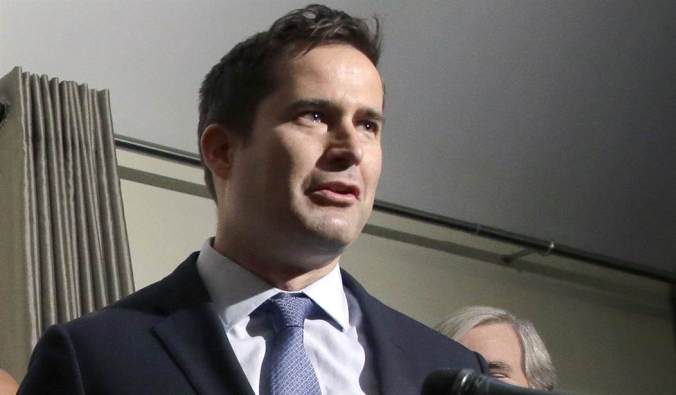
Ethics Dunce: Rep. Seth Moulton (D-Mass.)

Rep. Moulton must have read wrong. See, Teddy Roosevelt said, “Speak softly and carry a big stick.” Somehow the Massachusetts Democrat thought the sage words were, “Speak loudly and be a big weenie.”

After the election last year, Moulton criticized his party for avoiding controversial issues like biological men competing in women’s sports. “Democrats spend way too much time trying not to offend anyone rather than being brutally honest…I have two little girls. I don’t want them getting run over on a playing field by a male or formerly male athlete, but as a Democrat, I’m supposed to be afraid to say that.” The reaction by his constituents confirmed why: His comment on the topic were widely criticized and there were resignation from his staff. 

But Moulton continued to channel “Profiles in Courage.” “I stand firmly in my belief for the need for competitive women’s sports to put limits on the participation of those with the unfair physical advantages that come with being born male,” he said. “I probably will be primaried,” he told CNN. “And that’s great. That just proves my point: you can’t speak a sentence that’s out of line and not get backlash from the left. But that’s OK. This is a democracy.”

Impressive. Then, last month, Moulton quietly voted against the Protection of Women and Girls in Sports Act, which bans biological males from competing in girls’ school sports. Only two Democrats voted for the bill. He had been the most vocal Democrat in supporting its purpose, but when the time came to vote consistently with his fervent devotion to the safety of his daughters in their future athletic pursuits, he decided that he didn’t want to be primaried after all.

Coward. Liar. Hypocrite. Weasel. Hack.

The NYT Tries To Create Sympathy For An Unsympathetic Jerk And Paints a Fresh Target On His Back

Is this New York Times piece deliberately making the situation it is reporting on worse, or is the writer (Brendan Kuty) just as clueless as his subject?

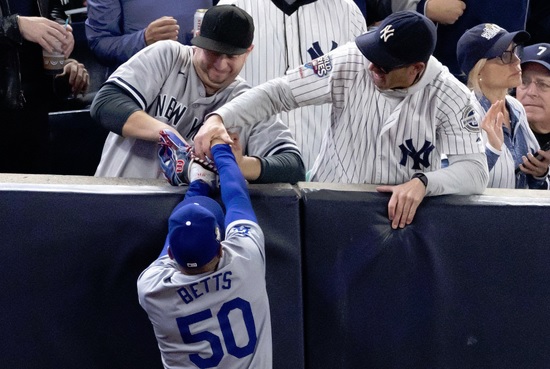
Baseball’s Spring Training is rapidly approaching, and so are media stories reminding us that it’s on the way. Today The Athletic, the sports publication that the New York Times owns and operates instead of its own sport page, ran a follow-up to the memorable (in a bad way) incident above that I wrote about here right after it occurred, during the World Series Two asshole Yankee fans (but I repeat myself—see? I’m getting ready for the season too!) nearly ripped Dodger outfielder Mookie Betts’ hand off trying to pry a foul pop out of his glove.

Interference was called, the Yankee batter (Gleyber Torres) was called out, and the two idiots were ejected from the game. For some reason it took Major League Baseball months to decide to ban the two from all ballparks for life, but that was ultimately the decision.

But The Athletic decided that it was time to try to make us feel sorry for Austin Capobianco, the jerk on the left in that photo whose name I had mercifully forgotten. We are told that he received a lot of mean phone calls, hate mail and mean messages on social media. Well, that’s what happens when you behave outrageously on national television and nearly hurt someone. An anonymous hater sent a box of poop to his home. Ew! and unethical, but there are a lot of crazy people out there (just look at yesterday’s protest against Elon Musk).

Continue reading

Death of a Baseball Ethics Hero: Fay Vincent (1938-2025)

Fay Vincent, the last real Commissioner of Baseball, has died and attention should be paid.

The post of Commissioner of Baseball was created in the wake of the 1919 Black Sox scandal, with baseball’s future in doubt after the revelation that key members of the Chicago White Sox had accepted money from gamblers to throw the World Series to the vastly inferior Cincinnati Reds of the National League. The desperate owners turned to an austere judge, the wonderfully named Kenesaw Mountain Landis, who accepted the job provided that he had absolute power to act in “the best interests of the game.”

Landis ruled with an iron hand and baseball’s perpetually corrupt, greedy and none-too-bright owners backed off while he was in power, from 1920 until his death in 1944. Landis, in the harsh light of hindsight, is now vilified for not figuring out that keeping blacks out of the Major Leagues wasn’t in the best interests of baseball (or blacks, or sports, or democracy, or society, or the nation), but he proved a tough act to follow nonetheless.

Most of his successors were mere figureheads or knuckleheads, notable more for their non-decisions and bad ones than their actions in the “best interests of baseball.” Ford Frick, one of the longest serving Commissioners, is best known for his foolish insistence that Roger Maris didn’t really break Babe Ruth’s season homer record, a controversy decisively ended in the American League three years ago by Aaron Judge. Baseball collected weenies and fools in the role because the owners wanted it that way.

There were a couple of exceptions. Peter Ueberroth made the game infinitely more profitable and considerably more popular by modernizing its brandingm merchandising, promotion and marketing. Bart Giamatti , following in the fading footsteps of Judge Landis, courageously refused to issue The King’s Pass to Pete Rose, one of the most popular former players in the game, and banned him for gambling. But when Giamatti died suddenly from a heart attack after less than a year as Commissioner, he was succeeded by Fay Vincent, in a sequence a bit like when the Vice-President takes over when a POTUS dies. He had been deputy commissioner under his good friend Giamatti, and the owners of the major league teams confirmed him without qualms as the next Commissioner . They thought he was one of them: a corporate veteran and lawyer who had served in top executive roles for Columbia Pictures and Coca-Cola before Giamatti recruited Vincent as his right-hand man.

Vincent, however, was not what the owners wanted or expected. He was intelligent, courageous, far-sighted, and worst of all, as a passionate baseball fan, he took his job description seriously and literally. He didn’t work for the owners, though they could fire him. His stakeholders were fans and the game itself. Vincent’s vision for the job was reminiscent of the difficult ethical conflict accountants face: businesses hire them and pay their salaries, but their duty is to the public.

Continue reading

Unethical TV Commercial In Oh So Many Ways: 2024 Hyundai Tuscon SEL

Here’s now sinister this ad is: I must have watched it six or seven times before I thought, “Hey…wait a minute!”

The male “bad date” in the ad is so disgusting a viewer is half-hoping the woman pulls out a .44 and shoots him right between the eyes. This is masterful manipulation at work…he begins with an insult framed as blame causing him disappointment: “You’re too short.” Asshole. Then he reveals his narcicissm and boastfulness, showing the selfie “by the dumbbells.” Giant asshole! Next the air-drumming comment…UNBELIEVABLE asshole! When he gets to the bit about forgetting his wallet and “Sugarmamma,” the viewer is seeing red, and feeling that the victim of this toxic creep is being noble by just sneaking out rather than setting him on fire.

But she isn’t. She’s being an asshole too, just a slightly better one. Leaving the table on false pretenses to escape is cowardly and indefensible. Moreover, someone who misbehaves as outrageously as the “bad date” needs to be told just clearly how unacceptable his conduct is and why, since he obviously doesn’t know. His next victim will at least partially be the runaway date’s fault.

The commercial also showed an anti-female bias by making the bad date a male and his victim female. A genders switched version would inspire at least a substantial reaction from viewers of “What a weenie! The jerk doesn’t have the guts to confront that jerk!” But teh woman in the ad is also a weenie—it’s just that the Hyundai marketers are calculating that running away from confrontations and unpleasant situations is a girl thing, and socially acceptable.

No, it really isn’t. This is not only a stereotype, it’s a damaging one. Why haven’t we elected a female President yet? Accumulated cultural poison like this commercial is one of the reasons.

Incidentally, I hope that actor who plays the asshole was well paid for his performance, because he may end up dying single and alone as a result.

Cognitive Dissonance Scale Lesson For Senate Democrats

I have mentioned here frequently that one of two things I learned in college that have been most useful in my life and career is Leon Festinger’s Cognitive Dissonance Scale. The concept illustrated by the scale is also one of the most useful tools for ethical analysis, often essential to answering the question, “What’s going on here?” the entry point to many perplexing situations. Check the tag: it just took me 15 minutes to scroll though the posts that got it. I was surprised to find that I didn’t use the tag until 2014, when the scale helped me conclude that the Tea Party, then in ascendancy, was “doomed by a powerful phenomenon it obviously doesn’t understand: Cognitive Dissonance.” Heard much about the Tea Party lately? See, I’m smart! I’m not dumb like everybody says… I wrote then,

As psychologist Leon Festinger showed a half a century ago, we form our likes, dislikes, opinions and beliefs to a great extent based on our subconscious reactions to who and what they are connected with and associated to. This is, to a considerable extent, why leaders and celebrities are such powerful influences on society. It explains why we tend to adopt the values of our parents, and it largely explains many marketing and advertising techniques that manipulate our desires and preferences. Simply put, if someone we admire adopts a position or endorses a product, person or idea, he or she will naturally raise it in our estimation. If however, that position, product, person or idea is already extremely low in our esteem, even though his endorsement might raise it, even substantially, his own status will suffer, and fall. He will slide down the admiration scale, even if that which he endorses rises. If what the individual endorses is sufficiently deplored, it might even wipe out his positive standing entirely.

The implications of this phenomenon are many and varied, and sometimes complex. If a popular and admired politician espouses a policy, many will assume the policy is wise simply because he supports it. If an unpopular fool then argues passionately for the same policy, Festinger’s theory tells us, it might..

1. Raise the fool’s popularity, if the policy is sufficiently popular.

2. Lower support for the policy, if he is sufficiently reviled, and even

3. Lower the popularity of the admired politician, who will suffer for being associated with an idea that had been embraced by a despised dolt.

This subconscious shifting, said Festinger, goes on constantly, effecting everything from what movies we like to the clothes we wear to how we vote.

Here, for the heaven-knows-how-many-th time, is the scale in simplified form…

Continue reading