Unethical Quote Of The Month: Rep. John Lewis

open-borders

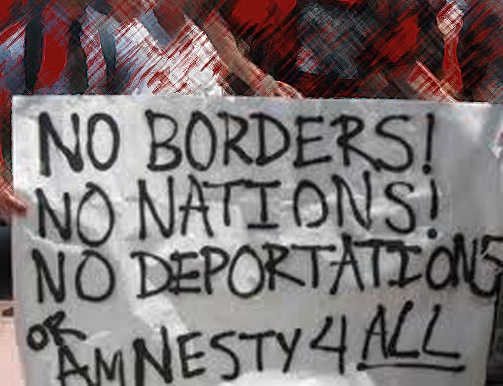
“We are all connected. We can’t just build a wall or a fence and say no more. This is America. Our doors are open. #AskDems”

–—–Rep. John Lewis (D-GA), in a tweet that is part of a concerted Democratic effort to announce to the world that U.S. immigration laws will not be enforced.

“The doors are open.”

“The doors are open”???

How can any sensible, honest, objective American read this, from a leader of the Democratic Party, and not be appalled? This is an assertion of open borders, in defiance of U.S. sovereignty. This is an abdication of the rule of law. Go to twitter and search for #AskDems: Lewis’s tweet is the worst, but many of the Democratic leadership are making similar, and similarly irresponsible statements that undermine the effort to stop illegals, including the current torrent of illegal children, from streaming across the border. Continue reading →

John Travolta, Carrie Fisher, and The Ethics of Outing

Mr. and Mrs. John Travolta

Mr. and Mrs. John Travolta

Should it matter if John Travolta is gay? It shouldn’t, no. To say it shouldn’t, however, is not to prove that it doesn’t. In his industry, for all its liberal and progressive grandstanding, the perceived sexuality of leading men does matter, because it is believed that it affects the bottom line. Most important of all, John Travolta doesn’t want the public to know/believe/think that he’s gay.

That alone ends the story, in ethics terms. Revealing this aspect of a private life that the actor has chosen to keep private is entirely his decision to make, and nobody should force him to make it, or make it for him. Therefore, what did actress Carrie Fisher, Hollywood kid, writer, “Star Wars” icon, and former bride of a gay man, think she was doing when she told the Advocate, in response to a question about Travolta’s legal maneuvers against a website that published a story about his alleged gay lifestyle…

“Wow! I mean, my feeling about John has always been that we know and we don’t care. Look, I’m sorry that he’s uncomfortable with it, and that’s all I can say.”

Continue reading →

Adam Wainwright’s Foul All-Star Ethics

"Boy, I'm  glad Wainwright threw me a pitch a Little Leaguer could hit, because I'm just about done. I sure hope he tells everyone about it,.."

“Boy, I’m glad Wainwright threw me a pitch a Little Leaguer could hit, because I’m just about done. I sure hope he tells everyone about it,..”

St. Louis Cardinals pitching ace Adam Wainwright lost MLB’s 2014 All-Star Game for the National League (though he was not the official losing pitcher). He gave up three quick runs in the first inning, and his squad never overcame the deficit, losing 5-3. As a result, his league’s champion at the end of the season, which could conceivably be his own team, will labor at a disadvantage: the league that wins the All-Star game get the home advantage, which recently, at least, has been decisive.

None of that reflects poorly on the pitcher. He got hit hard by a group of likely Hall of Famers (Derek Jeter, Mike Trout, Robinson Cano and Miguel Cabrera) in an exhibition game that doesn’t count in the standings. So what?

This, however, does reflect poorly on Wainwright:

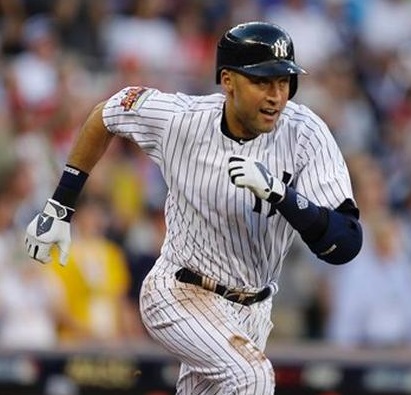
The game began with a long ovation for AL lead-off batter Derek Jeter, the Yankee shortstop who is retiring after this season following a storied career. Wainwright, in what appeared to be a class move, placed his glove and the ball on the mound in Minnesota’s Target Field and  stepped off to applaud, becoming, for a moment, just another fan giving a well-earned tribute to an all-time great. Then, three pitches into Jeter’s at bat, the living legend lined a ringing double to right field as if scripted, giving the crowd another chance to cheer, and triggering the American League’s winning rally. Later, in the dugout being interviewed on live TV, Wainwright announced that he had given Jeter “a couple of pipe shots”—that is, grooved his pitches so Jeter could get a hit.

Horrible. This is wrong in every way, no matter how you turn it—poor sportsmanship, disrespectful to Jeter, damaging to the game, and dumb: Continue reading →

The Gay Marriage Acceptance Reverse-Foxhole Conversion Problem

Atheists in trenchesThe New York Times sported a front page story extolling the actions and familial love of Rev. Frank Schaefer, a United Methodist minister, whose son Tim, now 30, had been raised  in his father’s conservative church in West Germany, Pennsylvania, where sermons, policy and the congregation embodied the belief that homosexuality was a sin, and gay marriage a monstrosity.  Then, after he had contemplated suicide, Tim told his father he was gay, and later that he wanted to wed his same-sex partner. The loving father accepted his son and presided over the wedding, causing him to become a target of criticism in his church, and the defendant in a church trial. To the Times reporter, Michael Paulson, he is an unequivocal hero.

He did the right thing, no question, just as Dick Cheney and Republican Senator Rob Portman did the right thing by changing their position on gay marriage when their children showed them the human side of the issue. I also agree that it takes courage to admit you are wrong, and that being able to change one’s ethical analysis is an essential ability for all of us. Indeed, in this post, I designated as an Ethics Hero an outspoken gay marriage opponent for changing his position after he became friends with gay men and women, leading him to realize, as he put it, that Continue reading →

Ethics Quiz: Is It Ethical For The President To Cut In Line?

"I'm more important than you are, so I'm cutting in line."

“I’m more important than you are, so I’m cutting in line.”

[Fred, who sent me this one, prefaced it by writing, “You’ll love this.” He was right. I do. I also hate it.]

News Item ( Austin 360):

“Following his speech at the Paramount, President Obama’s motorcade traveled to Franklin Barbecue on East 11th Street. The restaurant is well known for its great brisket and extremely long waits, but the president circumvented that using the powers of his office. “I know this is a long line. I feel real bad, but – I’m gonna cut,” Obama said, according to a pool report from the Statesman’s Chuck Lindell. [Owner] Aaron Franklin told the Statesman’s Ciara O’Rourke that nobody cuts the line at Franklin … except Obama.”

Your Ethics Alarms Ethics Quiz of the Day:

Is it ethical for the President of the United States to cut into a line for goods or services?

Can you guess my answer?

It’s not just “no,” but “Hell, no!”

Talk about the Imperial Presidency! There is no basis, justification or excuse whatsoever for the President to cut into line under these circumstances, especially by saying, “I’m gonna cut.” The proper answer to that, my friends, is “No, you’re not, Mister President. Why don’t you ask politely, and maybe everyone ahead of you will be magnanimous and agree?” Continue reading →

Ethics Dunce: Federal Judge Richard G. Kopf

"Oh dear...and he looks like such a NICE federal judge!"

“Oh dear…and he looks like such a NICE federal judge!”

Richard G. Kopf is a senior district court judge on the U.S. District Court for the District of Nebraska, and a blogger. He is also,I would say obviously, an Ethics Dunce. Why?

He told the U.S. Supreme Court to shut the fuck up.

He really did.

That he did this on his blog, Hercules and the Umpire, doesn’t matter. It was in print, in public, and he’s a Federal judge. The obscenity came in the context of Judge Kopf’s criticism of the recent Hobby Lobby decision, but the context doesn’t matter either. There is no context in which it would be appropriate, judicial and ethical for a member of the judiciary to tell the Supreme Court of the United States to shut the fuck up. Nor does it matter that he used the texting code stfu rather than spelling out the words.

For a Federal judge to be openly disrespectful, uncivil and abusive to the top of the nation’s judicial branch is an assault on the rule of law, and undermines public respect for our institutions. As lawyer and blogger Rich Hasen wrote, Continue reading →

Comment of The Day (Public Service Message Division): “Wanetta Gibson Is Even Worse Than We Thought”

Wait a second...I'm getting my rifle...

Wait a second…I’m getting my rifle…

We haven’t had one of these in a while, and I’m feeling like having a good fish-shoot in the ol’ barrel, so here we go….

Apparently there has been another development in the Wanetta Gibson saga—I know this because the last post about this horrible woman is suddenly getting traffic again—and this has moved one Terrance Skerrette—I sure hope there’s just one— to enter one of those periodic comments I receive here that serves as a public service announcement for the ethically-challenged. You know the kind—Saturday Night Live parodies of such spots used to be a staple:

“Hello. I’m Jack Marshall, and this is Terrance. Terrance was raised in an environment that left him with an inability to understand ethics. That’s right–he will go through life justifying horrendous conduct by using rationalizations, hideous logic, and warped values. Will you help Terrance? No, he can’t be helped by treatment, but perhaps, if you give generously, we can provide him with a comfortable shack in the forest and plenty of food, so he can live comfortably without infecting anyone else with his hopeless ethical ignorance and dangerous excuses for terrible conduct. Please send your generous contributions to “Help Terrance,” care of Ethics Alarms. Thank you. Terrance would thank you too, but he probably thinks you are evil.”

Continue reading →

Ethics Tools: “A Theory of Jerks”

Actually, no. The OTHER kind...

Actually, no. The OTHER kind…

In Aeon Magazine last month, philosophy professor Eric Schwitzgebel provided a serious essay on the nature of “jerkitude.” It is also an excellent essay, and useful. “Jerk” is a designation that I have occasion to use frequently on Ethics Alarms, and for the most part, Schwitzgebel convinced me that I have been using it properly. Some excerpts… Continue reading →

Ethics Hero Emeritus (Independence Day Division): John Dickinson (1732-1808)

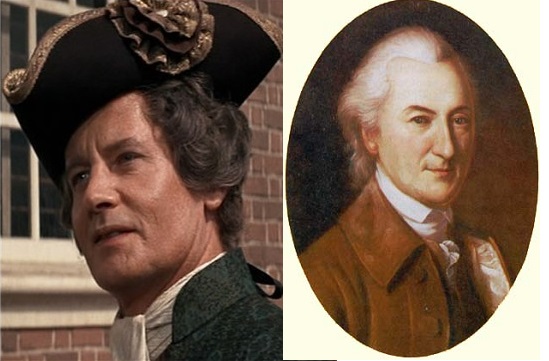
Villainous, singing version on the left; heroic, real life version on the right.

Villainous, singing version on the left; heroic, real life version on the right.

It is the American patriot John Dickinson’s curse that the very strength of character that caused him to stand out among the other Founders and that led them to respect him as much or more than any other also made him the black sheep in the inspiring tale of American independence. This led to relative obscurity. Although Dickinson is honored (along with his wife) by Dickinson College, Dickinson School of Law of the Pennsylvania State University, and University of Delaware’s Dickinson Complex, he is largely unknown to most Americans. He would be even less known, had Peter Stone not chosen to make him the villain of his 1969Tony-winning musical “1776,” where he was portrayed as a conservative loyalist who almost single-handedly foils the efforts of John Adams, Thomas Jefferson and Ben Franklin to declare independence from Great Britain. Whatever that choice’s dramatic virtues, it was unfair to Dickinson in every way.

Raised a Quaker, educated as a lawyer and a farmer by trade, Dickinson began public life in 1760 when he was elected to the Delaware legislature. During the next fifteen years he served both in that body and in the Pennsylvania legislature, a rare dual service made possible because he owned property in both colonies.

When the British Parliament instituted measures in the Colonies to raise revenue and provide for the quartering of British troops, Dickinson was one of the most eloquent and persuasive critics of the Crown, always with the intention of finding a satisfactory negotiated accord that did not involve the threat of armed rebellion. He urged Americans to rely primarily on economic pressure to oppose the hated Stamp Act, and he enlisted the influence of British merchants on the colonists’ behalf. His diplomatic orientation seemed like a prudent antidote to the firebrands calling for revolution in Boston, so the Pennsylvania legislature appointed him to represent that colony at the Stamp Act Congress of 1765. There he advocated the proposition that reconciliation was possible if the King and Parliament would only realize that colonial opposition was in the grand tradition English principles of political liberty. Dickinson set his reasoning to paper in his “Letters from a Farmer in Pennsylvania,” a series of deft essays that brought Dickinson international fame as a man of reason and principle. Continue reading →

Ethics Dunce: Anyone Who Thinks Hillary’s “I Gave It All To Charity” Excuse Excuses Anything

Money-box-giftI apologize in advance for this, because I assume all of you are as sick of commentary on Hillary, her book promotion tour, and her endless stream of statements that validate everything her critics have been saying for over a decade. However, her latest ethically tone-deaf statement is a special category of dishonesty that I vowed long ago to flag every time it was tried by a public figure, and given a pass by the news media. So here we are.

Hillary responded to the growing controversy over her absurd speaking fees, which she charges to universities as well as corporations, by saying this to ABC’s Ann Compton:

“All of the fees have been donated to the Clinton Foundation for it to continue its life-changing and life-saving work. So it goes from a foundation at a university to another foundation.”

Giving money to another individual’s charity of choice is indistinguishable from giving money directly to that individual. If a lobbyist gives corporate money to a politician’s charity, for example, that’s a crime in most states, and should be. The charity dodge is a popular one with corrupt individuals, because the average member of the public, being among those whom Abraham Lincoln noted that you can fool all the time, and also possessing the ethics analysis skills of the typical whippet, just nod and say, “Oh. Okay!” Continue reading →