Some of the things on the list of 25 are indeed genuinely stupid and annoying, like #7 on the list, “My mom still writes checks at the grocery store and stands there balancing her checkbook while everyone else stares impatiently at her, #15, “They use plastic cutlery so they don’t have to wash the real silverware, but then they wash and reuse the plastic ones to be thrifty!”, or #17, “Driving 10+ under the speed limit.”
Others, however, are the result of a whippersnapper’s unjust criticism of a different choice that is defensible, ignorance, or just plain snottiness.
“They own cell phones yet insist on keeping their landlines.”
Reaction: Bite me. I maintain a landline for business. It’s still more comfortable for long substantive conversations, and I prefer to keep my cell phone access limited.
“Turning the volume on the TV all the way down instead of pressing mute.”
Reaction: Why in the world would anyone care about this enough to be annoyed by it?
“My mom ALWAYS puts her phone on speaker phone. Even in public, she uses the speaker phone.”
Reaction: That’s not an old person thing; I see people of all ages, especially women, doing this.
Today became Frightening Mainstream Media Bias Saturday without my intention, so I’m going to shift gears to the other site of the massive Leftist societal and cultural manipulation, our conquered educational system. This Comment of the Day from one of EA’s resident authorities on the topic, will do quite nicely. Incidentally, I am a bit behind in my Comment of the Day posting. I’ll catch up, I promise.
There is a solution, but it cannot be implemented because of the corruption of the judiciary. The state schools are clearly in violation of numerous discrimination laws and they should be held to account.
Boys are being discriminated in schools. Look at the current performance of boys vs. girls in GPA and test scores below.
Now compare this to the 1975 – 1995 figures here. This is clearly a Title IX violation.
It is claimed that 20% of elementary school teachers are male, but I haven’t seen that and I doubt you have either. The real number is probably closer to 95% female. I am pretty sure this is clear evidence of sex discrimination by the schools and needs to be remedied. The 4 elementary schools my son went to had no, zero, male employees. Not even a janitor was male. This is clearly sex discrimination and should be remedied immediately.
Surveys show that at least 65% of public schoolteachers are Democrats. In the universities, it is MUCH higher. This type of viewpoint discrimination should not be allowed in public schools and the states need to outlaw it. The problem is, if you allow Democrats to be hired and they are allowed to determine hiring, the place becomes all Democrat eventually because Democrats are a cult that puts cult loyalty before merit. The concept of merit is considered evil to them. A solution would be to exempt Republicans from the taxes that support the schools (“Here is my Republican Card. This entitles me to a 60% property tax discount and a 3% sales tax discount”) or state-paid tuition at the private school of their choice. Since the schools are partisan, only that party should be required to support the schools.
The college population has been majority female since 1973 or 1974 (depending on if you define it as 50/50 or percentage of the population. Women are currently 61% of college students. The number in many surveys is below 60%, but it has been above 60% for some time in my experience. This is a massive Title IX violation.
My sympathy for Hillary Clinton has finally run out.
For a long time, I have wanted to give Clinton every bit of leeway imaginable since her fluky, statistical anomaly Electoral College loss to Donald Trump in 2016. It’s an ethicist thing; the Golden Rule is strong here. What must it feel like to be that close to achieving your dream and to have it yanked from your grasp at the last moment? Oh-oh…I’m making Hillary sound like Moonlight Graham.
Still, I can understand why she has been so bitter and angry ever since. On the other hand, to go from “Field of Dreams” to “The Godfather”: this is the life she has chosen. “Politics ain’t beanbag.” It’s been 10 years. Time to grow the hell up.
Hillary’s latest outburst of Trump Hate—always wrongly placed because her own ineptitude, corruption and foolishness lost her that 2016 election—-came on the anniversary of Teddy Roosevelt’s death—wait, no, that was the worst thing that ever happened on a January 6th, but Hillary was using the date to misrepresent the stupid January 6, 2021 riot at the Capitol. Clinton posted a comment on X, declaring, “Five years ago today, Donald Trump urged his supporters to attack Congress and the Capitol over a proven lie.”
I would really love to hear one of the woke DEI hypocrites in my life try to defend that flyer, promoting a program in Eugene, Oregon, another state, like Minnesota, where rampant bias has lowered the average IQ by double figures. It reads, “We invite BIPOC youth to join us where they are at being comfortable in the water. Whether working on increasing water safety skills or pursuing lifeguard certification, this cohort is here to support your goals. Funded by the community safety payroll tax in partnership with the Youth Empowerment Program.”
“To join us where they are at being comfortable ” sounds like Ebonics, or perhaps English as written by the Somalis who run the “Learing Center” in Minnesota.
Or does it suggest that “BIPOC” youths are more comfortable in the water when they don’t have to be around those icky whites?
Hey, here’s a bold new idea for a teachers union resolution: How about “teach students to read, write, do math and think”?
Here is what the Marxist Chicago teachers union, which isn’t much different from other teachers unions except that they are louder, announced as its resolution for 2026 with that graphic above on “X”:
“Our New Year’s resolution: Speak truth to power. We do it in our classrooms by teaching the truth. We will protect academic freedom and ensure students learn honest, inclusive history that reflects their lives and communities. We’ll also speak truth to power by defending Black and brown and immigrant communities who are targeted by federal agents. From Know Your Rights trainings to walking school buses to rapid response teams, we will continue to create spaces where students can learn without fear. And we speak truth to power by fighting back against an administration trying to dismantle the U.S. Department of Education and roll back civil rights protections that generations have fought to secure. Speaking truth to power means refusing censorship, rejecting criminalization, and choosing solidarity every time. In 2026, CTU recommits to telling the truth, protecting our communities, and organizing for a future rooted in dignity and care.”
Hello everybody! I’m your ethics game show host Wink Smarmy, and welcome to “Worth Confronting or Too Trivial To Bitch About?”,” the popular ethics game show where our contestants try to decide whether clearly unethical conduct is worth only a shrug and a giggle, or is serious enough to try to stop.
Here’s our special guest, Touchy McCrankface, with the problem he encountered recently…
“Hello, panel. My name is is Touchy McCrankface. For some reason I am still a Facebook user despite that platform banning my favorite blog Ethics Alarms for almost two years because one of their censors decided that it was racist to even discuss the topic of blackface’s appearance in some classic movies. When a Facebook friend I actually care about has allowed his or her birthday to be announced on Facebook, I will sometimes, as I am prompted, wish that friend a “Happy Birthday.”
“I do not use the stupid and juvenile pre-programmed emojis Facebook tries to stick on my message, the little cakes, candles and party hats. Recently I sent just such a birthday message to an old friend. Let’s call him “Mike.”
After I sent my “Happy Birthday”, Facebook sent me the equivalent of a receipt. I have no idea why. Maybe it has always done this, but I’ve never noticed one before, or if I have, I never bothered to read one. The message to me read,
“You wished Michael XXXXX a happy birthday on their profile.”
This, frankly, ticked me off. First of all, I knew that. But most of all, I don’t use the pronouns “they” and “their” for single individuals, as in “non-conjoined twins.” If you seem to be male to me, I will use the pronouns “You/he/him. If you seem to be female, I will use “You/she/her.” If I can’t tell, I won’t use any pronoun, constructing a sentence so that “misgendering” isn’t necessary, since men and boys don’t typically like being mistaken for women and girls, and vice-versa. If someone informs me that “he” wants to be refereed to as “she,” that’s fine: I aim to please. Similarly with 250 pound bearded bald guys who want to be called “she.” I’ll call you a pangolin or an Archaeopteryx if that’s what you want, as long as you don’t try to make me eat insects or worms with you. (Archaeopteryx is described as an “early bird,” and as we all know, the early bird catches the worm.)
But I will NOT agree to utter a grammatical monstrosity by using a plural pronoun in reference to one individual. And if you tell me you haven’t decided on your gender, or that it switches back and forth without warning, I will respond, most politely, “Please let me know when you make up your mind or get psychiatric help. Until then, you’ll be “him” or “her” to me.
But back to Facebook….My friend Mike has been married trice, has two grown kids and is as male and heterosexual, as well as unambiguously so, as anyone I have ever met. Who or what is Facebook to impose a plural pronoun on him, or to suggest that it is appropriate to do so in either his case or anyone’s case?
I view this as subtle cultural indoctrination regarding a societal practice that is at best a stupid fad and at worst ‘grooming’.”
Thanks, Touchy! Before I throw the challenge over to you, contestants, let me ask our resident ethicist, Jack Marshall, about Touchy’s dilemma. Jack, is this worth bitching about?
“Any person required to register as a sexual offender … shall be required on October thirty-first of each year to: Avoid all Halloween-related contact with children; Remain inside his or her residence between the hours of 5 p.m. and 10:30 p.m. unless required to be elsewhere for just cause, including but not limited to employment or medical emergencies; Post a sign at his or her residence stating, “No candy or treats at this residence”; Leave all outside residential lighting off during the evening hours after 5 p.m.“
Sanderson v. Hanaway, decided yesterday by Eighth Circuit Judge Jane Kelly and joined by Judges James Loken and Ralph Erickson, struck down the part of the law that required the sign as “compelled speech,” a First Amendment violation. Using the “strict scrutiny” test that requires a compelling state interest and a provision that is “narrowly structured” to minimize the burden on individual rights, the Court found the mandatory sign provision unnecessary and unreasonable given the law’s other requirements.
I agree. The sign mandate amounted to a required “I am a registered sex offender” declaration. On Halloween, that kind of message is likely to attract a lot worse “tricks” than toilet paper on some trees. Ethics Alarms has visited this issue repeatedly, most recently in May of 2025, but the harassment and persecution of sex offenders already raises serious ethical questions, including “pre-crime.” The whole law seems like gratuitous virtue-signaling using an already persecuted group as a cheap target. The rest of the law, however, was upheld.
An amusing note on the Trump Derangement front: even a legal report on a Missouri Halloween law managed to be twisted into a justification for an anti-Trump slap. “This is good news for Trump, but it would have been hilarious to see him forced to put that sign outside of the White House,” writes a commenter at The Volokh Conspiracy.
The last of the famous Dionne Quintuplets died last week. Annette Dionne, who seems to have been the strongest of the five identical sisters from the very beginning, was 91. The New York Times has an obituary that is also an excellent feature on their unusual lives (Gift link!)—this is the kind of thing the Times still does well. There isn’t a single slap at President Trump anywhere, at least that I noticed.
The article begins by noting that Annette, like all of her sisters, “resented being exploited as part of a global sensation.” I get it: the five girls were celebrities from the second they were born, and their fame was such that they never really escaped it: thus the last surviving quint being deemed worthy of a Times obituary more than 60 years after her birth. But resenting something that any objective analysis would find unavoidable is not just pointless, it’s unfair. In this case, the resentment was unfair to the quints’ parents and the public.
In 1934, the birth of surviving quintuplets in Ontario, Canada was considered, justifiably, a medical miracle. All five of them together weighed only 13 pounds, 6 ounces. Yes, in a way they were freaks and treated as such, extraordinarily cute little freaks. Medical miracles give people hope; they suggest that the world is getting smarter, safer, more beneficent. This miracle happened in the pit of the Great Depression, when celebrities like Babe Ruth and Shirley Temple became icons because they made Americans forget their troubles.
To the girls’ parents, Oliva and Elzire Dionne, the arrival of five babies to a family living in poverty was a looming catastrophe. The parents and five children already lived in a run-down farmhouse lit by kerosene and serviced by an outhouse. The new babies were nursed on water and corn syrup until the family started receiving breast milk donations. The fact that the public was so interested in the quintuplets was a blessing that saved the family from disaster.
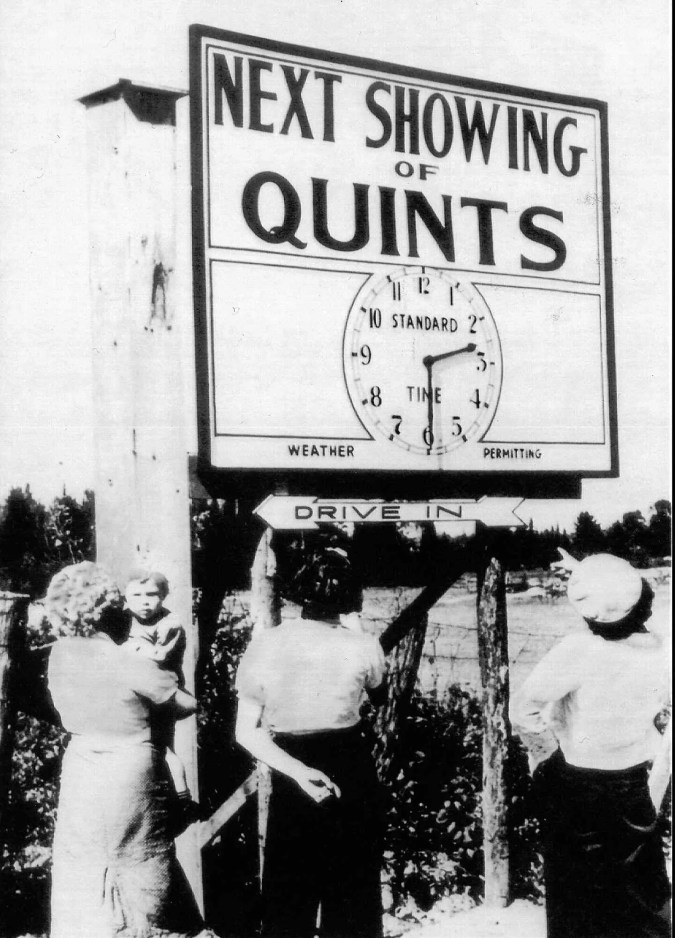
They were indeed exploited. The parents for a time surrendered custody of the girls and they were cared for by a government-appointed guardian, the doctor who had delivered them. The were housed and cared for by the doctor and a staff at “Quintland,” where they were displayed several times a day on a balcony as 6,000 spectators watched them through one-way glass.
[Johnny Mathisfinally announced his retirement this year—he’s only 90. His has been one of the most recognizable, enjoyable, seductive voices in American popular music for almost 70 years. My college room mate always had his records on hand to create the proper mood for his dates. An old time crooner’s chances of being remembered rests now on whether there is a Christmas standard he can be associated with. Johnny’s best shots are “It’s Beginning to Lot Like Christmas,” and “We Need a Little Christmas” from “Mame.” He sings all the others beautifully too, but they are taken.]
I was informed by a fellow Christmas movie fan that it is almost impossible to watch the original “Miracle on 34th Street” film on streaming services or the networks. They prefer to show the various remakes, all inferior in every way. What made director-writer George Seaton‘s movie (it won him an Oscar) so superb in addition to the casting, his straight-forward style and his obvious love of Christmas is that it instantly felt perfect despite its many suspension of disbelief challenges. Why do they feel this film has to be remade? Is it the lack of color? (“Miracle on 34th Street” was one of the first movies Ted Turner colorizes, and that version is unwatchable.)
As I’ve stated here before I believed in Santa Claus until I was 12. I didn’t want to give the fantasy up: I loved magic, and my parents always tried to make the season magical. My late wife Grace and I tried to do the same with Grant, now “Samantha,” but he was a non-believer by the third grade. Is there anything more joyful to see than the look on a child’s face as he or she wakes up to find what Santa has delivered? Will anything feel that wonderful again?
“Miracle on 34th Street” is an ethics movie in many ways. The movie is about the importance of believing in good things, hopeful things, even impossible things. The movie reminds us that wonderful things can happen even when they seem impossible, and that life is better when we believe that every day of our lives. I’m engaged in that right now: all of 2025 has required it. I’ve had serious injuries, successes, new projects and setbacks. My father taught me to be ready for the worst but to never to give up on the best.
One thing this film does well is to concentrate on the secular holiday without any allusions to the religious holy day, but not being obnoxious about it. “It’s a Wonderful Life” also straddles the line very cleverly: it begins in heaven, after all. All the “A Christmas Carol” films include Bob Cratchit telling his wife that Tiny Tim mused about how his disability reminded people of Jesus’s miracles at Christmastime, and that’s Dickens’ only reference to Jesus in his story.
On the offensive side is the Rankin-Bass animated “Rudolph the Red-Nosed Reindeer”—I can’t believe they still show that thing—when the “stormy Christmas Eve” causes Santa to decide to “cancel Christmas.” I’d say that’s above Santa’s pay grade, wouldn’t you agree? It also suggests that Christmas is only about gifts and children. (Do parents today explain that the singing snowman who narrates the story is based on, and looks like) the real person who also sings the most memorable songs? They should. Burl Ives had a fascinating life and a varied career, and those kids will probably be hearing him sing “Have a Holly Jolly Christmas” for the rest of theirs.
Interestingly, all of the perennial Christmas movies have been made into stage musicals of varying success—“White Christmas,” “It’s a Wonderful Life,” “A Christmas Story,” “Elf”—- but “Miracle on 34th Street” flopped so badly when Meredith Willson [“The Music Man”] adapted it as “Here’s Love” on Broadway that nobody has tried again. The show included the song, “It’s Beginning to Look a Lot Like Christmas,” which Willson wrote long before the show was assembled. But as with all the movie remakes, the show missed Edmund Gwynn, the best Kris Kringle of them all. He was a distinguished classical actor until that movie: he complained that after the film he wasn’t allowed to get rid of his bushy white beard and was type-cast as jolly old men.
I decided to post the Companion earlier this year; I also was moved by the fact that a number of EA readers had sought out the 2024 version today. When I’ve posted it on Christmas Eve, it has lacked views for the obvious reasons.
The 2025 companion reflects some additional thoughts upon my re-watching “Miracle on 34th Street” last week—I even took notes. Mostly, I though about how important the holiday, the stories, the music, the movies and what they signify taken as a whole is to our nation, our society and our culture. Thus it was that I decided that here was a good place to re-post “Christmas, the Ethical Holiday” Besides, I need to read it myself.
Christmas: the Ethical Holiday
Benjamin Franklin recognized the importance of regularly focusing one’s attention on ethical conduct rather than the usual non-ethical goals, needs, desires and impulses that usually occupy the thoughts of even the most virtuous among us. He suggested that every morning an individual should challenge himself to do good during the day. In the 21st century psychologists call this “priming,” a form of beneficial self-brain-washing that plants the seeds of future choices.
The Christmas season operates as an effective form of mass population priming, using tradition, lore, music, poetry, ritual, literature, art and entertainment to celebrate basic ethical virtues and exemplary conduct toward other human beings. Kindness, love, forgiveness, empathy, generosity, charity, sacrifice, selflessness, respect, caring, peacefulness…all of these are part of the message of Christmas, which has become more universal and influential in its societal and behavioral importance than its religious origins could have ever accomplished alone. Secular and cultural contributions have greatly strengthened the ethical lessons of Christmas. “It’s A Wonderful Life” urges us to value our ability to enrich the lives of others, and to appreciate the way they enrich ours. “A Christmas Story” reminds us to make childhood a magical time when wishes can come true. O. Henry’s story “The Gift of the Magi” proves that it is not the value of gifts, but the love that motivates them that truly matters. Most powerful of all, Charles Dickens’ “A Christmas Carol” teaches that the admirable conduct the spirit of the season can inspire need not be short-lived, and that if we use Christmas properly, as Ben Franklin used his morning exhortation to good conduct, it can make all of us better, happier, more virtuous human beings.
At this point in civilization, the religious context of Christmas almost does more harm than good. Though the day chosen to celebrate Jesus of Nazareth’s birthday has been spectacularly successful in promoting the ethical and moral ideals he taught, the idea that Christmas is indistinguishable from the religion he founded has made it the object of yearly controversy, as if celebrating Christmas is an affront to other faiths.
This is a tragedy, because every human being, regardless of religious belief, can benefit from a culture-wide exhortation to be good and to do good. “Happy Holidays!”—the bland, generic, careful greeting of those afraid to offend those who should not be offended—does nothing to spur us toward love, kindness, peace and empathy. “Merry Christmas!” does.
This is not just a religious holiday; it is the culture-wide ethical holiday, the time when everything should be aligned to remind us to take stock of our lives, think about everyone else who lives on earth with us, and to try to live for others as well as ourselves. Christians should be proud that their religion gave such a valuable gift to humanity, and non-Christians should be eager to accept that gift, with thanks.
It is foolish and self-destructive for there to be a “war on Christmas.” Charles Dickens understood. There is hardly a word about religion anywhere in his story. There doesn’t need to be. Christmas is the ethical holiday. Christians and non-Christians can celebrate it or not as they choose, but whether they do or not, the Christmas season is more important than any one religion, even the one that gives the holiday its name.
Christmas is important because it primes us to be good, be better, be more ethical, for the rest of the year. There should be nothing controversial about that.
Catherine Almonte Da Costa resigned from her post as NYC Mayor-elect Zohran Mamdani’s director of appointments. The Anti-Defamation League dug up comments she made as a teenager that registered as anti-Semitic; this happened just a day after Mamdani announced her appointment. Da Costa, 33 (above) is married to a deputy city comptroller, and he is, ironically enough, Jewish. When she authored the social media posts in question, however, she wasn’t married and couldn’t imagine that her dumb posts would come back to sideline her career.
“Money hungry Jews smh,” she wrote in one 2011 post, when she was 18, using the abbreviation for “shaking my head.” “Far Rockaway train is the Jew train,” she wrote in another post. “I spoke with the mayor-elect this afternoon, apologized, and expressed my deep regret for my past statements,” Da Costa said in her resignation statement. “These statements are not indicative of who I am. As the mother of Jewish children, I feel a profound sense of sadness and remorse at the harm these words have caused. As this has become a distraction from the work at hand, I have offered my resignation.”
Long-time readers here may remember Ethics Alarms posts about the “Hader Gotcha,” named for a young Major League Baseball pitcher of note (he’s still pretty good) who was forced to grovel an abject apology for tweeting offensive things when he was in high school that almost nobody read. I wrote in one of the early EA posts on the phenomenon,





 A Missouri statute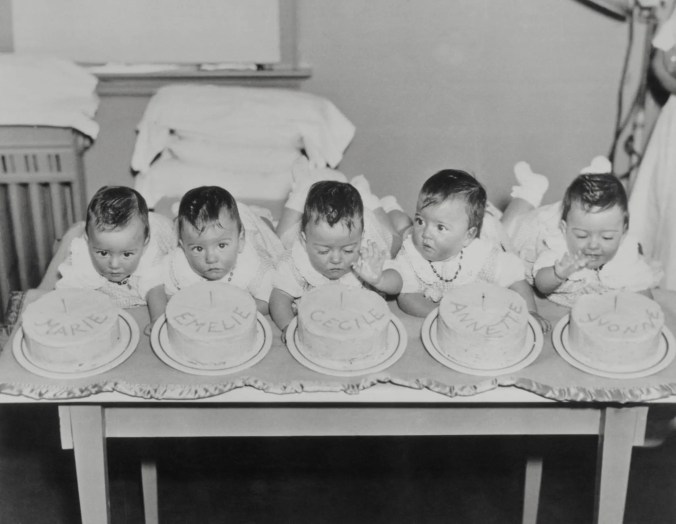

 Ethics Alarms