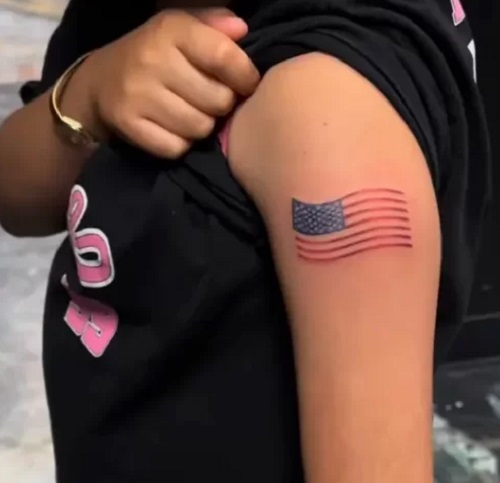
That’s a photo of a brand new tattoo on the arm of a nine-year-old girl.
The tattoo artist, who goes by the Instagram handle of “Cutzsosa,” posted a video of him giving the girl the permanent brand, and now he’s shocked that he’s getting a bad reaction on social media.
Yes, he’s an idiot. And an Ethics Dunce.
Now, it seems clear that the girl’s parents are worse: Cutzsosa says the girl and her parents traveled to his tattoo parlor, the Black Onyx Empire Tattoo parlor in Yuma, Arizona, from out of state specifically to get her the tattoo she wanted. What she wanted was a portrait of Donald Trump on her neck, and apparently her loving parents were determined to give their little darling what she desired. The artist claims he talked the girl into letting him ink a US flag on her arm instead. He thinks he deserves credit for that, since the neck-tattoo of Trump would probably get her beheaded in California. This is currently the basis of his Rationalization #22 (“There are worse things”) excuse for putting a tattoo on a child who cannot give informed consent for, well, anything, except maybe puberty blockers, but that’s “gender affirming care,” see, so it’s benign.
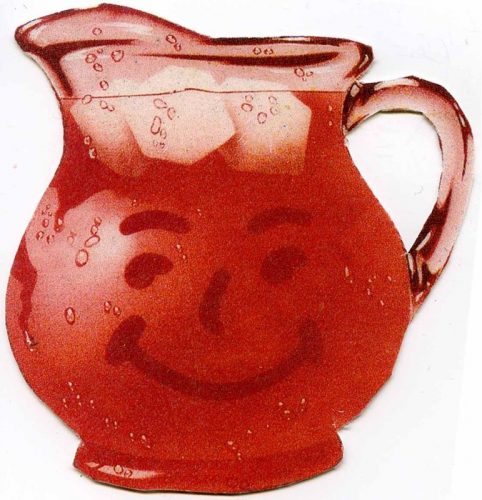
The Daily Mail headline is beyond stupid—-“People are only just realizing the dark origin of ‘drinking the Kool-Aid’ phrase”—-but sharp-eyed commenter Other Bill was quite astute to draw it to my attention (Thanks, OB) with an email this morning.
Apparently several historically and culturally illiterate whipper-snappers on social media expressed surprise at the “dark origin” of the common phrase “he (or she) drank the Kool-Aid” to describe someone who has been gulled into believing something false or dangerous. Yet this gap in the younger generations’ knowledge shouldn’t be surprising. Oh, there was a movie about the horrible incident and it is one of the best examples of the dangers of cults. But the Jonestown mass suicide of the 918 American followers of cult leader Jim Jones in Guyana occurred almost 50 years ago, in 1978. As unusual and shocking as it was, the poisoned powered drink massacre is not the kind of event likely to be covered in history courses: schools barely cover World War I. How would someone under the age of 50 come to know about the event?
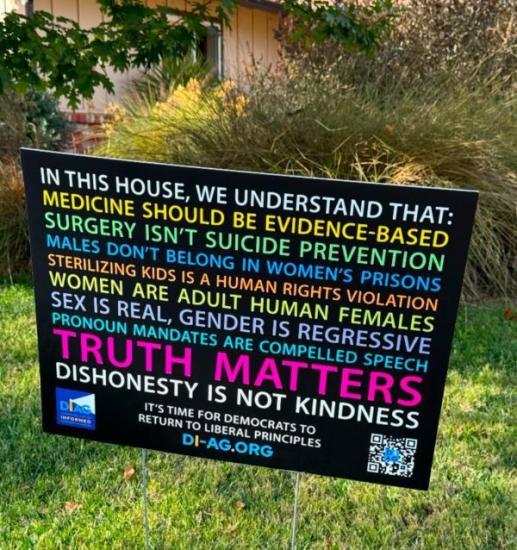
And apparently a real one, the creation of Democrat for an Informed Approach to Gender. Its website is here.
I wonder how that sign would go over in my neighborhood, where the standard woke virtue-signaling signs (“No human being is illegal”…”Love is love,” etc.) sprout like poppies in Flanders Field.
2024 was a bad year for the New York Times’s ethics advice columnist, Kwame Anthony Appiah. “He”The Ethicist” showed unseemly sympathy for the Trump Deranged all year, and not of the “You poor SOB! Get help!” variety, but more frequently of the “You make a good point!” sort, as in “I can see why you might want to cut off your mother for wanting to vote for Trump!” I was interested to see if the inevitability of Trump’s return might swerve Prof Appiah back to more useful commentary on more valid inquiries. So far, the results in 2025 have been mixed.
This week, for example, Appiah thought this silly question was worth considering (It isn’t):
“I am going to tell a brief story about my friend at his funeral. The incident happened 65 years ago. The problem is that I am unsure whether the details of the story, as I remember them, are factual or just in my imagination. No one who was a witness at the time is still living. Should I make this story delightful and not worry about the facts, or make the story short, truthful and perhaps dull?“
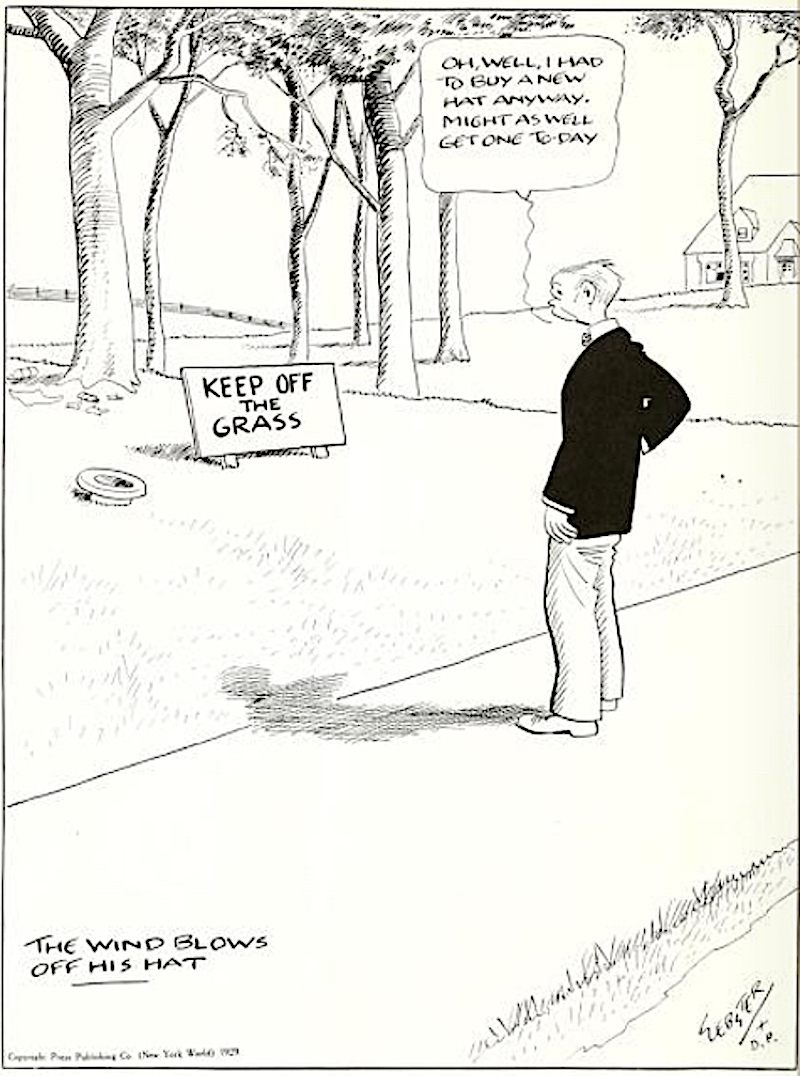
Good heavens. This guy is the living embodiment of Casper Milquetoast, the famous invention of legendary cartoonist H.T. Webster. Casper was the original weenie, so terrified of making mistakes, defying authority or breaking rules that he was in a constant case of paralysis. The idea of a story at a memorial service or funeral is to reveal something characteristic, admirable or charming about the departed and, if possible, to move or entertain the assembled. This guy is the only one alive who can recount whatever the anecdote is, so to the extent it exists at all now, he is the only authority and witness. So what if his memory isn’t exactly accurate? What’s he afraid of?
The advice I’d be tempted to give him is, “You sound too silly to be trusted to speak at anyone’s funeral. Why don’t you leave the task to somebody who understands what the purpose of such speeches are?” Or maybe tell him to watch the classic Japanese film “Rashomon,” about the difficulty of establishing objective truth. “The Ethicist,” who shouldn’t have selected such a dumb question in the first place, blathers on about how “everybody does” what the inquirer is so worried about and cites psychological studies about how we edit our memories. Blecchh.
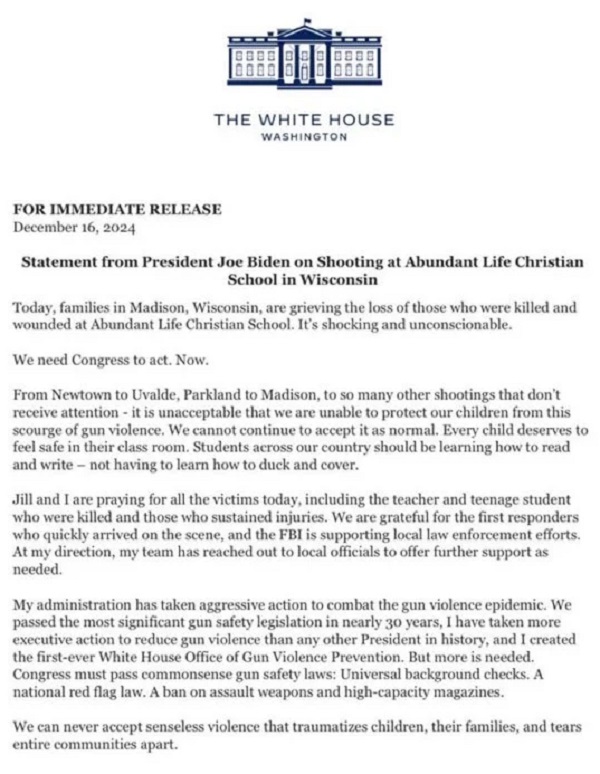
I missed this, but the White House statement from “President Biden” (Who wrote it? Who approved it? Did the President even know about it?) following the Madison, Wisconsin school shooting two weeks ago couldn’t be a better demonstration of the intellectual dishonesty and ruthlessness of the Left’s anti-Second Amendment fanatics. Apparently gun-phobics are thrilled any time a gun-related tragedy occurs so they can rush out junk like this and fundraising appeals to exploit the event for all it’s worth, and the higher body count the better. The alleged Presidential sentiment deliberately misrepresents the shooting by linking it to standard tenets of the anti-gun agenda that literally have nothing to do with the incident being exploited.
The Biden statement also brands itself as standard issue cant by using the deliberately meaningless Axis phrase “commonsense gun safety laws,” overwhelming used by those whose idea of “common sense” is not to allow legal private gun ownership at all. Then the letter advocates universal background checks, a national red flag law, a ban on assault weapons, and a ban on high-capacity magazines, not one of which would have done anything to prevent the shooting that is supposed to be the subject of the letter.
The shooter in Madison was a 15-year-old girl who couldn’t legally purchase a gun anyway: background checks don’t apply to shooters like her. Nor would a “red flag law” have flagged her, since it doesn’t include children too young to own guns. The shooter didn’t use an “assault weapon”; she used a pistol; nor was a high-capacity magazine involved. Never mind! Guns bad, so this tragedy that might have been prevented if only “we could melt all the guns and give a new world to our daughters and sons” (which we can’t: Who recognizes the song lyric?) justifies rushing out anti-gun propaganda when the appeal to emotion would be most effective.
(You’re going to have to wait until the end to learn who that is in the photo above….)
I’ve been trying to figure out an ethics angle for the best news story I saw today; the best I can come up with is “life incompetence.” The headline was “Woman Breaks Jaw After Biting into Jawbreaker Candy.” Apparently Canadian student Javeria Wasim wondered if someone could bite through a giant jawbreaker, and took it on as a challeng. She barely made a dent in the candy when she felt a pop followed by piercing pain in her lower jaw. Yup, it was a jawbreaker, all right! She had fractured her mandible in two places and also loosened her top and lower front teeth. Now her jaw is wired shut.
1. You’ve noticed “shrinkflation,” but have you picked up on ‘thinflation’? It appears that clothing manufacturers are using thinner, lighter fabric for such staples as T-shirts and chinos. “Pretty much everything is lighter and thinner,” Sean Cormier, a professor of textiles at the Fashion Institute of Technology, told Slate. He said chinos that used to weigh 8 ounces per square yard of fabric might be only 6 ounces today.
“It’s a trend in the industry, and not one that’s sustainable, because obviously the thinner the garment, it’s not going to last as long,” Cormier says. Two decades ago a T-shirt might have weighed 8 to 10 ounces per square yard of fabric. Today, experts report, it’s half that. Clothing doesn’t last as long as it used to, fabrics are generally thinner, and the quality of clothing has decreased. Not the prices, however. The garments also don’t have as much “covering power,” meaning that not only wet T-shirts but the dry ones too are revealing.
2. Apparently some people have a problem with this statement. Not me! An Illinois homeowner’s surveillance camera detected motion on the side of the home and he spotted two masked men. After instructing his wife to seek cover, he grabbed his gun. Then he shot shot and killed Jorge Nestevan Flores-Toledo, a 27-year-old from Mexico with a long criminal record. The second man, an illegal immigrant, aka. “a visitor” skedaddled but was tracked down by K9 dogs and arrested a few blocks away. Manatee County Sheriff Rick Wells said, in describing the incident, “This is the state of Florida. If you want to break into someone’s home, you should expect to be shot.” I don’t see why you shouldn’t expect to be shot when you want to break into anyone’s home in any state.
Adam Grant, an organizational psychologist who teaches at the Wharton School of the University of Pennsylvania, has authored a guest column for the New York Times that opens up, for the umpteenth time, an ethics topic that makes me uncomfortable. His subject is the cultural delusion shared by many in American society that rewarding effort is just as important as rewarding success, and perhaps moreso. He writes in part:
“….we’ve taken the practice of celebrating industriousness too far. We’ve gone from commending effort to treating it as an end in itself. We’ve taught a generation of kids that their worth is defined primarily by their work ethic. We’ve failed to remind them that working hard doesn’t guarantee doing a good job (let alone being a good person)…..[W]hat worries me most about valuing perseverance above all else: It can motivate people to stick with bad strategies instead of developing better ones…What counts is not sheer effort but the progress and performance that result. Motivation is only one of multiple variables in the achievement equation. Ability, opportunity and luck count, too. Yes, you can get better at anything, but you can’t be great at everything.”
The commentariate on EA always surprises and delights me, and the response I got to an off the wall post inspired by an AP story about “biblically correct” angels was a perfect example. The resulting thread was a veritable primer on anglelology, with Ryan Harkins weighing in with three substantive posts and several others contributing valuable insight as well.
I don’t deserve you.
One more Christmas tradition that I left fallow this year—like almost all of them—in the absence of my wife was our Christmas Eve reading aloud of the children’s book “The Littlest Angel,” by Charles Tazwell. Grace loved the story so. She would always cry at the place where the Littlest Angel gives his most cherished possession, a simple wooden box where he kept his earthly treasures when he was a child on Earth, as his gift to the soon-to-be-born son of God:
“The Littlest Angel trembled as the box was opened, and there, before the Eyes of God and all His Heavenly Host, was what he offered to the Christ Child.And what was his gift to the Blessed Infant?
“Well, there was a butterfly with golden wings, captured one bright summer day on the high hills above Jerusalem, and a sky blue egg from a bird’s nest in the olive tree that stood to shade his mother’s kitchen door. Yes, and two white stones, found on a muddy river bank, where he and his friends had played like small brown beavers. And, at the bottom of the box, a limp, tooth-marked leather strap, once worn as a collar by his mongrel dog, who had died as he had lived, in absolute love and infinite devotion.”
Somehow, it doesn’t work quite as well if one is thinking of the Cherubim as having eyeballs all over his wings or three heads.But that’s just me…
“Christmas is built upon a beautiful and intentional paradox; that the birth of the homeless should be celebrated in every home.”
—G.K. Chesterton.
“It’s Christmas Eve. It’s the one night of the year when we all act a little nicer, we smile a little easier, we cheer a little more. For a couple of hours out of the whole year we are the people that we always hoped we would be.”
—Frank Cross (Bill Murray) in “Scrooged”
CHARLIE BROWN: I guess you were right, Linus. I shouldn’t have picked this little tree. Everything I do turns into a disaster. I guess I really don’t know what Christmas is all about. Isn’t there anyone who knows what Christmas is all about?
LINUS: Sure, Charlie Brown. I can tell you what Christmas is all about. Lights, please?
“And there were in the same country shepherds abiding in the field, keeping watch over their flocks by night. And lo, the angel of the Lord came upon them, and the glory of the Lord shone round about them. And they were sore afraid. And the angel said unto them, ‘Fear not, for behold, I bring you tidings of great joy which shall be to all people. For unto you is born this day in the City of David a savior, which is Christ the Lord.’ And suddenly there was with the angel a multitude of the heavenly host, saying, ‘Glory to God in the highest, and on Earth peace, goodwill toward men.’”
That’s what Christmas is all about, Charlie Brown.
—Charles M. Schulz
“Our hearts grow tender with childhood memories and love of kindred, and we are better throughout the year for having, in spirit, become a child again at Christmas-time.”
—Laura Ingalls Wilder
“Then the Grinch thought of something he hadn’t before!
What if Christmas, he thought, doesn’t come from a store.
What if Christmas…perhaps…means a little bit more!”
—Dr. Seuss, “How the Grinch Stole Christmas”
“Want to keep Christ in Christmas? Feed the hungry, clothe the naked, forgive the guilty, welcome the unwanted, care for the ill, love your enemies, and do unto others as you would have done unto you.”
— Steve Maraboli, in “Unapologetically You: Reflections on Life and the Human Experience”
“My idea of Christmas, whether old-fashioned or modern, is very simple: loving others. Come to think of it, why do we have to wait for Christmas to do that?”
— Bob Hope
“I heard the bells on Christmas Day Their old, familiar carols play, And wild and sweet The words repeat Of peace on earth, good-will to men!”
—Henry Wadsworth Longfellow
“There are many things from which I might have derived good, by which I have not profited, I dare say,’ returned the nephew. ‘Christmas among the rest. But I am sure I have always thought of Christmas time, when it has come round—apart from the veneration due to its sacred name and origin, if anything belonging to it can be apart from that—as a good time; a kind, forgiving, charitable, pleasant time; the only time I know of, in the long calendar of the year, when men and women seem by one consent to open their shut-up hearts freely, and to think of people below them as if they really were fellow-passengers to the grave, and not another race of creatures bound on other journeys. And therefore, uncle, though it has never put a scrap of gold or silver in my pocket, I believe that it has done me good, and will do me good; and I say, God bless it!”
—Fred, Scrooge’s Nephew, in Charles Dickens’ “A Christmas Carol”Continue reading →
Sarah B.’s perceptive and eloquent Comment of the Day about the inquirer to the NYT’s “The Ethicist” advice column who asked whether the threat of various catastrophes ahead (as she saw them) concluded with a sentence that reminded me of this famous speech from the film “Parenthood.” I’ve been looking for an opportunity to post it. Thanks Sarah B.
It is very easy to mock and deride someone who is silly enough to believe the mainstream media and all the horror stories the left has subscribed to. I like feeling superior for not believing in this version of fantasy land. I felt superior when I was not one of the wackos who declared themselves part of the Navi in Avatar, and I’m feeling the same general happiness when recognizing that I’m not so far gone as to believe this current set of beliefs. Indeed, it is tempting to feel even more so, because so many of my contemporaries follow this insane set of beliefs.
However, I think we need to dig deeper than the mocking laughter this letter so easily inspires. What is this woman really saying? First, she is discussing a desire to have children. This is a desire that fewer and fewer women are subscribing to, usually to their and to societies eventual sadness. Therefore, this desire should be encouraged. Second, she is fearing that we are entering a time of tribulation. Before addressing this in any depth, we should consider what she is probably meaning with these two concerns. The first worry is likely that she feels that bringing a child into this world in a time of trouble means that her child may suffer. The second worry is that in bring a child into this world in a time of trouble would cause this woman to suffer.
The concern of bringing a child into a world in a less than perfect time causing the child to suffer is not a valid one for several reasons. First, the USA, under Trump or not, is better than many if not most places in the world. In addition, the world in 2024 is a better place than nearly all of human history. Less people suffer, and they suffer less than in the past. The human misery index is very low. Children are a joy to the human race, and the hope for the future. Man has always had children, even in tougher times than any we can illogically expect to come about today. The idea that the child MIGHT suffer in the perfect storm is still less likely than the child having a normal life and enjoying every moment his parents lovingly gifted him. Besides, in the best of times, a child will get illnesses and injuries. That is part of growing up. To quote Calvin, quoting his dad, “being miserable builds character.” As some say, if it were not for the heat or the hammer, the steel could not be honed. Adversity is what helps us become the best version of ourselves.
The concern of a parent suffering because they brought a child into a troubled world is ridiculous, because parents will always suffer for their children. Labor is no picnic. Sleepless nights when breastfeeding are a form of suffering. Staying up with a sick kid, or sitting by a kid’s bedside when they are in the hospital for a tonsillectomy, appendectomy, or croup is not exactly enjoyable. Holding them still so a doctor can give them stitches is incredibly painful, even before they kick you. I certainly feel greater pain than my children when they are sick and in misery and I wish I could take their suffering from them, even if it is a good suffering. Heck, it really does hurt me more than my child when I have to discipline them. And again, in the perfect utopia of a Democratic paradise, a child will still cause their parents suffering. Children will be born with special needs. Children will slip past an exhausted or distracted parent and fall into a pool or run into traffic. Accidents will happen, no matter what we do. Also, children will grow up and make poor decisions that cause parents all kinds of heartbreak. (I could mention that many democratic policies make some of those decisions more likely, but that would be of little use talking with this woman.) In short, being a parent is accepting suffering in the course of bring joy to ourselves and others.
My final thoughts on this involve a song by Garth Brooks. “Our lives are better left to chance. I could have missed the pain, but I’d have had to miss the dance.” Today, too many people have become convinced that no dance is worth the pain we may have to suffer, especially if we only imagine what the pain may be. I choose the dance.



 Ethics Alarms