Something For the Casey Anthony Lynch Mob to Think About

So they cut some corners....

The New York Times reports that John Bradley, a software designer who testified at the Casey Anthony murder trial that Anthony had visited a website regarding the use of chloroform 84 times, now says that he made a mistake, and that in fact Anthony only accessed the site exactly once. The finding of 84 visits was used by prosecutors repeatedly during the trial to suggest that Ms. Anthony had planned to murder her 2-year-old daughter, Caylee.

The designer realized his mistake after reworking his software.  Bradley told the Times that he immediately alerted a prosecutor, Linda Drane Burdick, and Sgt. Kevin Stenger of the Sheriff’s Office in late June to make them aware of his new findings. Yet the prosecutors never corrected the record or alerted the defense, as they are required to do under the law.

What does this mean? Continue reading →
A Radical Suggestion to Foster Tax Fairness

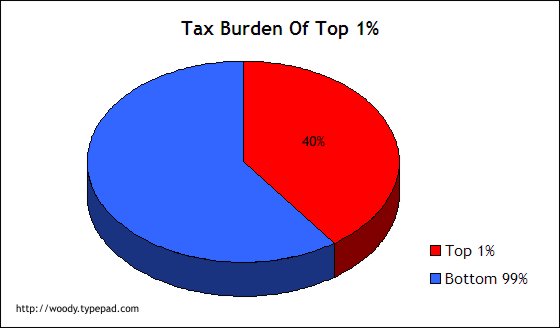
Maybe it should be more. But it is far from "unfair." That 99%, however...

The interminable and depressing negotiations over raising the debt limit have recently featured unseemly demagoguery from the President about making “millionaires and billionaires” pay their “fair share” in taxes. I have no ideological objection to raising tax rates on the richest Americans and even Americans like me; after all, as Willy Sutton pointed out when explaining why he robbed banks, “that’s where the money is,” and we have to pay our bills somehow. The fairness argument, however, is dishonest, and blatantly unfair.

It is unfair because the richest 1% of Americans pay close to 40% of the total tax revenue. Now, that 1% also have a lot of money, but they use a lot of that money to run businesses, create new products and services and hire employees. Maybe they should pay even more, and maybe they get too many tax breaks. To say that paying 40% of the total tax revenue is something to be ashamed of, however, is dishonest. Continue reading →

The Ethics of Stopping the Condemned From Accepting Death

In Oregon, a judge has granted death row inmate Gary Haugen’s motion to dismiss his lawyers after they persisted in taking measures to block his execution. They had declared he was not mentally competent to waive his appeals and allow his own state-decreed death to proceed.

Leave it to lawyers to be convinced that they know what’s best, even when it involves someone else’s wishes about his own life and death.

Is the condemend prisoner who approves of his own excecution insane, or courageous?

In an attorney-client relationship, the lawyer is ethically bound to do what the client wants as long as it is legal and within the bounds of the ethical constraints on the lawyer. A lawyer can render advice and should; a lawyer can explain the legal consequences of a course of action. But substituting the attorney’s judgment for that of the client is taboo…except, all too often, in cases like this one, in which a death row inmate decides that letting justice take its course and accepting the state’s death decree is preferable to rotting in prison.  Continue reading →

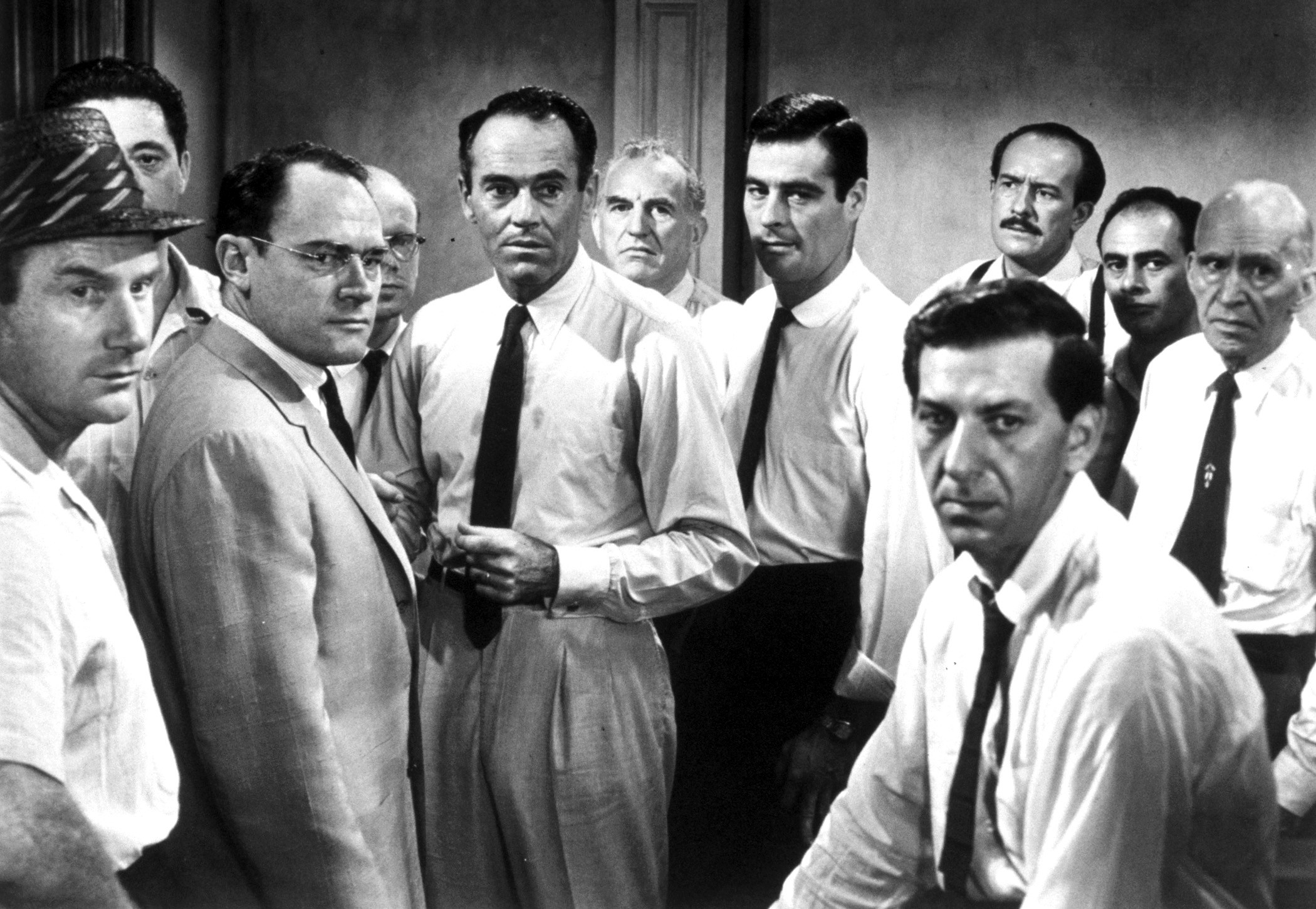
“Twelve Angry Men,” A Million Angry Fools, and the Jury System

Their defendant was probably guilty too.

Ethics Alarms All-Star Lianne Best sent me this link about a member of the Casey Anthony jury who is going into hiding because of all the hate and criticism being directed at jury members and their controversial verdict. Her plight, which must be shared by other members of the much-maligned jury, highlights the unethical, not to mention ignorant, reaction of the public to the Florida ex-mother’s narrow escape from a murder conviction she almost certainly deserved.

The problem begins with publicity. We may need to re-examine the logic behind broadcasting high-profile cases. The combination of live courtroom feeds and quasi-semi-competent commentary gives viewers the mistaken belief that they are qualified to second guess the jury, and they are not. They are not because the jury is in the courtroom, and the viewers aren’t. The jury and TV watchers see different things; individuals communicate different emotions and reactions in person than they do on camera. There is only one fair and sensible way to answer those on-line instant polls that ask, “Do you think Casey Anthony should be found guilty?”, and that is “I don’t know.”

Most of all, the viewers and pundits are not present in the jury room. Continue reading →

Explain to Me Why We Tolerate Illegal Immigration, Again?

Yes, I'm in a rotten mood today! Wanna make something out of it??

My cranky Saturday continues with an issue that I increasingly find bewildering: the tolerance, denial, and enabling by so many Americans of illegal immigration, although its unethical character cannot be denied or argued away. I know why Democrats support it—pure electoral cynicism—and I know why the business community encourages it—greed. What I don’t comprehend is why anyone else with a modicum of logic, fairness, and common sense isn’t confronting both of these self-serving institutions and demanding real enforcement of anti-illegal immigration measures. Instead, we get outrageous legislation like the Maryland Dream Act, which institutionalizes incentives for aliens to defy our laws. Continue reading →

Comment of the Day: “New Jersey Lottery Ethics…”

Tom Fuller, who can be perceptive when he isn’t peppering us with the quotations of others (all right, even sometimes when he is) makes a useful distinction in the Comment of the Day, on today’s post about the New Jersey Lottery:

“Don’t get me wrong. I’m no fan of government-sponsored lotteries, and I share all of the concerns about them mentioned above. But a facile slogan like “lotteries are a tax on people who don’t understand math” is, like most facile slogans, too simplistic a way of making the arguments. There are plenty of psychological and economic reasons why even people who understand the math buy lottery tickets that are, quite literally, bad bets. There is lots of research on this; one of the better articles is now 21 years old, but is still cited as a good, brief, and comprehensible overview.”  [You can read it here.]

“Every gamble is a losing bet in the long run; otherwise it wouldn’t be a gamble. The trouble with state-run lotteries is not so much that they exploit those who “don’t get it”; they exploit anyone, even a mathematical genius, who is drawn towards what society generally regards as undesirable actities, thereby sending the same mixed messages as taxes on tobacco and alcohol.”

The Ethics of “No-Body” Murder Prosecutions.

Oh! THERE's the body!!!

Texas lawyer Robert Guest has opined that a Texas jury would have convicted Casey Anthony in a heartbeat, and cites as proof the February conviction of Charles Stobaugh in Denton County. He was accused of killing his  estranged wife, though no body has ever been found at all.

Maybe.  There are a lot of differences in the circumstances of the two cases, not the least is that finding a badly decomposed body with a piece of electrical tape across her mouth has a big advantage over never finding any body at all: at least you are certain that the victim is dead.  Stobuagh, like Anthony, engaged in a pattern of lies and strange statements; for example, he suggested that his wife, who suddenly vanished and stopped using her bank account, credit cards and cell phone, was “playing a prank.”  He also began seeing a new girl friend more or less the moment his wife vanished. I’d say the biggest difference is the presumption of a motive: husbands killing their wives, especially their estranged wives, is a common and well-recognized form of homicide, with a motive that any married person immediately understands. A mother killing her young child, in contrast, is very unusual, and the presumption is that no mother would do it. The Anthony prosecution was more difficult than the prosecution of Stobuagh, even with Caylee’s body. Continue reading →

Unethical Blog Post of the Week: “But What About Caylee?”

Sad but true: the trial's purpose was not to find justice for Caylee.

If I responded to even one out of a hundred ethically muddled, logically addled posts by the hoard of bloggers in cyberspace, I’d have time for nothing else. Now and then, however, I am directed to a post that typifies the kind of free-floating, fact-starved gut sentiment that rots public discourse in America and that helps keeps the public confused and panicked.

In this case, I was directed to the post by the blogger herself, who managed to annoy me by accusing my post on the Casey Anthony jury of being callous to the victim in the case, two-year old Callie. I re-read my post; there wasn’t anything callous toward the child in any way. Puzzled, I went to the blogger’s page, a blog by someone who calls herself wittybizgal, and called Wittybizgal. Sure enough, there it was: an anguished lament about the verdict in the Casey Anthony trial entitled, “But What About Callie?”

The post is frightening, because I am certain that this kind of non-reasoning is epidemic in the United States, nourished by touchy-feely bloggers, pundits and columnists and made possible by the ingrained habit of having opinions without knowledge. Since their opinions are not supported by facts or reasoning, they can’t be debated. If you aren’t persuaded, you’re just mean, that’s all. That’s no way to decide what is right and wrong, but it certainly a popular way. Here is wittybizgal’s argument, one fallacious step at a time: Continue reading →

Ethics Heroes: The Casey Anthony Jury

America saved Casey Anthony, and we should be glad it did.

A Florida jury pronounced Casey Anthony not guilty of murder, aggravated child abuse or aggravated manslaughter in connection with the 2008 death of her two-year-old daughter, Caylee. It did find that she had lied to investigators and police, which was well-established during the trial.

Did she murder her daughter, as the prosecution claimed? Oh, sure she did; I don’t think any of the jury members will be asking Anthony to babysit for their kids any time soon. But the case against her was circumstantial. She was proven to be a liar, irresponsible, feckless, self-centered, deluded and callous, and the prosecution’s theory made a lot more sense that the defense’s alternative scenario. Still, there was not enough evidence to find Casey Anthony guilty of murder beyond a reasonable doubt. That’s the standard, not “it’s almost certain that she did it.” Despite all the media pundits who said it would be a slam-dunk conviction, despite all the community sentiment to make the party girl mother pay with her life for killing her child, the evidence to meet the intentionally tough standard of American justice just wasn’t there.

Already, reporters and commentators are comparing the verdict to the O.J. Simpson trial. Wrong. Continue reading →

Ethics, Porn, and the Creepy Professor

The Ronald Ayers saga raises the intriguing, Weiner-esque ethical issue of whether a college professor being creepy is sufficient reason to fire him.

The former economics professor was fired by the University of Texas for viewing pornography on an office computer, which the University’s policies forbade. The chain of facts has the ring of Kafka: 1) a student claims he hears “sexual noises” emanating from Ayers’ office, which 2) is considered sufficient provocation (the professor denied the accusation that he was not “master of his domain” at work) for the school to search his computer, which 3) uncovers evidence that he looked at some pornographic sites, and 4) also that he searched for the term “teen,” which 5) the university deems sufficient to indicate that he was searching for child pornography, so 6) they fired him, after three decades and tenure on the faculty.

University records say Ayers at first denied the allegations that he viewed pornography, but when confronted with a printout of his computer records, admitted that it may have happened “at the end of a long work day.” Ayers later told administrators seeing the porn was for “academic research.”

Uh-huh… Continue reading →