Remember The Alamo Today, March 6, When The Fort Fell, And Entered American Lore And Legend Forever.

The following post was mostly assembled from past essays here about my favorite event in American History…

I will never forget my first visit to the Alamo, and seeing Texans weeping, openly, proudly, as they read the plaque with Travis’s words engraved on it:

Commandancy of the Alamo
Bejar, Feby. 24, 1836

To the People of Texas & All Americans in the World

Fellow citizens & compatriots

I am besieged, by a thousand or more of the Mexicans under Santa Anna I have sustained a continual Bombardment and cannonade for 24 hours & have not lost a man The enemy has demanded a surrender at discretion, otherwise, the garrison are to be put to the sword, if the fort is taken I have answered the demand with a cannon shot, and our flag still waves proudly from the walls. I shall never surrender or retreat. Then, I call on you in the name of Liberty, of patriotism and everything dear to the American character, to come to our aid, with all dispatch. The enemy is receiving reinforcements daily & will no doubt increase to three or four thousand in four or five days. If this call is neglected, I am determined to sustain myself as long as possible and die like a soldier who never forgets what is due to his own honor & that of his country VICTORY OR DEATH.

William Barret Travis.

The story of the Alamo isn’t taught in schools outside of Texas. It wasn’t taught in my school, either: like most American history, I learned about the event though a thick mixture of pop culture, reading (Walter Lord’s “A Time To Stand” was a birthday present in 1961) and ongoing research. I recently completed “Texas Rising,” which was also just broadcast on cable as a mini-series starring the late Bill Paxton as Sam Houston. Historian Stephen Moore is a plodding writer, but he nicely puts to rest the currently popular politically correct slander that the defenders of the Alamo and the Texas rebels were fighting to keep their slaves, and trying to steal Mexico’s land. The Texians were opposing a dictator who had changed the terms under which they had come to the territory, and anyone familiar with the American character could have predicted what would happen when a despot demanded that they submit to unelected authority. The Alamo was a fight for liberty and democracy, and its martyrs exemplified sacrifice for principle and country.

From the official Alamo website:

While the Alamo was under siege, the provisional Texas government organized at Washington-on-the-Brazos. On March 2, the convention declared independence and the Republic of Texas was born, at least on paper. The Alamo’s garrison showed its support for independence from Mexico by sending its own delegates to the convention.While they were unaware that Texas had declared independence, the roughly 200 Alamo defenders stayed at their post waiting on help from the settlements. Among them were lawyers, doctors, farmers and a former congressman and famous frontiersman from Tennessee named David Crockett. While the youngest was 16 and the oldest defender was Gordon C. Jennings, age 56, most defenders were in their twenties. Most were Anglo, but there were a handful of native Tejano defenders as well. Legendary knife fighter and land speculator James Bowie was in command before falling ill and sharing duties with Travis. Several women and children were inside the Alamo, including 15-month-old Angelina Dickinson. Just before the final battle, Travis placed his ring around her neck, knowing she would likely be spared. One of the last messages from the Alamo was a note from Travis asking friends to take care of his young son Charles.

The final attack came before dawn on March 6, 1836. As Mexican troops charged toward the Alamo in the pre-dawn darkness, defenders rushed to the walls and fired into the darkness. Travis raced to the north wall but was soon killed. Bowie was most likely killed in his bed, while reports differ as to Crockett’s death. Many believe Crockett survived the initial attack but was put to death by Mexican soldiers soon afterward.

Mexican soldiers breached the north wall and flooded into the compound. The fierce battle centered on the old church, where defenders made a last stand.

The battle lasted about 90 minutes.

From the San Antonio Express News: Continue reading

Ethics Quote Of The Week: John Hinderaker

“It is almost unbelievable how ignorant and ill-educated America’s college students are. They are well below average in every material way. For all my life I have been an advocate for higher education, but I have reluctantly come to the conclusion that college is generally a mistake, as young people are mostly misinformed there, rather than educated. There are a few technical fields–medicine, engineering, possibly law–where such education is actually useful. Otherwise, we and our young people would be better off if they eschewed institutions like Colgate in favor of trade and technical schools, or immediate entry into the labor market. They couldn’t possibly do worse than to pursue the typical four-year liberal arts degree.”

—-Attorney-blogger John Hinderaker, in a Powerline post about the  hostile treatment conservative  author Heather McDonald received from Colgate students when she was invited to speak there.

The reason this seems almost unbelievable to Hinderaker, and the reason I chose this as an ethics quote, is that his painful conclusion that nobody wants to admit is true. I don’t want to admit it, and I was becoming convinced of this decades ago, when I  was part of the administration of Georgetown Law Center and discovered that we had Yale graduates who couldn’t write a coherent sentence, and later, when I had Stanford interns who thought Jane Fonda was an aerobics instructor and who looked at me blankly when I mentioned the 1968 Democratic National Convention, and still later, when a smart young woman who had graduated from Hofsta didn’t know who Jackie Robinson was, and when a Skadden Arps attorney with a Cornell degree guessed that the Civil War was fought sometime in the 1930s.

This is why I was not disappointed when my son, scion of a family with three Harvard graduates and a career Harvard employee, announced that he saw no point in going to college. Continue reading

Comment Of The Day: “KABOOM! At What Point Do Parents Blow The Whistle On Flagrant Ideological Indoctrination In Our Schools?”

This superb Comment of the Day by Steve-O-in NJ, on the post, “KABOOM! At What Point Do Parents Blow The Whistle On Flagrant Ideological Indoctrination In Our Schools?,” needs no introduction.

It just needs to be read.

A USAF F-16 Fighting Falcon, mainstay of the last 12 years of the Cold War, launches to fly a patrol. In those years it could have been anywhere from Italy to Spain to Turkey, while throughout Europe squadrons of the same under allied flags kept watch. A USAF F-15 Eagle, older still (they entered service in 1976) takes to the air. In the Cold War they kept watch further north, in Germany, in England, and even at Keflavik in Iceland. Every day they drilled, every day they patrolled, every day they were ready to go into battle on command, to stop the tyrannical scourge of Soviet communism or die trying.

We’d made a deal we wished we hadn’t had to with them, because the alternative was the genocidal tyranny of Nazism. We’d either looked the other way on, or not asked and not been told about, or accepted their lies about the worst things they’d done then like the Katyn Forest Massacre. However, we’d also seen them try to starve and freeze West Berlin out, and we’d seen them roll right over Hungary in 1956 and Czechoslovakia in 1968 when they dared to try to move toward greater freedom. We would be damned if we were going to let them bring that tyranny to the Rhine or past it. We’d heard from those who escaped what the conditions were like on the other side of the Iron Curtain, and we wanted no part of them.

We wanted no part of a system where there was one political party and only one. We wanted no part of a system where those who deviated from the party line either died or disappeared suddenly. We wanted no part of a system where faith was officially disapproved of and suppressed. We wanted no part of a system where the individual was just a cog in the government machine and had no hope of doing better. The system they offered was simply antithetical to what the Founding Fathers set up for this country, and we weren’t letting them bring it here. We’d fight to prevent it, and we’d die fighting rather than surrender to it. That’s why there were these patrols, that’s why the 41 for freedom were at sea at all times, but no one knew exactly where, and that’s why the 2nd Armored Division was always ready to go and the 82nd and 101st had battalions ready to fly out on minimal notice.

Now one of our political parties is likely to nominate a man who not only went behind the Iron Curtain, but did it willingly, for a honeymoon, when most of us head to someplace with a lot of sun and sand, or a lot of palazzos and palaces if the beach isn’t our thing. Not only did he go there, but he praised what he found there, in the place where those who dared speak out vanished and a refrigerator was a luxury item, saying it was a better system than we had here. Not only did he go there and praise what he found, but he did it while Ronald Reagan was finally arm-wrestling the Soviets to their final defeat, which would lead to their dissolution 3 years later. Not only all this, but he wants to bring that failed system here, on speed, and his followers say damned be anyone who stands in his way, because cities will burn otherwise.

I don’t know what’s more ironic (though not in an amusing way), that this system no longer exists in the nation where it originated (which also doesn’t exist anymore), or that the party that’s about to nominate this man is the same party that produced Thomas Jefferson, architect of the American brand of freedom, Andrew Jackson, who decisively stopped the first attempts to tear this nation apart, FDR, whom many still count as third in the great trinity of US presidents with Washington and Lincoln, and Harry Truman, who was the first president to stand up against this system that his party now wants to bring here. Continue reading

Seven Ethics Observations On The Las Vegas Democratic Candidates Debate

The transcript is here.

This was certainly the most entertaining of the debates so far, not that entertainment should be the purpose of such things. The substitution of Trump-obsessed billionaire Michael Bloomberg for Trump-obsessed billionaire Tom Steyer appeared to alter the chemistry of the entire group, rendering everyone nastier and antagonistic, and to each other, not President Trump. Steyer, after all, was always a pure vanity candidate, and like Stephen Yang, irrelevant, taking up space, and clogging the pipeline for voters to figure out who might be the best candidate. Bloomberg, incompetently and hypocritically, was considered a leading contender by “experts” (incompetently) and Democrats (hypocritically) as he entered his first debate.

1. Bloomberg, as I expected but far more spectacularly than I expected, proved that he isn’t a top contender no matter how much he spends. The former NYC mayor stood there with a perpetual ‘why do I have to put up with these peasants?’ look on his face, and though he had to know he would come under fire, appeared to be unprepared.

Elizabeth Warren’s (and to a lesser extent, Joe Biden’s) crushing attack on his (terrible) responses in defense of his stop-andfrisk policies in New York City (a utilitarian toss-up, but not for a party in which racial profiling is considered per se evil) and accusations of allowing a hostile work environment in his business reminded me of Chris Christie’s merciless humiliation of poor Marco Rubio in 2016. In particular, Bloomberg was a deer caught in the headlights when challenged on his transparency and asked to release women who had made complaints in his workplace from their non-disclosure agreements. His answer– “I’ve said we’re not going to get — to end these agreements because they were made consensually and they have every right to expect that they will stay private”—was nonsense of the sort I particularly detest. No one who understands what a non-disclosure agreement is could respond to that with anything but, “Huh? How stupid do you think I am?” Bloomberg, however, was counting on the ignorance of the public.  Releasing  women from the deals they made doesn’t affect their privacy: if they don’t want to talk, they don’t have to. All it means is that they get to keep their hush money, and not lose it if they don’t hush.

Competent moderators would have and should have  pointed that out, but you know—Chuck Todd. NBC.

Bloomberg started out with deceit—“I knew what to do after 9/11 and brought the city back stronger than ever.”  He didn’t become mayor of New York until four full months after 9/11.  His performance went downhill from there. Anyone who got excited at the prospect of him being the nominee after last night needs to see a neurologist. Continue reading

Noonish Ethics Round-Up, 2/19/2020: That Other Day That Will Live In Infamy…

Hi!

1. On this day in 1942, President Franklin D. Roosevelt signed Executive Order 9066, empowering the Army to issue orders emptying parts of California, Oregon, Washington and Arizona of immigrants from Japan, who were precluded from U.S. citizenship by law, and nisei, their children, who were U.S. citizens by birth. After the order, which was upheld by the U.S. Supreme Court including future liberal icon William O. Douglas, the Japanese-Americans  were first warehoused at “assembly centers,” which could be racetrack barns or on fairgrounds, then shipped to ten detendtion camps in Western states and Arkansas. Armed guards and barbed wire, plus morning roll call were part of the degrading and punitive experience.

It is fair to say this treatment was substantially rooted in racism, for there was no mass incarceration of U.S. residents with ties to Germany or Italy. Once the U.S. appeared to be on the way to victory along with its Allies in December 1944, the Executive Order was  rescinded. By then the Army was enlisting Japanese American soldiers to fight in Africa and Europe. President Harry Truman told the all Japanese-America 442nd Regimental Combat Team: “You fought not only the enemy, but you fought prejudice—and you have won.”

California is now preparing to formally apologize to the families of those interned.State Assemblyman Al Muratsuchi (D-Torrance) introduced a resolution that will formally apologize for California’s “failure to support and defend the civil rights” of Japanese Americans during that period,” and it is expected to pass today.

It’s naked grandstanding and virtue signaling, of course. The federal government apologized for the unconstitutional imprisonment and granted financial redress to survivors with the Civil Liberties Act of 1988, and the Supreme Court overruled its decision  upholding internment in 2018. Continue reading

Ethics Alarms Celebrates Presidents Day: The Speeches. II. President Ronald Reagan’s Address To The Nation, January 28, 1986

U.S. Presidents are leaders of their parties, but that is only one role among many that the U.S. Presidency has evolved to serve. There are times when it is crucial for the President to be seen as the symbol of the nation and the representative of all Americans, whether some Americans are able to concede that fact, or not. Some of the greatest Presidential speeches were inspired by national tragedies, as a Chief Executive was forced by events to serve as “Comforter-in- Chief,”  and to to set aside partisanship in times of tragedy to speak words that remind us that, despite what may be passionate differences, we are all Americans.

No President was better qualified by his experience and talents to fulfull this role than Ronald Reagan, after we all watched the Space Shuttle Challenger launch and then explode into pieces on that beautiful, cloudless day.

Ladies and gentlemen, I’d planned to speak to you tonight to report on the state of the Union, but the events of earlier today have led me to change those plans. Today is a day for mourning and remembering.

Nancy and I are pained to the core by the tragedy of the shuttle Challenger. We know we share this pain with all of the people of our country. This is truly a national loss.

Nineteen years ago, almost to the day, we lost three astronauts in a terrible accident on the ground. But we’ve never lost an astronaut in flight; we’ve never had a tragedy like this. And perhaps we’ve forgotten the courage it took for the crew of the shuttle; but they, the Challenger Seven, were aware of the dangers, but overcame them and did their jobs brilliantly. We mourn seven heroes: Michael Smith, Dick Scobee, Judith Resnik, Ronald McNair, Ellison Onizuka, Gregory Jarvis, and Christa McAuliffe. We mourn their loss as a nation together. Continue reading

Ethics Alarms Celebrates Presidents Day: The Speeches. I. President Washington’s Farewell Address

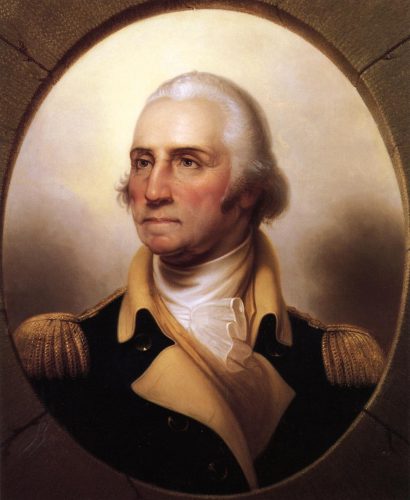
George Washington’s last “address” was really a letter, sent to Congress and published in newspapers across the nation,  to “Friends and Citizens” as the first President’s second term was nearing its end in 1796

The U.S. Senate began the tradition of having a member of Congress read the letter every February 22, Washington’s birthday, beginning in 1862, as a morale-boosting gesture during the Civil War. Citizens of Philadelphia had petitioned Congress to commemorate the forthcoming 130th anniversary of Washington’s birth by reading the Address at a joint session of both houses. Future President and Tennessee Senator Andrew Johnson introduced the petition in the Senate. “In view of the perilous condition of the country,” he said, “I think the time has arrived when we should recur back to the days, the times, and the doings of Washington and the patriots of the Revolution, who founded the government under which we live.”

Here is Washington’s “Farewell Address”:

Friends and Citizens:

The period for a new election of a citizen to administer the executive government of the United States being not far distant, and the time actually arrived when your thoughts must be employed in designating the person who is to be clothed with that important trust, it appears to me proper, especially as it may conduce to a more distinct expression of the public voice, that I should now apprise you of the resolution I have formed, to decline being considered among the number of those out of whom a choice is to be made.

I beg you, at the same time, to do me the justice to be assured that this resolution has not been taken without a strict regard to all the considerations appertaining to the relation which binds a dutiful citizen to his country; and that in withdrawing the tender of service, which silence in my situation might imply, I am influenced by no diminution of zeal for your future interest, no deficiency of grateful respect for your past kindness, but am supported by a full conviction that the step is compatible with both.

The acceptance of, and continuance hitherto in, the office to which your suffrages have twice called me have been a uniform sacrifice of inclination to the opinion of duty and to a deference for what appeared to be your desire. I constantly hoped that it would have been much earlier in my power, consistently with motives which I was not at liberty to disregard, to return to that retirement from which I had been reluctantly drawn. The strength of my inclination to do this, previous to the last election, had even led to the preparation of an address to declare it to you; but mature reflection on the then perplexed and critical posture of our affairs with foreign nations, and the unanimous advice of persons entitled to my confidence, impelled me to abandon the idea.

I rejoice that the state of your concerns, external as well as internal, no longer renders the pursuit of inclination incompatible with the sentiment of duty or propriety, and am persuaded, whatever partiality may be retained for my services, that, in the present circumstances of our country, you will not disapprove my determination to retire.

The impressions with which I first undertook the arduous trust were explained on the proper occasion. In the discharge of this trust, I will only say that I have, with good intentions, contributed towards the organization and administration of the government the best exertions of which a very fallible judgment was capable. Not unconscious in the outset of the inferiority of my qualifications, experience in my own eyes, perhaps still more in the eyes of others, has strengthened the motives to diffidence of myself; and every day the increasing weight of years admonishes me more and more that the shade of retirement is as necessary to me as it will be welcome. Satisfied that if any circumstances have given peculiar value to my services, they were temporary, I have the consolation to believe that, while choice and prudence invite me to quit the political scene, patriotism does not forbid it.

In looking forward to the moment which is intended to terminate the career of my public life, my feelings do not permit me to suspend the deep acknowledgment of that debt of gratitude which I owe to my beloved country for the many honors it has conferred upon me; still more for the steadfast confidence with which it has supported me; and for the opportunities I have thence enjoyed of manifesting my inviolable attachment, by services faithful and persevering, though in usefulness unequal to my zeal. If benefits have resulted to our country from these services, let it always be remembered to your praise, and as an instructive example in our annals, that under circumstances in which the passions, agitated in every direction, were liable to mislead, amidst appearances sometimes dubious, vicissitudes of fortune often discouraging, in situations in which not unfrequently want of success has countenanced the spirit of criticism, the constancy of your support was the essential prop of the efforts, and a guarantee of the plans by which they were effected. Profoundly penetrated with this idea, I shall carry it with me to my grave, as a strong incitement to unceasing vows that heaven may continue to you the choicest tokens of its beneficence; that your union and brotherly affection may be perpetual; that the free Constitution, which is the work of your hands, may be sacredly maintained; that its administration in every department may be stamped with wisdom and virtue; that, in fine, the happiness of the people of these States, under the auspices of liberty, may be made complete by so careful a preservation and so prudent a use of this blessing as will acquire to them the glory of recommending it to the applause, the affection, and adoption of every nation which is yet a stranger to it. Continue reading

Amy Gets A “Gotcha!”

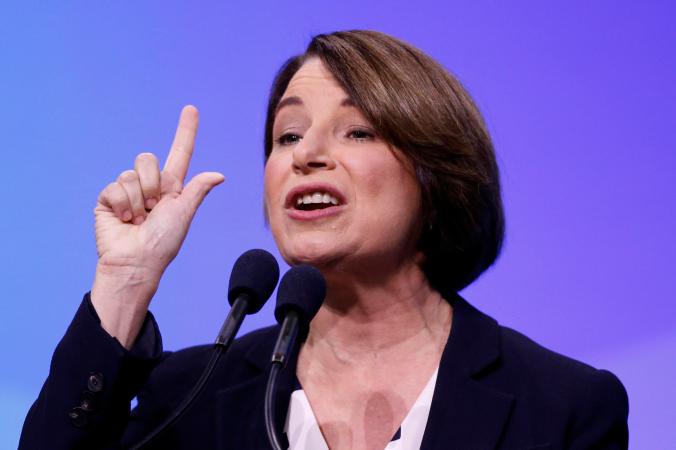
Senator Amy Klobuchar, the suddenly surging Democratic Presidential candidate, stumbled when she was quizzed by reporter Guadalupe Venegas of Telemundo on the name of the president of Mexico.

When asked “Can you tell me his name?” about the leader of the rather important U.S. neighbor to the south, Klobuchar answered “No.”

It is Andrés Manuel López Obrador,  known by his initials, AMLO ,  who took office in December 2018. (I had to look it up.) Continue reading

Sunday Ethics Warm-Up, 2/2/2020: The “Let’s Not Watch The CTE Bowl And Think About Ethics Instead” Edition

Good Afternoon!

I almost managed to ignore football completely this season, and I’m proud of it.  There were few rogue kneelers in the NFL this year, and the New England Patriots, my hometown role models for the Houston Astros, finally bit the dust. Meanwhile, there was little new on the CTE front, not any more is needed to prove that cheering young men in the process of destroying their brains for a handful of well-compensated seasons as football heroes is immoral and unethical.  I did recently watch the Netflix documentary, “The Killer Inside,” about Aaron Hernandez, the Patriots star who murdered a friend and perhaps two others. I didn’t know that after his suicide in prison, it was found that Hernandez suffered from CTE, and that  his brain was one of the most damaged scientists have ever seen.  The documentary also says that the New England Patriots coaching staff saw signs that he was deteriorating and becoming unstable, as well as using drugs, and they made no effort to intervene. After all, he was playing well, and the team was winning.

That’s pro football. To hell with it.

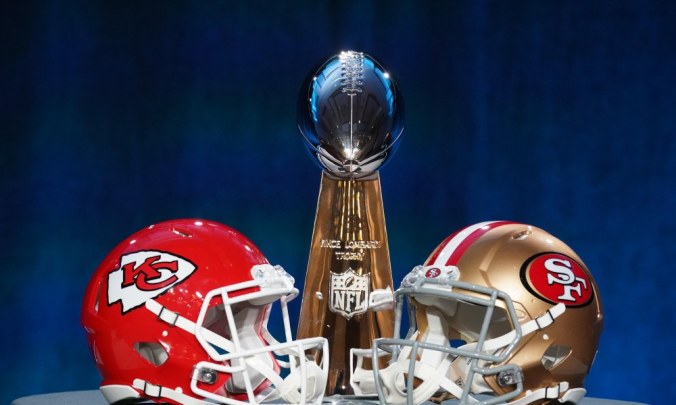
1. “The Chop.” I have written about this perpetually silly issue a lot, and recently, but the New York Times, being the Official Paper of the Woke, has felt it necessary to publish three pieces this week on the the so called “Kansas City Chop,” the tomahawk motion used by Kansas City Chiefs fans (The Chiefs are in the Super Bowl, you know) when cheering on their team. The chop is most identified with the Atlanta Braves (How satisfying it was to watch Jane Fonda dutifully chopping along with then husband Ted Turner when the  Braves finally made the world Series in 1991!), but Chiefs fans started copying Braves fans. It is, of course, intended to rally the team, has nothing whatsoever to do with any kind of commentary on Native Americans, those who pretend to be seriously unsettled by what fans of an NFL team do to show their affection for their team are either faking or need psychiatric care. But here’s CNN:
Continue reading

Morning Ethics Warm-Up, 1/29/2020: Dogs, Mike Bloomberg, Joe Biden, D.C., Jimmy Kimmel, Threatening Deplorables And Restricting Rights

Well, dogs are good, anyway…

1. Stop making  dogs defend Mike Bloomberg!…Is there anything too trivial that people won’t use to attack politicians? A CBS News video began circulating online yesterday afternoon showing Michael Bloomberg shaking hands with a man in Burlington, Vermont, then taking his dog’s upper jaw  in his hand and “shaking” the dog’s  snout  He then scratched the dog’s ears. The social media mob called him a dog abuser.

Morons. That’s a move that most dogs enjoy, as well as someone grasping their whole muzzle. It shows Bloomberg is comfortable with and knowledgeable about dogs. I used to do both moves with our 165 pound English Mastiff, and our Jack Russells.

2.  I know this is of interest to almost nobody who isn’t a lawyer, but trust me, it’s a big deal. The District of Columbia has long been the only U.S. jurisdiction that allows law firms to have non-lawyer partners, a structure prevented everywhere else by the general prohibition on lawyers sharing their fees with non-lawyers. When D.C. adopted its revolutionary approach, it assumed that the states would soon follow, with the American Bar Association’s assent. Because that hasn’t happened, a state-licensed lawyer with a D.C. license participating in a legal firm in D.C. could technically be found to  be violating that state’s ethics rules , though the District has negotiated a truce in that potential controversy.

Meanwhile, those special law firms with non-lawyer members are proliferating like legal rabbits. Now  a Jan. 23 press release tells the world that the District of Columbia Bar is taking comments regarding proposed changes to its ethics rules that could allow external ownership of law firms, as well as blended businesses in which lawyers and non-lawyers provide both legal and nonlegal services, like accounting. Or massages–who knows? Right now, law firms by definition can only practice law.

Perhaps even more significantly, California, Utah and Arizona are also studying changes that would relax ethics rules barring non-lawyers from holding a financial interest in law firms. Continue reading