Comment of the Day: “Interestingly, Being an Idiot Does Not, In The Eyes Of The Florida Bar, Make One Unfit To Practice Law”

This Comment of the Day from the stellar Harkins household—this is from Ryan Harkins–was just posted three days ago and it seems like eons. It responds to another one of my arguments that sufficient demonstrations of stupidity by lawyers even outside the practice of law should be grounds for disbarment—a suspension isn’t enough, because such a lawyer will not become smarter after a professional “time out.” I think the first time I suggested this reform to legal discipline was when “The View’s” token lawyer, racist Sunny Hostin, suggested that eclipses and earthquakes were caused by climate change. It upsets me just think about the fact that this idiot has a law degree.

Here is Ryan’s Comment of the Day on the post, “Interestingly, Being an Idiot Does Not, In The Eyes Of The Florida Bar, Make One Unfit To Practice Law”

***

A basic and important rule of gun safety, perhaps the preeminent rule, is that you should never point a gun at anything you don’t intend to shoot. Playing around with a gun in the fashion that Medina did shows a disturbing lack of gun safety in particular, but of the principal normalization of deviance in particular.

To delve into a little bit of brain science, in following the cognitive-emotive-behavioral model, we start with a desire. Perhaps in Medina’s case, it was simply to have fun. But how would he possibly conclude pulling the trigger of an unloaded gun is fun?

There are a large variety of ways we can try to satisfy our desires. In the case of hunger, we could seek satiation from a myriad of venues. In the case seeking stress relief, we could seek out a movie, a game, exercise, or any of a host of other options. But there are options we can choose from that are unhealthy, dangerous, or even illegal. When presented with all these options, our brains experience a byplay between thought and feeling. Does this option satisfy? The emotions clamor for a particular avenue, and cognition weighs the risks and benefits. If I eat a salad, I might not feel satiated, but if I eat a Hardee’s Monster Burger, I’ll be consuming far too many calories. But the salad may not be very tasty, and the Monster Burger is delicious. Whichever way I choose, my brain will record the success or failure of the endeavor, and the next time I am hungry, I will have a precedent to fall back on. They byplay between cognition and emotion in subsequent encounters proceeds much more quickly. The Monster Burger was indeed delicious, filled me up, and I didn’t seem to suffer any negative consequences. So the next time, my brain is patterned to lean toward the Monster Burger because of the positive experience.

Continue reading

Comment of the Day: “Justice for the Nicholas Brothers” [UPDATED]

This was another dreary Saturday (almost all Saturdays have been dreary since Grace died, to be honest) until Ethics Alarms provided a triple treat. A new commenter debuted with a Comment of the Day, and I always love that. Better yet, the comment arrived on an old post, one from July of 2012. I also love that, as it shows that these poor rhetorical exercises with too many typos don’t always vanish like random pebbles thrown into the surf, but sometimes provide amusement and perspective to readers months and even years later, giving hope that my existence has some meaning after all.

Best of all, however, is that Kevin Hall’s Comment of the Day focuses much deserved attention on the amazing Nicholas Brothers, probably the greatest tap dancers who ever lived, whose memory is tragically faint because of the racism that restricted their careers. That number above, from a film that was seen almost exclusively by black audiences when it was released, is perhaps the most famous film performance by Harold and Fayard Nicholas, and it is certainly characteristic of their amazing style, but there are others. There is also a website dedicated to their lives and artistry. I feel about the Nicholas Brothers a bit like King Arthur does about the legend of Camelot as he expresses it in the final song in that Lerner and Lowe musical…

Ask every person if he’s heard the story
And tell it strong and clear if he has not

Here is Kevin Hall’s Comment of the Day on the post, “Justice for the Nicholas Brothers.” I can’t resist some brief comments at the end…

Continue reading

Comment of the Day: “Inauguration Prelude Ethics Round-Up, 1/18/25”

I woke up this morning to a much-appreciated gift from Steve-O-in-NJ, a well-researched, n excellent Inauguration Day prelude post that touches on several issues, but mostly the political history of outgoing POTUS Biden. In that sense, it is also a Comment of the Day on the final installment of the EA inquiry on The Worst President Ever, to which Steve-O already contributed an epic supplement.

Two notes before I hand the metaphorical floor over to Steve: 1) How I love it when there is a Comment of the Day covering ground that I was expecting to have to cover myself on a Sunday morning! 2) I am grateful to AM Golden for asking in a comment about whether Trump has any company as a “businessman,” which I responded to last night and that seems to have prompted Steve’s opus. The quick answer is that nobody on the list of 45 men could be called a businessman/entrepreneur/mogul except Trump. As Steve points out, Harry Truman had a modest haberdashery store [above] before going into politics, but for him to be compared to Trump as a businessman he would have had to own Brooks Brothers and Men’s Warehouse. 3)The survey of Presidential occupations and those of their fathers was a large section of my honors thesis, which could have been called “How to Become President of the United States.” In summarizing the facts, Steve omitted #17, Andrew Johnson, who may have the most astounding background story of all. Johnson is usually referred to as a tailor, but his pre-White House occupation could be arguably called “slave,” as he was an indentured servant who was literally owned until he ran away. It was a cruel twist of fate that his public image, such that he has one at all, is dominated by his disastrous tenure as President when his life story is perhaps the most amazing rise to power in in our history. He also shares with #47 an amazing comeback, being elected to the U.S. Senate as the final act in his public career.

Here is Steve-O-in NJ’s Comment of the Day on the post,“Inauguration Prelude Ethics Round-Up, 1/18/25” :

***

I actually was looking up how many presidents have been exclusively politicians their entire professional lives, and the number is comparatively few. Most of them have had at least some other profession before entering the world of politics.

Most (31) have been in the military in some capacity at some point, and 12 (Washington, Jackson, Harrison, Taylor, Pierce, Johnson, Grant, Hayes, Garfield, Arthur, Benjamin Harrison, and of course Eisenhower) have been generals, albeit some “in name only.” Many were lawyers, judges, or bureaucrats, but there were also such diverse jobs as mining engineer, farmer, haberdasher, land surveyor, actor, teacher, executive, and publisher. Arguably Jefferson and Teddy Roosevelt might qualify as polymaths, since both could do multiple things well.

Pure politicians, the Presidents who spent their entire professional lives or close to it in elective office, have been relatively few. FDR almost was, but his political career was derailed for a time by the illness that left him wheelchair-bound. LBJ comes close, since he taught only briefly before getting into politics, and left only briefly to serve in the Navy in WW2. JFK definitely was, since he came out of the Navy, spent something like a year and a half as a “special correspondent” for Hearst Newspapers, then ran for the House and never looked back. Bill Clinton has often been described as never having a “real job” outside of politics.

Biden was also pretty much purely a politician. He came out of law school, spent about a year in private practice, then possibly less than a year as a public defender (the history is murky, and he only “rediscovered” it when he needed social justice creds in 2020) before he ran for his first office and never looked back until the four years between being Obama’s vice president and running himself, during which he “wrote” a memoir and was an “honorary professor” at the University of Pennsylvania.

Continue reading

Comment of the Day: “The Worst President Ever? Part 6: The Final Field”

Steve-O-in NJ contributed a well-reasoned and researched resolution of the Ethics Alarms series “The Worst President Ever?” after the penultimate installment, which I posted last month. At the time, I still wasn’t certain how the Wilson-Biden contest would come out, and since (spoiler!) his analysis came down to the same final two, I resolved to hold this obvious Comment of the Day until I had finished my final installment, which went up (finally!) last night. Steve’ alternate analysis is excellent, as all of Steve-O’s historical epics are.

Here is Steve-O-in NJ’s Comment of the Day on “The Worst President Ever? Part 6: The Final Field.”

An interesting list, certainly. I believe that if you asked 100 people who the worst presidents were and why, you’d probably get 100 answers that would all differ at least slightly, although some common threads would run through them, and you’d get one group from conservative folks and another from liberal folks. I’m not sure I 100% agree with this list, but it’s the list you’ve given us to work with, so here are my thoughts:

Franklin Pierce – Had a life-long problem with alcohol, to the point where other military officers (yes, believe it or not he is one of the ten presidents who was a general) called him the “hero of many a well-fought bottle.” Tragic family history, and let grief and drink paralyze his single term in office.

James Buchanan – Took almost no steps to stop the Civil War from happening. Started to dislike the office to the point where he told Lincoln that if Lincoln was as happy upon assuming the presidency as he was upon leaving it, he was a happy man indeed.

Andrew Johnson – Never meant to be president, put on the ticket because he was a Democrat and a southerner. Couldn’t control the radical Republicans. Was impeached (probably unfairly) and came the closest any president ever came to removal from office. Also had the hardest act of all to follow.

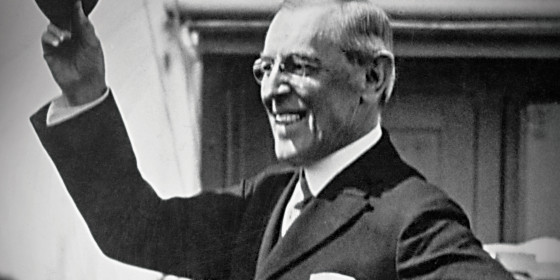
Woodrow Wilson – Biggest racist ever to sit in the White House. Also probably one of the 3 or 4 most arrogant presidents. Led us into WW1 when we might not have needed to go, then alienated the world with his attempt to impose his own morality. Also alienated most of his political allies back home and was a willing participant in hiding that he had had a debilitating stroke from the country.

Richard Nixon – Popular president who didn’t trust his own popularity to take him past the finish line and overreached, then tried to cover it up.

Continue reading

Comment of the Day: “Presuming Bias Also Makes You Stupid…and a Failure”

I think it is fitting to end 2024 with one of Steve-O-in NJ’s historical epics, this one in response my challenge at the end of the post to name a figure who would rebut the statement on the Victory Girls blog regarding Kamala Harris, “Never has so much been handed to one person who didn’t deserve it.” My mind immediately went to the Kim Kardashian’s sisters Khloe and Kourtney, who attained fame, celebrity and riches because their oldest sister had a viral sex tape. But moving from government and politics into pop culture is cheating.

Steve-O takes up that challenge with gusto in this Comment of the Day to the post, “Presuming Bias Also Makes You Stupid…and a Failure”. Here is it is….

***

It really depends on how far back in history you are willing to go. I could name you at least 10 monarchs who were handed a whole lot they didn’t deserve for no reason other than accident of birth without even putting on my thinking cap:

  1. Edward VIII of the UK – a child who never quite grew up and just wanted everything his own way, also TERRIBLE judge of character.
  2. Louis XVI of France – clueless and careless, led him to the guillotine
  3. Alfonso XIII of Spain – not up to the job and paved the way for fascist Franco.
  4. Selim II of the Ottoman Empire – called the Drunkard or the Sot for a reason, led to the huge defeat at Lepanto and Turkey’s long slide down into the Third World.
  5. Henry VIII of England – initially might even be considered heroic but ultimately destroyed by his excessive appetites and dictatorial nature.
  6. Mary I of England – Henry’s eldest daughter, called Bloody Mary for a reason.
  7. Charles II of Spain – the misshapen result of generations of Hapsburg inbreeding.
  8. Hirohito of Japan [above, with Khloe and Kourtney] – allowed himself to be a puppet for overambitious generals and admirals, didn’t stand up to them until defeat was certain.
  9. Cixi Yukian of China – waited till it was too late, then foolishly threw in with the Boxers, resulting ultimately in the Chinese Empire collapsing.
  10. Oh yes, lest we forget William II of Germany, who pushed wise old Bismarck aside and led the German Empire into WWI and its destruction.

If I put on my thinking cap, I could probably triple that list. The fact is that when you hand someone power based on something other than merit, you throw the dice and risk ending up with someone who’s either useless or a puppet for the unscrupulous.

Continue reading

Comment of the Day: “An Eternally Troubling Ethics Conundrum—at Least to Me”

The conundrum I discussed in the post was the proper degree to which accomplishments should be judged according to the effort and sacrifice they required.

Here is Jutgory’s Comment of the Day exploring the question further:

***

Not to solve your problem, but maybe I can make it clearer.

The distinction between effort and outcome is very basic. The Stoics observed that you have complete control over your effort, but no control over the outcome of those efforts. As a result, you can control how much effort you put into something, but it will not guarantee success. (Nietzsche kind of flipped this around and said that the great man is the one who could make reality to conform to his will. Maybe that is what a ton of effort, tenacity, and luck will get you. I am sure you can find examples of that in the lives of the Presidents.)

It is also embedded in the Declaration of Independence. Happiness is not an inalienable right; you only are guaranteed the right to pursue happiness. That is, you have the right to decide what you think will make you happy and pursue those goals, as long as they don’t infringe on the rights of others to do the same.

Continue reading

Comments of the Day (In the Thread of the Month!): “Wait…So Everyone’s Been Lying To Me All These Years About What Angels Look Like?”

s

The commentariate on EA always surprises and delights me, and the response I got to an off the wall post inspired by an AP story about “biblically correct” angels was a perfect example. The resulting thread was a veritable primer on anglelology, with Ryan Harkins weighing in with three substantive posts and several others contributing valuable insight as well.

I don’t deserve you.

One more Christmas tradition that I left fallow this year—like almost all of them—in the absence of my wife was our Christmas Eve reading aloud of the children’s book “The Littlest Angel,” by Charles Tazwell. Grace loved the story so. She would always cry at the place where the Littlest Angel gives his most cherished possession, a simple wooden box where he kept his earthly treasures when he was a child on Earth, as his gift to the soon-to-be-born son of God:

The Littlest Angel trembled as the box was opened, and there, before the Eyes of God and all His Heavenly Host, was what he offered to the Christ Child. And what was his gift to the Blessed Infant?

“Well, there was a butterfly with golden wings, captured one bright summer day on the high hills above Jerusalem, and a sky blue egg from a bird’s nest in the olive tree that stood to shade his mother’s kitchen door. Yes, and two white stones, found on a muddy river bank, where he and his friends had played like small brown beavers. And, at the bottom of the box, a limp, tooth-marked leather strap, once worn as a collar by his mongrel dog, who had died as he had lived, in absolute love and infinite devotion.”

Somehow, it doesn’t work quite as well if one is thinking of the Cherubim as having eyeballs all over his wings or three heads. But that’s just me…

Here are two of the many remarkable comments first from Ryan Harkins, and then from Sara B. on the post, “Wait…So Everyone’s Been Lying To Me All These Years About What Angels Look Like?” :

***

(First, Ryan)

Continue reading

Comment of the Day: “What, If Anything, Is The Ethical Response To This Trump Derangement Victim’s Letter To ‘The Ethicist’?”

Sarah B.’s perceptive and eloquent Comment of the Day about the inquirer to the NYT’s “The Ethicist” advice column who asked whether the threat of various catastrophes ahead (as she saw them) concluded with a sentence that reminded me of this famous speech from the film “Parenthood.” I’ve been looking for an opportunity to post it. Thanks Sarah B.

And thanks for this Comment of the Day on the post, What, If Anything, Is The Ethical Response To This Trump Derangement Victim’s Letter To “The Ethicist”?

***

It is very easy to mock and deride someone who is silly enough to believe the mainstream media and all the horror stories the left has subscribed to.  I like feeling superior for not believing in this version of fantasy land.  I felt superior when I was not one of the wackos who declared themselves part of the Navi in Avatar, and I’m feeling the same general happiness when recognizing that I’m not so far gone as to believe this current set of beliefs.  Indeed, it is tempting to feel even more so, because so many of my contemporaries follow this insane set of beliefs. 

However, I think we need to dig deeper than the mocking laughter this letter so easily inspires.  What is this woman really saying?  First, she is discussing a desire to have children.  This is a desire that fewer and fewer women are subscribing to, usually to their and to societies eventual sadness.  Therefore, this desire should be encouraged.  Second, she is fearing that we are entering a time of tribulation.  Before addressing this in any depth, we should consider what she is probably meaning with these two concerns.  The first worry is likely that she feels that bringing a child into this world in a time of trouble means that her child may suffer.  The second worry is that in bring a child into this world in a time of trouble would cause this woman to suffer. 

The concern of bringing a child into a world in a less than perfect time causing the child to suffer is not a valid one for several reasons.  First, the USA, under Trump or not, is better than many if not most places in the world.  In addition, the world in 2024 is a better place than nearly all of human history.  Less people suffer, and they suffer less than in the past.  The human misery index is very low.  Children are a joy to the human race, and the hope for the future.  Man has always had children, even in tougher times than any we can illogically expect to come about today.  The idea that the child MIGHT suffer in the perfect storm is still less likely than the child having a normal life and enjoying every moment his parents lovingly gifted him.  Besides, in the best of times, a child will get illnesses and injuries.  That is part of growing up.  To quote Calvin, quoting his dad, “being miserable builds character.”  As some say, if it were not for the heat or the hammer, the steel could not be honed.  Adversity is what helps us become the best version of ourselves.

The concern of a parent suffering because they brought a child into a troubled world is ridiculous, because parents will always suffer for their children.  Labor is no picnic.  Sleepless nights when breastfeeding are a form of suffering.  Staying up with a sick kid, or sitting by a kid’s bedside when they are in the hospital for a tonsillectomy, appendectomy, or croup is not exactly enjoyable.  Holding them still so a doctor can give them stitches is incredibly painful, even before they kick you.  I certainly feel greater pain than my children when they are sick and in misery and I wish I could take their suffering from them, even if it is a good suffering.  Heck, it really does hurt me more than my child when I have to discipline them.  And again, in the perfect utopia of a Democratic paradise, a child will still cause their parents suffering.  Children will be born with special needs.  Children will slip past an exhausted or distracted parent and fall into a pool or run into traffic.  Accidents will happen, no matter what we do.  Also, children will grow up and make poor decisions that cause parents all kinds of heartbreak.  (I could mention that many democratic policies make some of those decisions more likely, but that would be of little use talking with this woman.)  In short, being a parent is accepting suffering in the course of bring joy to ourselves and others.

My final thoughts on this involve a song by Garth Brooks.  “Our lives are better left to chance.  I could have missed the pain, but I’d have had to miss the dance.”  Today, too many people have become convinced that no dance is worth the pain we may have to suffer, especially if we only imagine what the pain may be.  I choose the dance. 

Comment of the Day: “From the Res Ipsa Loquitur Files:”

[Source: Health System Tracker]

In his useful Comment of the Day on the recent essay about “wanted” posters going up around New York City to target health industry executives, Chris Marschner examines some of the factors underlying the high cost of staying alive in the U.S.

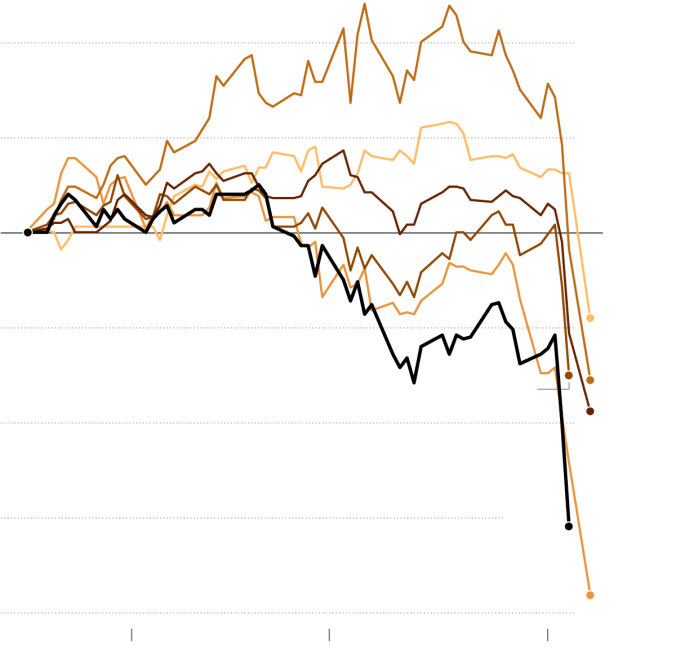
I worked on health care costs and the various schemes to keep them down in the 1980s at the U.S. Chamber of Commerce. Then, the big panacea was going to be HMOs. The cruel reality was that they were over-sold: HMO’s were great if you had something very simple or something very serious: in between, the care just wasn’t any good, as I found out when I first started suffering from chronic gout. Unless there is some incentive for the health care consumer to minimize costs, insurance helps make health care more expensive. Personally, I blame Franklin Roosevelt’s socialist theory that Americans should be guaranteed “Freedom from Want,” meaning guaranteed housing , jobs, a “living wage,” and cradle to grave health care. If people are not sufficiently motivated to avoid unnecessary trips to the doctor or emergency rooms because they won’t have to pay for the consequences of their life choices, medical costs will keep going up. Thus Obama’s “Affordable Care Act” was even less effective at keeping health care affordable than Biden’s Inflation Reduction Act was at reducing inflation.

Here is Chris Marschner’s Comment of the Day on “From the Res Ipsa Loquitur Files:”….

***

These posters would be, in my humble opinion, incitement to violence and immediate threats to the individuals identified. As such, claims of free speech cannot be defended.

I read an interesting article on the history of health insurance from PubMed A (Brief) History of Health Policy in the United States – PMC. While it outlined the historical development it fails miserably with respect to why health care costs have risen so dramatically. The primary reason for health care inflation is that insurance decouples the patient from the provider when it comes to making choices. If health care providers were not compensated based on a fee for service model it stands to reason that the number of services would fall which would allow greater access to health care when actually needed. Having your primary care physician have you make an appointment every 3-6 months just to evaluate you is an appointment that cannot go to someone in need resulting in long wait times.

Continue reading

Comment of the Day: “Critics of Federal Workers Telecommuting May Exaggerate But the Truth Is Bad Enough”

This Comment of the Day by new participant in the comment wars Dr. Blae cheers my pre-Christmas cockles more than most for two reasons: 1) I always love it when a first time commenter weighs in with a Comment of the Day. This is especially true since I spend so much time reading attempted first-time comments that read: “You suck, asshole!” 2) Genuine expertise on these topics is always a godsend. I am a pan-ethicist, meaning that I work in the ethics field regarding too many areas to count, legal ethics substantially but also business ethics, government ethics, sports ethics, academic ethics, journalism ethics, and more. I am neither a participant nor an expert in many of these fields themselves, so when ethics and one of them intersect, a specialist is especially welcome.

Here is Dr. Blae’s Comment of the Day on the post, “Critics of Federal Workers Telecommuting May Exaggerate But the Truth Is Bad Enough”:

***

So let’s break this down…

  • Federal agencies have been maintaining uninhabited office space in some of the most expensive real estate markets in the US.
  • The majority of federal workers, that can, telework/remote work and avoid coming into the office.
  • There is an assumption of a lack of efficiency due to telework/remote work, but the evidence is anecdotal or not directly relevant (e.g., office occupation).

Now for a couple of questions… prior to COVID:

  • When were government employees accused of being efficient?
  • What is efficiency? This is really important since the implication is a quantitative comparison, so we need some numbers.
  • Are all jobs/positions the same? Is there a single solution?
  • Where do most federal employees (in the DC area) come from?
  • How do you “drain the swamp” by reconcentrating employees in the swamp?
  • What is a comparison of costs between an employee doing telework/remote work v. being physically in the office?
  • Why do federal agencies continue to rent unoccupied spaces when according to GSA regulations/policies they are supposed to “right size” office space?

Ok let’s take into consideration a few points…

Continue reading