Everyday Ethics: The Dilemma of the Tardy Warning

Not for the first time in my life, the Dilemma of the Tardy Warning is causing me sleepless nights.

By random chance I encountered a gentleman who worked in my field, and we had a phone conversation. He was pleasant and flattering; his projects sounded both interesting and like possible complements to my own. We exchanged e-mails, and he sent me some materials. I said that I would contact him to set up a face-to-face meeting, and meant it.

Then I casually mentioned him to some colleagues, who reacted as if I had announced a planned liaison with the Marquis de Sade. Continue reading

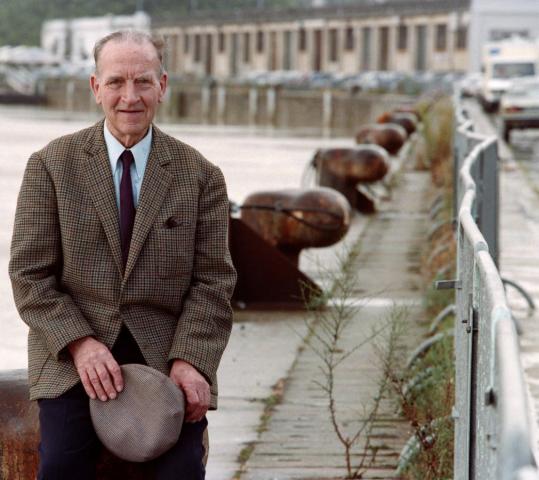
Ethics Hero Emeritus: Henri Salmide, 1919-2010

Henri Salmide by the port he saved, and came to love.

Henri Salmide by the port he saved, and came to love.

In the Nuremberg war crimes trials following World War II, the Allies took the high-minded position that “just following orders” was no defense to “crimes against humanity” committed during wartime. It is and has always been much easier to argue for defying military orders in the abstract, however, than in real combat situations. Conveniently, the victors in a war can take such a position, even knowing in their hearts, as most honest soldiers do, that they themselves might not be able to muster the courage and conviction to tell a commanding officer, “No!”

Henri Salmide, a former German soldier in World War II who died in France this week, would have been an appropriate judge for the trials, for he would not have been plagued by any such conflict or hypocrisy. For Salmide, back when he was called by his birth name of Heinz Stahlschmidt, was a rare and remarkable man who did defy an order he knew was wrong, and saved a city with his courageous, dangerous, and principled actions. Continue reading

Essay: Ending the Bi-Partisan Effort to Destroy Trust in America

Both the Pentagon shooter and the Texas I.R.S. attacker were motivated by a virulent distrust of the U.S. government, the distrust mutating into desperation and violence with the assistance of personal problems and emotional instability. We would be foolish, however, to dismiss the two as mere “wingnuts,” the current term of choice to describe political extremists who have gone around the bend. They are a vivid warning of America’s future, for the media, partisan commentators, the two political parties and our elected officials are doing their worst to convert all of us into wingnuts, and the results could be even more disastrous than the fanciful horrors the Left and the Right tell us that the other has planned for us. Continue reading

Nancy Pelosi and Forced Virtue

I’m sure my friend and colleague Bob Stone will forgive my picking on a casual phrase he used in a comment on the previous post, for it is the inspiration for this one, and it involves the important issue of forced virtue.

Bob alluded to Speaker Nancy Pelosi finally doing “the right thing” when, as reported in the morning media, she told House Ways and Means Committee Chair Charles Rangel that he had to resign his post because of multiple ethics violations. Pelosi, we now know, had avoided this for as long as possible, first ignoring Rangel’s actions, then making the dodge that the Ethics Committee first had to make its ruling (Rangel’s egregious violations have never been in doubt), then suggesting that the violations were not significant (knowing that among them was a failure to pay taxes on $75,000 of income as well as acquiring hundreds of thousands of dollars of unreported—that is, hidden—income, all on the part of the reigning chair of the committee that oversees tax legislation) because the country wasn’t “jeopardized” by them. But now the press is calling for Rangel’s head, the Republicans are making accusations that seem, for once, reasonable, and other Democratic House members have joined the chorus demanding that Charlie must go. And this is all occurring as Pelosi is trying to martial her House majority as she attempts to ram the latest health care reform package past the nation’s gag reflex.

In short, Pelosi isn’t really doing the right thing. She’s doing the only thing. Continue reading

Bertolli Makes Us Dumber

Just as sick people have an ethical duty not to spread their illnesses, ignorant people have a duty not spread their ignorance far and wide. This duty is not observed with much fealty by school teachers, much less the writers of TV shows and commercials, so my expectations are low. Still, there are limits. Continue reading

Ethics Hero: Liev Schreiber, an Actor Who Understands the Duty to Act

The rescue situation is finally beginning to come into focus. If you are in need to be rescued in a public venue, you don’t want to have to depend on the rapid response of off-duty EMT’s or the assistance of on-duty security personnel. No, what you need nearby is a good, professional, quick-thinking, courageous Broadway actor.

Liev Schreiber, the star of the Broadway revival of Arthur Miller’s drama “A View From the Bridge,” rushed to the aid of an audience member who lost consciousness during a performance. The man’s wife began screaming for help, and when the theater house lights were turned on, Schrieber could be seen emerging from backstage and running down the aisle to where the unconscious man was sitting. The actor tried to offer aid to him until a physician emerged from the audience, and eventually the stricken audience member was placed in the care of paramedics. Continue reading

Marco Rubio Trips an Ethics Alarm

Florida Republicans have a wonderful opportunity to demonstrate the proper response to a bracing ethics alarm. They can vote against Marco Rubio, the Tea Party-backed opponent of Governor Charley Crist in the Republican primary for the U.S. Senate.

Whatever Rubio’s virtues, ideological or otherwise, he set off the alarm with this: according to a carefully researched story in the Miami Herald, Rubio used his party credit card—his business credit card, issued to him by the GOP to use for party-related expenses only—to pay for things like: Continue reading

To Ethics Alarms Readers: Apology Time

Boy, there were a lot of typos today! I think I fixed them all, but I want to apologize to the many readers of the original versions. The fact that I was writing posts while running around like a headless chicken was my problem, not yours, and my duties of competence and diligence, not to mention professionalism. required me to either meet proper editing standards or not post at all.

I thank you all for your tolerance, and will strive to do better, because you deserve better.

It would sure help if I could learn to proofread.

The Dishonest or Cowardly Joke Excuse

An enthusiastic commenter to the post on Tony Kornheiser’s suspension by ESPN bases his defense of the suspended sports commentator on what I call “the joke excuse”: poor Tony was only joking when he insulted colleague Hannah Storm on his syndicated radio show, and that should insulate him from any negative consequences because humor is subjective, and we don’t want people without senses of humor snuffing out laughter in the world.

As anyone who actually has read the contents of this blog (the commenter in question has clearly not), I tend to be in general sympathy with the concept of giving humor free reign. The problem with its application here is that I see no evidence that Kornheiser was joking. His words:

“Hannah Storm in a horrifying, horrifying outfit today. She’s got on red go-go boots and a catholic school plaid skirt … way too short for somebody in her 40s or maybe early 50s by now. She’s got on her typically very, very tight shirt.She looks like she has sausage casing wrapping around her upper body … I know she’s very good, and I’m not supposed to be critical of ESPN people, so I won’t … but Hannah Storm … come on now! Stop! What are you doing?”

I’ll pause a second so you can catch your breath from uncontrollable laughter at Tony’s wit, deft use of irony. brilliant wordplay and creative absurdity. Continue reading

A Looming Ethical Dilemma: Family Health Incentives

Over at The Juggle, Sue Shellenbarger examines the increasing tendency of employers to attempt to control health care costs by encouraging behavior and life-style changes on the part of employees and their families. I think this is inevitable, but it opens up a slew of ethical issues. Do we really want our employers trying to influence how we eat, exercise,and spend our free time? On the other hand, do we give up the right to complain when we expect them to pay for our health problems, even those that are self-induced? Where do we want to draw the lines regarding what is acceptable employer interference among such measures as… Continue reading