I Don’t Know What To Call This, And I Really Don’t Know What Can Be Done About it, But I Know It’s Bad…

I’ve mentioned this toxic phenomenon before, but yesterday I was in Hell. While walking Spuds and driving I saw 14 pedestrians striding along staring at their phones. Three were walking their dogs, and paying no attention to them. One was pushing a baby carriage.

In contrast, I saw only nine adults who were not staring at their phones.

The phenomenon is one of many that is isolating members of society, crippling social skills, undermining the interaction between strangers and neighbors, and giving social media and remote communication an outsized influence over society and the culture. We paved the way for it with such developments as the Sony Walkman, now, if self-isolation and absorption in public isn’t a social norm, it is rapidly becoming one.

Is the conduct unethical? It is tempting to argue that it hurts no one but the phone screen addict, though that definitely doesn’t apply to those behaving like this while caring for dogs, babies and children (or crossing the street). The counter argument would be Kant’s Universality Principle: would we want a world where everyone walks through the world oblivious to everyone and everything but their phone? Well, that’s what we are on the way to creating.

Continue reading

Comment(s) Of The Day: “Not This Issue Again! Arrest These Parents For Child Endangerment, Please…”

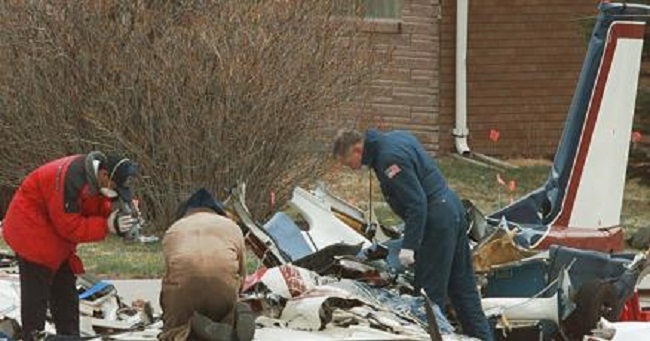
My position on parents endangering young children by seeking “all-time youngest” records for them and forcing them into unnecessarily dangerous recreational activities the kids can’t possibly understand or consent to is, I fear, unalterable. (Above is the 1996 wreck of the plane piloted by 7-year-old Jessica Dubroff, whose parents had her attempting to become the youngest trainee pilot to fly a light aircraft across the United States. Local, national, and international news media cheered on Dubroff’s story until she, her training pilot and her father died in the crash. )

However outdoors enthusiast Sarah B. mounted as strong a case against my position as I can imagine, in two successive comments combined here as Sarah B.’s Comment of the Day on the post, “Not This Issue Again! Arrest These Parents For Child Endangerment, Please…”:

***

I think there may be a misunderstanding on how Wyoming papers handle kid stories which I think changes a few things.

In small towns like most of Wyoming (not the urban hell that is Casper, Cheyenne, or Laramie), a story with a kid gets written long before a story about Bud Light and Dylan Mulvaney. I made the front page of our local paper at least a half dozen times as a kid, and made the paper dozens of times. Every year, the middle school and high school band/choir concerts would make the front page the day after they were held. If you consider that we did three concerts a semester for each of band and choir in high school, and two concerts a semester for each of middle school band and choir, that is ten days where the kids make the front page each school year. The high school homecoming royalty would make the front page on Thursday after the Wednesday reveal, the parade would always make front page on Friday, the game on Saturday, with the dance making page two. Prom was front page material. When four kids from our school got the best scholarship to the University of Wyoming one year, we made the front page. Every semester honor roll for every level of school made about third page. Placing in a math competition, debate competition, etc would always get a name in the paper, usually a picture too, and often on the front page. High school sports covered the front page every week.

I say this to emphasize my belief that this shouldn’t be considered as bad as you think. Newspapers gush over “youngest” this and “oldest” that. It makes people read the paper. National news is a page six or eight item and international news, like a war between Ukraine and Russia, is usually found below the fold on the comics page, under the Sudoku and Dear Abby.

People want the stories with the kids. Front page news is preferred to have a picture of a kid. A kid doing something good, like winning the coupon for a free pizza at the drawing at the library book fair, is a great front page story. Getting to the top of Devil’s Tower is just as good, and should be considered with the same gravity.

This is just standard newspaper fodder, nothing to get so excited about.

Continue reading

In Which Your Host Loses His Oldest CLE Organization Client For Telling The Truth

I and my ethics training company just got cancelled by the Continuing Legal Education organization that was my very first client when we started ProEthics over 20 years ago. Our seminars have always received top evaluations from lawyer attendees; nos small achievement in the legal ethics field. They also have made our long-time partners a lot of money. We had never needed to re-negotiate our arrangement, and my state tour with a new legal ethics program was a yearly occurrence every fall. This year, however, we had heard nothing about future dates or requests for possible program ideas (I have introduced most of my musical legal ethics seminars with Mike Messer with this group), and it was getting a little late. Grace sent an inquiry to the long-time contact who has handled our programs, and got back a stunning, “We have decided not to use you this year” letter. One shocking realization was that it was clear from the letter that the decision had been made long ago. After two decades, the organization did not have the courtesy to let us know about their decision, or to discuss their concerns with me before making it.

Even more shocking was the reason given for our dismissal. Last year, as I faced very small in-person groups with most of the attendees watching via Zoom, I made a point of thanking and congratulating those who made the effort to come in person, and urging those who had not to remember that remote training is not as effective as in-person training, and that ethics in particular was a topic in which interaction and engagement were crucial, features that are difficult to impossible using Zoom. This, we were told in the letter, did “not respect those who work diligently within our own Distance Education Department to provide remote options for attorneys.”

I did not denigrate the staff at all; I didn’t even know the organization had a Distance Education Department. What my comments did do, and appropriately so, was to alert lawyers to something they need to know. CLE isn’t just for getting mandatory credits. It is supposed to make lawyers better. Most data indicates that remote training with Zoom or similar methods don’t do the job: they are convenient, and lawyers like them because they can rack up billable hours and write emails while turning off their video and pretending to pay attention. But just as with children whose learning crashed with the substitution of distance learning for live instruction, lawyers are cheating themselves, their clients and the profession by undergoing CLE Lite when they should be challenged in a classroom.

Continue reading

From The Ethics Alarms Mail Bag: The Case Of The Abandoned Beanie Babies

Now and then people contact EA privately for some ethics guidance, which I usually supply free of charge. Yesterday an inquirer spun this tale:

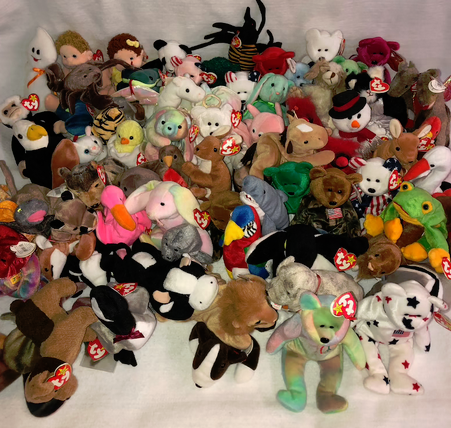
Her neighbor decided to clean house, and get rid of all of her now grown and out children’s abandoned toys. Among these were dozens and dozens of Beanie Babies, the toy fad of the Nineties. My inquirer said that neighborhood parents and pre-schoolers were just scooping the things up, and so she asked her neighbor if she could have three, two for her granddaughter, now 4, and one for as a future stocking-stuffer. Receiving a positive response, she chose three that she thought a little girl would like.

She swears it didn’t occur to her at the time that Beanie Babies are collectibles, but when she got home, she was moved to investigate. She was shocked at what some of the old stuffed animals are worth, and was particularly shocked to see that one of the BB’s she had chosen at random and that appeared to be in mint condition is considered rare and valued at $70,000. Her question: what is the ethical course to pursue at this point?

Continue reading

Epiphany: Ted Kaczynski Was Substantially Right, And I’m Beginning To Understand Sweeney Todd, Too

The death of “Unabomber” Ted Kaczynski once again reminded me that his “manifesto” about how technology was progressively making life unbearable was, yes, crazy, but he had a valid point. [You may consider today’s post a second installment to this one, from 2017]. I have long believed that the up-tick in seemingly random mass shootings is the predictable result of those who inject technology into our lives just because they can, selfishly making just getting through the day brain-killingly complex for people somewhere in the lower third of the intelligence scale, and a lot of people who are better off than that too. At some point, the anger and frustration reaches the point where you want to grab a rifle, find a tower, and start shooting.

This is essentially what happens to Sweeney Todd in the Sondheim musical of the same name, as he explains in the show’s first act finale why serial killing is logical:

We all deserve to die
Tell you why, Mrs. Lovett
Tell you why
Because the lives of the wicked should be made brief
For the rest of us, death will be a relief
We all deserve to die!

I began reflecting on both Ted and Sweeney when I tried to register for the Massachusetts Bar before they suspended me for non-payment of my 2023 annual dues. You have to do it online, and one reason I was late was that I hate the Mass. Board of Bar Overseers website, which always breaks down.

First, the site makes you log in. It wouldn’t let me, even though the password was correct and supposedly filled in automatically. The BBO can’t be bothered to have the feature that lets you see the letters and numbers so only little black dots appear. I had to ask to “reset” my password. Since I couldn’t see the figures, it took two tries to match the the thing, and then I was transferred to a page informing me that I could not move on to filling out my dues sheet until I had completed a “demographic survey.” I’m tempted to put it up: you wouldn’t believe it. If you didn’t type in a date in the right format (I eventually realized that tiny print AFTER each question told you what was acceptable) the question would register as “incomplete” when you selected “Done” at the end. The survey asked me to choose my “preferred” race and ethnicity from umpteen options and also asked which “sex or gender” I “identified” as. (In the comments section, I wrote that who or what I chose to have sex with, or not, and how, was none of the BBO’s business whatsoever.) The survey form was clumsy as well as insulting, it kept flagging reasons a response wouldn’t be accepted, and it took so long to load when it finally passed muster that I thought the program had broken down.

Continue reading

Ethics Zugzwang At CVS

I have a lot of pressing ethics posts on the metaphorical EA runway, but I have to get this one down while it is fresh in my mind.

Once again dealing with the pharmacy at CVS (no, the company never did respond to my complaint of rude and abusive treatment from last year; it just kept promising an investigation that never happened and a response that never came), I found myself waiting for prescription that I had been told was ready three days ago. An elderly woman sat down next to me, and started up a conversation: she was black, probably in her seventies, and less than four feet tall, with severely malformed legs.

I wanted so much to talk to her about her life. What was it like? What obstacles she must have overcome! Were most people kind and fair to her growing up? What prejudice and bigotry had she encountered? What was her view of humanity? Of America? Of race? Was she bitter, or did she have a positive view of the world? I would have loved to do an ethics podcast with her.

Yet there is no way, none, within current boundaries of etiquette, consideration, privacy and respect, to have such a conversation. All I could do is share my candy bar with her and chat amicably and emptily. She had, I think, a lot of wisdom to share that would help focus my ethics perception, yet there was no way to ethically unlock it. It was as rude to begin the conversation that I wanted to have as it was irresponsible to pass up the opportunity to have it.

Signature Significance And The Julie Principle Confront “The Ethicist”

Kwame Anthony Appiah, “The Ethicist” of the New York Times Magazine, doesn’t read Ethics Alarms so he isn’t conversant in two core EA concepts: signature significance, the fact that a single example of conduct can be enough to make a definitive judgment about an individual’s unethical nature, and The Julie Principle, which holds that once you recognize an individual’s flaws, you can accept them and continue the relationship, or use them to decide the individual is too flawed to tolerate, but it is pointless to keep complaining about them.A question from a disillusioned wife this week raised both, and “The Ethicist” acquitted himself well without directly acknowledging either.

“Theresa” revealed that her husband had tossed a banana peel out the passenger’s side window while she was driving on a highway. She protested, emphasizing her objection to littering and his setting a bad example for their 13-year-old in the back seat. He rationalized that the banana peel would “biodegrade”, and as if that wasn’t lame enough, defaulted to “I’m an adult, so I’ll do as I want.” After the incident, “Theresa” showed him an article about the dangers of throwing garbage on the street, plus a copy of the Massachusetts law declaring his conduct illegal. Her husband responded with, “Don’t you have anything better to do with your time?”

“He refuses to acknowledge that he made a mistake or change his behavior,” “The Ethicist’s” inquirer wrote, adding that the deadlock on the issue is making her question her marriage.

At the outset, I have to agree that the episode might make me question the character of someone I had just met—not merely question it, in fact, but perhaps make a confident diagnosis: this guy is an asshole, and the sequence is signature significance. The only feature of the story that possibly rescues it from being signature significance is that it can be broken down into components:

Continue reading

Psst! When You’re This Estranged From Human, Societal And Cultural Norms And Standards, No Advice Columnist Can Save You

The New York Times “Ethicist” got a jaw-dropping inquiry this week:

Nearly a year ago, I began dating two friends — I’ll call them Rachel and Dave — who were already themselves in a relationship. We all had no experience with polyamory. The throuple ended fairly quickly, with no one being at fault; the other two continued to date but broke up not too long afterward. Since then, Rachel and Dave have dated on and off, Rachel and I were casually together and Dave and I have been close friends who sleep together occasionally. There have also been relationships with others outside this group. At times, we have all behaved badly, sleeping together behind the other’s back, knowing the knowledge would hurt the other. Strong emotions, love and pain have arisen on all sides.

Throughout the past year, as multiple complex situations arose, we have all wished for a model of behavior. Monogamy-centered media suggests that one should avoid dating a friend’s ex-partner. Is this correct? And if so, can this concept be universalized? Do Rachel and Dave get “priority,” in that they should be together and I should not pursue either, because they dated first? What do we owe to our romantic partners and friends when the situations are complex?

His advice doesn’t interest me; you can read it here if it interests you. My focus is on the inquirer, predictably signed in as “Name Withheld.”

Continue reading

Some “Splainin’ To Do”…

I just returned from my first out-of-D.C. ethics presentation in more than two years. This, and the necessary preparation for it is why Ethics Alarms has been uncharacteristically devoid of new content for about 24 hours, though the commentariat, as usual, have admirably kept the ethics fires burning.

Before I make some ethics-related observations on features of the trip and the engagement, this: Are there really people out there who are primed to complain that references to Desi Arnaz’s famous catch phrase (as Ricky Riccardo on “I Love Lucy”), “Lucy, you have some ‘splainin’ to do!” are markers of bigotry and racism? They can bite me, because these are the individuals who fit Jacques Brel’s description of “them” is his famous quote, cited before here: “If you leave it up to them, they’ll crochet the world the color of goose shit.”

Continue reading

Who ARE These People And Why Don’t I Recognize Them?

Well, this is profoundly depressing.

I work hard at keeping current on all aspects of the culture, including the popular culture. I believe, and have written here frequently, that cultural illiteracy is a crippling problem in a democracy, and that citizens have an ethical obligation to avoid it by proactively informing themselves. I also agree with the thesis of E.D. Hirsch, who posited in his best-seller “Cultural Literacy” that the generations becoming estranged and unable to communicate with each other was a formula for societal disaster.

There has been an explosion of the use of a cheap joke at the expense of rising generations in TV and movie dramas: an older character will use a cultural reference to John Wayne, the Beatles, a Rockefeller or someone similarly significant, and a younger character, usually 20-ish, will reply, “Who’s that?” I managed never to be that kid, even as a preteen. The reverse gag is also common: a teen will mention Taylor Swift at the dinner table and a clueless parent will reply, “Oh, is that one of your new friends in school, dear?” I vowed when my son arrived never to be that boob either.

And yet today I ran one of my periodic spot checks on my pop culture literacy, and flunked. Perusing the stories in WeSmirch, a celebrity gossip aggregator, I found the names of 26 current celebrities, and endeavored to identify them (without cheating, of course). Here they are:

Continue reading