Case Study In “When Ethics Fail, Law Takes Over”: Harvard’s Prof-Student Romance Ban

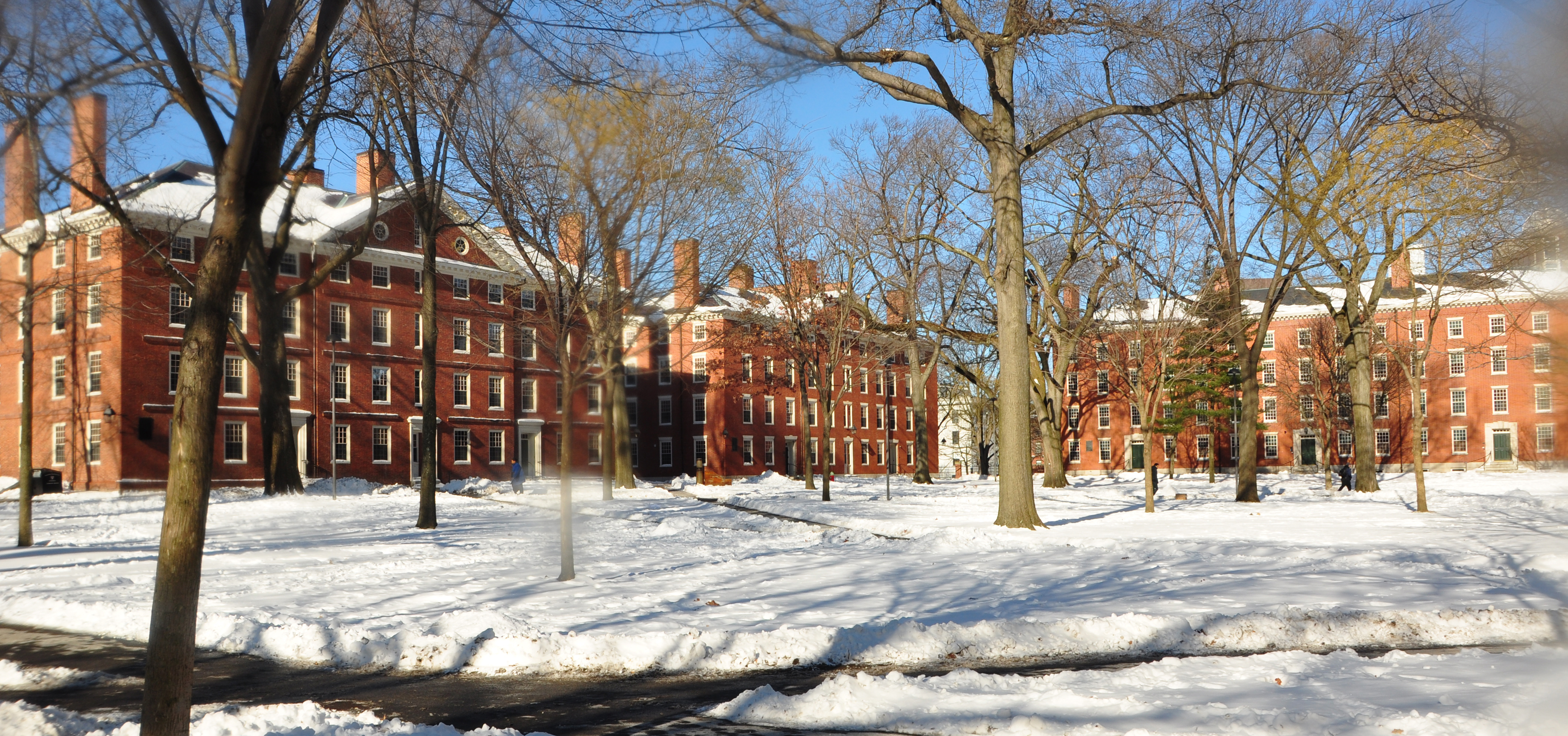
Harvard_yard_winter_2009j

Harvard used to just say “it’s wrong,” but left it up to the faculty’s ethics in the school’s infinite faith in its own superior virtue. My Freshman Humanities professor, poet William Alfred, was married to a former student. As is usually the case in this matter, ethics alone often wasn’t enough to restrain the lust of  many aging, prestigious, powerful professors facing a veritable cornucopia of luscious, young, ambitious co-eds they could court using brains, worldly wiles, charm and the promise of good grades. Now the profs have more to bolster their self-control…from the New York Times:

Harvard University has adopted a ban on professors having sexual or romantic relationships with undergraduate students, joining a small but growing number of universities prohibiting such relationships. The move comes as the Obama administration investigates the handling of accusations of sexual assault at dozens of colleges, including Harvard.

The ban clarifies an earlier policy that labeled sexual and romantic relationships between professors and the students they teach as inappropriate, but did not explicitly prohibit professors from having relationships with students they did not teach.

Harvard said in a statement released Thursday that the change was made after a panel reviewing the institution’s policy on Title IX, the federal law prohibiting sex discrimination in education, determined that the university’s existing policy language on “relationships of unequal status did not explicitly reflect the faculty’s expectations of what constituted an appropriate relationship between undergraduate students and faculty members.” It said the committee revised the policy “to include a clear prohibition to better accord with these expectations…Besides banning sexual and romantic relationships between professors and all undergraduates, the policy also bans such relationships between teaching staff, such as graduate students, and the students who fall under their supervision or evaluation.

Good. Long overdue.

This is also an excellent use of Harvard’s status and leadership, as the oldest and most famous institution of higher learning. Other universities will now suddenly be responsible as well.

Gee, do you think Harvard took my advice?

Nahhh.

Ethics Quiz: Is It Time For A “Let’s Tweet Insults About Chip McGee Day”?

Meet Chip McGee!

Meet Chip McGee!

At Bedford (New Hampshire) High School, several students were not pleased with Superintendent Chip McGee’s announcement via his Twitter feed that classes would resume the day following the school’s cancellation for snow. They responded with tweets of their own, some that were not especially pleasant. McGee, as one would expect a mature adult to be, especially one overseeing the education of children, was philosophical. saying, “Kids said some very funny, clever things. And some kids stood up and said, ‘Hey, watch your manners.’ That was great. And some kids — a few — said some really inappropriate things.”

Yes, kids will be kids. McGee then suspended those latter students for up to four days.

“It’s been a really good exercise in issues of students’ right to speech, on the one hand, and students’ and teachers’ rights to an educational environment that’s conducive to learning,” McGee explained to the Constitutionally ignorant. “Kids have the right to say whatever they want about me [and] The First Amendment right means you can say what you want, (but) it doesn’t mean that you are free of repercussion. It can’t disrupt what we’re doing in school … If something disrupts school, and it (occurs) outside school, we not only can take action, we have to.”

McGee  hopes that the punished students will learn from this incident about “the line” of decent and appropriate commentary. “You only learn that by checking where it is, and having something happen when you cross it,” he said.

Good ol’, wise ol’ Chip McGee. He has no idea what the hell he’s talking about.

The students are absolutely guaranteed of speech without “repercussion,” if the speech is off school grounds and the repercussion is from a school official who takes offense. The school has no authority to punish students for what they post on Twitter, from their homes, none at all, unless it relates directly to action at school itself, such as organizing a school disruption. A student opinion of the superintendent or his decisions? That’s 100% protected speech. I can find that right to free speech Chip mentions right there in the Constitution, but search as I might, I can’t locate in the Bill of Rights the provision describing the “students’ and teachers’ rights to an educational environment that’s conducive to learning” that extends to what a student says and writes outside of school. Where is that “right,” Chip?

Chip speaks in the measured tones of a caring educator, but he acts like a petty tyrant who is eager to abuse his position and power to punish anyone who dares to displease him in what they say or think.

No merely insulting or uncivil tweet is going to disrupt school, and if that’s Chip’s claim, he has a rather tough burden of proof to demonstrate it. Nor does a public school—that’s the state, you know— have the right to effectively censor speech by punishing content. If the speech isn’t libelous or a credible threat, Chip McGee’s reasonable remedy consists of asking to speak with the Tweeter and express his hurt and disappointment, or perhaps consulting with the student’s parents, who do have a right to limit online speech when their children are the speakers.  As an educator, he might explain to the student that insulting authority figures who you must relate to by flaming them on mass social media is neither wise, civil, nor a good habit. He might even  suggest that an apology is in order. He may not, however, abuse his power and position to constrain the free speech of those students and others by inflicting punishment. Chip McGee, who has the young minds of children within his power to lead or mislead, needs to learn this basic civics lesson, as do other tin god educators, and I’m sure there are many, who similarly itch to punish students for exercising their speech rights in the privacy of their homes.

Thus this somewhat atypical Ethics Alarms Ethics Quiz question to ponders:

Should we declare a “Let’s Tweet Insults About Chip McGee Day”?

Continue reading

And Now A Brief Public School KABOOM! From Your Sponsor…

exploding-head

There were fewer Ethics Alarms posts last year about outrageous conduct by public school teachers and administrators. I think this was because my brain was trying to save itself from ending up on the ceiling, as it so frequently does in these KABOOM! inducing stories.

And here is the first one of 2015…

In Gustine, Texas, population 457, there is just one schoolhouse for the elementary school kids. Apparently some incontinent young prankster has repeatedly deposited #2 on the gym floor, and since they had no clues, teachers rounded up two dozen student suspects—some as old as 12–and ordered them  “to pull down their pants” so the teachers could “check them to see if they could find anything.”

I’ll tell you what teachers would find if they tried that on my kid: a criminal complaint and an arrest warrant. Continue reading

Comment of the Day: “Ethics Alarms Encore: ‘Aesop’s Unethical and Misleading Fable: The North Wind and the Sun”

AESOPSFABLNever let it be said that we aren’t eclectic on Ethics Alarms! Today’s Comment of the Day is a thoughtful response to my objections to Aesop’s “The North Wind and the Sun,” a 2011 post that I republished this week in fascination over how it continues to draw traffic. The thread here and on the original has touched on many diverse topics, including theology; commenter Rich (in CT), however, just submitted the most interesting analysis yet.

Here is his Comment of the Day on the post, Ethics Alarms Encore: “Aesop’s Unethical and Misleading Fable: The North Wind and the Sun:

”The comparison of God and Satan in Job to the Sun and Wind is an apt comparison, because the fable relies on “divine privilege”. An exercise of divine privilege should not be taken as an example of behavior that non-divine entities should emulate. Rather, they are external parameters that set up a hypothetical environment to illustrate the lesson of the story.

I specifically say “lesson”, because the objective of the story need not be a superficial “moral”. The “moral” that was selected here was a lazy plot device by an author who attempted to pigeon-hole the fable into his limited definition of a fable. While the particular moral in the version you share is useless, the fable perhaps might better illustrate both the use of strategic thinking and well as illustrate the role of moral luck in one’s success. A more apt “moral”, if any, might be to be clever, but acknowledge the limit of cleverness.

Ethical behavior never takes place in a vacuum, but must balance certain principles with the current circumstances. In the fable, an arbitrary task is selected, and the two actors use the tools at their disposal to attempt to achieve the task. The wind has two tools: blow hard or soft; the sun has analogous tools: beat hard or soft. Given the task, arbitrarily set up as a competition, only one had tools that could creatively solve the task.

The tale here thus illustrates a few important principles that are of value to a child; creative use of ones tools can lead to success, and that not everyone has a every tool available. A non-lazy author might use the fable to teach the value of cooperation, pooling a group’s tools to complete a task.

The particular task is irrelevant, and is set up as an exercise of divine privilege. Mere mortals have no right to manipulate the weather, but the fable’s embodiment of the solar rays and moving air manipulate these elements in an ethically neutral manner. The selection of a mere mortal as a target of task, might be to lead the reader indirectly, through empathy, to the conclusion that some circumstances are arbitrary and beyond one’s control. The objective might be to teach humility, that one is never entirely responsible for one’s success, no matter how clever one might be.

I thus agree that the particular version of the fable shared is unethical. This is, however, the result of a lazy author. The premise, if used wisely, is ethically neutral; Aesop, or some other interpreter, could use the premise of the story to teach a valuable lesson if so desired.


Ethics Observations On Charles Blow’s “At Yale, the Police Detained My Son”

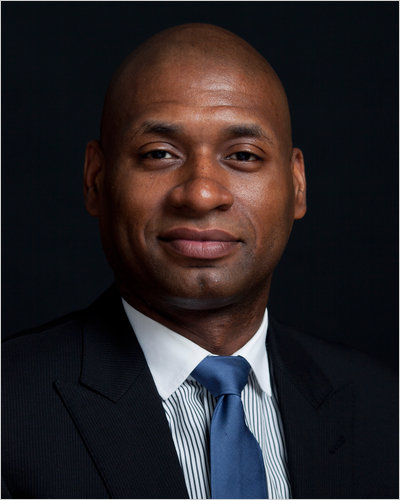
The esteemed columnist. If Yale police had known it was his son, they would have backed off: this is why it's important for the elite to teach their kids "Do you know who I am?" at a young age.

The esteemed NYT columnist. If Yale police had known it was his son, they would have backed off: this is why it’s important for the elite to teach their kids the phrase “Do you know who I am?” at a young age.

Charles Blow is a talented info-graphic op-ed columnist for the New York Times. he is also and African American who repeatedly pushes the narrative that the U.S. is a racist society hostile to blacks and black men in particular. Afew days ago, he authored an accusatory op-ed piece after his son, a Yale student, was detained at gunpoint by a campus police officer. Apparently Young Blow fit the description of a campus burglar, and was subjected to the indignity of being forced to the ground, identifying himself, and answering questions. Blow immediately decided to use his position of prominence with the Times to air a family grievance. Announcing that he was “fuming,” Blow questioned the officer’s procedure—

“Why was a gun drawn first? Why was he not immediately told why he was being detained? Why not ask for ID first? What if my son had panicked under the stress, having never had a gun pointed at him before, and made what the officer considered a “suspicious” movement? Had I come close to losing him? Triggers cannot be unpulled. Bullets cannot be called back.”

…and then concluded thusly:

“I am reminded of what I have always known, but what some would choose to deny: that there is no way to work your way out — earn your way out — of this sort of crisis. In these moments, what you’ve done matters less than how you look. There is no amount of respectability that can bend a gun’s barrel. All of our boys are bound together.”

“What you’ve done matters less than how you look.” Charles Blow is nearly engaging in code here, but his meaning is clear. His son was treated prejudicially because of the color of his skin. His son, the accomplished, Ivy League-going offspring of a distinguished journalist was treated like a criminal—how dare they!— because of how he looked, because he was black. “Some would choose to deny it” —you know: racists, conservatives, whites, Republicans—but “all of our boys are bound together.” Translation: we all look the same to racist white cops.
Continue reading

Ethics Alarms Encore: “Aesop’s Unethical and Misleading Fable: The North Wind and the Sun”

north-wind-and-the-sun-story-oil-painting

[ I vowed that the next time I got a comment on this post, I would publish it again. It hails from four years ago, when  Ethics Alarms got a quarter of the traffic it gets now. I confess that I wrote it on a whim, having been talking with my wife about how Aesop’s Fables were joining Mother Goose stories,  Edward Lear limericks and American folks song in the Discarded Bin of our culture and then stumbling upon a fable I had either never read before or forgotten about.  To my surprise the post attracted intense criticism from fans of the story—I even had to ban a commenter who got hysterical about it—and the post joined a very eclectic group of early essays here that get considerable and consistent readership every week. Apparently there are a lot of Sun-worshipers out there. Anyway, since you probably missed it the first time, here it is.]

Today, by happenstance, I heard an Aesop’s Fable that I had never encountered before recited on the radio. Like all Aesop’s Fables, at least in its modern re-telling, this one had a moral attached , and is also a statement of ethical values. Unlike most of the fables, however, it doesn’t make its case. It is, in fact, an intellectually dishonest, indeed an unethical, fable.

It is called “The North Wind and the Sun,” and in most sources reads like this:

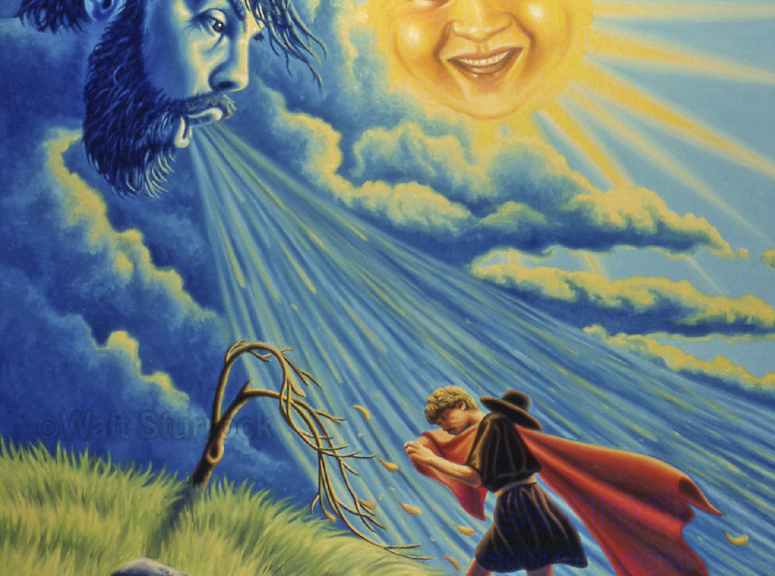
“The North Wind and the Sun disputed as to which was the most powerful, and agreed that he should be declared the victor who could first strip a wayfaring man of his clothes. The North Wind first tried his power and blew with all his might, but the keener his blasts, the closer the Traveler wrapped his cloak around him, until at last, resigning all hope of victory, the Wind called upon the Sun to see what he could do. The Sun suddenly shone out with all his warmth. The Traveler no sooner felt his genial rays than he took off one garment after another, and at last, fairly overcome with heat, undressed and bathed in a stream that lay in his path.”

The moral of the fable is variously stated as “Persuasion is better than Force” , or “Gentleness and kind persuasion win where force and bluster fail.”

The fable proves neither. In reality, it is a vivid example of dishonest argument, using euphemisms and false characterizations to “prove” a proposition that an advocate is biased toward from the outset. Continue reading

Campus Rape: How Opposing The Use Of Fake Stats, Lies and False Narratives Became “Conservative”

fondo abstracto de tecnologia 3d.Lenguaje binario

I just don’t see how or why insisting on using objective and verifiable facts in policy-making and public discourse became “conservative bias.” I don’t recall the media’s interest in correcting fake combat statistics during the Vietnam war being regarded as “liberal bias.” I can’t bring myself to believe that only moderates and conservatives care about making sure that the public isn’t deceived into believing things that aren’t true.

But why does this stuff keep happening, and particularly, why does it keep happening under the supervision of Democrats and their supporters during the Obama years? I know I’ve been harping on “Hands Up! Don’t Shoot!” and the deification of Mike Brown as contrary to all evidence, common sense, fairness and rationality, but such cultural embrace of lies is objectively outrageous and dangerous. I also resent being called a “teabagger,” a racist, or a right-wing nut for pointing this out.

One reason resent it, perhaps the main one, is that I’m a lifetime iconoclast, curmudgeon and contrarian (just like Dad!) and while I know that having  people, even friends, angry at me never changed my opinions, words or behavior very much, most people are not like me. Most people, when they are called racists on Facebook or bombarded with dishonest Daily Kos internet memes or realize that their friends aren’t inviting them out for beer because they will object to the conventional liberal wisdom of the nonce, decide its more important to get along than to fight the good fight, so they just adopt the prevalent opinion of their “crowd.” Usually, personal growth and education on the issue stops about then: if you listen hard, you will hear the sound of a slamming door. Soon they’ll be calling others racists on Facebook.

The fake campus sexual assault issue is another area where this phenomenon is occurring. CBS’s Sunday Morning gave one of its gauzy features about it yesterday, beginning with the assumption that for some reason (the reason was already pre-programmed and injected directly into the Democratic Party’s second most reliable “base” group, young single women bloodstream, with its “war on women” convention theme in 2012) campus sexual assault is epidemic. On the show’s website, proving that this was propaganda rather than journalism, was this sentence: “According to the U.S. Justice Department, one in five college women will experience some kind of sexual assault while in school.” (It had been removed by this morning.) Continue reading

Sen. Gillibrand’s State of the Union Guest

Emma and her mattress: actually, many of the other attendees at the State of the Union would have loved to have had a mattress...

Emma and her mattress: actually, many of the other attendees at the State of the Union would have loved to have had a mattress…

I was considering framing this as an either/or ethics quiz, with Sen. Gillibrand (D-NY) inviting Emma Sulkowicz, a Columbia student who continues to harass the student she accused of rape despite her allegations being judged, by the school and police, as unprovable to the State of the Union, being compared to Speaker John Boehner’s in-your-face invitation of Israel Prime Minister Benjamin Netanyahu to address a joint session of Congress about Iran. I don’t like either of the moves: both are unethical in different ways. I can at least devise an argument for Boehner, however. I don’t see how anyone can excuse Gillibrand, who is essentially accusing a young man of rape when she has no direct knowledge of what happened.

Columbia student Paul Nungesser was found “not responsible” for sexually assaulting Sulkowicz, Since that official determination, Sulkowicz has been carrying a mattress around the university as “an art project” to protest Nungesser’s success at defending himself. When he learned that the Senator had injected herself into the controversy, he told reporters,

“I am shocked to learn that Senator Gillibrand is actively supporting Ms. Sulkowicz’s defamation campaign against me by providing her with a public forum in which to broadcast her grave allegation. By doing so, Senator Gillibrand is participating in a harassment campaign against someone who, for good reason, has been found innocent by all investigating bodies.”

Yup, I’d say that’s a fair interpretation. He continued,

“Sulkowicz’s accusation is untrue and unfounded: I have never sexually assaulted anyone. This is why Columbia University after seven months of detailed investigation in November 2013 found me to be not responsible…I voluntarily let myself be interviewed by DA chief of Sex Crimes at SVU in New York City, in August 2014. Shortly after this interview, the DA’s office informed me that they decided not to pursue the case further.”

Sulkowicz  decided not to pursue the criminal case any further. She just took the alternative action of setting out to hound, harass, accuse, stigmatize and embarrass Nungesser as “art.” Continue reading

An Amazing Case Study On How Bias Makes Us Stupid

when-facepalmnot-enoughBias makes you stupid. It interferes with our objective judgment, makes us unreasonable and unfair, leads to poor decisions and the loss of the respect of others. Seldom will one see a more striking example than the current post on The Daily Kos, the unhinged far left website, by earnest, progressive, biased and struck-stupid commentator Mark E. Anderson.

Republican Gov. Scott Walker of Wisconsin is a potential Republican presidential contender who is hated by progressives with an unseemly passion for his successful vanquishing of public employee unions in a traditionally liberal state. He never graduated from college: he left the University of Marquette in his senior year to take advantage of a business opportunity, and never looked back. Good for him.

In a recent interview, addressing his lack of bachelors degree, Walker said,

“I’ve got a master’s degree in taking on the big government special interests, and I think that is worth more than anything else that anybody can point to.”

Continue reading

Ethics Alarms Mail Call: Mt. Holyoke Ditches “The Vagina Monologues” As “Non-Inclusive,” and the Misuse of Kindness

VaginaI’m an ethicist who often writes on college controversies, and I make no secret about my double life in professional theater, so it figures that my inbox would include more than one query about Mt. Holyoke College’s decision to end its annual student performance of Eve Enlser’s “The Vagina Monologues” on the grounds that it is now admitting women without vaginas—I know, it’s confusing–who would feel excluded from what was supposed to be an inclusive experience and statement for the all-women’s school.

From Campus Reform:

The annual production of the play is part of a country-wide tradition to perform Eve Ensler’s Vagina Monologues on Valentine’s Day to raise awareness about gender-based violence and usually coincides with the V-Day campaign. The proceeds are donated to sexual assault prevention organizations or women’s rights organizations. This year, however, Mount Holyoke’s Project Theatre Board is defying tradition by permanently retiring the play. In a school-wide email from the Theatre Board, a representative from the group, Erin Murphy, explained the problems with the play and the reasoning behind its discontinuation.

“At its core, the show offers an extremely narrow perspective on what it means to be a woman…Gender is a wide and varied experience, one that cannot simply be reduced to biological or anatomical distinctions, and many of us who have participated in the show have grown increasingly uncomfortable presenting material that is inherently reductionist and exclusive,” the email, obtained by Campus Reform, said.

Replacing the play will be Mount Holyoke’s own version that will be trans-inclusive and fix the “problems” supposedly perpetuated by Ensler. Murphy also claims that there are problems with race, class, and “other identities” within the play. The new production, comprised of students’ monologues, will be performed in a fashion reminiscent of the feminist classic. The program will be performed alongside the College’s Peer Health Educators, an on-campus student-led group that provides education and workshops for students, including a workshop on how to use sex toys properly.

Continue reading