
Perfect! Just what you need to handle that pesky flea, Professor!
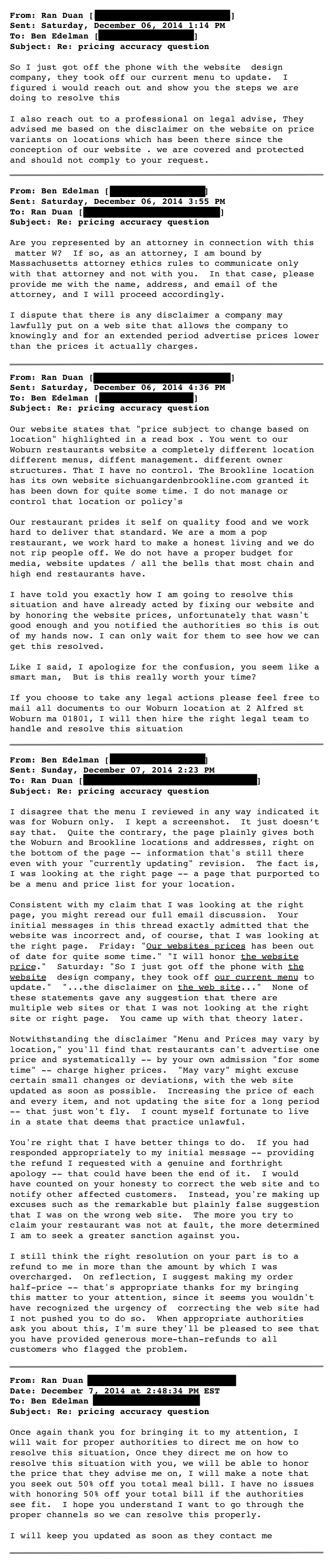
Ben Edelman, a rather well-noted Harvard Business School professor, had this fascinating exchange with a local Szechuan restaurant:

 Your Ethics Alarms Ethics Quiz:
Perfect! Just what you need to handle that pesky flea, Professor!
Ben Edelman, a rather well-noted Harvard Business School professor, had this fascinating exchange with a local Szechuan restaurant:
Your Ethics Alarms Ethics Quiz:

Well, friends, for the second time this month my brains are on the ceiling, walls and floor again, and I’ve had to gate the dog so that…well, you know.
Columbia Law School announced that it is permitting students who are so devastated by recent non-indictments in the Michael Brown and Eric Garner matters to postpone taking their final exams. Isn’t that nice?
By “nice, “I mean stupid, irresponsible and embarrassing. You can read the Dean’s nauseatingly delicate statement here: I don’t want it polluting the blog, so I’m not going to quote it. Besides, if I look at it again, who knows what else might be on my walls. Continue reading

Melissa McEwan’s profile photo. I’m not going to say a thing. No, really. Not a thing.
— Melissa McEwan, feminist proprietor of @Shakestweetz, an-all tweet blog, responding to the meltdown of the Rolling Stone story accusing a University of Virginia fraternity of gang rape.
Look, I’m not going to insult you by explaining what’s wrong with the assertion that those accusing others of horrific crimes shouldn’t be held to strict standards of credibility.
What is more significant than McEwan or her tweet is that this frightening and dangerous state of denial is moving from the status of self-evidently insane to acceptable. As I suggested in the previous post about the Rolling Stone retraction of its explosive story by Sabrina Rubin Erdely, the Ferguson demonstrators, the “Hands up!” protestors, the Congressional Black Caucus, and pundits like Eugene Robinosn who are still arguing that Officer Wilson should be indicted are doing essentially the same thing. Having decided that the Ferguson narrative pressed by civil rights activists communicated a deep truth about America, they refuse to accept that it was false even in the face of overwhelming evidence because they are intellectually and emotionally committed to that “truth.”
The tweet also forces me to upgrade the Rolling Stone fiasco to Ethics Train Wreck status. Continue reading
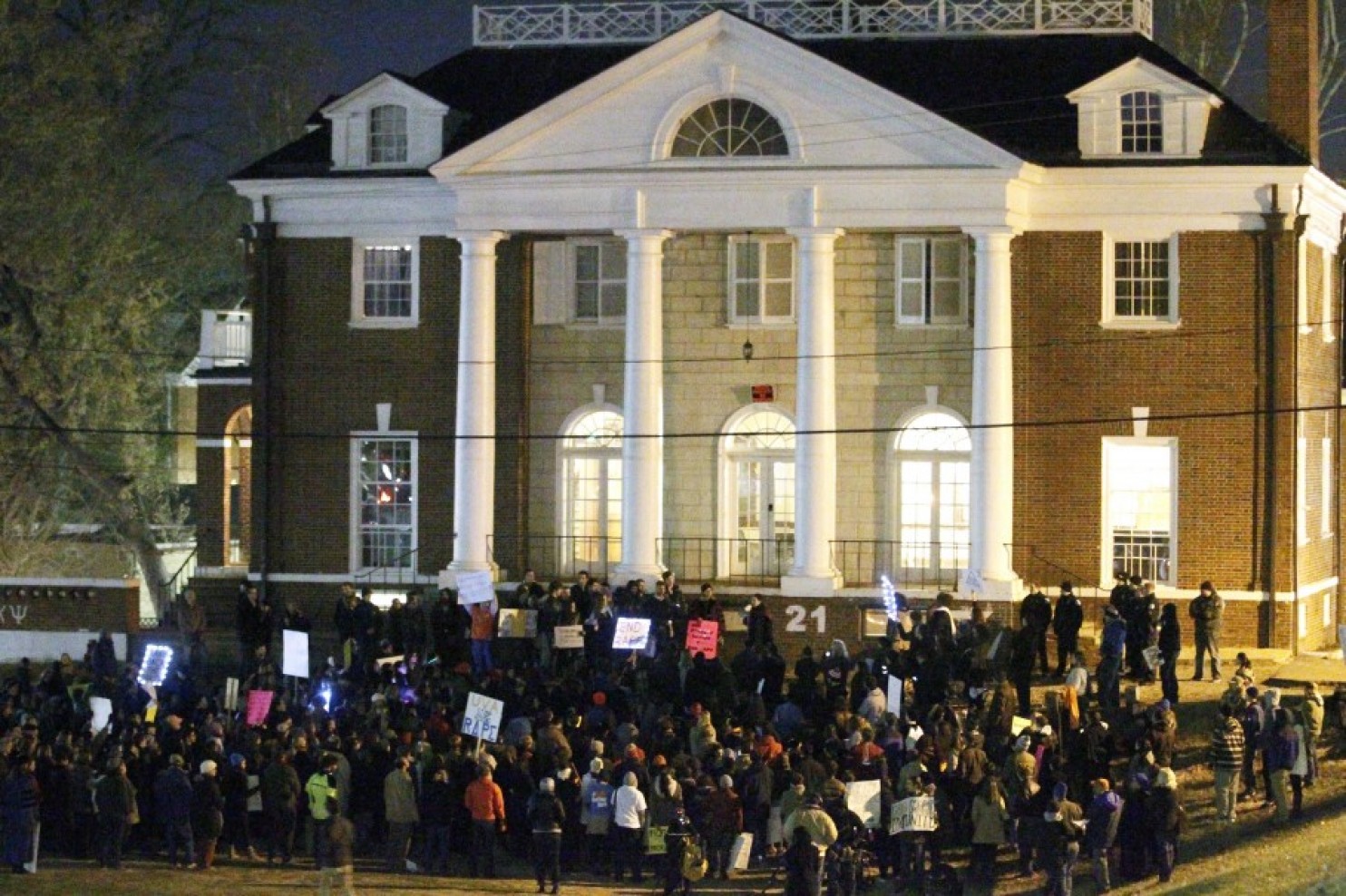
Student protest against campus rape at UVA. And if the rape didn’t happen? Take a cue from the “Hands up!” crowd: keep protesting! The news media won’t notice.
Hardly making it to the headlines (except where I live) is the latest example of 1) irresponsible journalism and 2) the results of the Obama administration threatening colleges with sanctions of they don’t presume every male student accused of sexual assault is guilty.
On Nov. 19, Rolling Stone published a sensational report—sensational, mind you—by reporter Sabrina Rubin Erdely, telling the tale of a vicious gang rape at the Phi Kappa Psi fraternity at the University of Virginia. The victim and the source of the story, a young woman called “Jackie,” said that in 2012 she was forced into a room in the fraternity and raped by seven men, as her date and another man cheered her assailants on.
In response to the uproar triggered by the story, the university, which was loathe to be a target of investigations and sanctions by the Obama administration if they did not act with appropriate haste and severity, suspended all the campus fraternities until January as the media went into a feeding frenzy. Meanwhile, the alleged crime is under investigation by local police. [UPDATE: Here is a call to suspend the UVA President Teresa A. Sullivan: “Her decision was arbitrary, rash and wrong. Even Delta House got some semblance of a trial in the movie, ‘Animal House.'” I do not disagree.]
Several journalists diplomatically raised questions about the account, especially the fact that the story was often phrased in terms that left no hint that these were allegations only. In an environment where the party in control of the White House maintains that any hesitation to regard a rape accusation as inherently reliable is proof of a “war on women,” one unnamed woman’s unconfirmed accusation presented as truth by a female reporter was sufficient to trigger adverse consequences for male UVA students with remarkably little reflection: this was unfair, an example of punishing all the horses because someone said that one of them left the barn.
It should be no surprise that the other shoe has dropped. Continue reading

Sure, who wouldn’t think this was funny coming from a member of your school board?
The most important feature of apologies is that they express sincere and honest regret for the real harm done. If the first apology for misconduct fails that test, how much credence should a second attempt have? Does it negate the first apology completely? Ought it to be read and understood in light of the initial, unsatisfactory apology? Or should it be ignored completely as a public relations document crafted to achieve a result, rather than to express genuine contrition?
The case of Chris Harris, a board member for the Hooks Independent School District in the town of Hooks, Texas, provides a fascinating test.
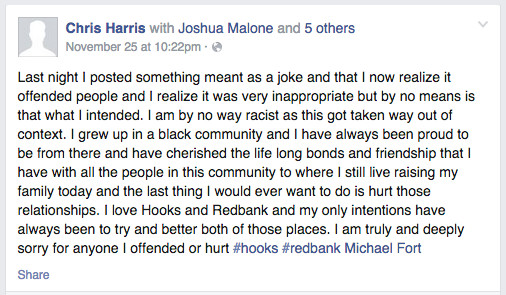
Lat week, Harris posted an image of a Klu Klux Klan member with the caption, “I’m dreaming of a white Christmas” to his Facebook page. The reaction to this was what almost anyone with a fully functioning cerebrum would expect, a category that Harris does not belong to, or at least did not when he posted it. Perhaps after shouting, “Doh!” or perhaps not, Harris rushed to repair the damage, publishing this apology:
Terrible apology! Continue reading
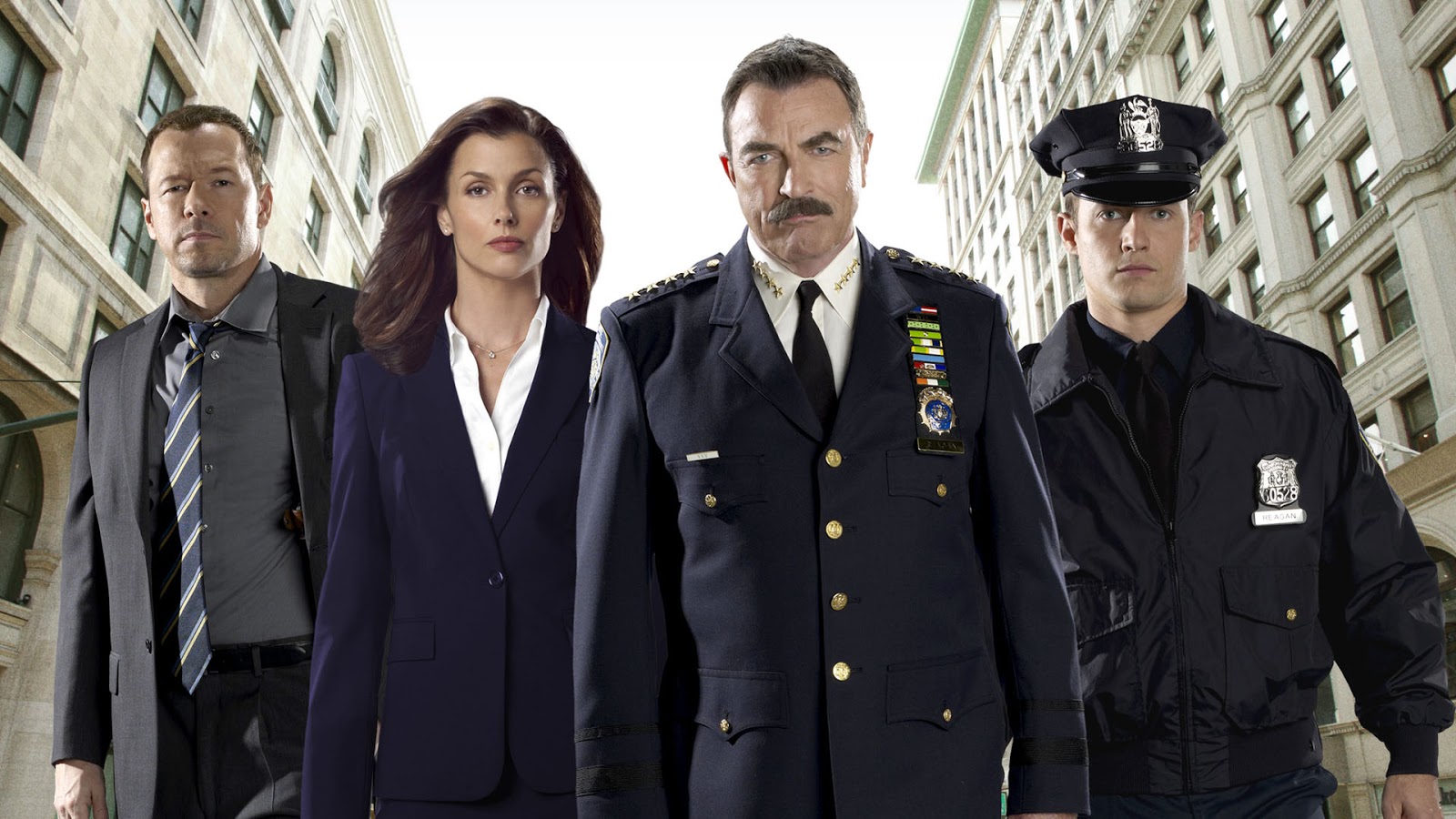
I owe Tom Selleck an apology. The long-time genial hunk, famous as “Magnum, P.I.” and notable in show business lore for missing the career opportunity of a lifetime when contractual obligations forced him to turn down the role of Indiana Jones in “Raiders of the Lost Ark,” has guided his CBS police series “Blue Bloods” to five seasons, exploring tough ethics dilemmas in virtually every episode, and usually doing it very well. For some reason, I’ve only cited the show a few times, once critically, and it deserves better. Netflix started streaming the show, and my wife has been watching about three a day. I really hadn’t been paying sufficient attention, or respect. It’s a wonderful ethics show, the best since “Star Trek, the Next Generation’s” hay day, and one of the very best ethics TV shows of all time.
Selleck plays fictional New York City police chief Frank Reagan. The show could be called “The Conflicts of Interest Family, ” because law enforcement is the family business, and Selleck’s large brood includes two sons, one a patrolman and the other a detective, under his command, and a daughter who is an assistant district attorney. Reagan delicately balances the jobs a father, mediator and boss, all while being given back-seat advice from his father, who is retired but was also a NYC police chief.
I have found myself thinking about how Selleck’s character would react to the Ferguson ethics train wreck. Police shootings have been frequent topics of episodes, as have political efforts to demonize police. Frank was a fan of New York’s controversial stop-and-frisk policy, and accusations of profiling do not reduce him to a mass of apologetic jelly. Meanwhile, he has forged a working relationship or trust with the City’s black mayor, whose loyalties to the black community, and more than a few dubious civil rights headline-seekers.
Selleck is a credentialed, if low-key, Hollywood conservative, and his show’s demographics are just short of Social Security territory. It’s too bad: teachers should assign the show and discuss the episodes in class. The episode I wrote about earlier was an entire ethics course on its own, but hardly unique in the series: What should an undercover cop do when a child is imperiled in a burning building, and he is the only one who can get to the kid in time? If his photo is taken by the media that arrive on the scene, not only is his cover blown, but his life and family may be in danger. He hands off the child to his partner, who is the on photographed and becomes a hero. The city is clamoring for the Chief to decorate him as a hero. Naturally, the real rescuer is a Reagan. Should the partner be willing to live a lie? Should the Chief deceive the public and preside over a fake ceremony to preserve an undercover operation that might bust the mob? This was a memorable “Bluebloods” episode. but many reach this level of ethics complexity, and the duds are far and few between. This season the show has explored many ethics problems that have been debated in the news, such as campus rape, police body cameras, the “blue line,” news media bias, and others.
I apologize, Mr. Selleck. I have neglected your excellent efforts to present ethical dilemmas in law enforcement, leadership and parenting to the public in an intelligent, balanced, courageous and entertaining manner. Great job, on a great show. Please keep it up. I promise to pay closer attention.
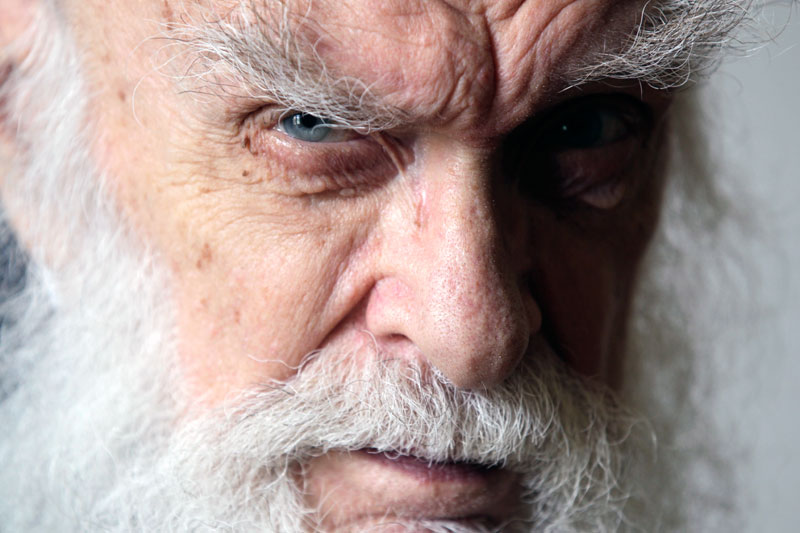
Magician, hoax-exposer, historian, truth-seeker James Randi
Alexander Cheezem weighed in with a wonderful expansion on The Gruber Variation (and its parent, Rationalization #29, The Altruistic Switcheroo). It speaks for itself: the gist involves the situations when deception really does have beneficial results for the deceived, intended by the deceiver—in which case, the claim that an otherwise unethical act was “for his own good” mean that the act not have been unethical, and thus the claim is not rationalization, but truth.
One immediate result of Alexander’s comment is that I’m editing the text in #29. I wrote:
It is true that misfortune carries many life lessons, that what doesn’t kill us often makes us stronger, and that what hurts today may be the source of valuable wisdom and perspective later, but it really takes a lot of gall to cheat, lie to, steal from or otherwise harm someone and claim it will be a good thing in the long term. Yet an amazingly large number of people possess this much gall, because the Altruistic Switcheroo is very common, especially among parents who want to convince themselves that bad parenting is really the opposite. A marker for this rationalization is the statement, “You’ll thank me some day”—the specious theory of the sadistic parent who named his son “Sue” in the famous Shel Silverstein song made famous by Johnny Cash. No, he won’t.
“A Boy Named Sue” is a lousy example. It is true that the singer ends the song by saying he isn’t thankful, and I don’t blame him, but the father’s theory was borne out: the name did make his son tougher. There’s nothing in the lyrics to suggest that he name choice was sadistic, and if the only rationale for the song was what the father claimed it was, it’s no rationalization. Oh, it was cruel, irresponsible and unfair—and stupid— but the father did name the boy “Sue” for his own good. (The fact that his cruel tactic worked still doesn’t make it right: that would be 3. Consequentialism, or “It Worked Out for the Best.”
I’ll end the passage before the dash.
Here is Alexander’s Comment of the Day on the post, “Rationalization List Update: 29 (a). The Gruber Variation and 47. Contrived Consent, or ‘The Rapist’s Defense'”:
Interesting additions, but I think that the Gruber Variation needs a bit of a caveat in nuance regarding its description: it needs to be distinguished from both legitimate teaching techniques which involve parallels and certain grey areas.
To handle the last first, I’ll just give a few examples, starting with Project Alpha ( http://en.wikipedia.org/wiki/Project_Alpha ) and the Sokal Hoax (http://en.wikipedia.org/wiki/Sokal_affair ). Both involved presenting people who were supposed to safeguard against deception with a hoax in order to expose the holes in said safeguards. Both involved rationales which closely paralleled the Gruber Variation in several respects, and were criticized for actually following that sort of logic (I disagree, although I do think that both were ethically “grey”). Continue reading
—-Lawyer Keith Wyatt, L.A. Unified School District’s trial attorney who successfully defended it in a law suit by the family of a middle school girl who had been engaged in a six month sexual relationship with her math teacher. The girl’s family claimed the district negligently permitted the teacher’s criminal conduct to occur and that the teacher’s exploitation of the girl had caused emotional damage to their daughter. Wyatt also told a radio interviewer that it was a more dangerous for a 14-year-old to cross a street in traffic than to have sex with her middle-school teacher.
Yes, he’s an idiot.

Yeah, those middle school tarts all want it, right, Keith?
The school district fired him, disavowing and apologizing for his comments. Yet they were willing to let Wyatt argue in court—on the school’s behalf, remember— that a 14-year-old middle school student was mature enough to consent to having sex with her 28-year-old teacher, and that she shared responsibility for what happened. Wyatt introduced the girl’s sexual history into evidence as proof of his client’s lack of culpability.
There is nothing wrong or unethical about Wyatt’s tactics in the trial itself. State law is weird in this area—this is California, after all, home of Hollywood, Roman Polanski fans, Woody Allen enablers, Miley Cyrus and the Kardashians—for while the age of consent is 18 in criminal cases, two appellate court rulings have held that the argument that a minor can consent to sex with an adult is permissible in civil law suits. He did what the law permitted him to do in defense of his client. That’s not just ethical lawyering, it is at the core of legal ethics. The argument won. Wyatt did what he was trained to do, paid to do, and obligated to do if he agreed to take the case
However, it is a revolting and irresponsible argument for any school or school district to make. Wyatt should have made this clear, and maybe he did (though that quote doesn’t support such a supposition.) Who in their right mind–well, OK, this is L.A.–would send their child to a school system that takes the position that a 14-year-old student is responsible when she is raped by her 28-year-old teacher, and that she’s really not being harmed if he does? The teacher, Elkis Hermida, was convicted of lewd acts against a child and sentenced in July 2011 to three years in state prison. Continue reading
What does this picture have in common with the Alstory Simon case and the Illinois criminal justice system? Read on…
All Americans owe a debt to the many non-profit organizations across the country dedicated to freeing innocent prisoners, some of them sentenced to die, who were wrongly prosecuted and convicted as a result of breakdowns in the justice system or prosecutorial corruption. Their work has served as an invaluable fail-safe, it has focused attention on needed reforms, and it has rescued innocent lives before they were completely destroyed. As a reminder of the corruptive power of good intentions, however, the recent release of a convicted murderer put in prison by one of these organizations serves as an ethics cautionary tale. Apparently one such “innocence project” believed that it was worth sending an innocent man to prison for a murder he did not commit in order to save the man originally convicted of the crime from execution.
In 1998,* Illinois death row inmate Anthony Porter, convicted in the 1982 murders of Marilyn Green and Jerry Hillard, was apparently proven innocent 48 hours before his scheduled execution. A Northwestern University professor and his students working with the Medill Innocence Project had obtained a videotaped confession by a man named Alstory Simon, admitting that he, not Porter, was the real killer. Porter was ultimately released, in 1999.
The governor of Illinois at the time, George Ryan, a longtime supporter of the death penalty, claimed that he was so shocked by the near fatal miscarriage of justice that he halted all executions less than a year after Porter’s exoneration. Eventually he commuted the sentences of every prisoner on death row, saying the state’s capital punishment system could not be trusted. The Simon confession leading to Porter’s exoneration drove the shift in public opinion that caused the Illinois death penalty’s demise in 2011.
Happy ending? Not exactly. In 2005, witnesses who implicated Simon announced that they had fabricated their stories in exchange for money and a promise by the Northwestern professor, David Protess, that he would work to free two incarcerated relatives of one of the witnesses. Then Alstory Simon recanted his confession, saying that he had been persuaded by a faked videotape of witnesses implicating him in the crime, and promises of a short prison sentence and a movie deal if he confessed to a crime he didn’t commit. Last week, an Illinois judge ordered Simon released from prison after prosecutors agreed that he was probably not guilty. He had spent almost 15 years in prison. Continue reading

“One of these things is not like the other…”
The Bill Maher Ethics Conundrum is not what you probably think it is.
Maher, the alleged comic and anti-conservative scold who hosts an HBO program, was chosen by a student committee to be the commencement speaker for the University of California-Berkeley’s December graduation. This was a lazy, embarrassingly juvenile and politically-loaded selection, but Maher had also just recently used his show to join fellow atheist and neuroscientist Sam Harris in a condemnation of Islam, calling it “the only religion that acts like the mafia that will fucking kill you if you say the wrong thing, draw the wrong picture or write the wrong book.” Later on Maher nodded approvingly as Harris also called Islam”the mother lode of bad ideas.”
This caused Muslim students at Berkeley to prove Maher correct about their religion’s entrenched intolerance of opposition, and they have been joined by other political correctness censors in the student body—there are a lot of them—to demand that the university rescind Maher’s invitation because of his “hate speech.”A Change.org petition—-now THAT site is the real mother lode of bad ideas—now urges students to boycott the decision and asks the campus to stop him from speaking. It has gathered more than 1,400 signatures. The committee that chose Maher, naturally, backed down, but the University, so far at least, is sticking to its decision to invite him.
Yes, yes, universities ought to be marketplaces of ideas where all views are welcome, and yes, it is hypocritical and offends the traditions of liberal education to stop Maher from stating his views on Islam, or re-telling “The Aristocrats,” or making a fool of himself, or whatever he’s going to do because some students or all students disagree with him, just as it was for Rutgers students to force Condolezza Rice into withdrawing after she was invited to speak at Rutgers. The dilemma illustrated by this flap is a classic ethics problem, which I will henceforth call the Bill Maher Conundrum, which has been long debated and never decisively settled:
Is the ethical nature of an act defined by its intent, or by an objective assessment of the act alone without reference to motive? Continue reading
 Ethics Alarms