Hyping “Extreme Weather”=”Untrustworthy”…Also “Al Gore”

sharknado

In their effort to create enough climate change hysteria to rally the public in support of scientifically dubious and possibly futile—but expensive!— regulations, some media outlets have resorted to censoring commentary that is hostile to current global warming cant, even though few if any of the editors involved  comprehend the data, research, or models. I propose that they would do more to bolster the push to accept  man-made climate change if they stopped publishing blatant and misleading hype, and they could begin by not quoting Al Gore.

Stipulated: both sides of the climate change debate are guilty of misrepresentation, lies, exaggeration and nonsense. The difference is that most of the news media adopts and legitimizes the pro-climate change misrepresentation, lies, exaggeration and nonsense, with this year’s model being the claim that climate change is already increasing “extreme weather events.” Continue reading

Are Universities Ethically Obligated To Tolerate Professors Who Embarrass Them By Saying Idiotic And Offensive Things?

Apparently the answer to the above is “Yes.”

"Duh!"

“Duh!”

If the university is a state school, then for it to fire a professor who makes ridiculous, foolish or hateful statements that make people wonder why they should ever entrust the minds of their tender charges into an institution that would knowingly hire cretins and jackasses to pollute student RNA, then this is probably a First Amendment violation, since it amounts to the government punishing speech and chilling free expression. If, on the other hand, the university involved is not a state school, then to send a professor packing because he or she has rammed his or her foot down his or her throat up to the knee is a violation of the crucial principle of academic freedom, which is, in brief, that to encourage the free discussion of ideas on a college campus, education being the purpose of the institution, literally no idea, point of view or position should be blocked or chilled by substantive negative action.

Three cases of recent vintage illustrate the university’s plight: Continue reading

Of Teenage Tweets, Politics, Fairness, and Acorns

How about scrutinizing the trees, and not the acorns?

How about scrutinizing the trees, and not the acorns?

Two GOP Congressmen are apologizing for the offensive tweets of their teenage sons, as well they should. But to what extent do the homophobic, racist and otherwise vile social network comment of a couple of high school students with famous fathers tell us anything about their legislator parents? Are such communications newsworthy? Should the kids be exposed to “Gotchas!” as if they were the elected officials, not their dads, and are their indiscretions legitimate clubs for political and journalistic foes to beat their fathers with?

I think these are difficult ethics questions, and I don’t much care for any of them.  Let’s examine the ethical conduct of some of the participants in this icky drama: Continue reading

Ethics Dunce: Florida Highway Patrol

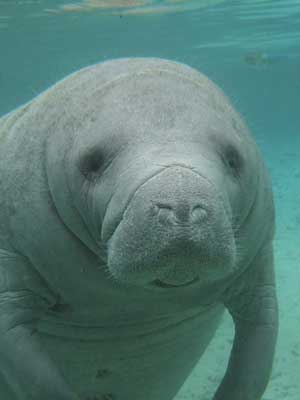
Huge Manatee

Do you recall the post last week about the brain-dead reaction of various website commenters to the Florida arrest prosecution of a man for harassing a manatee?

If they had been commenting about this incident, they would have been on firm logical and ethical ground.

Anthony Brasfield and his girlfriend shared a carefree, romantic interlude one Sunday morning in the parking lot of the Motel 6 on Dania Beach Boulevard, as they released a dozen red and silver mylar heart-shaped balloons and watched them rise, up, up, up into the air, then slowly float away, high and far, until they became tiny specks against the blue. They squeezed each other’s hands, smiled, and…got arrested by a Florida highway patrol state trooper on the spot.

Brasfield was charged with the environmental crime of helium pollution, under the Florida Air and Water Pollution Control Act.Aggravating the offense apparently was the fact that endangered marine turtle species and birds make their abode in John U. Lloyd State Park, about 1.5 miles east of the motel. The third-degree felony is punishable by up to five years in prison. Continue reading

Manatee Reflections: How Can We Tell Right From Wrong When We Can’t Think Straight At All?

Interestingly, not the slowest participant in this situation...

Interestingly, not the slowest participant in this situation…

I think the greatest impediment to building an ethical culture is the relentless dumbing down of the culture, a process now driven as much by political factors as educational ones and Honey Boo-Boo. The last election showed that ours politicians fhave decisied that they only benefit from misleading and frightening the ignorant and logically impaired among us—all the better to persuade them to elect leaders not much smarter than they are, but probably more ruthless and dishonest. In so many corners of our society, there are no consequences for demonstrated intellectual incompetence.

The news media is a prime example. CNN’s Deborah Feyeric actually asked, on the air, whether the approaching asteroid last week was “the effect of, perhaps, global warming.” She is too ignorant to be on television: this is signature significance. I know science isn’t her usual beat, but nobody this incapable of basic logic should be interpreting news on the airwaves about anything. If she had announced the moon was made of cheese, or asked if anyone had ever found that pot of gold at the end of the rainbow, it could not have been any worse. CNN doesn’t care: she still has a job. Being jaw-droppingly stupid—the worse kind of stupid, so stupid you don’t even know how stupid you are—is no longer a bar to permanent employment in national media, in teaching, in business, in government.  Probably Feyeric’s bosses thought she asked a reasonable question. Continue reading

What Al Should Have Said

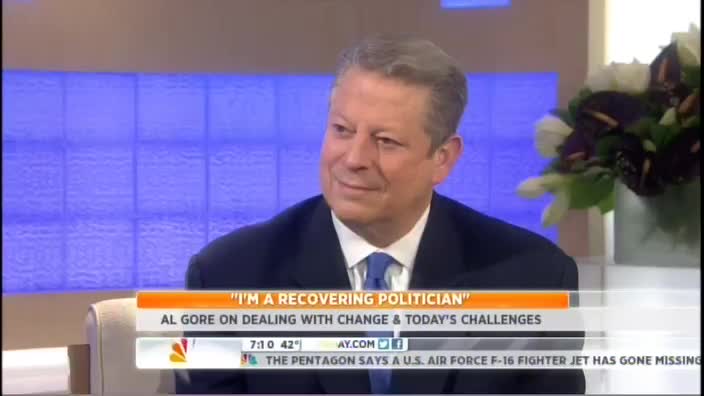
I have no illusions about Al Gore, but he will always occupy a warm place in my heart.

Gore

My first run-in with Al Gore was long ago. I had taken over the president’s job at a struggling national health promotion organization, and Sen. Gore was our angel in Congress. Health care screening was his mission back then, and he opened doors to sponsors, allies and funding around the country. Then, one day, he stopped answering our phone calls. We were curtly told that Sen. Gore was no longer the Herald of Preventive Health Care. Now he was the guru of something called “the information super-highway,” and we would have to fend for ourselves. (The organization went belly-up a year later). Thus I learned that Gore was nothing if not opportunistic, and perhaps not the guy you would want to be in a World War II foxhole with if he spoke fluent German.

Still, I can’t imagine how hard it must be to be the unlucky loser of the highest office in the land in one the nation’s rare popular vote/electoral vote splits, and I admire the fact that Al’s not in a rubber room by now. I thought his concession speech in 2000 was one of the high-points of political nobility during my lifetime, and the  Saturday Night Live appearance that was Gore’s farewell to politics will always stand as one of the bravest, quirkiest, saddest, funniest, most fascinating public breast-barings in media history. Al is a phony, and an opportunist, and I wouldn’t trust him as far as I could throw him, but he’s lived out a roller-coaster life in the hot lights of center stage, and I’m not certain I could do it any better. Continue reading

Ethics Round-Up in Race, Religion and Sex: GOP Bigotry, Georgetown’s Integrity, and Warren’s Absurdity

Help! I’m buried in great ethics stories!

This is one of those periods in which there are so many juicy ethics stories that I am falling far behind. Here are three that are worthy of longer treatment that I can’t allow to get lost in the crowd: Continue reading

Ethics Quiz: The Purloined Championship Team

Within hours of winning a Final Four national championship, a triumphant college coach not only jumped ship and went to another university, the coach took the entire championship squad.

Nobody went nuts about this over at ESPN, however, because the championship was in chess.

Texas Tech chess coach Susan Polgar took her entire all-star squad of seven chess grandmasters from Texas Tech to private Webster University in suburban St. Louis, home to the World Chess Hall of Fame and the U.S. national championships. Polgar is unapologetic for gutting the Texas Tech elite chess program that she built there beginning in 2007 . “The program grew rapidly, and Texas Tech wasn’t ready to grow with the speed of the program. St. Louis today is the center of chess in America. It just seemed like a perfect fit.”

I’m sure it is, but that leads to your Ethics Quiz: Is it ethical for a coach to take a school’s championship team with her when she accepts a position elsewhere? Continue reading

Time To Retire Editorial Cartoons, With Gratitude

The nuanced subtlety of Pulitzer Prize winning Herb Block. Translation: "Nixon's a crook." Brilliant!!!

All right, hear me out. I love cartoons. I used to aspire to being a cartoonist. I have good friends who are cartoonists, and I know there are cartoonists who are strong contributors to Ethics Alarms. But for many years it has appeared to me that editorial cartoons have become an increasingly archaic form of commentary, one that misinforms the public and contributes to the venom and lack of nuance in public discourse.

Cartoons, by their very nature, deal in caricature, exaggeration and extremes for metaphorical and humorous effect. The practical effect of this, however, is that the opinions expressed through cartoons are also “supported” in a manner that would be outrageous in a written opinion piece. I know: you can’t hold a cartoon to the same standard as an op-ed. Fine—then don’t put it on the editorial pages. Continue reading

Ethics Hero Emeritus: James Q. Wilson (1931-2012)

“Denmark or Luxembourg can afford to exhibit domestic anguish and uncertainty over military policy; the United States cannot. A divided America encourages our enemies, disheartens our allies, and saps our resolve—potentially to fatal effect. What General Giap of North Vietnam once said of us is even truer today: America cannot be defeated on the battlefield, but it can be defeated at home. Polarization is a force that can defeat us.”

James Q. Wilson wrote that, in an essay on America’s polarization. The scholar, author, philosopher and social scientist who died yesterday at the age of 80 was a passionate conservative who believed in winning arguments, influencing policy and changing conduct with the power of ideas, facts, studies and analysis. That the media, especially the conservative media, treated the death of Andrew Breitbart as a thunderclap and the death of Wilson as a footnote tells us as much as we need to know about our culture, values and intellect. I watched GOP presidential candidate Rick Santorum respond to the news of Breitbart’s death as if the culture warrior was the equivalent of Martin Luther King. Breitbart died too young, at 43; he had a family, and reputedly was a nice guy. But his contribution to the American scene was to use his various websites to increase the intensity of partisan warfare, and to help banish fairness, compromise, civility and mutual trust from public discourse. One of the last videos of Brietbart showed him screaming insults at Occupy protesters.

I had stopped using Breitbart’s sites for source material: I couldn’t trust them. The editing of James O’Keefe’s ACORN sting was one strike; the misleadingly truncated Shirley Sherrod speech was another. I wasn’t going to wait for a third. It tells me something alarming about conservatives in this country that such an unethical new media figure could be so lionized upon his death, when his methods were so frequently aimed at destruction rather than elightenment.

Wilson, in contrast, got substantive and wide-ranging results.His 1981 essay “Broken Windows” argued that community policing, rather than mere law enforcement, was the secret to changing urban culture. He wrote (with co-author George Kelling): Continue reading