Do I really have to explain what’s unethical about this?
I hope not.
It’s something special, all right. Talk about shattering “norms.” Also good taste, the respect for the office, the line between celebrity and public service, and… well, you fill in the rest.
Unbelievable. Or at least it should be unbelievable that an elected member of Congress would behave like this. That the party such an indefensible hack belongs to—and who is regarded as a leader of???— wouldn’t collectively disclaim any responsibility for said hack and wear paper bags over their heads in penance. That…oh, never mind. Why do I bother?
Diving in to try to defend Virginia Islands Delegate Stacey Plaskett (D) after the Epstein files revealed that she had been reading texts from the convicted sex-trafficker during a House hearing, Crockett got up and accused Mitt Romney, John McCain, Sarah Palin and Trump official Lee Zeldin among other Republicans officials of receiving political contributions from “someone named Jeffrey Epstein” as she claimed that Republicans were exacting a double standard—you know, like Democrats do routinely. But the Jeffrey Epstein she was tying to Romney et al. was a completely different person.
Was the ethically-inert Texas Congresswomen shooting off her mouth using false information because she is irresponsible and incompetent, or was she engaging in despicable deceit (that is, lying) to mislead the public? Who knows, and I don’t care: her declaration was a bright-line ethics breach and sanctionable in either case, as well as signature significance both for an untrustworthy member of Congress and a hyper-partisan asshole.
Ah, but this in-your-face blot on the U.S. Legislative Branch wasn’t done. When her false innuendos were raised in a CNN interview, Crockett exploded in double-talk to try to weasel out of her indefensible conduct:
“Listen, I never said that it was that Jeffrey Epstein. Just so that people understand, when you make a donation, your picture is not there. And because they decided to spring this on us in real time, I wanted the Republicans to think about what could potentially happen because I knew that they didn’t even try to go through the FEC,” this awful woman humina-humina-ed. “So my team, what they did is they Googled. And that is specifically why I said, ‘a Jeffrey Epstein’. Unlike Republicans, I at least don’t go out and just tell lies.”
Somebody pleas explain to Crockett what a lie is.
” Because it was not the same one, that’s fine,” she continued, spinning like Dorothy’s cyclone. “But when Lee Zeldin had something to say, all he had to say was it was a different Jeffrey Epstein. He admitted that he did receive donations from a Jeffrey Epstein. So at least I wasn’t trying to mislead people. Now, have I dug in to find out who this doctor is? I have not. So I will trust and take what he says is that it wasn’t that Jeffrey Epstein, but I was not attempting to mislead anybody. I literally had maybe 20 minutes before I had to do that debate.”
Right. Of course she was trying to mislead.
Kaitlin Collins responded (more equivocally than she should have): “Yeah, but people might see that say, well, you’re trying to make it sound like he took money from a literal sex offender.”
“But I literally did not know,” Crockett answered.
Jasmine Crockett is a walking, jive-talking insult to the nation.
You know that six former members of the military who by chance happened to be Democrats didn’t just wake up one morning and decide to “remind” members of the military that they are not supposed to obey “illegal orders.” They know that: every member of the military is taught the principle, though few have the fortitude to actually defy a superior officer on that basis. (My father did it at least three times during World War II while in the infantry.) This fake public service message or whatever you’d like to call it was a cheap, deceitful, underhanded way of advancing the Democratic Party’s “autocrat”/”threat to democracy”/”end elections” narrative to smear President Trump while exacerbating the brain fever of Trump Derangement Victims. Oh, it’s clever in the same diabolical way the “It’s OK to be white!” signs were, or the whole Black Lives Matter scam, or “Let’s Go Brandon!” Wink-wink. nudge-nudge, you get what we really mean, don’t you?
—Zohran Mamdani, on ABC News, saying that he would do everything in his power to enforce warrants from the International Criminal Court….which have no authority in the United States, just like the Court itself. He added, “and being a city of international law means looking to uphold international law.”
Gee, do you think this guy is a globalist? The problem is, as usual, Mamdani doesn’t know what he’s talking about. Everything within his power is nothing. An international warrant has as much legal force in the U.S. as Confederate money or a Bazooka Joe comic.
New York City is not a city of international law, and the Communist mayor saying that he “thinks” it is means about as much as him saying, “I am the Lizard King!” or “I believe in the Tooth Fairy.” Cities cannot individually decide to enforce ICC warrants or international law; these are national policy decisions, and New York City as well as the states are bound by U.S. policy.
Over the last two days, the listserv of the Association of Professional Responsibility Lawyers (APRL) had been embroiled in a debate over ABA Model Rule of Professional Conduct 3.10 and its application to a hypothetical posed by a member. The association, which I belong to, includes law professors, ethics partners, CLE trainers, and ethics consultants, expert witnesses—pretty much all of the legal ethics experts in the United States.
There is no ABA Model Rule 3.10.
Eventually, after a lot of replies, someone figured out that the question really involved California’s Rule 3.10, which neither the ABA nor any other jurisdiction includes. The big clue was that the member who posted the hypothetical practices in California, though the state was not mentioned in the original post. Most of the responses to the post were also California lawyers, none of whom mentioned that this was an issue confined to their state.
Question: are these legal ethics experts unaware that the rule in their state is an outlier? Or is the Golden State such an impenetrable bubble that legal ethics experts there assume that its often bizarre sensitivities are the only ones that count?
[Perhaps relevant (or not): the lawyer who started the debate over the almost imaginary ethics rule includes mandatory pronouns in each post.]
Its continues to amaze me whom the New York Times will give a platform to. Take Dr. Nils Gilman (please!), a historian who “works at the intersection of technology and public policy,” whatever that means.
He has written a supposedly learned column for the Times [gift link] claiming that human beings should have something akin to attorney-client privilege when they shoot off their mouths to their chatbots. His cautionary tale:
On New Year’s Day, Jonathan Rinderknecht purportedly asked ChatGPT: “Are you at fault if a fire is [lit]because of your cigarettes?”… “Yes,” ChatGPT replied…. Rinderknecht…had previously told the chatbot how “amazing” it had felt to burn a Bible months prior….and had also asked it to create a “dystopian” painting of a crowd of poor people fleeing a forest fire while a crowd of rich people mocked them behind a gate.
Somehow the bot squealed to federal authorities. Those conversations were considered sufficient evidence of Rinderknecht’s mind, motives and intent to start a fire that, along with GPS data that put him at the scene of the initial blaze, the feds arrested and chargeed him with several criminal counts, including destruction of property by means of fire, alleging that he was responsible for a small blaze that reignited a week later to start the horrific Palisades fire.
To the author, “this disturbing development is a warning for our legal system.” You see, lonely, stupid people are using A.I. chatbots as confidants, therapists and advisers now, and the damn things cannot be trusted. “We urgently need a new form of legal protection that would safeguard most private communications between people and A.I. chatbots. I call it A.I. interaction privilege,” he pleads.
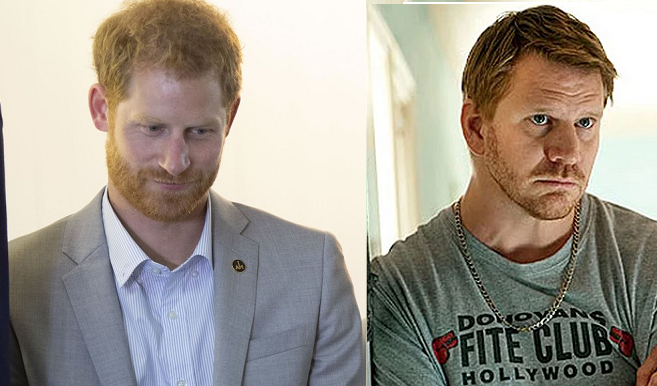
On the superb Showtime series “Ray Donovan,” actor Dash Mihok played Ray’s sad, stupid, easily manipulated brother, “Bunchie.” I always thought self-exiled Prince Harry was disturbingly Bunchie-like in appearance and intellect, and he proved the latter resemblance spectacularly in recent weeks.
As I discussed in an earlier post, Prince Harry attended one of the World Series games in L.A. with he and his insufferable wife wearing blue-and-white Dodgers caps. Harry’s father, King Charles, is the official ruler of Canada, a part of the British Commonwealth, and given that the Dodgers’ opposition in baseball’s ultimate series was the Toronto Blue Jays, many Brits and Canadians were upset that a member of the royal family would publicly favor the American competitor over the Canadian one. Of course they were. Imagine the scandal if one of Trump’s sons ostentatiously cheered on a Russian athlete in the Olympics.
The Georgetown Gilbert and Sullivan Society is the now half-century old theater organization I inadvertently spawned as a first year law student (before they were called “1Ls”) at Georgetown University Law Center. Right now, the group, which calls itself “The only theater group with its own law school,” is nearing an all-time peak in student participation, interest and talent, making this old lawyer-theater guy proud and happy indeed.
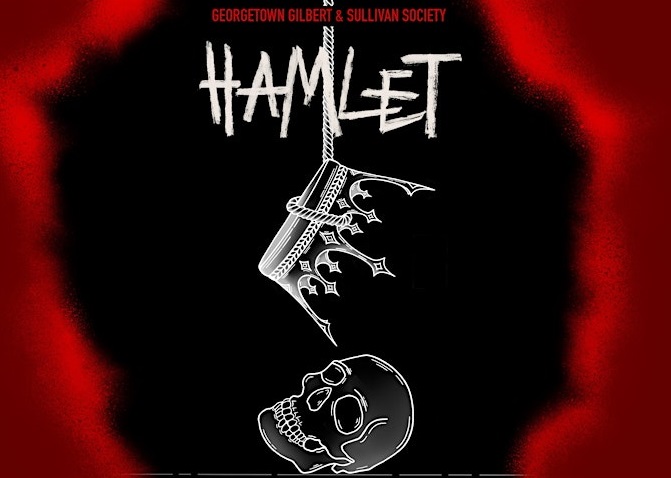
Last night I attended closing night of the group’s ambitious, full production of “Hamlet,” which most community theater groups wouldn’t dare attempt. It was a modern dress version (period set “Hamlet’s” are the exception rather than the rule and have been for decades) with an “emo” concept that worked just fine. The student director staged with skill and intelligence, the casting was spot on, and it even gave me some new insights into the work despite having see the play too many times to list. Yes, a woman played the Danish prince, but the 1L actress was excellent, and female Hamlets first appeared in 1899, when the great Sarah Bernhardt played the role.
“We will prove that there is no problem too large for government to solve, and no concern too small for it to care about.”
—Zohran Mamdani‘s marathon victory speech on Election Night, after the Democratic Socialist (that is, Communist) was elected as New York City’s mayor.
A commenter asked my opinion regarding Mamdani’s speech and I demurred, because it was standard commie tripe that I’ve read and heard from everyone from Lenin to Castro, and now this guy. He speaks well, and I’m always in favor of that as a key leadership skill. So did David Koresh. However, as I kept seeing that quote being published by the disgracefully uncritical mainstream media, my inner Popeye scratched to get out (“It’s all I can stands, ’cause I can’t stands no more!”) Who does he think he’s kidding?
Perhaps more importantly, what is the proper reaction to any American who wasn’t raised in a cave who doesn’t hear that insane claim and conclude, “Oh, brother! So much for that guy. He’s either lying, ignorant or a moron”? At very least it’s “RUN AWAY!”
My father, Jack A. Marshall Sr. was always remarkably fatalistic about death, much to the chagrin of my mother. She was never amused when he repeated his supposed desire to be displayed sitting in a chair, eyes open, at his wake with a metal plate in the floor in front of his casket that would trigger a recording when mourners stepped on it. Then a recording would boom out in his voice saying, “Hello! I’m so glad that you came!”
Dad was half-kidding, but only half. My father hated the solemnity of funerals and found open casket wakes barbaric. Yet I have to believe he would have been secretly honored by the send-off the military gave him when he was buried at Arlington, with the horse-drawn caisson, the riderless steed and the 21-gun salute.
Today I learned that someone actually carried out my father’s threatened posthumous prank, but even in worst taste than what he proposed. The Wills, Trusts, & Estates Prof Blog reveals that Irish grandpa Shay Bradley, a Dublin native, arranged that after his death in 2019 a recording of his voice would be played at his funeral from inside his grave. Mourners heard repeated banging noises that sounded like they were coming from the interior of the coffin. “Hello? It is dark in here! Let me out! I can hear you! Is that the priest I can hear? I am in the box, can you hear that?” his voice could be heard shouting, in apparent panic.



 Ethics Alarms