Ethics Hero: Fox News Anchor Chris Wallace

It has come to this: a journalist doing his job properly and meeting his professional duties now qualifies as exemplary conduct.

To hear the White House tell it,Fox News is nothing but a shill for conservative positions and anti-Obama criticism. This has always been an exaggeration, but especially so with regard to the Fox starting line-up of news anchors—Chris Wallace, Shepard Smith, Greta Van Susteran, Bret Baier and Megyn Kelly, who are generally fair and professional. Wallace is the best of the lot, and showed why in an interview with Wayne LaPierre, the National Rifle Association’s  CEO who has been the group’s public face during the post-Sandy Hook gun control debate.

Wallace raised the ill-conceived NRA  advertisement that criticized President Obama as a hypocrite for not supporting the NRA’s proposal to have armed guards in schools, while sending his own daughters to a private school that has exactly that.

“They also face a threat that most children do not face,” Wallace said, making the obvious distinction between the  daughters of the President and the average student. “Tell that to the people in Newtown,” was LaPierre’s facile response.

“You really think that the president’s children are the same kind of target as every other school child in America?” Wallace said, eyebrow arching right off his forehead. “That’s ridiculous and you know it, sir.” Continue reading

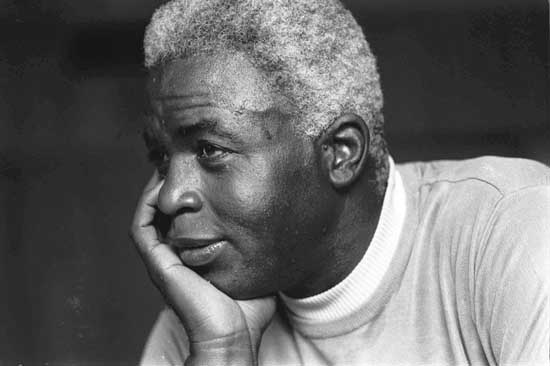
Today is Jackie Robinson’s birthday. He would be 94, but he lived only slightly more than half that long. He was one of our greatest ethics heroes, and I’d like to honor Mr. Robinson by reblogging a post from April 16 of last year.

Jack Marshall's avatarEthics Alarms

Yesterday, the media, history buffs and Kate Winslet fans were obsessed with remembering the Titanic, sometimes even with proper reverence to the 1500 men, women and children who lost their lives in the North Atlantic on April 15, 1912. A strong argument could be made, however, that the most significant event that occurred on April 15 took place in 1947, in Brooklyn, New York. For that was the day that Jackie Robinson ran out to his position at first base as a member of the Brooklyn Dodgers, and became the first African- American to play baseball in the Major Leagues since the earliest years of the game.

With that act, and his epic heroism for the rest of the season, Robinson changed baseball, sports, American society and history. It was a cultural watershed in a nation that had been virtually apartheid since the end of the Civil War, a catalytic…

View original post 781 more words

No, Mark Mattioli is Not An Ethics Hero

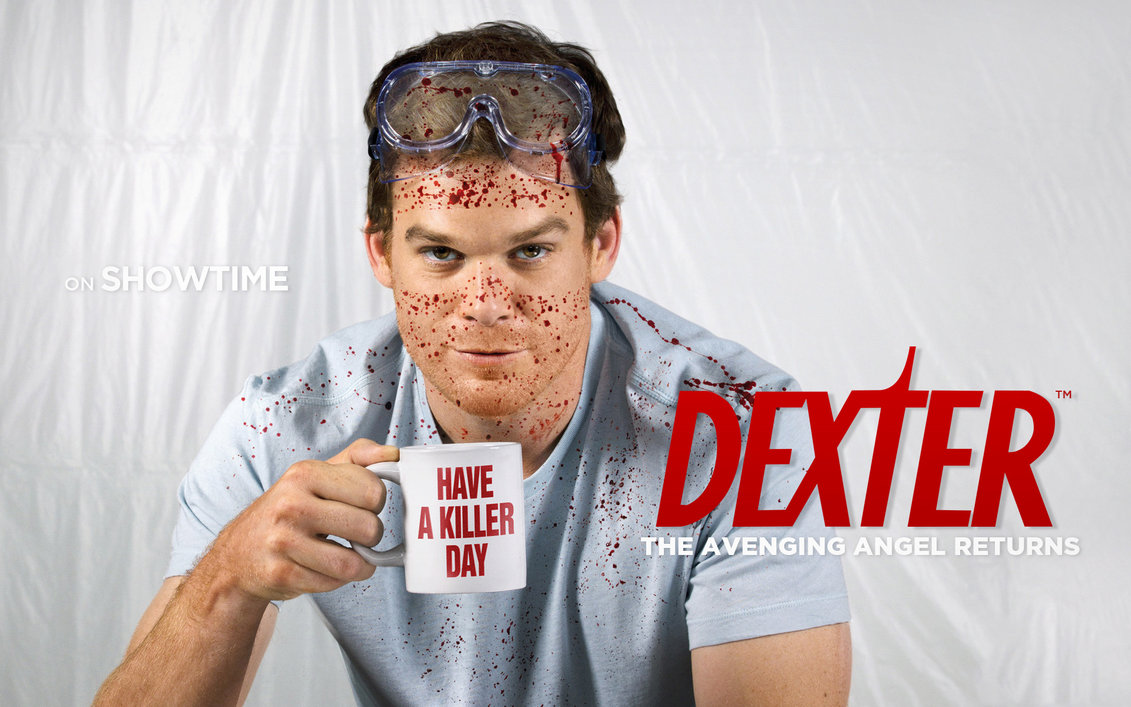
Dexter, for example, is a very civil serial killer.

Dexter, for example, is a very civil serial killer.

I’ve been getting emails from people nominating Mark Mattioli as an Ethics Hero for his comments before a subcommittee of the Connecticut Legislature considering gun control measures following the Newtown, Connecticut school attack. It’s easy to see why they think that is appropriate, since his emotional remarks—he lost his son in the tragedy—sounded ethical themes throughout.  Insisting that more laws were not the solution, Mattioli decried violence on television, and poor parenting. “We need civility across our nation,” he said, and for “common decency to prevail.” He called for accountability, and personal responsibility.  All nice sentiments; he got a standing ovation from the legislators.

Ethics, however, is not some kind of magic wand that fixes all problems, and how Mattioli thinks it will eliminate crazy teens with semi-automatic weapons is beyond me. We heard the “incivility kills” argument once before, you will recall, when the Left and the media went on a “blame Rush Limbaugh and Sarah Palin for Jared Loughner”  rampage of their own.  Mattioli’s lament had all the practical relevance to addressing gun violence as Rodney King’s “Can’t we all get along?” and John Lennon’s “Give peace a chance”…which is to say, none. Continue reading

Ethics Hero: Bindi the Jungle Girl

Bindi Irwin,posing with an American politician

Bindi Irwin,posing with an American politician

It shouldn’t surprise us that 14-year-old Bindi Irwin, a.k.a. “Bindi the Jungle Girl”, has the stuff of ethics heroism. After all, she is the daughter of Steve Irwin, the late lamented “Crocodile Hunter,” and his intrepid wife, Terri Irwin. She has also been hosting her own Australian TV show since she was 7, in which Bindi regularly faces-off with the same nasty critters that amused her father so.

But Bindi’s heroism doesn’t involve crocodiles on this occasion, but rather the treachery and deceit of American politics. She was asked to write an article about protecting the environment for Secretary of State Hillary Clinton’s e-journal. (I’m not sure why this is a topic for discussion by the Secretary of State, but never mind.) After spending many hours of school time writing the piece for the “Go Wild – Coming Together for Conservation” edition of the newsletter last month, Bindi received the edited version of her 1000 word essay from State and found that it was drastically changed to the point of being rewritten completely.  ( You can read the original essay—which isn’t bad at all—here, and the re-written one, on a substantially different topic, here. She refused to let it be published with her name as author, withdrew it, and called foul to the Australian press.

This is called integrity. It is a rare and exotic breed in today’s Washington, D.C. Continue reading

Ethics Hero: Michael Garcia

Say thanks to Michael, everybody.

Say thanks to Michael, everybody.

An ethical culture is constructed of millions of acts, small and large, prominent and not, that reinforce the best of human values, priorities and aspirations. The Ethics Heroes among us are those who recognize the opportunities to engage in such acts, and who have the courage, initiative and wisdom to not merely perform them, but to perform them impeccably.

Meet waiter Michael Garcia, Ethics Hero.

Garcia, a waiter at Laurenzo’s in Houston, Texas, was serving a family that has regularly patronized the restaurant since it opened. The family’s five-year-old son Milo has Down syndrome, and was talking and making noises, not being disruptive, but still noticeably different than the usual young patron at the family restaurant.  A member of a family at a neighboring table in Garcia’s serving section became annoyed, and began making disparaging comments about Milo. That family farther away from the child, and from that table, still within Garcia’s service responsibilities, said, the offended patron said audibly,

“Special needs children need to be special somewhere else.” Continue reading

Ethics Hero: Cartoonist Ted Rall

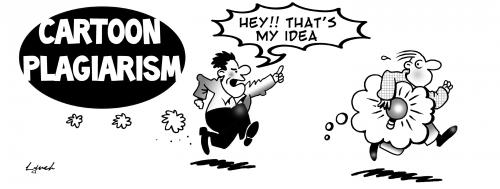
cartoon_plagiarism_444045

It is always courageous and exemplary when someone calls out his own profession for deficient ethical standards, and this is what political cartoonist Ted Rall has done on his blog. The topic: plagiarism in editorial cartoons, which is bad enough. Rall, however, makes strong case that the unethical practice flourishes because syndicates, editors, publications, honors committees and the professional associations tolerate it, and journalists don’t seem to care. He also blows the whistle on the practice known as self-plagiarism, where a cartoonist recycles his previous work as new. Rall writes, Continue reading

Unethical Quote of the Week (Newtown Massacre Ethics Train Wreck Division): Ed Rendell

“The good thing about Newtown is, it was so horrific that I think it galvanized Americans to a point where the intensity on our side is going to match the intensity on their side.”

former Pennsylvania governor Ed Rendell, enthusiastically becoming the latest passenger of the Newtown Massacre Ethics Train Wreck

discouraged

“Phooey! If only a few more kids had been shot, we’d really have the NRA on the run!”

The shocking thing about this is that unlike Piers Morgan, Alex Jones, Andrew Cuomo, and most of the other public figures who have boarded lately, Ed Rendell is usually a responsible individual in word and deed. His statement, however, is as indefensible as it is cynical.

  • Needless to say (I thought), there can be nothing good about a gunman killing twenty small children.
  • Following Ed’s logic, another school massacre, preferably of even more kids, is just what the anti-gun movement needs. Ha! Now we’ve got you, NRA! Continue reading

The Fourth Annual Ethics Alarms Awards: The Best of Ethics 2012

nonpartisan

One of the reasons there are always more negative stories than positive ones on Ethics Alarms is that ethical conduct is still much more common than unethical conduct, and thus has to be more spectacular to be worthy of comment. At least, that’s my rationalization this year….

Here are the 2011 Ethics Alarms Awards for the Best in Ethics:

Most Important Ethical Act of the Year:

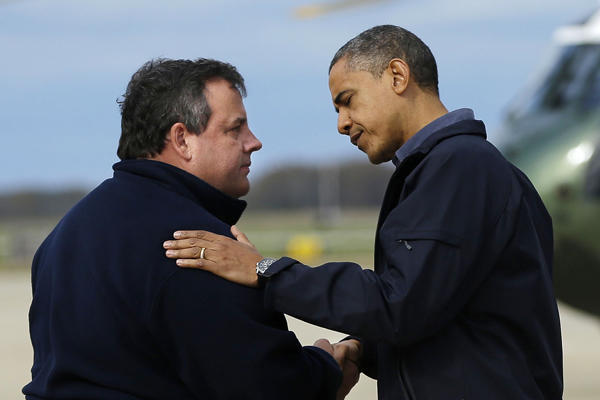
New Jersey Governor Chris Christie’s public display of appreciation to President Obama for the rapid Federal response to Super Storm Sandy. Naturally, Christie was subsequently called a turncoat and blamed for Mitt Romney’s loss.

Outstanding Ethical Leadership

Supreme Court Chief Justice John Roberts. Roberts’ decision to confound conventional wisdom and to vote to uphold the constitutionality of  the Affordable Care Act, a.k.a. Obamacare, reaffirmed the ideological independence of the Court while giving due deference to the will of Congress. Roberts was derided by Republicans and conservatives, while liberals and Democrats patted themselves on the back, presuming that they had intimidated him into rejecting the so-called conservative wing of the Court by their (irresponsible, dishonest and unethical) accusations that the Court put politics ahead of law and justice. Roberts, in truth, just interpreted the law, which is what his duty required.

Heroes of the Year

Seniors at Lexington (Ky) Catholic High School. When a gay couple was told by school administrators that they were not welcome at their senior prom, a significant number of their classmates moved the prom to the parking lot, where a good time was had by all. Courage, respect, fairness and kindness. These seniors are ready for the real world, which needs them more than they need it. Continue reading

Ethics Hero: Stanford Law Prof. Pamela Karlan, Pulling A McLuhan

One of the funniest moments in Woody Allen’s Academy Award-winning comedy “Annie Hall” is the classic scene in which Woody squelches a pompous know-it-all standing in line behind him at a movie theater. The man is holding forth on film criticism and finally begins pontificating on the theories of Marshall McCluhan, a Sixties media scholar most famous for the quote, “The media is the message.”  Woody acts out everyone’s fantasy who has had to listen to strangers blather on about topics they aren’t qualified to discuss by magically producing the real McCluhan to confront the man. “You know nothing of my work!,” McLuhan tells the shocked pedant.

Today Stanford law professor pulled a McCluhan on none other than George Will, who, she pointed out in a letter to the Washington Post, recently used her law review article to bolster his position by substantially misrepresenting—or misunderstanding–what it actually said:

“Mr. Will’s column distorted my Harvard Law Review article in details both large and small. Yes, the Framers of our Constitution intended to limit the federal government’s power to protect liberty. But they also crafted the new Constitution to empower the government to deal with critical problems. For much of our history, the Supreme Court recognized congressional resourcefulness as a source of our nation’s strength. By looking only to James Madison and 1787, Mr. Will ignored the post-Civil War 14th Amendment, which explicitly authorizes Congress to enforce guarantees of liberty and equality.

“As for my discussion of the court’s Citizens United ruling, I did not attack “spending by outside groups,” as Mr. Will wrote. Rather, I pointed out only that there has been a significant increase in such spending (much of it in forms that leave voters in the dark as to who bankrolled the messages they hear) and that reasonable people can disagree about whether this is good for democracy.

“Finally, for someone who prides himself on his linguistic precision, Mr. Will’s attack is particularly tone-deaf. “Disdain” means “scorn” or “contempt.” Nothing in my article expresses scorn or contempt for the court or for judicial review. I — like many other Americans, including some of their colleagues and many of their predecessors — simply disagree strongly with the approach some justices have taken and the conclusions they have reached in some recent cases.”

Take that, George! Continue reading

Ethics Hero Emeritus: Charles Durning, 1923-2012

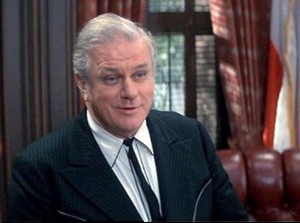
Charles DurningWorld War II veterans are dying by the thousands every year now; “the Greatest Generation” is running out of members. When one of the survivors of World War II combat who became famous in subsequent pursuits leaves us, it is important to remember that their brave service to their country was probably the most important thing they did in their lives, and was their invaluable gift to all of us. In most cases, that is how the veterans looked at it too. I know my late father did.

I can’t be sure about the great character actor Charles Durning in this regard, because he generally refused to talk about his World War II experiences, which resulted in his being honored by a Silver Star and three Purple Hearts. This too is admirable. His military service was his duty, but having to kill other human beings, no matter who they are, is something that throw most ethical people into a searing conflict of values and emotions. Durning, who died today at the age of 89, preferred to discuss his acting.

He was as talented and brave at entertaining us as he was in combat. Never a leading man, Charles Durning could play drama and comedy with equal deftness, and given the chance to be in a musical, the (awful) film version of “The Best Little Whorehouse in Texas,” he proved that he could sing and dance well too. He was outstanding in such classic films as “The Sting,” “Dog Day Afternoon” and “Tootsie,” an actor who seemed incapable of seeming false or inauthentic  while never playing the same kind of character twice. Perhaps the performance that was closest to the real Charles Durning was in his Emmy-winning role on “NCIS” in the episode “Call of Silence,” in which he played an elderly Marine veteran and Congressional Medal of Honor recipient who is tortured by the belief that he had been responsible for the death of his best friend in combat.

Durning’s own military service would have made an exciting movie on its own.  His highest rank was Private First Class, and like many others, he did the most dangerous and dirtiest work of the war. On D-Day, June 6, 1944, and was among the first troops to arrive at Omaha Beach in Normandy, after overshooting  his landing zone and having to fight his way to the beach.  He was severely wounded by a German “S” Mine on June 15, 1944 at Les Mare des Mares, France, but despite suffering from the effects of shrapnel in the left and right thighs, the right hand, his head, and his chest, he declared himself fit to return to the lines, which he did just in time for the Battle of the Bulge. During that battle he was wounded again, captured, and survived the German massacre of American prisoners at Malmedy, one of the most heinous war crimes perpetrated in the field.

We should honor the memory of Charles Durning as a wonderful actor who contributed a great deal to films and popular culture, entertaining millions in the process. We should also honor him as a patriot, a soldier, a citizen, a World War II veteran and a hero, not because he was unique, but because he was not, and when we salute him as he passes from this world, we also honor all the anonymous and forgotten fighting men like him who never became famous, saved the United States and the human race, and who, like Charles Durning, refused to boast about it.