Ethics Quote Of The Month: Times Columnist Bret Stephens

“Of all sad words of tongue or pen, the saddest are these: it might have been…” Wait, WHAT?

“Tax cuts. Deregulation. More for the military; less for the United Nations. The Islamic State crushed in its heartland. Assad hit with cruise missiles. Troops to Afghanistan. Arms for Ukraine. A tougher approach to North Korea. Jerusalem recognized as Israel’s capital. The Iran deal decertified. Title IX kangaroo courts on campus condemned. Yes to Keystone. No to Paris. Wall Street roaring and consumer confidence high.

And, of course, Neil Gorsuch on the Supreme Court. What, for a conservative, is there to dislike about this policy record as the Trump administration rounds out its first year in office?

That’s the question I keep hearing from old friends on the right who voted with misgiving for Donald Trump last year and now find reasons to like him. I admit it gives me pause. I agree with every one of the policy decisions mentioned above. But I still wish Hillary Clinton were president.”

—-New York Times Bret Stephens, in a column titled “Why I’m Still a NeverTrumper”

Stephens, since joining the Times left-heavy columnist stable as its token wishy-washy cnservative, has been occasionally perceptive, often incoherent, and obviously conflicted. In this case, he is ethically confused.

I wrote the equivalent of this column in the post called Roger Simon Says The NeverTrumpers Owe The President An Apology. Well, He’s Not Getting One From Me…(Mine was also better, and I wasn’t paid for it.)

Like Stephens, I do not regard Trump’s largely successful first year (by his own standards, and certainly by the standards of those who predicted a national catastrophe) sufficient to bring me to retract my original objections to Trump. I wrote,

“Competent and responsible leadership is not only made up of what a leader does, but how he does it. How Donald Trump operates as President is divisive, obnoxious, politically self-destructive, undignified, chaotic and scary, just as I expected. This conduct, which is entirely a product of his character deficits and near complete lack of interest in ethical values, does harm far beyond the benefits any policies he may advance that I agree with, or that are improvements over the mess left by Barack Obama. He is, day by day, week be week, diminishing that strength and credibility of the Presidency by lowering it to his thuggish, crude, juvenile level. He is also provoking his opposition and the news media to lower themselves to his level or lower, doing further damage to our democracy.”

This essentially what The Times columnist is saying when he writes, Continue reading

Ethics Quote Of The Week: Peggy Noonan

“Why does all this matter? Because we are losing history. It is not the fault of Hollywood, as they used to call it, but Hollywood is a contributor to it. When people care enough about history to study and read it, it’s a small sin to lie and mislead in dramas. But when people get their history through entertainment, when they absorb the story of their times only through screens, then the tendency to fabricate is more damaging. Those who make movies and television dramas should start caring about this. It is wrong in an age of lies to add to their sum total. It’s not right. It will do harm.”

—-Former Reagan speechwriter and current columnist Peggy Noonan, after citing the material historical misrepresentations in the Netflix series “The Crown” and the new Spielberg film, “The Post.”

I have written about the ethics of misrepresenting history in films many times, always facing the “Lighten up! It’s just a movie!” chorus. As Noonan explains deftly, the stakes are different now, in an age of rotten public education, mass media and internet indoctrination. The first time I wrote about this issue was 2010, in the post “Titanic” Ethics. It concluded in part,

I don’t blame Cameron for not basing his portrayal on evidence that only was clarified years after his film. I fault him for discounting the testimony of survivors, and misinforming the public by plastering a false version on a giant screen for millions to see, knowing that they would trust that a man who would insist that the doomed ship’s china pattern was accurate…Now the film is back, bigger than ever, and false representations of Officer Murdock, “Unsinkable” Molly Brown, the sinking itself, and other aspects of the iconic event will be embedded even deeper into our historical understanding. It didn’t have to be that way, and it is wrong that it is. History, the public, and the 1500 who died that night in 1912 deserve better.

I’ve seen “The Crown,” and like it a lot. The portrayals that Noonan complains about, however, especially the suggestion that Jack Kennedy abused Jackie, rang false immediately. As for “The Post,” which I haven’t seen, Noonan calls out a misrepresentation of a cultural villain whom the film-makers probably thought nobody would rise to defend: Continue reading

And Now A Brief Word From Charles Dickens….

From “A Christmas Carol”:

The chimes were ringing the three quarters past eleven at that moment.

“Forgive me if I am not justified in what I ask,” said Scrooge, looking intently at the Spirit’s robe, “but I see something strange, and not belonging to yourself, protruding from your skirts. Is it a foot or a claw!”

“It might be a claw, for the flesh there is upon it,” was the Spirit’s sorrowful reply. “Look here.”

From the foldings of its robe, it brought two children; wretched, abject, frightful, hideous, miserable. They knelt down at its feet, and clung upon the outside of its garment.

“Oh, Man! look here. Look, look, down here!” exclaimed the Ghost.

They were a boy and girl. Yellow, meagre, ragged, scowling, wolfish; but prostrate, too, in their humility. Where graceful youth should have filled their features out, and touched them with its freshest tints, a stale and shrivelled hand, like that of age, had pinched, and twisted them, and pulled them into shreds. Where angels might have sat enthroned, devils lurked, and glared out menacing. No change, no degradation, no perversion of humanity, in any grade, through all the mysteries of wonderful creation, has monsters half so horrible and dread.

Scrooge started back, appalled. Having them shown to him in this way, he tried to say they were fine children, but the words choked themselves, rather than be parties to a lie of such enormous magnitude.

“Spirit! are they yours?” Scrooge could say no more.

“They are Man’s,” said the Spirit, looking down upon them. “And they cling to me, appealing from their fathers. This boy is Ignorance. This girl is Want. Beware them both, and all of their degree, but most of all beware this boy, for on his brow I see that written which is Doom, unless the writing be erased. Deny it!” cried the Spirit, stretching out its hand towards the city. “Slander those who tell it ye! Admit it for your factious purposes, and make it worse! And bide the end!”

“Have they no refuge or resource?” cried Scrooge.

“Are there no prisons?” said the Spirit, turning on him for the last time with his own words. “Are there no workhouses?”

The bell struck twelve.

Ethical Quote Of The Month: David French

“For more than a year, I’ve been challenging conservative readers to look at Trump’s actions and imagine how they’d react if Democrats were behaving the same way — to apply the same standards to their team that they’d apply to their opponents. Now, I want to challenge my progressive readers: Consider how you would respond to the federal bureaucracy with the opposite ideological imbalance. Would you have confidence that it would apply the law and Constitution fairly? Would you be alarmed if you found that a senior FBI agent so biased and reckless was playing a key role in the investigation of a Democratic president?”

——National Review writer David French, in his article, “Peter Strzok’s story will hurt public trust in the federal government at the worst possible time.”

The Strzok story, an embarrassment to the Special Counsel’s inquiry, is just one more that the mainstream media has, in sequence, tried to ignore, spin, bury, and brush off as a “conservative” obsession.  French is a credentialed “Never-Trumper,”{ but he knows an appearance of impropriety, poor oversight and conflicts of interest when he sees them:

…Robert Mueller had months ago asked a senior FBI agent to step down from his role investigating the Trump administration. [He] was caught in an extramarital affair with an FBI lawyer. The affair itself was problematic, but so was the fact that the two were found to have exchanged anti-Trump, pro-Hillary Clinton text messages….

…This agent, Peter Strzok, also worked with FBI director James Comey on the Clinton email investigation. In fact, he was so deeply involved in the Clinton investigation that he is said to have interviewed Cheryl Mills and Huma Abedin, and to have been present when the FBI interviewed Clinton. According to CNN, he was part of the team responsible for altering the FBI’s conclusion that Clinton was “grossly negligent” in handling classified emails (a finding that could have triggered criminal liability) to “extremely careless” — a determination that allowed her to escape prosecution entirely. After the Clinton investigation concluded, Strzok signed the documents opening the investigation into Russian election interference and actually helped interview former national-security adviser Michael Flynn. In other words, it looks like a low-integrity, reckless, biased bureaucrat has played an important role in two of the most important and politically charged criminal investigations of the new century. Yes, it’s good that Mueller removed Strzok when he discovered the text messages. No, Strzok is not solely responsible for the conclusions reached in either investigation. But his mere presence hurts public confidence in the FBI, and it does so in a way that further illustrates a persistent and enduring national problem: America’s permanent bureaucracy is unacceptably partisan.

…It is to Robert Mueller’s credit that he took swift action against Strzok. It’s a problem that, as the Wall Street Journal observes, he “kept this information from House investigators.” For a critical mass of the public to have confidence in Mueller’s investigation, it must be as transparent and accountable as humanly possible. A proper investigation into Russian interference in our election is vital to the health of our democracy. A biased and opaque probe, however, will do far more harm than good.

French is bending over backwards to be fair, but he goes so far he may snap. Mueller must know his team, and he must understand, or one would think he would, that if he finds anything that justifies action against the President of the United States, it is essential that there be no hint of bias or partisan conflicts. How could he allow someone like this to play a key role in his investigation? The Wall Street Journal asked,quite reasonably,

Special Counsel Robert Mueller’s team is emphasizing its ejection of FBI agent Peter Strzok immediately upon learning about anti-Trump texts he exchanged with another FBI employee, Lisa Page, before the 2016 election. But when did the FBI learn of the messages? …[W]hen did the FBI dig up and turn over that very first tranche? How long has the bureau known one of its lead investigators was exhibiting such bias? Was it before Mr. Mueller was even appointed? Did FBI leaders sit by as the special counsel tapped Mr. Strzok? In any case, we know from the letter that the inspector general informed both Messrs. Rosenstein and Mueller of the texts on July 27, and that both men hid that explosive information from Congress for four months. The Justice Department, pleading secrecy, defied subpoenas that would have produced the texts. It refused to make Mr. Strzok available for an interview. It didn’t do all this out of fear of hurting national security, obviously. It did it to save itself and the FBI from embarrassment.

Yet when the President made some derogatory tweets about the FBI, the news media as one treated it as if he were committing blasphemy. The tweet, as usual, were foolish and unprofessional. Trump was wrong to send them, as usual, but I don’t see how anyone can argue that the substance of what he wrote is wrong. Continue reading

Unethical Quote Of The Month, And A Bonus Kaboom: The New York Times Editors

“But if your man is really innocent, what’s the worry?”

The New York Times in an editorial, “Fox News v. Robert Mueller”

Yes, the New York Times really printed that, under its banner.

Well,

KABOOM!

There goes my head.

As much as I have learned to distrust the objectivity and motives of the New York Times, I did not expect the traditionally liberal paper to make a sinister argument typically associated with totalitarian regimes. This is nothing but a  rephrasing of the traditional “nothing to hide” rationalization for obtrusive state surveillance, as well as illegal police searches and abusive prosecutorial methods.

“If you’ve got nothing to hide, you’ve got nothing to fear” is such a cliché of oppressive state action that it has its own Wikipedia entry. It is often attributed to Joseph Goebbels or “1984,” though there is no documentation for either. It was uttered by villain Pius Thicknesse in “Harry Potter and the Deathly Hallows”:

“As your new Minister for Magic, I promise to restore this temple of tolerance to its former glory. Therefore, beginning today, each employee will submit themselves… for evaluation. But know this: you have nothing to fear if you have nothing to hide.”

In the film version of the novel, the actor (Guy Henry) playing Pius was cast to evoke Goebbels. (above).

Progressive writer Upton Sinclair used an inverted version in 1918 in “The Profits of Religion: An Essay in Economic Interpretation” (1918):

“Not merely was my own mail opened, but the mail of all my relatives and friends—people residing in places as far apart as California and Florida. I recall the bland smile of a government official to whom I complained about this matter: ‘If you have nothing to hide you have nothing to fear.'”

The statement adopted by the Times editors as well as the attitude behind constitute a rejection of democratic values and an endorsement of state sponsored fear and subjugation of individual rights. “It you are innocent, why worry?” literally stands for the proposition that one is guilty until proven innocent, which is an accurate description of the position of the Times, the mainstream media and “the resistance” regarding the baseless allegation of  “collusion” with Russia to steal the election from Hillary Clinton. In the context of the editorial, which dismisses legitimate questions about the objectivity and conflicts of interest among Special Counsel Robert Mueller’s team, the argument is especially disingenuous. If one is innocent, one shouldn’t worry if a biased team of lawyers is trying to find a way to make you look guilty? Continue reading

Franken’s Resignation Speech: The Lost Opportunity

Senator Al Franken took to the Senate floor to announce that he would be resigning his seat.  It was Harry Truman who said,

“Fame is a vapor, popularity is an accident, riches take wings, those who cheer today may curse tomorrow and only one thing endures – character.” 

What did we learn about Franken’s character today?

Part of me feels that we shouldn’t be too hard on Franken. He is a human being, and this entire scenario for him must be humiliating, frustrating, and infuriating. Yet he is also a U.S. Senator, and knew that he had, perhaps for the only time in his life and professional career, an opportunity to talk when everyone would be listening, or at least interested in what he had to say. Under these circumstances, and in his high elected position, Senator Franken had a unique opportunity to accomplish great things. He had the bully pulpit, essentially, with nothing to lose except the opportunity before him. Nathan Hale had that opportunity minutes before he died, and found the character to make a statement that has rung out in the minds of patriots ever since. Even Richard Nixon, who had blown such an opportunity 12 years earlier when he thought his political career was over, made the best ethics statement of his life when all eyes were on him as he prepared to leave the White House forever. He said in part,

“Remember, always give your best. Never get discouraged. Never be petty. Always remember, others may hate you. But those who hate you don’t win unless you hate them. And then you destroy yourself.”
Al Franken couldn’t muster the character to say something memorable, inspiring, beneficial or important. He couldn’t even bring himself to apologize: there was no apology anywhere to be found. Given the opportunity to be a statesman, an ethics leader, a role model, Al could only show us the real Al, a petty, small, angry little man. Good to know, I guess, though we already knew it.The Washington Post mercilessly handed the job of annotating the Senator’s speech to Amber Phillips, who could reliably be expected to give no quarter, and she didn’t. She was fair, however, and Al deserved what she gave him.

Franken began by virtue-signalling, saying that he had been excited that

“We were finally beginning to listen to women about the ways in which men’s actions affect them. The moment was long overdue. I was excited for that conversation and hopeful that it would result in real change that made life better for women all across the country and in every part of our society.”

Then the first accusation came his way, and Franken, despite his supposedly sincere statement at the time, didn’t say he was “embarrassed,” or “sorry,” or that there “was no excuse,” that he was “disgusted with himself,”  or that his conduct was “completely inappropriate.” He says he was upset. Says Phillips in her notes,

“Upset” is a pretty strong word to use on the Senate floor, suggesting he was really angry that these women would accuse him of sexual misconduct.”

Franken’s whole demeanor today was angry.  Next he went off the ethics rails:

“But in responding to their claims I also wanted to be respectful of that broader conversation, because all women deserve to be heard and their experiences taken seriously. I think that was the right thing to do. I also think it gave some people the false impression that I was admitting to doing things that in fact I haven’t done.”

We have talked about this before. Franken had smugly joined his progressive colleagues in promoting the unethical, dangerous, irrational concept that any woman who accuses a man of sexual assault must be believed, even without evidence. It was this anti-American radical feminist claptrap that had led the Obama administration to issue the vile “Dear Colleague” letter extorting colleges and universities into putting young men accused of sexual assault before biased and unqualified Star Chambers, to be labelled rapists without due process or representation. This was also the most hypocritical stance imaginable for the party that had rescued a President from impeachment by airily arguing that “everyone lies about sex.”

So his convoluted argument was that he chose to bolster the dangerous party cant by pretending that the accusations against him had merit–that is, not challenging whether they were true—when in fact he doesn’t believe they were true. Yes, this is what his second apology sounded like he was doing, and it was obvious: I rated it cynical doubletalk.

And today, Al literally said that cynical doubletalk was “the right thing to do.” In reality, you see, all those women that good progressives should believe were in fact shouldn’t be believed. Got it.

Bye, Al.

Then he said, “Some of the allegations against me are simply not true. Others, I remember very differently.” Phillips pounced:

Continue reading

Unethical Quote Of The Month: Detroit Attorney And Democratic Michigan AG Candidate Dana Nessel

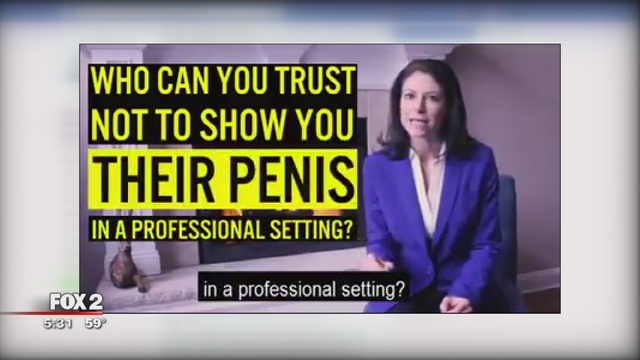
“Who can you trust most not to show you their penis in a professional setting? Is it the candidate who doesn’t have a penis? I’d say so.”

—-Detroit attorney Dana Nessel, a Democrat and a misandrist running for Attorney General of Michigan by suggesting that all men should be assumed to be sexual harassers and predators.

In another ad, Nessel says…

I want to tell you what you can expect me not to do. I will not sexually harass my staff, and I won’t tolerate it in your workplace either. I won’t walk around in a half-open bathrobe, and I’ll continue to take all sex crimes seriously just like I did as a prosecutor.

I wonder how feminists would react if a male candidate said,

I want to tell you what you can expect me not to do. I won’t try to influence judges to make bad rulings by wearing tight clothes and wiggling my hips. I won’t take says off because I have a period, or break down in tears under stress. I won’t try to win cases by sleeping with lawyers and judges, or not report sexual misconduct because I’ve exploited it to my own advantage.

Nessel should meet exactly the same fate as a male candidate who made those bias-promoting, sexist remarks. Continue reading

Ethics Quote Of The Month: Professor Jonathan Haidt

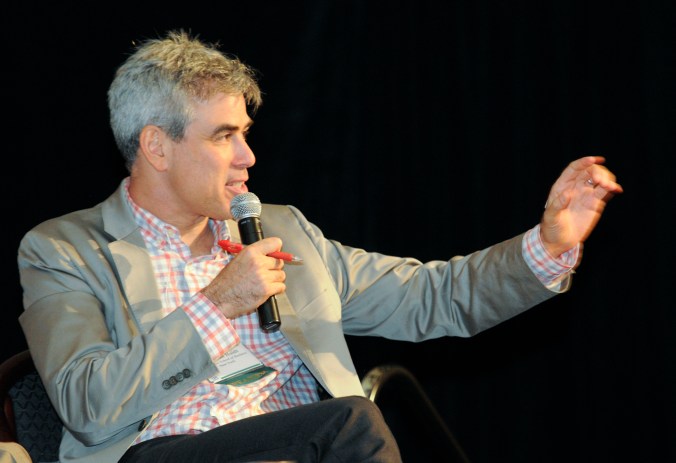
This is longer than the typical featured ethics quote. It comes from NYU Professor of Social Psychology Jonathan Haidt’s 2017 Wriston Lecture to the Manhattan Institute on Nov. 15 , excerpted by the Wall Street Journal.

Today’s identity politics . . . teaches the exact opposite of what we think a liberal arts education should be. When I was at Yale in the 1980s, I was given so many tools for understanding the world. By the time I graduated, I could think about things as a utilitarian or as a Kantian, as a Freudian or a behaviorist, as a computer scientist or as a humanist. I was given many lenses to apply to any given question or problem.

But what do we do now? Many students are given just one lens–power. Here’s your lens, kid. Look at everything through this lens. Everything is about power. Every situation is analyzed in terms of the bad people acting to preserve their power and privilege over the good people. This is not an education. This is induction into a cult. It’s a fundamentalist religion. It’s a paranoid worldview that separates people from each other and sends them down the road to alienation, anxiety and intellectual impotence. . . . Continue reading

Unethical Quote Of The Week: Emily Linden

Funny, she doesn’t LOOK like Chairman Mao…

“If some innocent men’s reputations have to take a hit in the process of undoing the patriarchy, that is a price I am absolutely willing to pay.”

Feminist writer Emily Linden, in the most unethical portion of an unethical twitter screed. After it was roundly attacked as the despicable, sexist, Left- facist, “by any means necessary” mind poison that it is, she hid her Twitter account. But of course.

Here is her whole yuck-pooie! rant:

“Here’s an unpopular opinion: I’m actually not at all concerned about innocent men losing their jobs over false sexual assault/harassment allegations…false allegations VERY rarely happen, so even bringing it up borders on a derailment tactic. It’s a microscopic risk in comparison to the issue at hand (worldwide, systemic oppression of half the population)…The benefit of all of us getting to finally tell the truth + the impact on victims FAR outweigh the loss of any one man’s reputation..If some innocent men’s reputations have to take a hit in the process of undoing the patriarchy, that is a price I am absolutely willing to pay.”

Yes, Emily is absolutely willing to pay a price that involves devastating harm to someone else. This woman is allegedly a writer, and yet delivered a rhetorical punch to he own jaw like that. Wow. Continue reading

Was Charlie Rose’s “Apology” The Worst Of All?

I’m thinking about it.

Harvey Weinstein, you recall, announced that he would devote himself to crushing the NRA. Analysis: Desperate deflection and virtue-signalling.

Kevin Spacey decided to finally announce that he was gay. Analysis: Appeal for support and sympathy from a minority group he had spurned for decades

Bill O’Reilly continues to insist that he never did anything wrong, and that it was all a partisan hit job. Analysis: Deny, deny, deny.

Louis C.K. explained that he misread signals—as if there is any signal from a woman that says, “I want to see a chubby, homely, middles aged guy masturbate nude.” Analysis: Ridiculous and pathetic.

George H.W. Bush sought sympathy—he’s old and in a wheelchair—and anyway, it was all in good fun. Analysis: Generational ignorance

Al Franken gave an apology that said that female accusers should be believed, though he didn’t agree with his female accusers account, and that there was no excuse for his conduct, though he was just joking and jokes sometimes look bad in retrospect. Analysis: Cynical double-talk

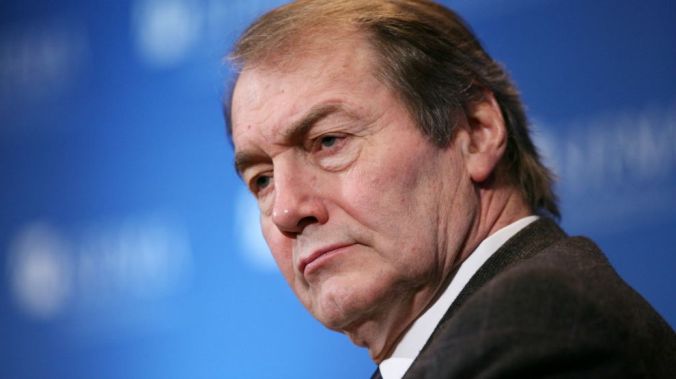
One common thread that cannot be missed is that all of these men are assholes. Their words brand them as such. This figures, since only assholes harass women in the workplace, or anywhere else. I think this is why Charlie Rose’s statement angers me so much, specifically when he said,

“I have learned a great deal as a result of these events, and I hope others will too. All of us, including me, are coming to a newer and deeper recognition of the pain caused by conduct in the past, and have come to a profound new respect for women and their lives.”

Don’t drag me into this, Rose, or any of the millions of men who always treat women as equals, respectfully, and fairly, both socially and professionally. I don’t need any “newer and deeper” recognition, you fecal creep, that putting hands on women’s upper thighs uninvited, parading naked, groping butts, making lewd phone calls  to co-workers and making young interns watch sexually explicit films are all unambiguously wrong and intolerable. I didn’t need it 40 years ago, and I don’t now. Continue reading