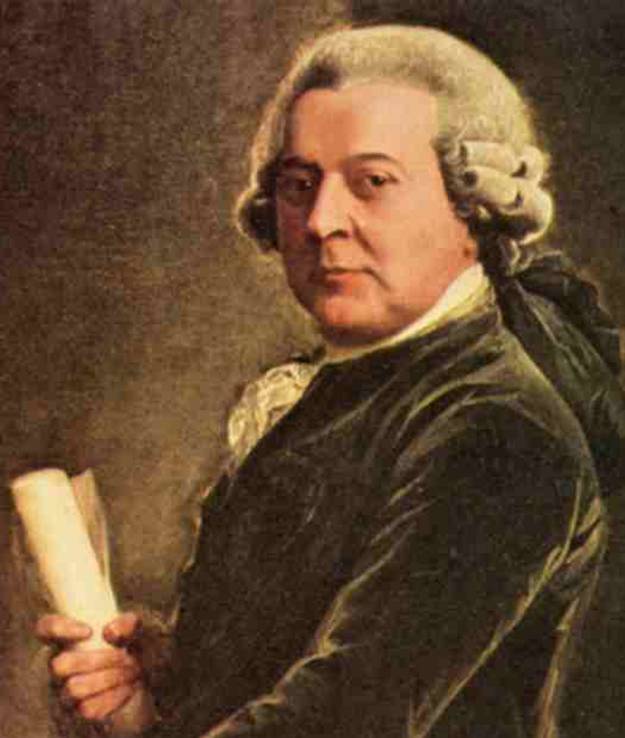
“I dare not look beyond my Nose, into futurity. Our Money, Our Commerce, our Religion, our National and State Constitutions, even our Arts and Sciences, are So many Seed Plott’s of Division Faction, Sedition and Rebellion. Every thing is transmuted into an Instrument of Electioneering.”
“I think he shouldn’t have settled; personally I think he shouldn’t have settled. Because you should have taken it all the way. I don’t think Bill did anything wrong. I think he’s a person I know well — he is a good person.”
Now President Trump is acting like President Obama. The President of the United States abuses his power and position by ever commenting upon or registering an opinion about matters that do not involve the national welfare or his direct responsibilities. These include local law enforcement episodes (Trayvon Martin, the arrest of an African-American professor in Cambridge by a white cop), employment matters, private lawsuits, pending criminal trials, TV shows (Saturday Night Live), media coverage (don’t get me started), legal business decisions and sports controversies (Colin Kaepernick). Obama never learned this (among other leadership basics, a problem fagged as “flat learning curve” on Ethics Alarms), and, not surprisingly, Trump is going to be even worse. Continue reading →
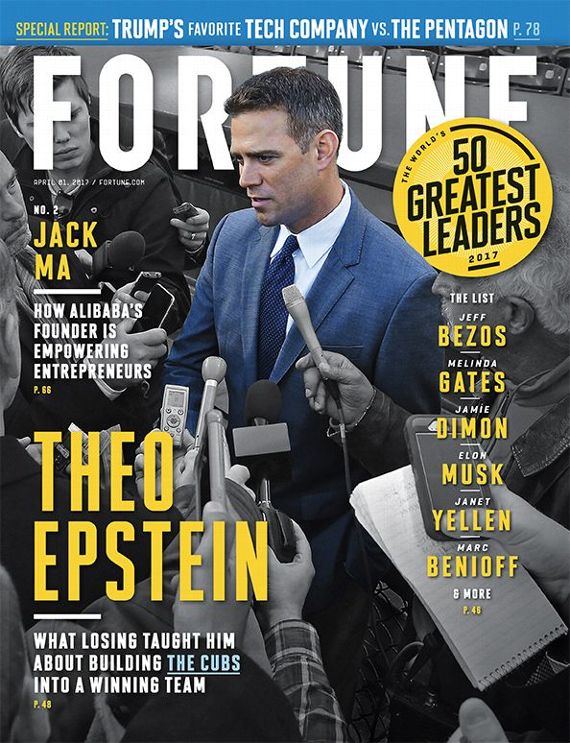
“That is ridiculous. The whole thing is patently ridiculous. It’s baseball–a pastime involving a lot of chance. If [Ben] Zobrist’s ball is three inches farther off the line, I’m on the hot seat for a failed five-year plan.”
—-Theo Epstein, president of the Major League Baseball’s 2016 World Champion Chicago Cubs, upon learning that Fortune Magazine had chosen him #1 among “The World’s Greatest Leaders” in a click-bait list released last week.
Thank-you, Theo, for explaining moral luck and the perils of consequentialism to the public. When it came down to the final innings of Game 7 in last year’s World Series, it looked for a while like Cubs manager Joe Maddon was about to blow the chance to win an elusive title after over a century of frustration by keeping his clearly gassed closer on the game. That his risky decision didn’t make Maddon a goat for the ages and Epstein one more name in the long list of Cubs saviors was pure moral luck—the element of chance that often distinguished heroes from villains. winners from losers and geniuses from fools in the public’s mind—and gross consequentialism, judging decisions by their uncontrollable results rather than their objectively judged wisdom and ethics at the time they were made.
If the Cleveland Indians had won that crucial game in extra-inning, no matter how, Epstein might have made Fortune’s list (I doubt it), but he would have been nowhere near the top. Continue reading →
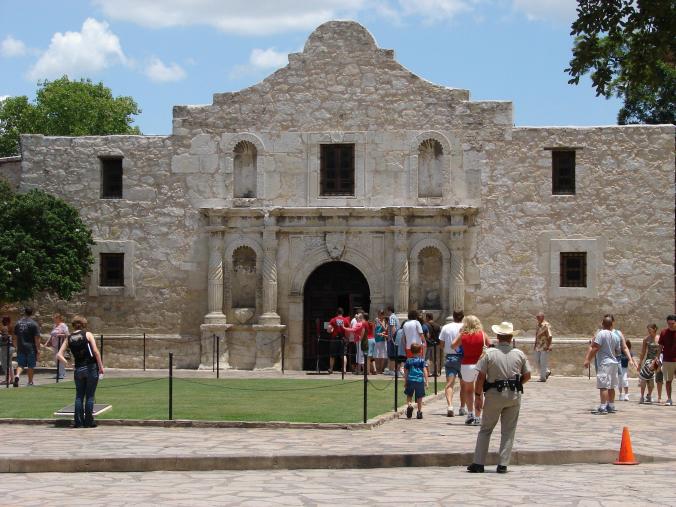
It is now April, and though I vowed at the end of February to finally post a thorough essay on the significance of the Alamo to U.S. culture, ethics, traditions and ideals at some point during the dates corresponding to the fort’s siege and fall on March 6, 1836.
I never did.
I thought I had posted an earlier essay about the Alamo. No, I haven’t. This is as inexplicable as it is inexcusable. The Alamo is by far my favorite historical landmark, and one of the events in American history that most inspires and fascinates me, beginning from when I looked on in horror as Fess Parker, as Davy Crockett, desperately clubbed Mexican soldiers as the last Alamo defender standing, and hundreds more charged toward him, as I heard on the soundtrack,
His land is biggest an’ his land is best, from grassy plains to the mountain crest
He’s ahead of us all meetin’ the test, followin’ his legend into the West
Davy, Davy Crockett, king of the wild frontier!
I learned all about Davy, of course, the real Davy, America’s first pop culture celebrity who created a legend about himself and by fate, irony or justice, inadvertently placed himself in a situation where he had to live up to his own hype—and by all accounts,did. Then there was Jim Bowie. I had seen several dramatized versions of his famous last stand, fighting off soldiers from his cot, finally dispatching one last attacker with his Bowie knife. It is one of the great examples of a scene so good it should have been true, though it wasn’t: Bowie was dead or unconscious by the time the Mexican burst into his sick room. Never mind: that’s how an American hero goes down, fighting. “Print the legend.” Later I learned how Bowie really was one tough, brave SOB, the perfect man for the Alamo, if he hadn’t been dying of cholera.
My impression of William Barrett Travis was biased by Lawrence Harvey’s portrayal of him as a martinet (with a British accent that supplanted his Southern one after the first scene) in the John Wayne film “The Alamo”, my favorite movie as a kid. The real Travis was a pefect example of someone who had failed in everything, including as a father and a husband, but redeemed himself magnificently at the end. His final letter to the world is one of the great proclamations of defiance, dedication and courage in all of history.
I will never forget my first visit to the Alamo, and seeing Texans weeping, openly, proudly, as they read the plaque with Travis’s words engraved on it:
Commandancy of the Alamo Bejar, Feby. 24, 1836
To the People of Texas & All Americans in the World
Fellow citizens & compatriots
I am besieged, by a thousand or more of the Mexicans under Santa Anna I have sustained a continual Bombardment and cannonade for 24 hours & have not lost a man The enemy has demanded a surrender at discretion, otherwise, the garrison are to be put to the sword, if the fort is taken I have answered the demand with a cannon shot, and our flag still waves proudly from the walls. I shall never surrender or retreat. Then, I call on you in the name of Liberty, of patriotism and everything dear to the American character, to come to our aid, with all dispatch. The enemy is receiving reinforcements daily & will no doubt increase to three or four thousand in four or five days. If this call is neglected, I am determined to sustain myself as long as possible and die like a soldier who never forgets what is due to his own honor & that of his country VICTORY OR DEATH.
William Barret Travis.
The story of the Alamo isn’t taught in schools outside of Texas. It wasn’t taught in my school, either: like most American history, I learned about the event though a thick mixture of pop culture, reading (Walter Lord’s “A Time To Stand” was a birthday present in 1961) and ongoing research. I recently completed “Texas Rising,” which was also just broadcast on cable as a mini-series starring the late Bill Paxton as Sam Houston. Historian Stephen Moore is a plodding writer, but he nicely puts to rest the currently popular politically correct slander that the defenders of the Alamo and the Texas rebels were fighting to keep their slaves, and trying to steal Mexico’s land. The Texians were opposing a dictator who had changed the terms under which they had come to the territory, and anyone familiar with the American character could have predicted what would happen when a despot demanded that they submit to unelected authority. The Alamo was a fight for liberty and democracy, and its martyrs exemplified sacrifice for principle and country.
I let them down. The story of the Alamo should be told and retold, with its ethics lessons made clear and bright. Next year, on March 6. 2018, Ethics Alarms will honor Davy, Bowie, Travis, Bonham, Almaron Dickinson and the rest of the 220 or so heroes who died that day, and do it the right way, not as an afterthought.
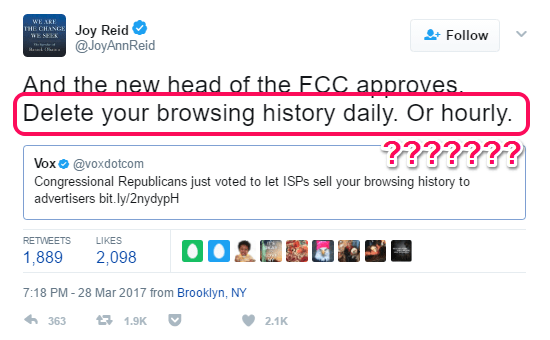
“We don’t solve problems by misrepresenting what the real scenario is. It’s true that ISPs have way too much power over these markets, and they can see and collect a ton of information on you which can absolutely be misused in privacy-damaging ways. But let’s at least be honest about how it’s happening and what it means. That’s the only way we’re going to see real solutions to these issues.”
—–Mike Masnick on Techdirt on the ignorance of supporters, critics, and the public regarding consumer broadband privacy protections, which were just repealed by straight party line votes in Congress, as part of the Congressional Review Act, which allows the legislative branch to eliminate regulations and limits an agency’s ability to issue similar rules to the ones being struck down. President Trump is expected to sign the bill.
I can see both sides of the Internet “privacy” debate. All I ask is that the average screaming head on TV knows what she’s talking about, and that the news media try to educate citizens on the issue, not portray it as another Obama did it so it’s wonderful, Trump is overturning it, so it’s the end of the world. This morning I watched Morning News Babe Robin Meade roll her eyes while “describing’ what the bill does completely inaccurately. The bill, her unhappy face broadcast is baaaad like everything the Trump Administration and Republicans do is baaaaad. Then she explained that the bill would allow internet service providers, browsers and “search engines” to take your internet history and sell it to big corporations. Then she giggled about how Max Temkin, inventor of some card game* I have never heard of, promised in a tweet…
“If this shit passes I will buy the browser history of every congressman and congressional aide and publish it.”
Robin, not having the foggiest idea what the bill really did, thought this was so funny and cool. She did not inform her audience, some of whom were actually seeking reliable information and not just tuning in to ogle, that..
The bill only undoes the Obama FCC regulations that stopped ISPs from gathering data on its customers’ internet use, and they hadn’t taken effect yet. In other words, it changes nothing.
Google, Amazon, Facebook, and other browsers and internet services still can gather anything they get their grubby cyber paws on. The FCC doesn’t regulate them.
As Masnick explains, neither Temkin nor anyone else can buy individual web-use data:
You can’t buy Congress’ internet data. You can’t buy my internet data. You can’t buy your internet data. That’s not how this works. It’s a common misconception. We even saw this in Congress four years ago, where Rep. Louis Gohmert went on a smug but totally ignorant rant, asking why Google won’t sell the government all the data it has on people. As we explained at the time, that’s not how it works*. Advertisers aren’t buying your browsing data, and ISPs and other internet companies aren’t selling your data in a neat little package. It doesn’t help anyone to blatantly misrepresent what’s going on.
When ISPs or online services have your data and “sell” it, it doesn’t mean that you can go to, say, AT&T and offer to buy “all of Louis Gohmert’s browsing history.” Instead, what happens is that these companies collect that data for themselves and then sell targeting. That is, when Gohmert goes to visit his favorite publication, that website will cast out to various marketplaces for bids on what ads to show. Thanks to information tracking, it may throw up some demographic and interest data to the marketplace. So, it may say that it has a page being viewed by a male from Texas, who was recently visiting webpages about boardgames and cow farming (to randomly choose some items). Then, from that marketplace, some advertisers’ computerized algorithms will more or less say “well, I’m selling boardgames about cows in Texas, and therefore, this person’s attention is worth 1/10th of a penny more to me than some other company that’s selling boardgames about moose.” And then the webpage will display the ad about cow boardgames. All this happens in a split second, before the page has fully loaded.
At no point does the ad exchange or any of the advertisers know that this is “Louis Gohmert, Congressional Rep.” Nor do they get any other info. They just know that if they are willing to spend the required amount to get the ad shown via the marketplace bidding mechanism, it will show up in front of someone who is somewhat more likely to be interested in the content.
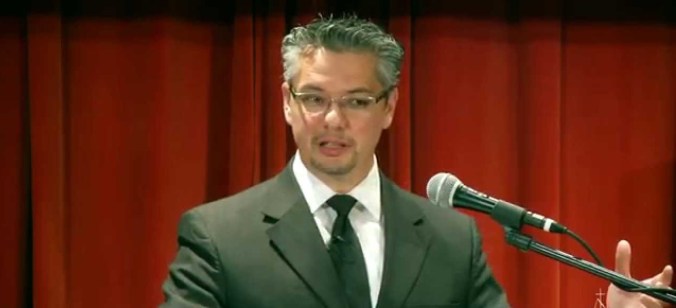
Vincent Phillip Muñoz is the Tocqueville Associate Professor of Political Science and Concurrent Associate Professor of Law at The University of Notre Dame. Following the violent protest that prevented his announced lecture at Middlebury College earlier this month, Prof. Muñoz invited Murray to speak at the University of Notre Dame next week. This occasioned some protests and objections from students and faculty at his own college, and he responded with an essay at RealClearPolitics, writing in part…
Charles Murray is speaking at Notre Dame because I and another Political Science professor assigned his book “Coming Apart” in our classes. His visit is one of several outside lectures that are part of this semester’s Constitutional Studies offerings. My class, “Constitutional Government & Public Policy,” addresses some of the most important and divisive issues in American politics: abortion, gay marriage, religious freedom, inequality, freedom of speech, death penalty, race and the meaning of constitutional equality, immigration, euthanasia, and pornography.
The class is designed to prompt students to think more deeply and thoughtfully about contemporary moral and political issues. I don’t assign a textbook or “neutral” readings that summarize the issues; I require students to read principled thinkers who advocate vigorously for their respective position. I want my conservative students to read smart, persuasive liberal thinkers, and I want my liberal students to read thoughtful conservatives. Educated citizens can give reasons for their beliefs and can defend intellectually the positions they hold. That requires that we understand and articulate the positions with which we disagree.
…“But Murray is controversial and will make students feel uncomfortable,” my faculty colleagues say. Don’t I know that he has been accused of being racist, anti-gay, and a white nationalist? I’m told that bringing him to campus is not fair to Notre Dame’s marginalized students.
I have no desire to inflict unwanted stress or anxiety on any member of the Notre Dame community, especially our minority students. I appreciate the concern for student well being that motivates some of the opposition to Murray’s visit. But I believe what is most harmful to students—and, to speak candidly, most patronizing—is to “protect” our students from hearing arguments and ideas they supposedly cannot handle.To study politics today requires handling controversial, difficult, and divisive topics…
The price of a real education is hearing powerful arguments that make us realize our opinions are based on untested assumptions. Only then, when we realize that we do not know as much as we think we know, can genuine learning occur.
I invited Dr. Murray to Notre Dame months ago…Given what happened at Middlebury, it would be cowardly to disinvite Murray now. Rescinding his invitation would communicate that violence works; that if you want to influence academia, sharpen your elbows, not your mind. It would tell those who engaged in violence—and those who might engage in or threaten violence—that universities will cower if you just appear intimidating. Rescinding Murray’s invitation would teach exactly the wrong lesson…
Notre Dame faculty critical of Murray have implored me to think about the larger context of what his visit means. I am. That is why I will not rescind his invitation. As a professor and program director, my job is to do what we are supposed to do at universities: pursue the truth through reasoned dialogue and discussion. Whether you find Charles Murray’s scholarship persuasive or objectionable, his visit offers an opportunity to learn. That is why I invited him to speak at Notre Dame. After Middlebury, it’s all the more important that he do so.
It is almost an insult to academia to call Prof. Muñoz ‘s statement heroic. It should be obvious. Dissenters from the position he articulates should be instantly recognizable as regrettable outliers, the opponents of academic freedom and freedom of thought, the advocates of censorship and ideological indoctrination. Yet increasingly it is this traditional view of higher education that Muñoz advocates that is under attack.Continue reading →
“We are all acutely aware of the enormous controversy and chaos that attended the issuance of the Executive Order. People contested the extent of the national security interests at stake, and they debated the value that the Executive Order added to our security against the real suffering of potential emigres. As tempting as it is to use the judicial power to balance those competing interests as we see fit, we cannot let our personal inclinations get ahead of important, overarching principles about who gets to make decisions in our democracy.
For better or worse, every four years we hold a contested presidential election. We have all found ourselves disappointed with the election results in one election cycle or another. But it is the best of American traditions that we also understand and respect the consequences of our elections. Even when we disagree with the judgment of the political branches — and perhaps especially when we disagree — we have to trust that the wisdom of the nation as a whole will prevail in the end.”
—-Five judges of the U.S. 9th Circuit Court of Appeals (Judges Jay Bybee, joined by Judges Alex Kozinski, Consuelo María Callahan, Carlos Bea, and Sandra Segal Ikuta, attacked what Bybee called the “fundamental errors” in the February decision of a three-judge panel upholding the temporary restraining order that blocked President Donald Trump’s first executive order temporarily halting immigration from seven Muslim-majority countries.
The opinion denounced the panel’s ruling as a “clear misstatement of law,” and stated that the five, constituting a larger number of judges than the three judge panel whose contrary holding was described as a “unanimous” 9th Circuit decision, had an”obligation to correct” it for the record.
“We are judges, not Platonic Guardians. It is our duty to say what the law is, and the meta-source of our law, the U.S. Constitution, commits the power to make foreign policy, including the decisions to permit or forbid entry into the United States, to the President and Congress,” the five judges stated.
Currently, the President’s revised order is held up by an even more widely criticized temporary restraining order issued by U.S. District Judge Derrick K. Watson. As well as following many of the same lines of activist judicial reasoning the five judges criticized in their dissent, Judge Watson’s opinion heavily relies on the campaign rhetoric of President Trump and statements by chief aide Stephen Miller in TV interviews. This means, as several critical legal experts including Alan Dershowitz have pointed out, that the exact same order, if issued by Barack Obama, would not have been blocked, and would have been found Constitutional.
Now that’s a double standard!
In criticizing their colleagues, the five judges said that the panel “brushed aside” the clearly controlling case law of Kleindienst v. Mandel, 408 U.S. 753 (1972) and ignored entirely the rulings in Kerry v. Din, 135 S. Ct. 2128 (2015) and Fiallo v. Bell, 430 U.S. 787 (1977). The Supreme Court in Mandel recognized that First Amendment rights were implicated by an executive action but decided…
“when the executive has exercised its authority to exclude aliens on the basis of a facially legitimate and bona fide reason, the courts will neither look behind the exercise of that discretion, nor test it by balancing its justification against the First Amendment 11 interests of those who seek personal communication with the applicant.”
“However, I recognise that being sorry is not enough. We, as public servants, should not merely meet but exceed the standards we expect of others. Failure to do so risks undermining the public’s trust in us, something we cannot let happen. Furthermore, my integrity has, I believe, never been questioned throughout my career. I cannot allow that to change now. I am therefore resigning from my position. I will, of course, work with you through any transition.”
—-The Bank of England’s chief operating officer and incoming Deputy Governor for Markets and Banking, Charlotte Hogg, in her letter of resignation over criticism regarding a possible conflict of interest and her failure to report it.
Charlotte Hogg, a senior Bank of England official who had been named a deputy governor, resigned this week after a Parliament committee found that she had failed to disclose a potential conflict of interest: her brother held a senior position at Barclay’s during her time at the central bank. Hogg insisted that she never breached her duties or passed along any confidential information to her brother, but she had helped draft an industry ethics code of conduct policy required a disclosure of such conflicts. This creates doubts about her integrity, judgment competence, as well as the appearance of impropriety.
The Parliamentary committee recently issued a report finding that Ms. Hogg’s professional competence “short of the very high standards” required to be deputy governor, adding that her failure to disclose her brother’s role was a “serious error of judgment.”
This is one of my favorite kinds of conflicts, because it may be only appearances at stake. What if, as is often the case (sadly), Hogg and her brother are estranged? What if she doesn’t speak to him? What if they hate each other? Never mind: the public, not knowing this, will suspect that she might use her position to favor him or his bank, so disclosure is crucial to maintaining public trust. Not disclosing, in contrast, raises suspicions. Why didn’t she let everyone know about her brother? What was she hiding?Continue reading →
“It’s outrageous the administration is saying anyone who might have committed a crime qualifies for deportations.”
—-Sen. Kamala Harris (D-CA), on Twitter, in response to the recent Trump Administration immigration order.
I know it’s Twitter, but Senator Harris had 41 unused characters left, so we have to assume that she means this. And if she means this, she is unqualified to be an elected official representing the American public. In fact, she’s a fool.
It is not and cannot be “outrageous” to say that any illegal immigrant, criminal or not, qualifies for deportation. To maintain otherwise is to say that the United States cannot enforce its immigration laws, and not only that, it is “outrageous” to enforce the laws. Is that the position of the Democratic Party? Clarification is essential here. Is it? If so, by what set of values and principles do Democrats make this argument? Does the “it’s outrageous to enforce the law” principle apply to other laws? Presumably it does, or the party has no integrity or legitimate governing philosophy at all.
Why is enforcing the immigration laws against—The Horror!–only the portion of the law-breakers who have no right to be here who have additionally become involved with the violation of other criminal laws so “outrageous”? Does the Senator have some rationale for that contention, or is she just grandstanding? That is, lying.
Or does she accept the reasoning of Jorge Ramos, the openly partisan, pro-illegal immigration Univision anchor, who said at a the network’s annual entertainment awards show (Aside:Why would anyone watch an awards show today, as they have devolved into political rant sessions from one narrow perspective, largely by smugly ignorant hyperpartisans who deserve a nationwide platform no than the average ranting activist holding a placard?), as he erased any distinction between legal and illegal immigration, Continue reading →
“[T]he mainstream media has dropped its standards since President Trump was sworn in. Rather then adjusting adeptly to Trump’s easy relationship with the truth and his tendency to abuse members of media, by dialing up their standards, a significant number of journalists have tripped over themselves recently to repeat every bit of gossip and half-cocked rumor involving Trump and his administration….Now this isn’t to say that all coverage of this new administration has been slipshod. Rather, it’s to say that there has been a disturbing and unusually large number of stories that have turned out either to be overhyped, inconclusive, half-true or flat-out incorrect. There have also been a number of reports whose sourcing is so thin, that to believe them would be to take a major leap of faith.The one thing that these reports have in common is that they fail to provide readers with a clear and indisputably accurate picture of what is really going on at White House. The press’s most important role is to shine a light on those in power. Bad reporting only muddies the waters, and it gives powerful people more room to do as they please. After all, whom are you going to believe: the guy at the top or the newsroom with a recent track record of botched reporting? We didn’t get to the point where people find the press less credible than the Trump administration by some freak accident.”
What the Examiner calls its database of biased and incompetent reporting since January 2o can be found here.
It’s a fair list, and I will quote the exactly accurate point above when I get another comment that says, “Why do you think the mainstream media reporting is more important than Trump’s outrageous conduct?” and “How can you say the news media is untrustworthy when the Times, Post and Wall Street Journal do excellent investigative reporting?”
President Trump is trying to do his job, as he promised he would, as well as he can. To have any chance of doing it successfully, he will require more than the usual amount of patience, support, and responsible criticism from the nation. He may well fail, but no respectable and patriotic American or organization, news or otherwise, should be trying to make him fail. ( I refer you to this post, For The Last Time: This Is Why The Post-Election Attacks On Trump And His Election Are Unethical)
(Yes, in case I haven’t made this clear before: The so-called “resistance” is undemocratic, unethical, and thoroughly despicable.)
Journalists, in contrast, are not doing their jobs, and indeed are doing the opposite of their job, which is properly and ethically to convey facts, not to distort them for their own political purposes. At this point in the post-election left-wing freak-out, the news media doesn’t even see its own obvious bias, just as fish aren’t aware that they are in water. Continue reading →



 Ethics Alarms