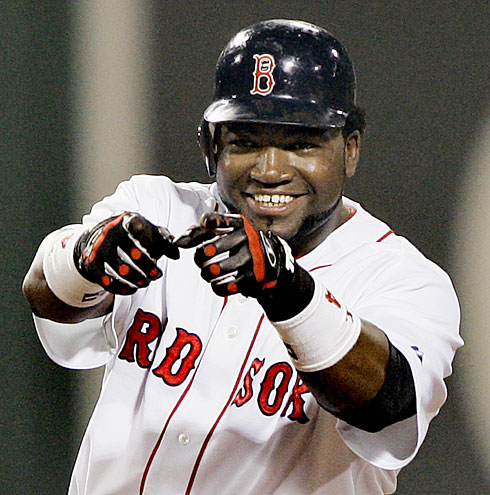
Unethical Quote Of The Week: Boston Red Sox Star David “Big Papi” Ortiz

“This is our fucking city!”

—Boston Red Sox designated hitter and icon David Ortiz, aka “Big Papi”, representing the team in a pre-game ceremony at Fenway Park honoring Boston in the wake of the past week’s violence, heroism and travails.

"Big Potty-Mouth"

“Big Potty-Mouth”

I love you, David, and you got us past the Yankees in 2004, but your choice of words  was classless, crude and unnecessary.

There were children in that crowd and watching on TV, as I was. You are a role model, and locker room language belongs in the locker room, not in public events. Your obviously calculated incivility moves the culture one more step away from public manners and toward obscenity as standard expression.

I’m disappointed in you, and you also embarrassed your sorority sisters at Delta Gamma.

Ethics Quote of the Week: Tom Hawking

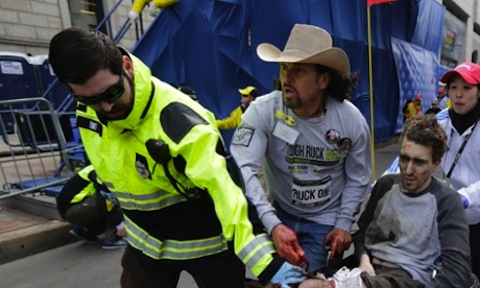
“It’s not the role of our media and our journalists to shield us from truth; it’s their job to confront us with it. In this respect, the plurality of imagery is both a blessing and a curse, because in the sort of panic that follows an event like yesterday’s bombing, anything could be real. But equally, it’s also the volume of images and coverage — graphic and otherwise — that help us get a clearer picture of reality than we ever did in the days when our opinion was shaped by one journalist and a few photographs.”

—- Tom Hawking in his essay “The Ethics of Disaster Photography in the Age of Social Media,” discussing the controversy over whether graphic images from catastrophes like the Boston Marathon bombing ought to be published by the mainstream media, or should be toned down, edited, or withheld altogether.

Boston Marathon ExplosionHawking’s conclusions are spot-on, and you should read the entire essay here. Obviously horrendous photographs shouldn’t be thrust in readers’ and viewers’ faces; we should all have the opportunity to avoid seeing images we know would upset us. ( I have not looked at any of the graphic images from Boston. The text descriptions are plenty for me, thanks.) Leaving it to editors and journalists to decide how much realism we can stand, however, is folly. To be blunt, there is no reason to trust them. One of the blessings of the web and social media is that the traditional media no longer have the power to withhold information based on their biased and paternalistic judgement, which they are thoroughly unqualified by intellect, education  to render.

______________________________

Source and Graphic: Flavorwire (Tom Hawking)

Ethics Alarms attempts to give proper attribution and credit to all sources of facts, analysis and other assistance that go into its blog posts. If you are aware of one I missed, or believe your own work was used in any way without proper attribution, please contact me, Jack Marshall, at  jamproethics@verizon.net.

Ethics Quote of The Week: Umpire Marty Foster

“I saw the pitch and of course don’t have the chance to do it again. But had I had a chance to do it again, I wouldn’t call that pitch a strike.”

—– American League Umpire Marty Foster, in the wake of the controversy over his game-ending strike call in the Texas-Tampa Bay game last night.

In other words, “I missed it. I was wrong.”

Strike Three?

Strike Three?

Good for Foster. His wildly inaccurate call was strike three on Rays batter Ben Zobrist, who thought that he had worked a base on balls. This would have placed Rays runners on first and second with two outs, creating a reasonable opportunity for the Rays to tie or win the game.  Instead, the Rangers got a gift. Rays manager Joe Maddon, in interviews and in a tweet to his followers, said, “That can’t happen in a major league game,” meaning that the call was beneath major league umpiring standards.  Of Maddon, Foster said,  “He was frustrated and I understand .He acted probably the best he can under that situation.”

Obviously, there have been many, many worse calls, nearly as bad calls, and only a smidge better calls, and there will be this season. In the vast majority of those, umpires have and will remain mum, maintaining that they were in the best position to judge the pitch or the play, and that even video showing their gaffes are misleading. Foster, however, did the hardest thing for many of us: admitting a mistake. Admitting so, to himself as well as the world, doesn’t make him a worse umpire; it makes him a better one.

Note: I apologize for the sparse postings the last few days. I am involved in a night and day project that is preventing me from doing thinking and working on anything else…even baseball. Naturally, the only game update I happened to watch, at 2:20 AM, was an ethics story.

___________________________________

Sources: NBC Sports (and Graphic); Townhall

Ethics Quote of the Week: Moses (Charlton Heston) in “The Ten Commandments”

The evil that men should turn their brothers into beasts of burden, to be stripped of spirit, and hope, and strength – only because they are of another race, another creed. If there is a god, he did not mean this to be so.

—-Moses, as played by Charlton Heston and scripted by seven writers, in Cecil B. DeMille’s “The Ten Commandments.” answering to the Pharoah Seti’s question, “Then why are you forcing me to destroy you? What evil has done this to you?”

The Ten Commandments“The Ten Commandments” is so extravagantly fun and entertaining that, I must confess, I never watched it as an ethics film until tonight, as ABC once again broadcast the Biblical epic on an Easter weekend. This quote especially struck me as remarkable for a film made by an infamously rigid conservative, DeMille, in 1956.

On Dec. 1, 1955, Rosa Parks was arrested for refusing to give up her seat on a Montgomery city bus. The next twelve months were tense, difficult days in which the entire U.S. population was undergoing a wrenching cultural debate regarding human rights.  On Dec. 6, 1955, the civil rights boycott, led by Marin Luther King, of Montgomery city buses began. January 1956 saw Autherine Lucy, a black woman, accepted for classes at the University of Alabama in Tuscaloosa, the first African-American ever allowed to enroll.  On Jan. 30, the home of Martin Luther King, Jr. was bombed in Montgomery. February 4 saw rioting and violence on the campus of the University of Alabama and in the streets of Tuscaloosa. Lucy had to flee the campus, and the university’s Board of Trustees barred her from returning. On the 22nd of that month, warrants were  issued for the arrest of the 115 leaders of the Montgomery bus boycott. A week later, courts ordered Lucy readmitted, but the school expelled her. Continue reading →

Unethical Quote of the Week: President Obama

“The notion that two months or three months after something as horrific as what happened in Newtown happens and we’ve moved on to other things? That’s not who we are. That’s not who we are. And I want to make sure every American is listening today…Shame on us if we’ve forgotten. I haven’t forgotten those kids. Shame on us if we’ve forgotten.”

—-President Obama, at a White House event designed to re-energize the push for stricter gun control laws.

Wrong.

Right back at you, Mr. President.

Right back at you, Mr. President.

Shame on the President…for not only making a facile, lowest-common-denominator appeal for gun control regulations, but for implying that policy should be made in the heat of emotional rather than after rational debate and analysis, looking at all sides of an issue, rather than just the most sensational.

Shame on the President…for insulting principled opponents of the Democrat’s irresponsible, hysterical and cynical effort to portray the complex issue of fire arms regulation as a matter of “saving the children” by accusing them of forgetting the horrendous massacre of toddlers at Newtown.

Shame on the President…for dishonestly suggesting that the measures under consideration, good and bad, would have necessarily done anything to prevent the Sandy Hook rampage by a deranged killer. If it would not, then why is the date of the event, whether it was 10, 100, or 1000 days ago, relevant to anything? Investigators found that Adam Lanza had a 28 inch Samurai sword in his arsenal. How many children might he have killed in the same amount of time with that, rather than his assault rifle? Watch “Kill Bill, Part I” and get back to me. Continue reading →

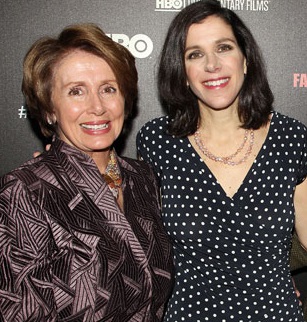
Unethical Quote of the Month: Alexandra Pelosi

“I don’t ask for permission. I think anytime you have to ask for permission your project is doomed.”

—-Alexandra Pelosi, political documentary film-maker (and daughter of you-know-who), speaking about her embrace of the unethical philosophy, “It’s easier to ask for forgiveness than to get permission,” or in her version, “It’s better to beg for forgiveness than to ask for permission.” Pelosi employed a bait-and switch ruse to made former New Jersey Governor Jim McGreavey the subject of her latest documentary.
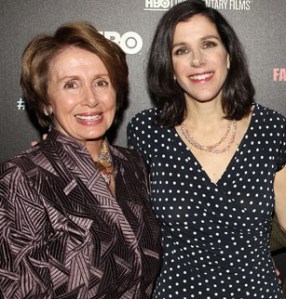
Mother taught her well...

Mother taught her well…

If Pelosi is correct, then she is in an inherently unethical profession, and shameless about it. If Pelosi is correct, then all documentary film-makers are indistinguishable from other manipulative deceivers like Sasha Baron Cohen, James O’Keefe, Michael Moore, and her. She is not correct, however. There are many celebrated, honest, straightforward documentary makers who get proper permission from subjects before they put them on camera, respecting their autonomy and privacy and engaging with them fairly. The fact that Pelosi sees no need for this tells us all we need to know about her documentaries.  She believes that the ends justify the means, so she can’t be trusted. She will employ chicanery, deception, and lies in order to make a commercially viable film, which will be worth approximately as much, from a documentation standpoint, as her word: nothing.

The context of Pelosi’s smug endorsement of deception as her SOP was the description of how she filmed McGreavey in his new life since resigning as governor and announcing that he was gay. Pelosi persuaded McGreevey to let her follow him around, but not to make a documentary, which McGreevey’s partner, Mark O’Donnell, opposed. Pelosi told Politico, “I don’t think he thought I was making a movie. I think he thought I was just hanging around.” Then, after the documentary was completed, Pelosi says she told her unwitting and deceived star,  “You have a choice. You can support the bigger picture of what the movie is trying to say, which is about the theme of redemption and second acts, or you can not sign a release and this film will go to waste.” McGreevey should have said, of course, “Go to hell. You lied to me. You won’t have my release, and if you show it to anyone, I’ll sue you right back to living in your mother’s house.” Pelosi, however, as master con artist must, chose her victim well. Though “he was not happy,” McGreevey signed the release. Continue reading →
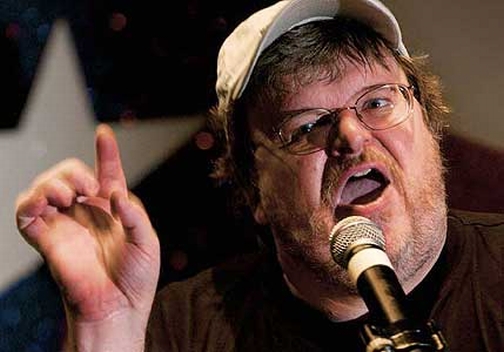
Unethical Quote of the Week: Michael Moore

“If a man with an assault weapon goes into the school where Harry Reid’s grandchildren go to school tomorrow and kills his grandchildren, would he stand in front of that microphone at five o’clock and say, ‘I know how Dianne [Feinstein] had to witness the mayor getting murdered, but my grandchildren just got killed today, but, you know, we can’t get it passed because we just don’t have the votes.’”

—Documentary Film-Maker Michael Moore, ranting about Senate Majority Harry Reid’s decision to remove Sen. Feinstein’s assault weapons ban from the Senate gun reform package.

This is when I should not say anything at all, my mother told me.

This is when I should not say anything at all, my mother told me.

I know ad hominem attacks are uncool, but truly: what an awful, awful man Michael Moore is. He lies in his documentaries; he engages in deceit routinely; he abused Charlton Heston, knowing he was in the throes of Altzheimer’s Disease; he praised Fidel Castro; he is, for all intents and purposes a Communist, his public statements are fueled by and designed to ignite hatred more often than not, and, on top of it all, he says unethical and asinine things like this. Moore is to progressives what Newt Gingrich and Donald Trump are to conservatives: any group that can endure, indeed, applaud such people has serious, deep-rooted ethical and cognitive problems. Continue reading →

Ethics Hero Emeritus: Ewald-Heinrich von Kleist-Schmenzin

The first Nazi soldier Ethics Hero.

The SECOND Nazi soldier Ethics Hero!

Ewald-Heinrich von Kleist-Schmenzin didn’t accomplish anything heroic, but boy, did he try. The last surviving member of the most famous and closest call of the many failed plots to kill Adolf Hitler, von Kleist-Schmenzin is a ringing example of how the only difference between a a deathless hero and some guy with an unspellable name that you never hear of until he dies sometimes is just luck, and moral luck at that.

von Kleist-Schmenzin was 90 when he perished at his home in Munich this week, outliving almost all of his fellow conspirators in Operation Valkyrie by just short of seven decades. After that near-miss assassination attempt failed (because the bomb-in-a-briefcase dropped near Hitler’s feet by chief conspirator Claus von Stauffenberg was inadvertently moved just enough to save Der Fuhrer’s miserable life), von Kleist-Schmenzin managed to convince Gestapo interrogators that he wasn’t part of the plot, though in truth he was originally given the assignment of planting the bomb. He ended up in prison (the fact that his father was also involved in the plot and was one of those executed guaranteed that) and later was sent back onto the battlefield, but only random chance prevented him from being remembered as the man who ended the war…in fact, it foiled him twice. Continue reading →

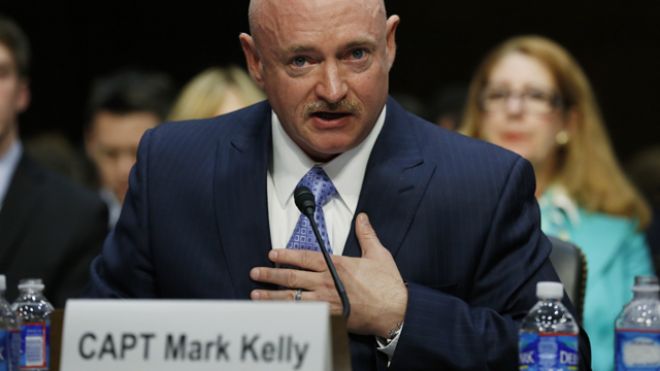
Ethics Quote of the Week, Sandy Hook Ethics Train Wreck Division: WSJ Blogger James Taranto

“It’s like a proponent of laws against hate speech standing on a street corner shouting racial slurs in order to “demonstrate how easy it is” to say offensive things under the First Amendment. Of course it’s ‘easy’ to do something that is perfectly legal and protected by the Constitution. That doesn’t mean you ought to do it, especially if you claim to believe it is wrong.”

—–Wall Street Journal blogger, pundit and wit James Taranto, describing the “stupid stunt”perpetrated  by Mark Kelly, the husband of  former Rep. Gaby Giffords, in which he purchased the kind of weapon he and his wife have been lobbying Congress to ban, a so-called “assault weapon,” in order to “demonstrate how easy it is to obtain” one.

At least Kelly didn’t break the law, like David Gregory, to show how easy it was to get an illegal magazine in Washington, D.C.


If this is the best argument you have...be quiet.

If this is the best argument you have…be quiet.

Is this hypocrisy? No, it’s not hypocrisy. Kelly’s act is reminiscent, though not as certifiably cretinous, of stunt pulled by the foolish Ronald Miller, who walked into his child’s school and announced that he was going to start shooting people, just to show that he could. Kelly proved nothing. To someone who believes that a law-abiding citizen who believes he needs an assault weapon to protect his family against home invaders, Rodney King-style riots or the breakdown of civilization (never mind what Joe Biden or Andrew Cuomo think he needs), Kelly’s purchase proved only that the system works: a law-abiding citizen can buy a legal gun. The Horror. To anti-gun crusaders, Kelly proved that a gun they think should be made illegal is legal—but presumably they already knew that. Kelly was trying to demonstrate that legal conduct should be made illegal because people can currently do it?

Okaaaaay… Continue reading →

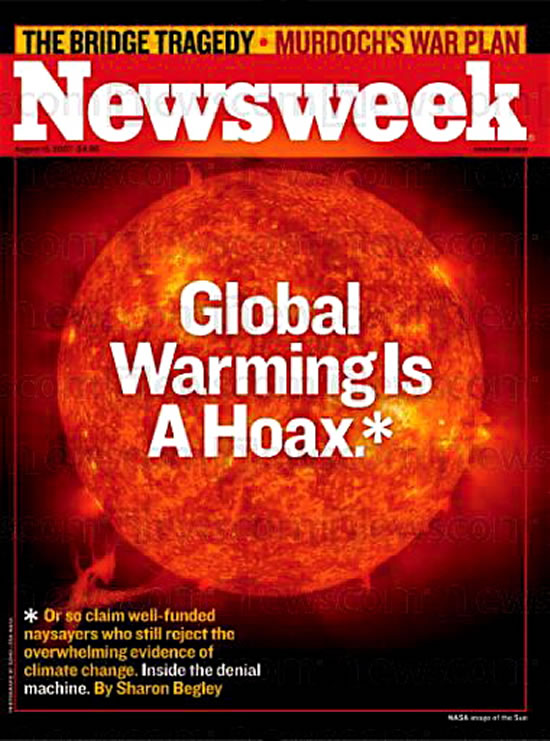
Unethical Quote of the Week: Rush Limbaugh

“Speaking of global warming…which has now been proven to be a hoax”…”

—-Rush Limbaugh, riffing today on his radio show regarding the evils of liberals from Obama to Bloomberg.

No, actually, Newsweek is now a hoax.

Actually, Newsweek was the hoax.

This an outright ethics foul, even if Rush believes it. If he doesn’t believe it, it’s a lie. If he does believe it, it is still a reckless, incompetent and irresponsible thing to say to millions of listeners who trust him to tell them the truth.

Global warming, or climate change, is not a hoax. Its exact extent may not be known, or as conclusively known as some scientists and commentators claim. It may be difficult to measure, and the historical data it is being measured against may be flawed. Its researchers may have biases, and have strayed too far over the line into advocacy. They may also have been too willing to stifle dissenting voices in the scientific community. How serious global warming will be, when its effects will be fully felt and how long it will last are all matters of projection and speculation, subject to error. Projections have been, and will continue to be, unreliable, and arguably, too unreliable to justify costly public policy measures. Remedies are speculative, and cost-benefit ratios are in doubt.

It is also true that many of the most vocal and visible supporters of the most dire projections by climate change researchers, as well as the most vociferous attacker of climate change skeptics, literally don’t know what they are talking about. Their fervor is driven by ideology and faith rather than actual expertise and scholarship, and anything they say on the subject should be given no weight whatsoever. This groups includes journalists, columnists, bloggers, celebrities, academics not in the sciences, public officials and leaders, including, depressingly, Barack Obama, whose State of the Union speech comments on climate change were outrageous and irresponsible: Continue reading →