Brian Williams’ Suspension

smoke-n-mirror

Nope.

This is smoke and mirrors.

From Politico:

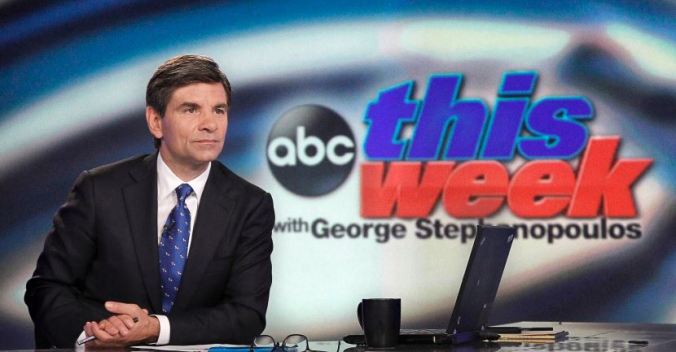
“NBC Nightly News anchor Brian Williams has been suspended for six months without pay following his false claims about an experience he had during the Iraq war, NBC News president Deborah Turness announced Tuesday night.”

Observations:

1.  An untrustworthy anchorman does not turn into a trustworthy one because he hasn’t worked for 6 months.

2. NBC apparently thinks, or hopes the public will think, that the issue is punishing Williams. Undoubtedly, there are (ethically obtuse, ignorant) people who think this way, but the issue is trust. Williams has shown, by lying to the public for more than a decade about his Iraq experience and probably more, that he cannot be trusted to do what his job requires: truthfully and reliably telling the public what happens in the world.

3. That an organization allegedly dedicated to broadcast journalism doesn’t understand that, or worse, does understand it and will retain an untrustworthy anchor anyway because he might still be profitable—after the heat is off, that is—is an indictment of that organization’s lack of courage, integrity, honesty, professionalism, and respect for its audience.

4. NBC says that its investigation of Williams will continue. I think it is possible, even likely, that he will not return. That means that this half-measure’s main result may be to mark NBC as a cynical, venal organization for which journalism is neither a calling nor a profession, but a sham and a profit center.

5. We will see if NBC’s audience is as gullible, foolish, and easily manipulated as this action suggests the network believes it is. If viewers just return to Williams like sheep, it is difficult to see why any news organization would value honesty and integrity, since its market doesn’t.

UPDATES (2/11)

From Althouse:“I guess they want to see if we’ll forget why he left and start wondering why he’s gone, so they can bring him back. That’s all very lame and pathetic, and I don’t watch the nightly news, so there’s a limit to my outrage about NBC’s wan interest in the truth.”

From Ruth Marcus (WaPo): “Some discussion of Williams’s fate has involved his central role at NBC and whether the network could “afford” to lose its most recognizable franchise. This is the network version of “too big to fail” — that Williams is too important to can. I see it the opposite way: Williams’s elevated status subjects him to a higher standard of behavior, and more rigorous consequences. The face of NBC News cannot afford to be so scarred.”


Brian Williams Ethics Train Wreck Update: David Brooks’ Ethics Confusion

Huh?

Huh?

David Brooks’ New York Times op-ed column decrying the widespread criticism of Brian Williams’ serial lying show us that Brooks himself is frighteningly confused regarding such basic ethical values as accountability, trust, trustworthiness and accountability. That’s good to know, don’t you think? Now the question is why anyone in their right mind would care what such an ethically muddled political and cultural analyst thinks about anything.

Yesterday, the Washington Post revealed yet another example of Williams’ fabulism: his bizarre story about roaming gangs at the local Ritz Carlton in the wake of New Orleans’ devastation by Katrina. Never mind, argues Brooks: the problem isn’t with Williams, it’s with his critics.

Brooks’ New Times column begins with a strange, exaggerated and unethically inclusive first paragraph about how  fame drives people to wrongdoing. “The desire for even more admiration races ahead. Career success never really satisfies. Public love always leaves you hungry,” he writes. “Always?” Who is he talking about, himself? The famous people being described here are emotionally and spiritually unhealthy famous people–addicts to fame, narcissists, desperate hostages to celebrity. I have no doubt that Williams fits that description,  but many prominent, accomplished and celebrated people do not. They are known as “trustworthy.” Having impugned many thousands of well-adjusted pubic figures past and present to lay the groundwork for an “everybody does it” defense of Williams (EDI is running neck and neck with the other favorite rationalization being used by Williams enablers: “It’s not the worst thing.”), Brooks attacks anyone not famous who resents being lied to:

“The barbaric part is the way we respond to scandal these days. When somebody violates a public trust, we try to purge and ostracize him. A sort of coliseum culture takes over, leaving no place for mercy. By now, the script is familiar: Some famous person does something wrong. The Internet, the most impersonal of mediums, erupts with contempt and mockery. The offender issues a paltry half-apology, which only inflames the public more. The pounding cry for resignation builds until capitulation comes. Public passion is spent and the spotlight moves on.”

This paragraph is astounding, and embarrassing too. Someone violates a public trust, and the public has the audacity not to trust him any more! What barbarism! Is Brooks even passing familiar with the concept of accountability? Not on the evidence of this drivel, he isn’t. An honorable man or woman in a position of trust who so publicly disgraced himself as Brooks has should immediately and voluntarily resign. Once, long ago, that was the natural, traditional, expected and required response to such a scandal, but this was in the days when celebrity and power was not so frequently accompanied by greed. Williams is paid about ten millions dollars a year, and that’s apparently too much to give up merely to demonstrate integrity, remorse and acceptance of responsibility for wrongdoing, especially when there are allies like Brooks out there ready to shift the blame.

There would be no need to purge someone who has proven themselves untrustworthy in a high position of trust if the individual would be accountable and courageous and purge himself, as he (or she—I’m looking at you, Kathleen Sibelius) is obligated to do. How can Brooks not understand this? The offender offers a “paltry apology,” and Brooks blames the public for correctly concluding that such an offender doesn’t understand the seriousness of what he did, isn’t really sorry, and will do it again. So the “pounding cry for resignation builds until capitulation comes.” Yes, David, that’s the way it’s supposed to work. This isn’t barbarism. This is civilization. This is enforcing standards. This is ethics, this is accountability.

Brooks doesn’t comprehend any of it, apparently:

“I do think we’d all be better off if we reacted to these sorts of scandals in a different way. The civic fabric would be stronger if, instead of trying to sever relationships with those who have done wrong, we tried to repair them, if we tried forgiveness instead of exiling.”

We’d all be better off if we let people who lie to us stay in the position that will allow them to keep lying to us? Continue reading

“Hands Up! Don’t Shoot!” Ethics: The Public Defenders And The Rap Video

defenders30n-1-web

Kumar Rao and Ryan Napoli, two  lawyers who worked for the New York City-funded public defenders group called the Bronx Defenders, ran headlong into an ethics mess when they appeared in a video posted on YouTube the December day after the grand jury voted not to bring criminal charges in Eric Garner’s suspicious “choke-hold” death. In the video titled “Hands Up” (of course), Rao and Napoli comfort a grieving mother at the Bronx Defenders offices as they work on a case involving police brutality. The video also includes the image of a white man in a police uniform with pistols pointed in his face and the back of his head by black men, as rappers chant that it’s “time to start killing these coppers.”

Nice.

The video came under heavy criticism from Mayor de Blasio and others. City-paid public defenders should not be lending their positions and the prestige of their office to calls for retribution and violence. Lawyer Rao defended his appearance, arguing that the video supported the mission of the Bronx Defenders to zealously defend minority clients, and that a rap video was an ideal vehicle to make their services known. Gallant try, but no cigar. That message about killing cops is not part of the organization’s mission presumably, nor is it a responsible message for those in the justice system to appear to endorse. Continue reading

The Brian Williams Affair Is Now Officially An Ethics Train Wreck

trainwreck6

…and almost all the passengers so far are journalists.

An Ethics Train Wreck is an episode involving unethical conduct that rapidly exposes ethical flaws, if not an outright lack of ethics, in a steadily widening group of participants, commentators and stake-holders and even victims. The Brian Williams Ethics Train Wreck, like most of them, could have been averted early in the  journey, if, for example, NBC had immediately acted responsibly and suspended Williams when the facts of his 13-year-long fable about being in a wounded helicopter over Iraq were exposed by Stars and Stripes. It did not however, and now NBC executives have First Class seats after apparently knowing about Williams’ lies and doing nothing. It is Williams’ colleagues and compatriots in journalism, however, who are rapidly filling up Coach. In doing so, they are demonstrating that even some of the most famous names in the field have the under-developed ethical instincts of an 11-year-old, and that when substantive ethical analysis is required, they resort to rationalizations. This is discouraging, if not surprising. For example:

Bill Moyers.

Here is liberal lion and lengendary PBS commentator Bill Moyers  on Twitter:

Moyers-RS

That’s the depth of analysis we get from Moyers: flat out Rationalization #22, Comparative Virtue, #2, The “They’re Just as Bad” Excuse, and  “Everybody does it.” So what counts most in “journalism excellence” to this multiple Peabody Award winner isn’t that a journalist tells the truth, but that he doesn’t lie about the things Moyers cares about.

Piers Morgan

The ex-CNN talk-show host, whose credentials as an ethical and trustworthy journalist are, well, non-existent, penned a sarcastic attack on Williams’s critics called “Do we want to tar and feather Brian Williams or let him be the BETTER journalist this ‘scandal’ will make him? And trust me, I’ve been there.” As you can see, his argument begins with a straw man, and a cheaply made one at that: No, we don’t want to tar and feather Brian Williams, we just don’t think liars should be paid millions to tell the nation what happened in the world when he can’t be trusted to be truthful about what happened to him. It goes on to mass a pile of juvenile rationalizations, all of the Biblical rationalizations for example, which is a terrific example of someone projecting his own highly dubious career onto every other journalist. Yes, Piers, we get that someone with your dubious past would have trouble being taken seriously “throwing stones” at another journalist’s ethics, but not everyone is you. Then Morgan repeatedly says that Williams is being pilloried because he isn’t perfect [ #19 “Nobody’s Perfect!” and #20. The “Just one mistake!” Fantasy], and this is so unfair because he’s wonderful and should be given a break [ a classic #11. The King’s Pass, The Star Syndrome, or “What Will We Do Without Him?” and #38. The Miscreant’s Mulligan or “Give him/her/them/me a break!”] Continue reading

The Ethics Scandal Is No Longer About Brian Williams. It’s About NBC, And Journalism

"Uh, do you think we should say something to Brian?"

“Uh, do you think we should say something to Brian?”

Yesterday Brian Williams announced that he was removing himself temporarily as anchor of the NBC nightly news broadcast, as NBC revealed that it was conducting an independent investigation, which certainly sounds like eyewash to me (and others.) The ethics issue, however, has expanded rapidly to the point where Williams’ fate—and at this point, I think he’s doomed—is almost incidental to the larger broadcast and news media ethics issues involved.

Maureen Dowd and others have revealed that NBC executives had been well aware that Williams was, to put it kindly in Dowd’s terms, “inflating his resume” and yet declined to stop it. In other words…

…they were aware he was lying to the public, which means that

…they were aware that he lies in public, which meant that

…their face, voice, anchor and head of their news division was a liar, indeed perhaps even a pathological liar, meaning that

…Williams was unquestionably  untrustworthy, and

…a constant risk to misinform the audience, and

…they still didn’t remove him because his ratings were good and he was making money for the company.

Continue reading

Big Lies Die Hard

No, this was no way to pick a President..

No, this was no way to pick a President..

It is clear after nearly 15 years that bitter Democrats will always believe that the 2000 Presidential election was “stolen,” just as the losing parties in 1824, 1876 and 1988 claimed those elections were stolen. (In 1876, the election was stolen.) But as the cliche goes, while they have a right to their opinion, they do not have a right to their own facts. I understand why Democrats flogged this myth during the first term of the Bush Presidency—it was irresponsible, dishonest and divisive, and helped make political discourse the vile swill it is today, but I understand it. However, history should not be permanently warped by strategic lies.

The 2000 Election Big Lie turned up again today, in an indignant letter to the Washington Post. George Will had written a column condemning third party Presidential candidates for warping elections, using Ralph Nader’s quixotic 2000 run as an example and claiming that Nader cost Gore the White House. Will was wrong. Nader ran on his usual “pox on both parties” platform, and nobody knows how his voters would have split if he hadn’t run, or how many of them would have voted at all. Nader’s lawyer, Oliver Hall, protested against Will’s analysis in a letter to the editor, properly pointing out that a chaos-theory illustrating confluence of factors led to Gore’s narrow electoral college loss, not the least of which was that Gore was an inept candidate. (The person most responsible for Gore’s defeat, of course, was Bill Clinton.)

That correct interpretation, however, runs counter to the Big Lie, so partisan reader Bill Yue reiterated it today. His letter claimed that “the removal of any one of those elements ” mentioned by Hall would “likely have put Gore in the White House,” “for example, if the Supreme Court had allowed the recount to continue.” Continue reading

No More And The Ethics Of Awareness

NO-MORE-MUG-11ozI was aware of the flimsiness of No More, the NFL’s designated mouth piece to show that it cares about domestic violence, when I recently reviewed the Super Bowl ads. It wasn’t the place to raise the issue, but now Deadspin writer Diana Moskovitz had done so in explosive fashion, in a piece called “No More, The NFL’s Domestic Violence Partner, Is A Sham.”

I think “sham” is a bit harsh, but her point is well-taken: the organization doesn’t really do anything to stop domestic violence. Its sole goal is to raise awareness of the problem by creating a “brand” that can be plastered on t-shirts, coffee mugs, mouse pads, stickers and tote bags. Oh—there’s also a pledge you can take. That’s about it. If you expected that the organization giving us the frightening ad featuring the terrified woman calling 911 was more than this, I guess “sham” may be fair. “Scam” may even be fair.

As Moslkovitz explains with barely restrained anger, No More is all about PR and feeling virtuous. It was inspired by the AIDS ribbons, which in turn were inspired by the yellow ribbons people wore to show support for the Iranian hostages in 1979, which in turn were inspired by…a Tony Orlando and Dawn song. As with Michelle Obama’s hashtag appeal to brutal Nigerian terrorists, none of these symbolic efforts are substantive, but they do make the good, caring people who perform them feel like they are solving a problem. Of course, they aren’t. Moskovitz:

“You know why they are doing this? Because it works. Because it makes money. Because we love pretending to care, especially when a brand makes it easier for us to do by removing all the pain, horror, darkness, and self-reflection and turning concern for others into products—preferably ones that can be worn. Do those teenage boys wearing “I Heart Boobies” really care about breast cancer? Probably not, but at least they’re thinking about it, right? And even if they don’t think about it, they generated money (a nickel on the dollar, maybe, but better than nothing) for a good cause!

This is how low our standards are. Gesture toward a good cause and you’re practically unassailable. No More gave Goodell and the NFL a cheap and perfect way out of a public relations disaster and we shouldn’t be surprised. We do the exact same thing every day when we throw on our Toms, our pink baseball hats, and our latest rubber bracelet of choice, shopping our way into another day with pure hearts and clean consciences.”

Continue reading

Watching The Super Bowl Is Unethical. You Know That, Right?

Super2015

I was going to call this post “Ten Reasons Why Watching The Super Bowl Is Unethical,” then “TOP Ten Reasons Why Watching The Super Bowl Is Unethical.” Ethical people should only need one good reason though, and while you can rationalize it away to slave your conscience and to avoid having to renege on that RSVP to tomorrow’s Super Bowl party, it is there, undeniable, and ugly.

So you don’t even have to argue that the fact that the most successful NFL team for more than a decade is also the one repeatedly caught cheating is irrelevant because “everybody does it,” or that the large number of felons, thugs and spouse abusers the teams employ (one ex-player—why, a Patriots’ ex player, in fact!—just went on trial for murder) doesn’t matter because the players aren’t really role models, or that the fact that the NFL corrupts and warps our universities by turning them into football’s minor leagues is overstated because such scandals as the University of North Carolina conspiring to let athletes take imaginary courses aren’t really the NFL’s fault. All you have to do is accept the fact that when you support the NFL, it’s TV ratings and the companies that profit from them, you are not merely killing people, you are cheering while you do it.

Disgusting.

What the hell’s the matter with you?

Yesterday I rewatched the 2013 PBS Frontline documentary, “League of Denial.” (That’s the link to the video; the transcript is here.) It was more horrifying the second time, especially in view of how the NFL has managed to stonewall, tap-dance and delay its way through another season without seriously admitting the extent of its head injury problem. One could even argue that the Ray Rice fiasco and other scandals helped the NFL by deflecting attention away from its biggest ethical deficit. Today, CNN, which is duly promoting the Super Bowl all weekend, reported on Roger Goodell’s “state of the NFL” press conference. It didn’t mention the concussion issue at all, just spousal abuse. It’s working, Roger!

As thoroughly and irrefutable shown by the documentary and the book it was based on, football causes dementia and death. The earlier you start playing it, the worse the effects are. The NFL has systematically waged a public relations war of denial and deception, taking carefully calculated half-measures that will not address the problem, relying on America’s love of the game to allow the industry to continue making billions by paying young men to maim themselves. In hearings before Congress, U.S. representatives compared the NFL to cigarette manufacturers denying that cigarettes were addictive and that they caused health problems. The comparison is fair, but once the truth was known about tobacco, the non-smoking public quickly realized that it shouldn’t be cheering lung cancer on. Cigarette ads on TV were banned; programs that children watched were pressured to avoid showing characters smoking. But then, nobody gets a visceral rush watching human beings slowly kill themselves by puffing away: is that the difference? As long as you get a kick out of the process of athletes turning themselves into future drug addicts, depressives, neglectful fathers, abusive husbands, drooling imbeciles and suicides, it’s okay to keep watching and cheering?

Keep telling yourself that. It’s intellectually lazy and ethical abdication, and that’s all it is. Watching the Super Bowl can’t be wrong because so many people do it, right? You know, since you’re here, what’s the matter with that argument.

You can also try the argument that the players are accepting the risk, so it’s OK for you to encourage them, in fact help pay them to liquify their brains for your amusement. That would be employing three more rationalizations on the Ethics Alarms Hit Parade: Continue reading

Brief Notes: Healthcare.gov’s Contractor, Netanyahu, and Charles Blow

life-preserver

I am drowning in important ethics topics and short of time, so I’m reluctantly employing the rarely-used (here) flotation device of briefly noting three stories that would normally warrant full posts. I’ll reserve the right to change my mind and fully explore one or more of them later.

1. Wait: who’s the journalist here?

Six days after Ethics Alarms noted the ridiculous fact that the IRS has hired—for about 5 million dollars of taxpayer money— the same group of incompetents who botched their 800 million dollar job of getting Healthcare.gov up and running, the Washington Post ran the story (on page 18). The new contract itself dates from August: I regard my nausea over it as late, but I regard the Post’s failure to report the story until now a) suspicious, b) incompetent and c) indefensible.

2. Netanyahu lobbies Congress Continue reading

Ethics Observations On Charles Blow’s “At Yale, the Police Detained My Son”

The esteemed columnist. If Yale police had known it was his son, they would have backed off: this is why it's important for the elite to teach their kids "Do you know who I am?" at a young age.

The esteemed NYT columnist. If Yale police had known it was his son, they would have backed off: this is why it’s important for the elite to teach their kids the phrase “Do you know who I am?” at a young age.

Charles Blow is a talented info-graphic op-ed columnist for the New York Times. he is also and African American who repeatedly pushes the narrative that the U.S. is a racist society hostile to blacks and black men in particular. Afew days ago, he authored an accusatory op-ed piece after his son, a Yale student, was detained at gunpoint by a campus police officer. Apparently Young Blow fit the description of a campus burglar, and was subjected to the indignity of being forced to the ground, identifying himself, and answering questions. Blow immediately decided to use his position of prominence with the Times to air a family grievance. Announcing that he was “fuming,” Blow questioned the officer’s procedure—

“Why was a gun drawn first? Why was he not immediately told why he was being detained? Why not ask for ID first? What if my son had panicked under the stress, having never had a gun pointed at him before, and made what the officer considered a “suspicious” movement? Had I come close to losing him? Triggers cannot be unpulled. Bullets cannot be called back.”

…and then concluded thusly:

“I am reminded of what I have always known, but what some would choose to deny: that there is no way to work your way out — earn your way out — of this sort of crisis. In these moments, what you’ve done matters less than how you look. There is no amount of respectability that can bend a gun’s barrel. All of our boys are bound together.”

“What you’ve done matters less than how you look.” Charles Blow is nearly engaging in code here, but his meaning is clear. His son was treated prejudicially because of the color of his skin. His son, the accomplished, Ivy League-going offspring of a distinguished journalist was treated like a criminal—how dare they!— because of how he looked, because he was black. “Some would choose to deny it” —you know: racists, conservatives, whites, Republicans—but “all of our boys are bound together.” Translation: we all look the same to racist white cops.
Continue reading