Ethics Quiz: How Jean Carroll Got To Sue Trump For A Sexual Assault Allegation Over Two Decades Old

When I was discussing the recent jury verdict finding Donald Trump liable for defamation and sexual assault with an astute trail lawyer friend, he expressed surprise that the sexual assault civil case wasn’t barred by the statute of limitations, as the criminal case was. Among the glaring problems with the jury verdict was that it found by a preponderance of the evidence that the sexual assault—not the rape allegation , which, strangely, is what Trump called a lie on social media, prompting the defamation suit—took place even though Carroll couldn’t say what year it had occurred in. “This is the reason we have statute of limitations,” my learned friend said. “Memories fade, evidence is lost, testimony becomes unreliable. I’m amazed New York’s statute allows this.”

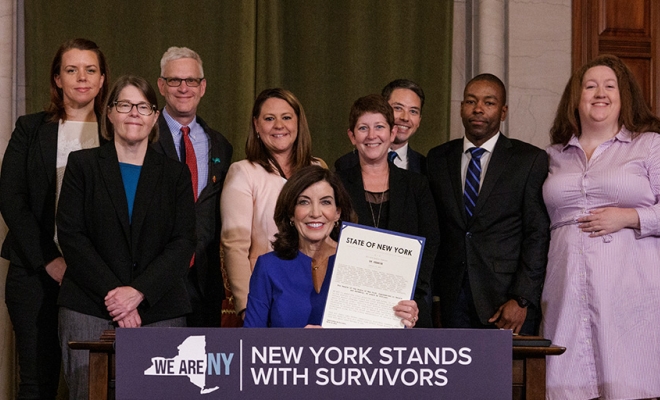
Well therein lies a tale. The statute didn’t allow it until, coincidentally <cough> last year. The Adult Survivors Act was passed by the New York legislature and signed by Democratic Governor Kathy Hochul in 2022. It created a “one-year lookback window for survivors of sexual assault” to legally pursue their alleged abusers, irrespective of when the abuse took place.

It was and is a blatantly political measure, pandering to the #MeToo crowd, which itself is deeply conflicted and corrupt. Now bad, bad men like Harvey Weinstein, Bill Cosby and…surprise! Donald Trump, can be sued during a convenient one year window no matter how long ago their alleged sexual misconduct took place, or how blurry memories of the details may be. Never mind that the protection against unfair sexual assault and sexual harassment lawsuits based on accusations that only surface when the accuser calculates that there are forces at play in society (like “Believe all woman”) making a victory likely should be available to all citizens. Never mind that such late-hit lawsuits rely on emotion and politics as much as evidence.
Continue reading

Observations On The Trump Defamation and Rape Civil Trial Verdict [Updated]

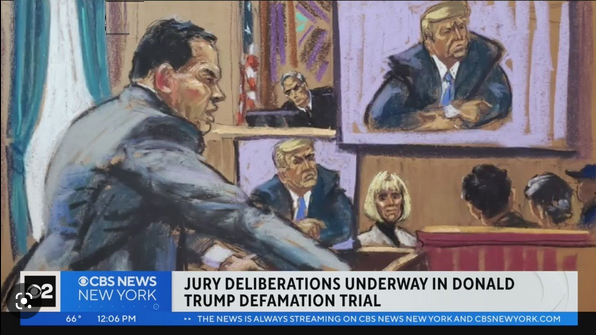
Former President Donald Trump has been found liable in the rape and defamation civil suit brought by Jean E. Carroll’s civil suit, and Carroll is to be awarded a total of $5 million in damages. This was not a criminal case, because the statute of limitations for rape had run: the alleged sexual assault occurred in 1995 or 1996.

A federal jury of six men and three women found that Carroll, now 79, had proved by a preponderance of the evidence that Mr. Trump sexually assaulted her in a dressing room of the Bergdorf Goodman department store in Manhattan. The jury did not, however, find that Trump raped her, as she claims.

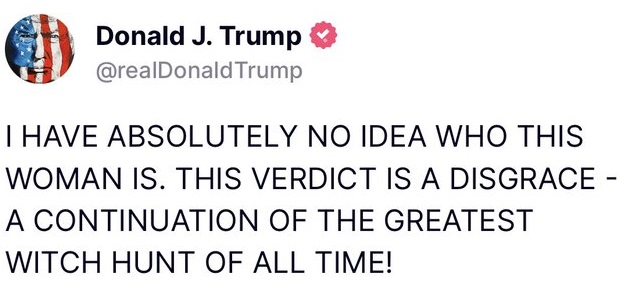
But because the former President on his Truth Social platform called her case “a complete con job” and “a Hoax and a lie,” the jury also found that he had defamed the plaintiff. His lawyer said he would appeal; no witnesses were called on behalf of Trump’s defense.

The ex-President’s reaction was characteristic:

Ethics observations:

Continue reading

Final Ethics Observations On The Bud Light-Dylan Mulvaney Ethics Train Wreck

The last time EA visited the corporate cautionary tale was on April 23, here. Today’s post should be the end-point for this particular ethics matter, but you never know.

1. This isn’t going to blow over. Some commenters here and professional woke spinners in the news media tried to make the case that the backlash over Bud Light putting trans performance artist/influencer Dylan Mulvaney on a Bud Light can and featuring the camp figure in a promotion pandering to LGTBQ audiences was short-lived and a “nothingburger.” That has not been the case. Bud Light sales have fallen significantly for the third consecutive week. Beer Business Daily described the response to the campaign as a “shocking deterioration” of Bud Light’s market share. “We’ve never seen such a dramatic shift in national share in such a short period of time,” the newsletter said. Meanwhile, Bud Light’s biggest competitors like Coors Light and Miller Light are gaining consumers while Bud Light loses them.

So the immediate ethics breach here was competence. Corporations are supposed to use marketing to increase sales, profit and favorable views of their products—in fact, they are obligated to. Using marketing and messaging to endorse controversial political positions as self-conscious virtue-signaling is irresponsible, and, frankly, stunningly stupid. Pick your analogy: Bud Light featuring Jane Fonda on a can during the Vietnam war? How about Cindy Sheehan on a can during the Bush administration? It is amazing that Bud Light’s management was so estranged from the views of its own market.

2. It is not the job of corporations to try to change the views of its market.

Continue reading

Unethical Quote Of The Month: San Francisco Homeless Resident Joseph Peterson

“I just stole to eat.”

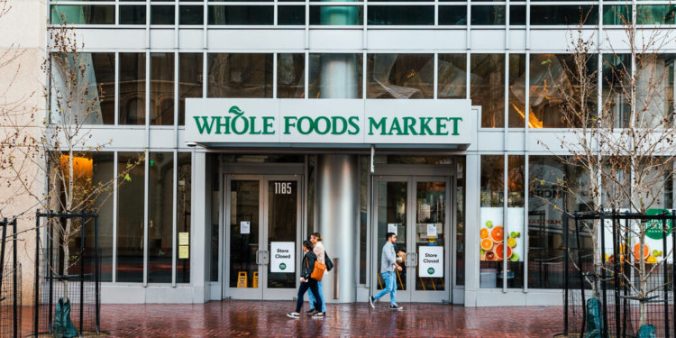
 —Joseph Peterson, a homeless man in San Francisco, lamenting the demise of the Whole Foods in his neighborhood and attempting to draw a material distinction between the rampant theft from the store by those seeking to sell what they stole, and his own shoplifting.

And there it is! In such carefully crafted rationalizations lie the seeds of societal rot. Peterson thinks his personal shoplifting—he cops to stealing macaroni and cheese and chicken from the hot food bar at the now closed grocery store a number of times, but believes that his theft is justifiable, unlike those who wanted to sell their heist for cash. Also believing his thefts were justifiable are many of San Francisco’s elected officials. They also believe that the “bad” shoplifters in Peterson’s view are equally justified, and in fact they are. What’s the ethical difference between stealing food to eat it, and stealing food to sell and use the money for other needs? There is none. In both cases, the expense of the food stolen is borne by other city residents, who will have to pay higher prices for their food, unless the prices become so high that they resort to theft as well.

Continue reading

The Problem: Trump Doesn’t Believe In Democracy That Much More Than Democrats Do

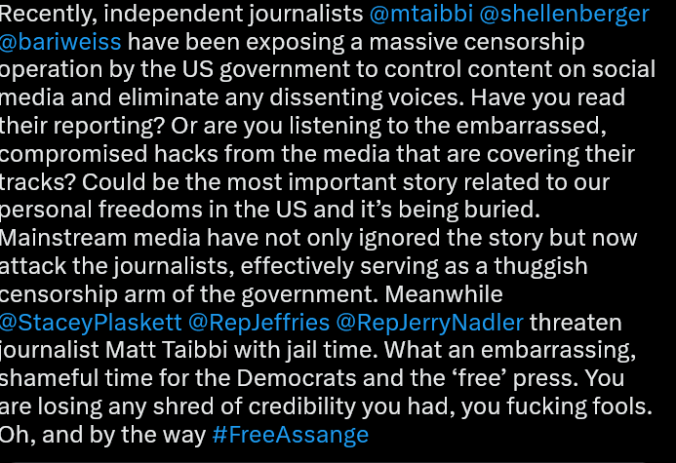
Some prominent progressives are noticing that Democrats are increasingly hostile to the core principles of democracy. Yesterday, for example, actor/activist Tim Robbins issued a tweet condemning the House Democrats who threatened reporter Matt Taibbi with prison following his congressional testimony on the so-called Twitter Files:

A serious, individual liberties-respecting, democratic values-honoring GOP candidate who hadn’t already burned every bridge he came across might have some success turning such previously knee-jerk Democratic voters around. Such a candidate is emphatically not Donald Trump.

In both his social media posts and his recent rally in New Hampshire, Trump implied that he wouldn’t participate in any pre-primary debates among other contenders for the Republican nomination. Describing the debates as giving rivals like Florida governor Ron DeSantis a chance to challenge him, he asked the crowd n Manchester,“Why would you do that?”

Gee, give me a minute; let me think. Oh! You do that because democracy requires an informed public. You do it because voters deserve an opportunity to compare their options. You do it to show respect for the process of American elections and the office Trump is seeking.

Then he said, “I do look forward to the debate with Joe.”

Idiot. Why would Biden agree to debate Trump if he didn’t have to? Trump ducking the primary debates would eliminate any traction he could gain by claiming that Joe was “ducking him.” Trump skipping the GOP candidates debates all but guarantees that Biden will refuse to subject himself to the risks of a debate format.

All of which degrades and undermines the functioning of our system. These guys don’t care, and Trump is seemingly setting himself up to run a Bull Moose-style kamikaze third party assault if the Republican Party doesn’t do his bidding and make him its candidate. Recall that the RNC announced that promising to support the GOP nominee was a prerequisite for participating in the debates. Now Trump is saying, “Debates? I don’t need no stinking debates!” It’s obvious what he’s threatening, isn’t it?

Trump is declaring himself the nominee—Napoleon crowned himself as Emperor, remember—-leaving the rest of the possible contenders with a no-win dilemma: all they can do is knock each other off while Trump coasts to the nomination, only appearing before fawning audiences of deplorables and never having to engage with his critics.

Democrats want to silence and criminalize dissent; Trump wants to block any route to challenging his power.

As divided as Americans are, it doesn’t appear that enough of them care about preserving democracy to do anything to preserve it. They only differ on the means by which they are willing to let it collapse.

On Waco, “Waco,” And Cults

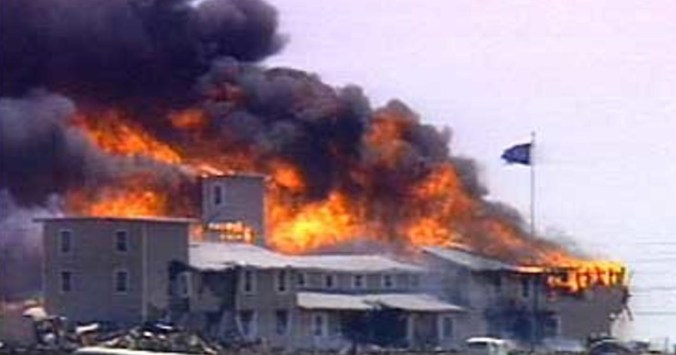
Another horrible occurrence that I did not mention yesterday while review the ethics-related events of April 19 through the centuries was the tragic conclusion of the FBI’s seige against Mount Carmel in Waco, Texas, in 1993. After a 51-day stand-off between the federal government and an armed religious cult, the compound burned to the ground, with about 80 members of Branch Davidians, including 22 children, dying in the blaze.

This was an ethics train wreck to be sure, and an unusually deadly one. There are so many documentaries and online accounts of the incident (of various quality and accuracy) that I’m not going to add to them here. I do recommend the 2018 Showtime docudrama series “Waco,” which is now streaming with a fascinating new sequel, “Waco: Aftermath,” currently being presented on Showtime.

There is a natural bias in “Waco”: its main sources were a book by one of the survivors and cult members whose wife perished in the fire, and another by an FBI negotiator who was extremely critical of how the agency handled the situation. Both authors come off as heroes of the disaster to the extent that such a botch can have heroes. When the docudrama premiered in 2018, many reviewers complained that the writers treated the FBI as the villains of the story, with cult leader David Koresh portrayed too sympathetically.

My impression, seeing “Waco” now, is that the series’ creators were on to something that has come into sharper focus in recent years. The FBI abuses its power, is badly managed, has too much autonomy, and can’t be trusted. That should have sunk in in 1993, but the news media was determined to let the hallowed law enforcement agency, Attorney General Janet Reno, and especially President Bill Clinton off the hook. I remember the coverage well: Koresh’s cult was lumped into the paramilitary and survivalist anti-government movement of the period. The Waco siege followed on the heels of the Ruby Ridge fiasco the year before, involving the same federal agencies, the FBI and the ATF. Even though that fatal showdown was ultimately shown to be exacerbated by the Feds (and a lawsuit found the agencies liable for damages), the public and media still were conditioned to regard the FBI as the “good guys.” Sure, it was tragic that people died, but the consensus was that they brought it on themselves, sad as the outcome was. At the time, I found it astounding that Reno wasn’t forced to resign, and that President Clinton escaped any accountability at all.

Much of that result was because of the subsequent Oklahoma City Bombing by Timothy McVeigh in 1995. Public opinion was turning against the trend of over-aggressive government following Waco: Rush Limbaugh in particular was leading a daily attack on what he saw as as Big Government restrictions on personal liberties (like the right to live out in the desert with fellow followers of a deranged but charismatic religious fanatic who claimed to be chosen by God). Once McVeigh’s truck brought down the Alfred P. Murrah Federal Building, destroyed or damaged 324 other buildings within a 16-block radius, killed 168 people and injured 680, however, public opinion turned decisively the government’s way. McVeigh cited Waco as a major reason for his terrorism, and the Cognitive Dissonance Scale worked its predictable magic: now the Branch Davidians were linked to pure evil. The FBI, and thus the U.S. government, propelled to the other side of the scale, the “good guys” at Waco, at Ruby Ridge, and always.

They aren’t, and weren’t. “Waco,” for all its flaws, makes that contrary conclusion unavoidable.

Continue reading

From Chicago: Today’s “It Isn’t What It Is!” Moment Of Delusion…

The impetus for this indignant and ignorant rant is Walmart’s announcement that it is closing 4 of their 8 stores in Chicago, including the one at issue. In announcing the move, Walmart explained,

The simplest explanation is that collectively our Chicago stores have not been profitable since we opened the first one nearly 17 years ago – these stores lose tens of millions of dollars a year, and their annual losses nearly doubled in just the last five years. The remaining four Chicago stores continue to face the same business difficulties, but we think this decision gives us the best chance to help keep them open and serving the community.

Continue reading

The “Get Trump!” Plan Has Officially Abandoned All Restraint

The Washington Post revealed that it isn’t just state prosecutors like Alvin Bragg who are determined to find something, anything, to use to convict Donald Trump, it is federal prosecutors too. The Post story also makes it clear that not only are the gloves off, so is any pretense of rationality.

The federal prosecutors still looking for ways to claim Trump was trying to mount an “insurrection” on January 6, 2021 have now begun seeking documents related to his fundraising after the 2020 election. Somebody apparently had a brilliant idea: “Hey! The news media keeps saying that Trump’s claims that the election was stolen are “baseless,” so why can’t we say that Trump or scammed donors by using false claims about voter fraud to raise money?” So that’s the latest Hail Mary. It might be the most ridiculous and dishonest yet.

This latest “Get Trump!” miasma focuses on money raised during the period between Nov. 3, 2020, and the end of Trump’s time in office on Jan. 20, 2021, with prosecutors looking at whether anyone associated with the fundraising operation violated the wire fraud laws, which make it illegal to make false representations over email to swindle people. The Post’s anonymous (of course!) sources say that special counsel Jack Smith’s office has sent subpoenas to Trump advisers and former campaign aides, Republican operatives and other consultants involved in the 2020 presidential campaign, some of these figures have already testified in front of a Washington grand jury. The idea, apparently, is to find communications proving that Trump, his allies allies and advisers were privately admitting that Biden’s election was beyond reproach, while stirring up passionate supporters with appeals using the voter-fraud claims to generate more than $200 million in donations.

Please. Seriously? We are now going to use a fraudulent claims basis to prosecute political fundraising messages? THAT will work out well.

Continue reading

Apparently Donald Trump Is A Ham Sandwich [Corrected]

Of course, we’ve known for decades that the man was a ham. Yesterday, however, unethical prosecutor Alvin Bragg provided decisive evidence that the former POTUS is also a ham sandwich, with an abusive grand jury indictment that perfectly embodied the old saw (first coined by former Chief Judge of the New York Court of Appeals Sol Wachtler) that district attorneys could get grand juries to “indict a ham sandwich.”

When the breathlessly anticipated indictment finally came down from the grand jury (here is the indictment), it fulfilled the worst predictions of critics.

“Oh, we have to wait to see the indictment” was the mantra from Bragg’s defenders, and that was sort-of true. However, we already knew that this was a bad case: the statute of limitations has lapsed, Bragg has no jurisdiction to enforce federal law, the act of paying for a non-disclosure is not a crime, the claim that the pay-off was really a campaign contribution is based on circumstantial evidence at best, the key witness is Michael Cohen, one of the sleaziest lawyers in the professions long line of sleazy lawyers and convicted perjeror, and both the Justice Department and Bragg himself had already decided it was too weak to prosecute, at least to prosecute ethically. Moreover, Bragg’s “statement of facts” before the indictment (which you can read here), made the case sound just as weak as many suspected it was.

When we learned that there were 34 counts, we thought, or at least I did, “Wow! Bragg must have a lot more to pin on Trump than Stormy Daniels and Michael Cohen!”

Uh, no.

Continue reading

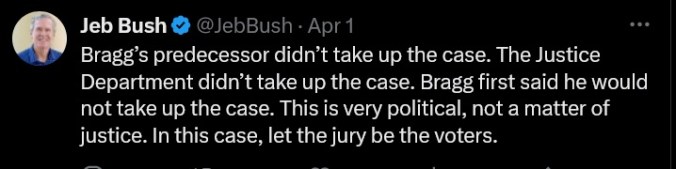
Ethics Reflections On Jeb Bush’s Tweet

Jeb Bush—remember him?—managed to reclaim his lost significance briefly with the tweet above, which was batted around the Sunday morning TV shows, on podcasts and in various blogs.

Observations:

  • He wouldn’t mention Trump’s name, because the former POTUS is the equivalent of Voldemort to the Bush family. How juvenile. But Jeb was and is a weenie, and that’s one of the reasons he never got to run for President.
  • Why should anyone care what Jeb Bush thinks about the indictment? He isn’t a lawyer. He isn’t a New York politician. Using the tweet as an appeal to authority is pathetic: “But Jeb Bush says…” on this topic is exactly as persuasive as “But Joy Behar says…”
  • It’s too late, by about seven years, for the Bush family to emulate fairness and objectivity regarding Donald Trump. The previous two Republican Presidents could have helped unify the GOP, helped Trump accomplish policy objectives they agreed with, bring NeverTrumpers back into the fold and avoided (maybe) the current Democratic Party assault on democracy by not acting like the Corleones and sending out their Luca Brasis to seek revenge on Trump for saying mean things about George and Jeb. They made it clear that they placed family pride above national interests and the institution of the Presidency. Jeb, like George W. is ethically estopped from urging fair treatment of Trump now.
  • The tweet makes no sense, when it isn’t stating the obvious. The fact that Justice et al. didn’t take up the case doesn’t prove anything by itself. Maybe those decisions were political and Bragg’s was not. Of course “this” is very political: any time a prominent political figure is investigated or charged it is political by definition, because the actions have political consequences. “No shit, Sherlock”—indicting a former President is very political, but that doesn’t automatically mean it also isn’t a matter of justice. James Comey decided in part that Hillary Clinton should be let off the hook for conduct that lower level officials have been prosecuted for because he felt that charging a Presidential candidate mid-campaign would unjustly influence the election, which is a valid act of prosecutorial discretion. Was that “justice”? Would charging her have been less political and more about justice?
  • “Let the voters decide”? Ugh. When would Jeb want that principle to apply? Where would he draw the line, or would there be any line at all? Never indict a candidate or potential candidate regardless of evidence of a crime? Any crime? A felony? A crime involving “moral turpitude,” which disqualifies citizens from being lawyers? The public loves the King’s Pass,” #11 on the rationalizations list, which holds that special people—you know, the famous, the beautiful, the rich, the accomplished—should be held to lower standards of conduct than the schmuck next door. We don’t want people who think like that on juries, do we?
  • Asked to comment on Jeb’s tweet, former Manhattan District Attorney Cyrus Vance, as political a DA as one could find, answered,

Continue reading