An Ethics Puzzle From “The Affair”…

This would normally be an item in a Warm-Up or the equivalent, but I haven’t had time for them lately, so I’m going to let the issue fly solo.

In “The Affair,” the protagonist’s best friend assesses the problems that have befallen him as the result of said affair, and offers him $50,000. The adulterous husband (his wife and the friend has been an inseparable threesome in college) protests, but the friend, who is rich and just became richer (he’s a hedge fund whiz), insists. He has the money, and he won’t miss it, and what are friends for?

A couple years later, the protagonist, who has a best selling second novel and is suddenly rolling in money, fame and opportunities, has an argument with his old friend and benefactor at a party. The freind, insulted at his treatment, says, “You seem to forget you that I gave you $50,000!” He adds, “And you never paid me back!” The author protests, “That was a gift!” His friend responds, “Yeah, well you have the money to pay me back now!”

Thoughts:

Continue reading

I Don’t Know What To Call This, And I Really Don’t Know What Can Be Done About it, But I Know It’s Bad…

I’ve mentioned this toxic phenomenon before, but yesterday I was in Hell. While walking Spuds and driving I saw 14 pedestrians striding along staring at their phones. Three were walking their dogs, and paying no attention to them. One was pushing a baby carriage.

In contrast, I saw only nine adults who were not staring at their phones.

The phenomenon is one of many that is isolating members of society, crippling social skills, undermining the interaction between strangers and neighbors, and giving social media and remote communication an outsized influence over society and the culture. We paved the way for it with such developments as the Sony Walkman, now, if self-isolation and absorption in public isn’t a social norm, it is rapidly becoming one.

Is the conduct unethical? It is tempting to argue that it hurts no one but the phone screen addict, though that definitely doesn’t apply to those behaving like this while caring for dogs, babies and children (or crossing the street). The counter argument would be Kant’s Universality Principle: would we want a world where everyone walks through the world oblivious to everyone and everything but their phone? Well, that’s what we are on the way to creating.

Continue reading

Ethics Hero (Corporate Division): In-N-Out Burger

Among the many ways the last few years of Wokemania has reduced the quality of American life and our access to the pursuit of happiness is the creation of the ideology-linked addiction to virtually useless masks and a near-crippling phobia regarding the threat of air-borne illnesses created by fearmongering during the pandemic.

Continue reading

Ethics Quiz: “Colored People” Bad, “People Of Color” Good!

I almost missed this kerfuffle completely. Of all people, one of my most reliably Democrat-supporting friends raised it, beginning by saying. “I know this is not something a good progressive is supposed to say or think, but….

…why in the world is it ‘racist’ to say ‘colored people’ but politically correct to use the term ‘people of color’ when by the undeniable rules of English, they mean exactly the same thing?”

She continued, “And how can anyone belonging to an organization called ‘The National Association for the Advancement of Colored People’ accuse someone of being a racist for saying it?”

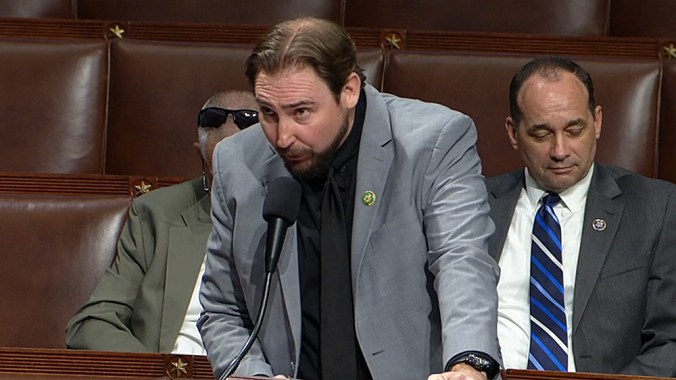
Arizona Republican Rep. Eli Crane was arguing for his amendment to the defense budget and policy bill, as he wants to prohibit the Pentagon from requiring participation in DEI training or the use of ” race-based concepts” in the hiring, promotion or retention of individuals. In the course of debate, Crane said “My amendment has nothing to do with whether or not colored people or black people or anybody can serve, okay? It has nothing to do with color of your skin… any of that stuff.”

Recognizing a “gotcha!” when she saw one, black Democratic Rep. Joyce Beatty, an enthusiastic member of the racist Congressional Black Caucus, demanded Crane’s words be stricken from the congressional record. “I am asking for unanimous consent to take down the words of referring to me or any of my colleagues as “colored people,'” said the dues-paying member of the NAACP. Crane wanted to amend his comments to “people of color,” but Beatty insisted that she wanted his words stricken. Censorship is, after all, her party’s way, and no Republicans had the guts to object.The chair ordered Cranes entire statement stricken by unanimous consent.

Beatty then worked to exploit the gaffe for all it was worth, writing on Twitter: “I am still in utter and disbelief that a Republican uttered the words ‘colored people’ in reference to African-American service members who sacrifice their lives for our freedom… I will not tolerate such racist and repugnant words in the House Chamber or anywhere in the Congress. That’s why I asked that those words be stricken from the record, which was done so by unanimous consent.” Then the Ohio Democrat told CBS that Crane’s explanation that he “misspoke” was a lie. “He didn’t misspeak,” Beatty said. “He said clearly what, in my opinion, he intended to.” 

In other words, he intended to use a racist slur.

Your Ethics Alarms Ethics Quiz of the Day is…

What is fair treatment for Rep. Crane?

Continue reading

“Curmie’s Conjectures” #3: Confucius and the Fourth Circuit

by Curmie

Twentysomething years ago, a few months after completing my PhD, I got a phone call from my mentor in Asian theatre, who, upon learning job search wasn’t going as well as I might have hoped, asked if I wanted to teach a couple sections of the university’s Eastern Civilizations course.  I asked if I was really qualified to teach such a course.  His response: “You know something, and you can read.” 

Based largely on his recommendation, I got an interview for the position.  I made no attempt to conceal my ignorance of a lot of what I’d be teaching.  But the department had struggled with grad students who had lost control of their classrooms, and I’d taught full-time for ten years before entering the doctoral program; I got the job.  The head of the Eastern Civ program closed the interview with “There are some books in my office you’ll want to read before you start.”  I knew something, and I could read.

That’s relevant to my consideration of the recent ruling of the Fourth Circuit Court of Appeals in Porter v. Board of Trustees of North Carolina State University, in which a tenured faculty member claimed to have been punished for arguing against certain initiatives undertaken by his department.  I’m no lawyer, so there’s some legalese I’m not so sure about, and I have no interest in chasing down all the precedents cited by either the majority or the dissent to see if they really say what these judges say they say.  But I know something and I can read. 

More to the point, one of the texts I taught in that Eastern Civ course was Confucius’s Analects, which I had to get to know a lot better than I did previously in order to teach it to someone else.  One of the central tenets of Confucian thought was his argument against having too many laws, as no one could possibly predict all the various special circumstances surrounding every dispute.  Context matters; timing matters; motives matter.  Confucius’s solution was to turn everything over to a wise counselor (like him) who would weigh all the relevant elements on a case by case basis.  That’s not the way our justice system works, nor would it be practical, but it’s easy to see its appeal… in theory, at least.

Significantly, Confucius’s reservations about laws’ inability to anticipate all the possible combinations of circumstances are the first cousin if not the sibling of what Jack calls the “ethics incompleteness principle” which asserts that there “are always anomalies on the periphery of every normative system, no matter how sound or well articulated.” 

Continue reading

Unethical Quote Of The Week And Worst Apology Of The Month: Doug Dechert

New York gossip columnist Doug Dechert (above right), during the Robert F. Kennedy Jr.presidential campaign event for the press that he was hosting, became enraged during a contentious exchange regarding climate change and shouted,

“I’m farting!”

as he did, in fact, fart loudly for the assembled. That’s The Ethics Alarms Unethical Quote of the Week, ironically, because it was completely honest and factual. Later, he provided the Ethics Alarms Worst Apology of the Month, and maybe the year, by telling the New York Post, “I apologize for using my flatulence as a medium of public commentary in your presence.”

This is also ironic, because it is a straightforward and seemingly sincere apology without qualifications, and yet is still terrible, indeed uniquely terrible, because it doesn’t even fit on the Apology Scale.

I suppose the closest would be #9: “Deceitful apologies, in which the wording of the apology is crafted to appear apologetic when it is not (“if my words offended, I am sorry”). Another variation: apologizing for a tangential matter other than the act or words that warranted an apology.” But the wording is deliberately humorous, raising the suspicion that Doug Dechert isn’t sorry at all, and doesn’t care if everyone knows he isn’t sorry. Moreover, intentionally farting at a public event you organized for a presidential candidate and announcing it, thus turning the event into a fiasco that can only embarrass the individual it was supposed to benefit, is one of those things that can’t be apologized for, like setting someone’s cat on fire.

Come to think of it, Dechert also should be in the running for the Ethics Alarms’ Asshole of the Year title. For more reasons than one.

Continue reading

Anatomy Of A Canadian Ethics Train Wreck

Ugh.

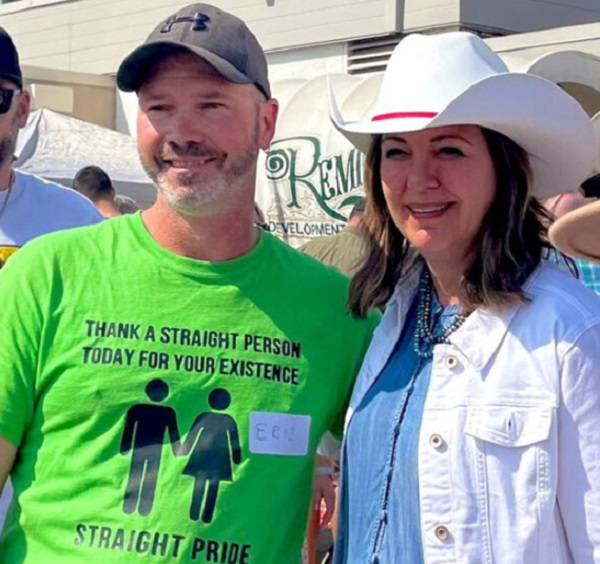
Alberta premier Danielle Smith was photographed with a man wearing the T-shirt you see above. It was circulated on social media. Immediately, she was criticized intensely, and predictably, Smith immediately groveled. Her spokesperson said, “The premier didn’t read his shirt and obviously doesn’t agree with its message. She has always been clear that she supports the LGBTQ+ community and will continue our work to make sure they feel safe in our province.”

What’s going on here?

1. The guy, whoever he is, is a jerk. That’s not a T-shirt, it’s a protest sign, and intentionally confrontational. I have always agreed with the maxim that a person’s IQ is inversely related to the number of words on his or her T-shirt. This is a prime example.

2. Further proving that the T-shirt wearer is someone to be avoided: the back of it read, “Good people disobey bad laws.” No, in fact good people obey all laws, or if they want to engage in civil disobedience, violate the “bad law,” accept the consequences, and see how many people agree with them. Asserting that it is good to break laws you happen to think are “bad” is a recipe for societal chaos.

3. The premier lied, and obviously so. How could she miss all those words, unless she can’t read? The guy’s a walking billboard; you can’t stand next to someone like that and not appear to be endorsing his message.

4. Whoever drafted that statement should be fired. What is it that Smith doesn’t agree with? Should straight people be ashamed? It’s not the message that is objectionable but the in-your-face gesture. It’s like “It’s OK to be white”—the shirt’s purpose is to annoy and start an argument.

5. What does a T-shirt have to do with “feeling safe”? Safe from words? Should non-LGBTQ individuals feel “unsafe” when they see Pride parades, signs and slogans?

When Ethics Alarms Don’t Ring AND You’re A Moron: The Roman Colosseum Vandal

First, the moral: Cultural literacy is a life competence obligation both at home and abroad. Now the tale:

I had been planning on a post about the manhunt in Rome for the unethical tourist caught on video carving “Ivan + Hayley 23/6/23” into a brick on a wall of the Colosseum. Authorities went looking for “Ivan;” meanwhile, not only is destruction of natural and historical sites an occasional Ethics Alarms theme, but in this case the video-taker’s conduct was also questionable: he was more interested in taking a viral video than he was in stopping the vandalism.

Continue reading

From The Ethics Alarms Mail Bag: The Case Of The Abandoned Beanie Babies

Now and then people contact EA privately for some ethics guidance, which I usually supply free of charge. Yesterday an inquirer spun this tale:

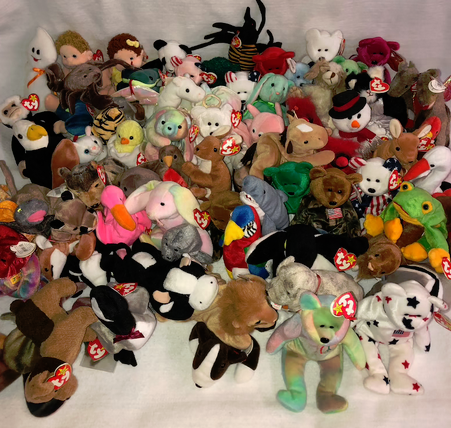
Her neighbor decided to clean house, and get rid of all of her now grown and out children’s abandoned toys. Among these were dozens and dozens of Beanie Babies, the toy fad of the Nineties. My inquirer said that neighborhood parents and pre-schoolers were just scooping the things up, and so she asked her neighbor if she could have three, two for her granddaughter, now 4, and one for as a future stocking-stuffer. Receiving a positive response, she chose three that she thought a little girl would like.

She swears it didn’t occur to her at the time that Beanie Babies are collectibles, but when she got home, she was moved to investigate. She was shocked at what some of the old stuffed animals are worth, and was particularly shocked to see that one of the BB’s she had chosen at random and that appeared to be in mint condition is considered rare and valued at $70,000. Her question: what is the ethical course to pursue at this point?

Continue reading

“They’re Here!!!” How Do People Get This Way, And Why Do They Now Think It’s To Their Benefit To Display Their Malady?

I usually keep a watchful eye on advice columns, especially “The Ethicist,” Carolyn Hax and a few others, but have been a bit lax of late. Thus I missed this astounding letter sent to “Ask Amy,” which was bought to my attention by loyal reader and frequent commenter Jeff.

Hold on to your heads or erect signs nearby warning others that they are in a potential head-explosion zone…

Continue reading