Little League Ethics: A Bat Flip Controversy Goes To Court

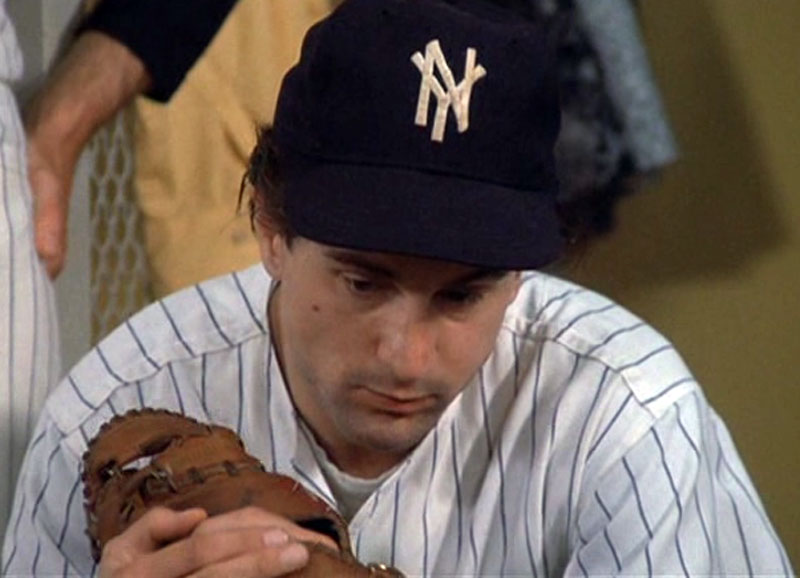
Little Leaguer Marco Rocco of Haddonfield, N.J., 12-years-old, hit a majestic home run in a Little League tournament game against a team from Harrison last week. Marco emulated what many big league players do in similar moments of triumph: he flipped his bat into the air to celebrate as he began to circle the bases. His homer put his team up 8-0 and a step closer to the Little League World Series.

But Marco was ejected from the game, and, by the Little League rules, the ejection included a one-game suspension for the next game too. Marco’s innocent bat flip meant he would would be barred from playing in a showdown against Elmora Township, with a the New Jersey state Little League title on the line. Marco’s father was told that in the umpire’s judgment, his son broke a rule that “At no time should ‘horseplay’ be permitted on the playing field.” No rule mentions bat-flipping.

So Mr. Rocco, who is a lawyer, filed a motion asking a New Jersey court for a temporary restraining order, and got it. The judge that Marco could play, in the next game, which took place yesterday, holding that “Little League is enjoined from enforcing its suspension.”

Continue reading

Another Bonkers Question To “Social Q’s”

Who are these people?

A mere summary won’t do the full craziness of this question to the NYT’s manners advice column full justice, so here’s the whole, ugly thing:

My husband’s brother, mid-60s, has always been single. Before his parents died, he lived with them. While attending a violent political rally that my husband and I opposed early in the pandemic, he contracted Covid, then infected his mother and behaved irresponsibly in managing her care. She died soon after. We have had no real relationship with him in years. Still, he emails suggestions of gifts he would like for birthdays and Christmas. We send them, and he responds with thank-you notes. When he asks what we would like, we respond that we don’t want any gifts. He sends them anyway, and we donate them to charity. We do not acknowledge them, which we normally would do. Recently, he expressed a desire for acknowledgment of his gifts. How should we handle this?

I’m not going to read columnist Phillip Galanes’s answer to this one because I declared him an irredeemable woke bigot quite a while ago. I’m insulted that he thinks any reader worthy of human association would be interested in such a family’s pathology. Shunning a family member is an extreme move that had better be justifiable; shunning him without letting him know he’s being shunned is not just cruel, it’s weird.

Considerations:

Continue reading

Smug, Self-Satisfied Progressive Asshole of the Year: David Litt

The obnoxious screed “Is It Time to Stop Snubbing Your Right-Wing Family?,” authored by an obscure writer I never heard of (three of his better-known mentors are above) and hope I never hear of again, was deemed appropriate content for New York Times readers, and not as satire either.

Litt epitomizes the type of insufferable elitist jerks that have made the modern Left the pit of despond that it has become over the last decade or so. Yuck. Was this guy ever a tolerable human being? The Times should be required to publish a full analysis of how Litt got this way as a public service, kind of like that episode of “I Love Lucy” where her book draft was sought by a publisher to use in a how-to tome to illustrate what writers shouldn’t ever do.

The column is about how Litt “felt a civic duty to be rude” to his wife’s younger brother because he hadn’t seen the light and surrendered his mind to the Woke and Wonderful. A few excerpts will tell you all you need to know about Litt, but I may add a little commentary here and there:

Continue reading

There’s No Crying In Tennis!

Poland’s No. 8 seed Iga Świątek beat the U.S.’s 13th seed Amanda Anisimova 6-0, 6-0 in the Wimbledon women’s final yesterday. That’s a slaughter in tennis, ending Anisimova’s feel good story as an underdog in humilation.

Świątek is one one of the best players in the world; though this is Świątek’s first Wimbledon title it’s her sixth Grand Slam title. She was favored to win, but no one has won the Women’s finals 12 games to none in a Grand Slam tournament since 1988. Anisimova’s wipe-out is being attributed to nerves; if she were a male player, the explanation would be “choking.”

Worse, however, is that after the match Anisimova started weeping, covered her head with a towel and left the court. When she came back to a huge reception from the crowd, she was still sobbing. After receiving the runners-up’s plate at center court, she cried some more as she addressed the crowd.

Continue reading

Switching Jobs Ethics

A Guest Post by

Alex

(From this week’s Open Forum)

Here are some real life ethics ruminations I’m going through as I’m switching jobs in the next month…

  • Two-week notice: In general, this a good and professional practice. In the past I even extended it to three weeks because of a high-priority project my team was dealing with. This time around it ended up being closer to a week because I had a planned vacation where my last day would have fallen, my current employer provides “unlimited” PTO and did not want to abuse the privilege of extra pay days at the tail end of my tenure. Thoughts?
  • Working for a competitor: In the past I’ve worked for $BIGTECH and seen people who are escorted out of the building because they are going to a company that is remotely involved in the same matters. This time around I’m going to a direct competitor, and yet, my manager, my management chain and HR all seemed fine with me working here until the last day. I’m a professional; in no way would I use the extra time to get access to information I should not or collect data for the new company. Seems like the prudent thing would be for management to cut my access immediately, as there is a balance between getting a good handoff of responsibilities (and actual work) vs. the risk of having someone with broad access. I’m happy the way things are turning out for me – even gives me a chance to say my goodbyes—but at what point is the risk too much for management to accept? (In this case I think the fact that we are not a public company is making the difference)
  • No poaching for a year: All my previous employers had that in the employment contract. This one does not. I don’t plan to try to bring anyone over (it’s a small industry) in the short term, but what does one do when a former coworker expresses interest in coming to the new place?
  • Throwing your own farewell party! This one is on a lighter note. There is a prohibition of using morale budget for farewell parties (understandable), so I’m sort of narcissistically organizing a small pizza get-together for my direct team and coworkers. I don’t need or plan to ask for contributions, but what would be the correct etiquette for that situation?

Anyway, it should be a fun week (as we are also trying to meet a very tight deadline).

An Ethics Alarms “Bite Me!” Goes To Dr. Kirsten Viola Harrison!

The “Bite Me!”is an Ethics Alarms designation reserved for either an individual whose “response to being bullied, pressured and threatened into submissiveness is to say, “Do your worst. I believe in what I am doing, and I don’t grovel to mobs,” or as used several times here, to impugn the author of unethical conduct that demands the response, “Bite me!”

Dr. Kirsten Viola Harrison is a licensed psychologist and a “spiritual integration coach,” whatever the hell THAT means. She’s seeking her 15 minutes of faux fame by lecturing us about how people can unwittingly give off an “unapproachable energy,” thus sending out a “bad vibe.”

“Giving off a bad vibe’ means unintentionally projecting energy, through words, tone and body language, that others perceive as negative, inauthentic, or that make one appear unapproachable,” she explains. “It often triggers discomfort and mistrust, even when no harm is intended. Since our brains are wired to detect dissonance between what someone says and how they say it, the non-verbal signals which inform our emotional responses are exceedingly influential and powerful in shaping our interactions.”

Dr. Harrison has identified nine phrases she says can create these bad vibes if one isn’t careful. Gee, I wonder if “Bite me, you insufferable, over-credentialed fool!” is on the list? In her case, the “Bite Me!” is earned by abuse of authority and making gullible people stupid with New Age psychobabble. Here is her list, and my reactions.

1.”I’m Just Being Honest!”

Continue reading

The Ethicist Answers An Officious Jerk

…and much more nicely than I would have,

“Name Withheld” says that a member of her book club typically regurgitates online reviews of the assigned books that she seldom reads, aggressively presents them as her own, and is begging for a slapdown. “In the days before a meeting, she will casually share with me that she ‘couldn’t get into it,’ but she never says so to the other members. I sit there steaming but don’t reveal her duplicity. What would you do?,” she asks Prof. Appiah, the Times Magazine ethics advice columnist in lat week’s column, “A Woman in My Book Club Never Reads the Books. Can I Expose Her?”

“I get why you’re peeved,” the professor says. So do I: she thinks a social book club is a seminar for credit. “Still, the first rule of book clubs is that someone will always show up having read only the first chapter and the last page, armed with three profound observations from Goodreads.” No, that’s the second rule of book clubs. The first rule is to provide a regular opportunity for people to get together and socialize in the context of a structure more potentially engaging than arguing about Donald Trump. “Your job, in any case, isn’t to police her page turns. Cast yourself as the enforcer, and you betray the spirit of a group dedicated to forging connections through stories.”

Bingo.

“But the goal isn’t to humiliate her…maintain your small, imperfect community. One thing you’ll have learned from your books, after all, is that the flawed characters are always the most human.” Yadayadayada. Maybe she’s having cognitive issues. Maybe she’s dyslexic. Maybe she’s lonely and just wants company. Maybe she’s insecure about her analytical ability. The woman’s cheating in her book club exploits literally hurts nobody but herself at worst, and possibly allows her some human contact that she desperately needs at small cost to the other members.

Sure, the inquirer can expose her. To me, however, the fact that she’d even consider it means I’d rather have the book faker in my club than her.

“Can The Princess Treatment Go Too Far?” Answer: No, If Your Ethics Alarms Function…

I heard the term “The Princess Treatment” for the first time last week, then right on cue the New York Times produced a feature called, Can the ‘Princess Treatment’ Go Too Far? A popular video has prompted discussions about how to treat your significant other, what qualifies as “the bare minimum” and how this all relates to traditional gender roles.” It begins in part,

A husband opening the car door for his wife. A boyfriend surprising his girlfriend with flowers. Remembering her birthday. Tying her shoes. Paying for her nail appointment. Are these normal expectations or examples of the “princess treatment”? A recent slew of popular videos on social media have debated the concept, and what it means for women in relationships…Last week, Courtney Palmer, 37, reignited that discussion with a video that has garnered more than three million views. In it, she describes how princess treatment informs her relationship, including how she will sometimes defer to her husband. “If I am at a restaurant with my husband, I do not talk to the hostess, I do not open any doors and I do not order my own food,” she says in the opening of the nearly six-minute video, which has prompted a wide-ranging discussion about gender roles, restaurant etiquette and relationship expectations…

You can read it all: it’s a stupid debate. Not only with “significant others” but with all women (and, for that matter all men), how I treat them in private and social situations is based on 1) how I would like to be treated, Golden Rule 101, 2) how I have been told or discerned that they would like to be treated, and 3) what I have concluded is basic manners, and ethical societal norms that I believe should be cultivated. Why is this hard? Continue reading

If Trump Derangement (And Groupthink) Can Make Intelligent and Informed People Post Junk Like This…

.

…what hope is there for sanity and rational discourse in the near future?

I am distraught. The meme above was posted with approval by a elite college history professor I have known for 50 years. I know he’s smarter than this, wildly so, and that he would flunk any student exercising such poor critical thinking skills in an essay or thesis. So how did he come to post such obvious crap, and how can he be helped? Continue reading

Message to Simone Biles: “Shut Up and Vault!”

It shouldn’t matter than cute little Simone Biles isn’t very bright. She’s a talented gymnast, and has parlayed that skill into a fortune, a brand, and enough fame to last her a while. There was that choking episode at the 2020 Olympics, but never mind: she’s won enough championships and medals to qualify as one of the all-time greats.

Unfortunately, Biles, like so many other jocks and celebrities,, has let her popularity and acclaim in a very narrow field go to her head. She thinks she has something to contribute to national debates that have nothing to do with floor exercises and the balance beam, and she doesn’t. I’d love to know what books, if any, Biles has read while being essentially a full time gymnast since she was knee-high to a praying mantis. The fact that she never attended high school (she was home-schooled) and eventually got a college degree from a non-profit, online college doesn’t mean Simone necessarily is lacking in critical thinking skills, but her engaging in a name-calling battle with Riley Gaines—the former competitive swimmer who has become a critic of trans men who still have to shave every morning throttling girls and women in women’s sports because they can— does.

To begin with, Gaines is smart, articulate and knows her topic. Biles’ contribution to the debate has consisted of social media posts the equivalent of “Oh yeah?” and “Well, I’m better at my sport than you were at yours, so there!” Here’s one…

Continue reading