Vice President Biden May Be A Boob, A Hypocrite And An Ethics Dunce, But He Understands The American Culture Better Than Most Of His Party

I’m late to the blog today, because I spent it giving a special program for the Smithsonian Associates called  “From Stagecoach to Django Unchained: The Hollywood Western and Its Influence on American Values, Aspirations and Culture.” It consisted of me talking, a terrific Powerpoint presentation by the gifted Grace Marshall, and almost three hours of clips from classic Westerns—the whole session was five hours. My primary message is that anyone who is not literate  regarding the Hollywood Western really doesn’t understand the myths and archetypes that powerfully influence U.S. culture to this day. Within that “anyone” are the majority of pundits and journalists, a large percentage of citizens under 50, and the vast majority of women and minorities. This is a problem.

For example, no one can consider the vast influence of the Western genre on American culture and be the least bit surprised that gun control has an uphill battle with the American public. No other culture has as its primary source of heroes, legends and lore figures and events so dependent on firearms as a means to right wrongs, protect the innocent, and punish evil. Frankly, if a pundit doesn’t understand why John Wayne (who died in 1979) just set a Harris poll record by being included in its annual list of top ten most popular movie actors for twenty consecutive years, from 1994 to 2014, I don’t think they can comprehend the nation sufficiently to opine on it.

Joe Biden, however, understands. I have been critical of Joe, as he is frequently an embarrassment, and there was a lot wrong with his comments today as he was honored with the “Voice of Solidarity” award by Vital Voices, a women’s rights charity, at their event celebrating “men who combat violence against women.” Still, Biden proved that whether he knows it or not, he is more atuned to U.S. culture than most of his colleagues. He deserves credit for that, if nothing else.

You see, Biden told a fascinating personal anecdote from his childhood. He related:

“I remember coming back from Mass on Sunday Always the big treat was, we’d stop at the donut shop…We’d get donuts, and my dad would wait in the car. As I was coming out, my sister tugged on me and said, ‘That’s the boy who kicked me off my bicycle.’ So I went home—we only lived about a quarter mile away—and I got on my bicycle and rode back, and he was in the donut shop.”

Biden said the the boy was in a physically vulnerable position,“leaning down on one of those slanted counters,” so he took immediate advantage:

“I walked up behind him and smashed his head next to the counter.His father grabbed me, and I looked at his son and said, ‘If you ever touch my sister again, I’ll come back here again and I’ll kill your son.’ Now, that was a euphemism. I thought I was really, really in trouble… My father never once raised his hand to any one of his children—never once—and I thought I was in trouble. He pulled me aside and said, ‘Joey, you shouldn’t do that, but I’m proud of you, son.’”

The lesson, Biden said, was that one should to “speak up and speak out” to correct wrongdoings. Like much of what come out of Biden’s mouth, this was nonsense in the context of his own story, and was not what the lesson was at all. The lesson was that force, punishment, violence and intimidation is sometimes necessary to stop bullying, discourage misconduct, protect the innocent and vulnerable,  set standards, and give more than lip service to core values. Little Joey Biden didn’t “speak up”: he bashed a bully’s head and threatened to kill him. Apparently it worked, too. America, Americans, the culture and our history—as well as the Duke–have long believed that sometimes violence is necessary to stop violence, and send important messages, and can therefore be virtuous and ethical.  Biden understood that when he was ten, and somewhere deep in that mess of mush he calls a mind, he understands that now. Continue reading →

For You, Dad.

Jack Marshall Sr Army portraitI lost my dad, Jack Marshall, Sr., five years ago today, and for some reason the loss feels especially sharp right now. This has been another miserable birthday, but not so miserable as that one, and I found myself once again revisiting my father’s favorite poem, which was a personnel credo for him and which has often served me well in hard times too. It is linked in the “Inspiration” section on the  Ethics Alarms home page, as well as quoted in my post here on the day my father was buried in Arlington National Cemetery.

Nonetheless, I am going to post Rudyard Kipling’s “If” once again. My father’s favorite line was…

If you can meet with Triumph and Disaster
    And treat those two impostors just the same;   
That was Dad to the core. He never looked back, never cursed his luck, never thought too highly of himself (or anyone else), always believed in tomorrow, and that no victory was final, and no defeat was forever. And I know he was right, though it doesn’t often feel like it. So this is for you, Dad. Thanks for everything.

“If”

If you can keep your head when all about you

Are losing theirs, and blaming it on you,

If you can trust yourself when all men doubt you,

But make allowance for their doubting too;

If you can wait, and not be tired by waiting,

Or being lied about, don’t deal in lies,

Or being hated, don’t give way to hating,

And yet, don’t look too good, nor talk too wise:

If you can dream – and not make dreams your master;

If you can think – and not make thoughts your aim;

If you can meet with Triumph and Disaster

And treat those two imposters just the same;

If you can bear to hear the truth you’ve spoken

Twisted by knaves, to make a trap for fools,

Or watch the things you gave your life to, broken,

And stoop, and build ’em up, with worn-out tools:

If you can make one heap of all your winnings

And risk it on one turn of pitch-and-toss,

And lose, and start again at your beginnings

And never breathe a word about your loss;

If you can force your heart and nerve and sinew

To serve your turn, long after they are gone,

And so hold on when there is nothing in you

Except the Will which says to them: “Hold on!”

If you can talk with crowds and keep your virtue,

Or walk with Kings – nor lose the common touch,

If neither foes nor loving friends can hurt you,

If all men count with you, but none too much;

If you can fill the unforgiving minute

With sixty seconds’ worth of distance run,

Yours is the Earth and everything that’s in it,

And—which is more—

You’ll be a Man, my son!


Ethics Dunce and Unethical Facebook Post of the Month: Elizabeth Lauten, Spokeswoman for Rep. Stephen Fincher (R-Tennessee)

Elizabeth Lauten, communications director for Republican Congressman Stephen Fincher, decided that she is authorized to give parental advice to First Offspring Sasha (13) and Malia (16) Obama. She was deeply troubled by the young ladies looking bored in photographs she saw online, so she posted this jaw-dropper on Facebook:

Facebook lecture

Wow. What a Thanksgiving feast of unethical features! Let’s see: Continue reading →

Baby-Switching Ethics

The song from H.M.S. Pinafore tells the story amazingly well.

In Johannesburg, South Africa, a horrendous situation resembling the plot-resolving song from “H.M.S. Pinafore” may be reaching an unusual resolution for such cases—a sensible and ethical one. The families never suspected until one of the mothers underwent tests when her ex-husband refused to pay child support. One of the mothers wanted her biological child back, while the other wants to keep the child she had raised. A judge now has to decide.

The court asked the University of Pretoria’s Centre for Child Law to investigate and make a report n what would be in the children’s best interests. The experts’ answer: “The recommendation is that the children should stay with the parents who have raised them and should also be permitted to have contact with their biological parents.”

Exactly. Let’s hope that the court follows the recommendation, the only ethical one. Four years old is too old for this wrong to be set right without making it worse. What about three years old, though? Where do we draw that line? Furthermore, I am assuming that the two families are more or less equally fit, able and qualified to raise children. What if the investigation showed that one family was clearly more advantageous for a child: better educated parents with more resources and experience with children, living in a safer community? Then what would be the calculation of “the right thing”? The benefit of one child would be the detriment of the other, a zero sum game. In such a case, would fairness govern, rather than the best interests of the children? Why should one child be cheated out of the better life awaiting him, because of a nurse’s mistake? Fortunately, we don’t have those details, so we can make a confident abstract ethics judgement without confounding factors and issues. Continue reading →

Watch “Blue Bloods”

Blue Bloods

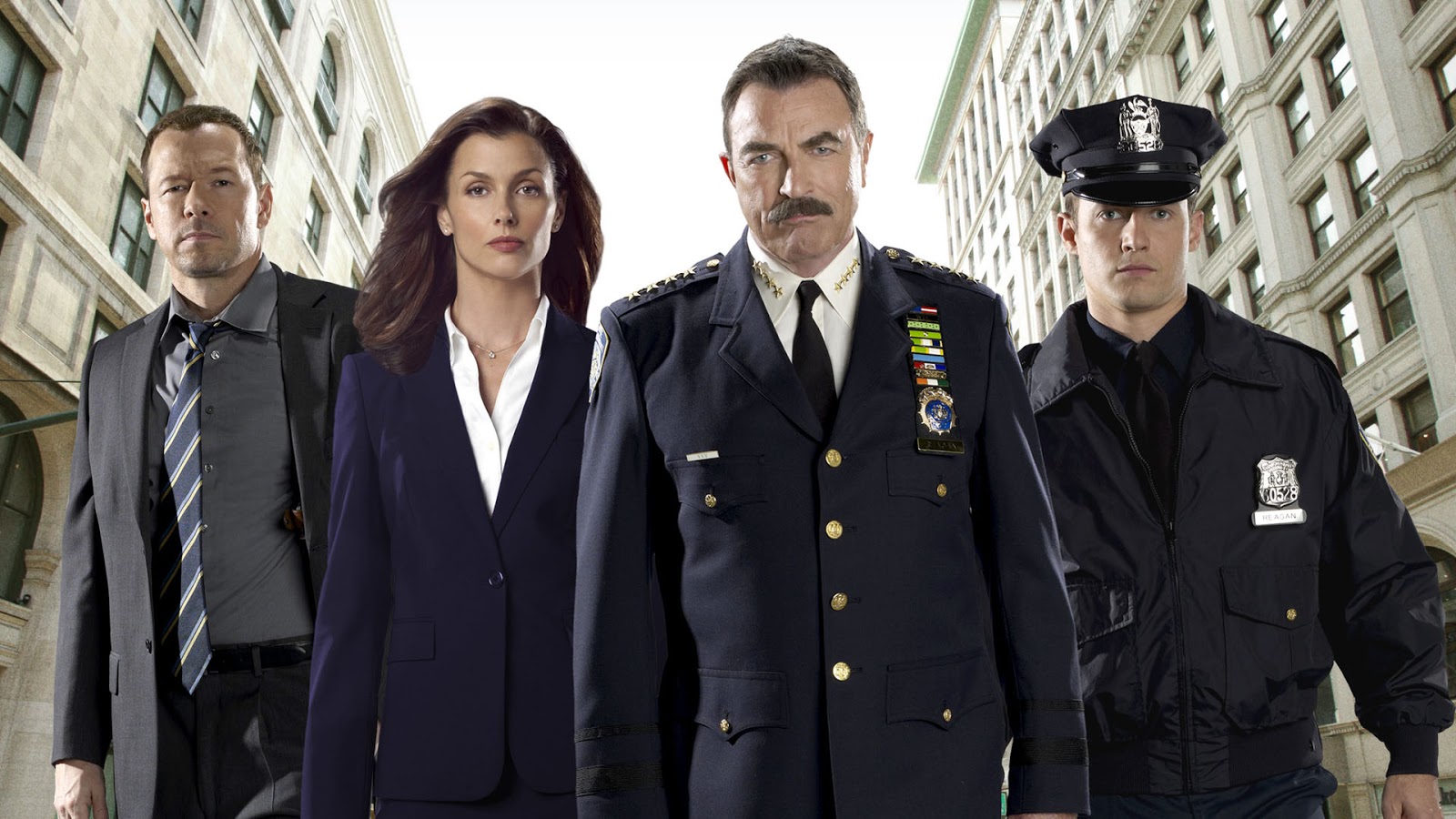
I owe Tom Selleck an apology. The long-time genial hunk, famous as “Magnum, P.I.” and notable in show business lore for missing the career opportunity of a lifetime when contractual obligations forced him to turn down the role of Indiana Jones in “Raiders of the Lost Ark,” has guided his CBS police series “Blue Bloods” to five seasons, exploring tough ethics dilemmas in virtually every episode, and usually doing it very well. For some reason, I’ve only cited the show a few times, once critically, and it deserves better. Netflix started streaming the show, and my wife has been watching about three a day. I really hadn’t been paying sufficient attention, or respect. It’s a wonderful ethics show, the best since “Star Trek, the Next Generation’s” hay day, and one of the very best ethics TV shows of all time.

Selleck plays fictional New York City police chief Frank Reagan. The show could be called “The Conflicts of Interest Family, ” because law enforcement is the family business, and Selleck’s large brood includes two sons, one a patrolman and the other a detective, under his command, and a daughter who is an assistant district attorney. Reagan delicately balances the jobs a father, mediator and boss, all while being given back-seat advice from his father, who is retired but was also a NYC police chief.

I have found myself thinking about how Selleck’s character would react to the Ferguson ethics train wreck. Police shootings have been frequent topics of episodes, as have political efforts to demonize police. Frank was a fan of New York’s controversial stop-and-frisk policy, and accusations of profiling do not reduce him to a mass of apologetic jelly. Meanwhile, he has forged a working relationship or trust with the City’s black mayor, whose loyalties to the black community, and more than a few dubious civil rights headline-seekers.

Selleck is a credentialed, if low-key, Hollywood conservative, and his show’s demographics are just short of Social Security territory.  It’s too bad: teachers should assign the show and discuss the episodes in class. The episode I wrote about earlier was an entire ethics course on its own, but hardly unique in the series: What should an undercover cop do when a child is imperiled in a burning building, and he is the only one who can get to the kid in time? If his photo is taken by the media that arrive on the scene, not only is his cover blown, but his life and family may be in danger. He hands off the child to his partner, who is the on photographed and becomes a hero. The city is clamoring for the Chief to decorate him as a hero. Naturally, the real rescuer is a Reagan.  Should the partner be willing to live a lie? Should the Chief deceive the public and preside over a fake ceremony to preserve an undercover operation that might bust the mob?  This was a memorable “Bluebloods” episode. but many reach this level of ethics complexity, and the duds are far and few between. This season the show has explored many ethics problems that have been debated in the news, such as campus rape, police body cameras, the “blue line,” news media bias, and others.

I apologize, Mr. Selleck. I have neglected your excellent efforts to present ethical dilemmas in law enforcement, leadership and parenting to the public in an intelligent, balanced, courageous and entertaining manner. Great job, on a great show. Please keep it up. I promise to pay closer attention.


Ethics Dunce: Israel

"Nothing personal, you understand. It's just your dead son we're angry at."

“Nothing personal, you understand. It’s just your dead son we’re angry at.”

Prime Minister Benjamin Netanyahu had vowed a harsh response to the recent terrorist attack on a synagogue in Israel by two Palestinians wielding meat cleavers and a pistol. Four rabbis and a policeman were killed in the attack. What does he consider “harsh”?

“I have ordered the destruction of the homes of the Palestinians who carried out this massacre and to speed up the demolitions of those who carried out previous attacks,” Netanyahu said.

Oh.

Yeah, I’d call that harsh.

Hours after his announcement, Israeli forces razed the east Jerusalem apartment belonging to the parents of another terrorist youth, Abdelrahman Shaludi, who intentionally rammed his car into a crowd of pedestrians on October 22, killing a young woman and a baby. Shaludi was shot by police at the scene and later died.
There is no indication that Shaludi’s parents were complicit in the attack, except for, I suppose, spawning him.

Israel seems to think that’s justification enough.It had used house demolitions as draconian retaliation for years in the West Bank but ended the policy in 2005 after the army decided that the tactic had no apparent deterrent effect and made violence more likely rather than less. Hmmm…I wonder where the fact that the tactic is just indefensibly wrong figured in that calculation? It obviously isn’t on Israel’s ethical radar now, as the government has reinstituted the indefensible measure.

The Netanyahu government, says commentators, feels that it must show the Israeli public that it is punishing its enemies. But human rights groups are again condemning the practice, arguing that this is unjust collective punishment targeting not the perpetrators but their innocent families…which is exactly what it is. Continue reading →

Now THIS Is Abuse Of Police Power

Andy and Opie

No riots are anticipated, fortunately.

Police Lt. Brian Keller, an assistant sheriff,  used his unmarked black Dodge Charger, with emergency lights flashing, to stop a school bus so he could hand his son his lunch, which the boy left home without. The bus was not within Keller’s jurisdiction….not that his actions would be much better it it has been.

There was a complaint,  which Lake County (Illinois) officials are investigating.

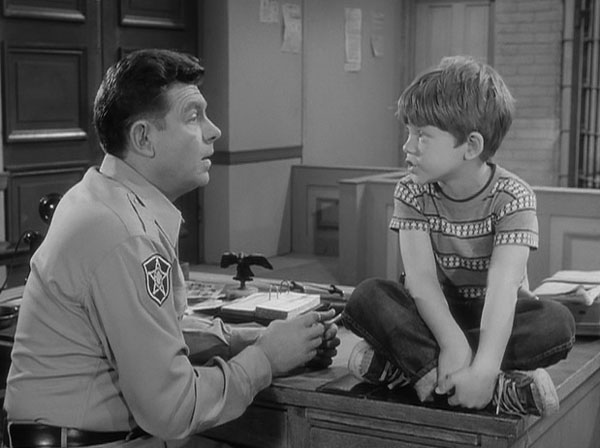
This is the kind of thing Sheriff Andy Taylor might have done for Opie in little Mayberry, but such abuse of power is neither cute nor funny outside of TV Land. I don’t care if he’s a single dad (like Andy); it doesn’t even matter if the kid had crucial, life saving prescription drugs in the lunch bag—insulin, maybe. Using official authority for a personal matter like this is the sign of an untrustworthy cop who doesn’t comprehend his job. It is small wonder that police labor under the public presumption that they don’t respect the law or the limitations of their authority.

___________________

Pointer: Mediaite

Michael Brown’s Parents Go Rogue

Why wait for U.S. Justice to work, when we can be dictated to by representatives of Chile, Senegal, Georgia, and Mauritius?

Why wait for U.S. justice to work, when we can be dictated to by representatives of Chile, Senegal, Georgia, and Mauritius?

Wherever the line lies where grief and anger no longer excuse irresponsible, irrational and destructive conduct, the parents of slain police shooting victim Michale Brown have charged over it.

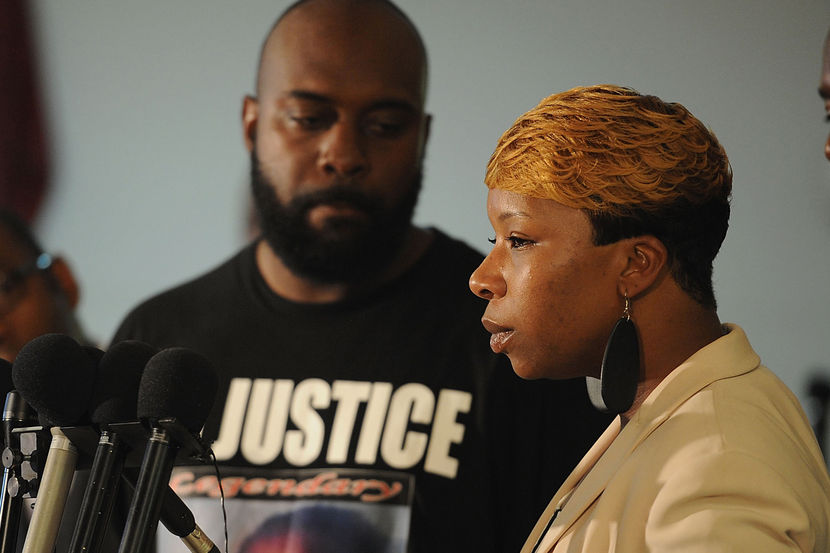
On Veterans Day, Lesley McSpadden and Michael Brown Sr. addressed the United Nations Committee Against Torture  in Geneva, Switzerland. The Committee supposedly works to address brutality by governments around the world, but based on this stunt, and stunt it is, the panel is just one more U.N. sham entity with an anti-American agenda. Whatever is going through the minds of Brown’s parents, their willingness to be part of this transparent attack on the U.S. is in the spirit of treason.

“We need answers and we need action. And we have to bring it to the U.N. so they can expose it to the rest of the world, what’s going on in small town Ferguson,” McSpadden told CNN. It should be obvious that neither parent has any direct knowledge of what happened to their son, and would not be allowed to testify in any court proceeding held to determine the truth. That the United Nations would behave otherwise is proof positive of bad will and nasty intent, and for McSpadden and Michael Brown Sr. to participate in this despicable effort makes them accessories to a plot devised by their own nation’s enemies. Continue reading →

Ethics Dunce: “Girls” Creator/Actress Lena Dunham

Dunham

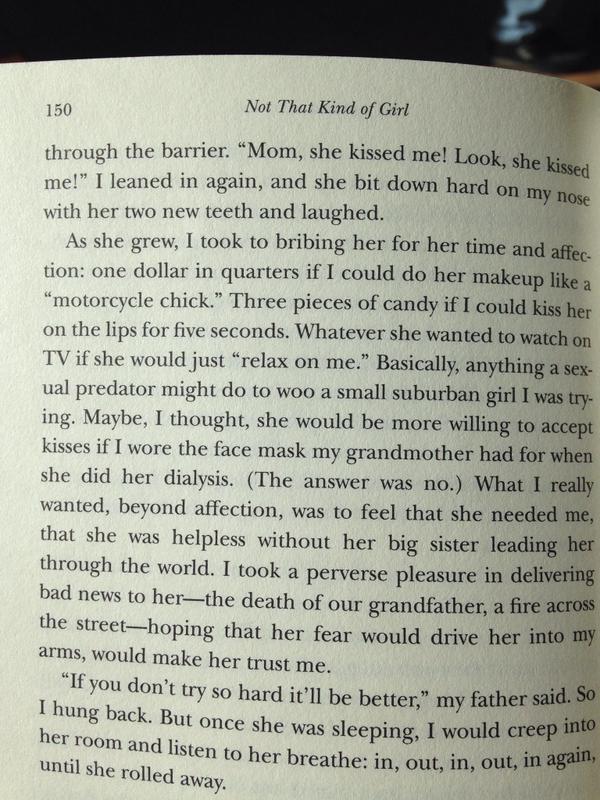
Lena Dunham, creator and star of the inexplicably critically acclaimed HBO series “Girls,” has written a memoir, “Not That Kind of Girl.” Here are ten inquiries regarding its most controversial passages, like the one above,  and the reaction to them:

1. What does one say about a Hollywood figure who puts a passage like this in her memoirs, writing about her relationship with her sister, who was six years younger…

“As she grew, I took to bribing her for her time and affection: one dollar in quarters if I could do her makeup like a “motorcycle chick.” Three pieces of candy if I could kiss her on the lips for five seconds. Whatever she wanted to watch on TV if she would just “relax on me.” Basically, anything a sexual predator might do to woo a small suburban girl I was trying.”

2. Or this…

“I shared a bed with my sister, Grace, until I was seventeen years old. She was afraid to sleep alone and would begin asking me around 5:00 P.M. every day whether she could sleep with me. I put on a big show of saying no, taking pleasure in watching her beg and sulk, but eventually I always relented. Her sticky, muscly little body thrashed beside me every night as I read Anne Sexton, watched reruns of SNL, sometimes even as I slipped my hand into my underwear to figure some stuff out.”

3. Or, most famously, this...

“Do we all have uteruses?” I asked my mother when I was seven.

“Yes,” she told me. “We’re born with them, and with all our eggs, but they start out very small. And they aren’t ready to make babies until we’re older.” I look at my sister, now a slim, tough one-year-old, and at her tiny belly. I imagined her eggs inside her, like the sack of spider eggs in Charlotte’s Web, and her uterus, the size of a thimble.

“Does her vagina look like mine?”

“I guess so,” my mother said. “Just smaller.”

One day, as I sat in our driveway in Long Island playing with blocks and buckets, my curiosity got the best of me. Grace was sitting up, babbling and smiling, and I leaned down between her legs and carefully spread open her vagina. She didn’t resist and when I saw what was inside I shrieked.

My mother came running. “Mama, Mama! Grace has something in there!”

My mother didn’t bother asking why I had opened Grace’s vagina. This was within the spectrum of things I did. She just got on her knees and looked for herself. It quickly became apparent that Grace had stuffed six or seven pebbles in there. My mother removed them patiently while Grace cackled, thrilled that her prank had been a success.

?

I say that that the Hollywood darling apparently used her little sister as a sex toy for at least a decade, was never stopped or admonished for doing so by remarkably negligent parents, and has grown to adulthood without recognizing that there is anything wrong with her conduct.

The first passage not only treads on the borders of incest, but also leaves the uncomfortable question of what else she did to her sister that emulated a sexual predator. The second is profoundly creepy, and the third describes what, if true, is abuse of an infant in terms designed to sound erotic. As blogger Ann Althouse points out, does anyone believe that an infant would stuff pebbles in herself “as a prank,”or that a compos mentis parent wouldn’t immediately assume that the older girl had done it to the younger girl? At best, Dunham is lying, and doesn’r realize that her lie puts her and her family in a terrible light.

4. What can we conclude about the character of a celebrity who proposes such conduct as harmless fun, apparently unaware that it violates standards of fairness, respect and caring, to be emulated and embraced by her readers and anyone whom they have influence over, including their own children, as a legitimate cultural norm? I conclude that her values are seriously and perhaps clinically warped. and that the more critics point this out, the safer everyone is, present and future. Lena Dunham is an ethics corrupter. Continue reading →

The Free Range Mom, Bias, and the Perils Of Blind Loyalty

About  the blind leading the blind---not only is it dangerous, it looks ridiculous to those who can see.

About the blind leading the blind—not only is it dangerous, it looks ridiculous to those who can see.

One of my favorite bloggers just fell into the blind loyalty trap. I’m sympathetic, but this is something that those who accept the responsibility of  teaching us important lessons and clarifying difficult issues must avoid at all costs. Bias makes us stupid, and blind loyalty breeds bias like carrion breeds maggots. It pains me to see Lenore Skenazy, author of the Free Range Kids blog, undermine her credibility like this.

She titled her post Horrible Editorial Chides Mom for Not Predicting Unpredictable Crime. In it, she takes the side of a mother who left her four-year-old son in an unlocked, running van while she picked up her daughter at a northeast school. Someone was drove her van off with her son in it, and subsequently crashed. The boy was unhurt. Under the circumstances, there is nothing horrible about the editorial, which uses the incident—even Skenazy agrees that the mother’s conduct was “dumb”—to caution parents about leaving children in cars. This is the editorial that aroused Skenazy to defend the indefensible:

“A Calgary mom has no doubt learned her lesson. The woman recently left her four-year-old son in her unlocked, running van while she picked up her daughter at a northeast school. The mother said she was gone about six minutes, and when she came out, someone was stealing her van with her son in it.

Fortunately, the incident ended well, with the child unhurt after the thief crashed the van, and the suspect was taken into custody.…charges of child endangerment need to be pressed to set an example, because no matter how often these types of things occur, other parents continue to leave their kids in similar situations. It takes just a few minutes to get your child out of a vehicle and bring him or her along with you on whatever errand needs running. Sure, it’s more convenient just to leave a child in the car and do the errand, unencumbered. However, child safety should trump inconvenience every time. Better a few extra minutes lost bundling a little one in and out of a vehicle than a lifetime of regret and what-ifs.”

The rationalizations in Skenazy’s defense begin with the title of her post, which is dishonest and in her own words, “dumb.” She is using moral luck as a defense, arguing that the sequence of events as they unfolded were merely unfortunate, and the mother just as easily could have returned to her van and car with nothing amiss. The odds favor nothing bad happening in six minutes; on the other hand, the odds of nothing bad happening are much better if a child isn’t in an unlocked vehicle with the engine running at all. Continue reading →