“The Ethicist” Gets A Genuinely Hard Question…And I Don’t Like His Answer

This time, I’d like to concentrate on the answer “The Ethicist” gave to a question more than the question itself. Prof. Appiah was asked by a woman (or man) who had been sexually molested by his (or her) father whether it was time to finally inform family members about the abuse, now that this son or daughter has decided to cease contact with the father for other reasons as well as the obvious one. He or she says the mother and siblings think the decision to cut off Dad is cruel, and that the father should have a chance to make amends—but they don’t know the whole story.

“If I were to share these details with my mother, I’d risk destroying a decades-long marriage in a single conversation,” the inquirer writes. “If I were to tell my siblings, I’d do irrevocable damage to their relationship with our father. Should I continue my silence to protect the rest of my family from emotional harm? Or do I owe it to them to tell them the truth? As I write this, I’m also painfully aware that if I break my silence, he will try to manipulate them into believing that none of this is true, that I’m delusional — he has done it successfully before.”

I’m not a nuanced kind of person regarding situations like this. My reaction: The truth shall set you free. Would I want to know if my spouse or father was a monster? Absolutely. That the information would be painful doesn’t mean I’d rather live in contrived ignorance. The writer has no obligation to protect his father, and it’s not protecting the mother or siblings to enable a lie.

Here’s the philosophy professor’s answer, in a few bite-size chunks:

“Now, an immediate issue is whether your father could be in a position to repeat his crimes with other children — that there aren’t others suffering in silence. If that’s the case, staying silent isn’t an option. You don’t raise this as a concern, but you need to be confident that it isn’t one.” 

And how exactly could that confidence be justified? It can’t be. The writer has already stated that this man has managed to fool his entire family for decades. The rest of “The Ethicist’s” answer is superflous: “staying silent isn’t an option.” A man who molested his own child isn’t trustworthy, and never can be.

Suppose you told him that you’ll keep quiet if he tells the family that he accepts that you don’t want to see him owing to a serious wrong he did to you. The problem is that questions would arise about the nature of that wrong, and that he may not be willing to deal with them. Nor is it obvious that keeping the details vague would leave your parents’ relationship intact. Besides, your father doesn’t sound like the sort of person who could be talked into taking responsibility.

Never mind that: bargaining with the damaging information comes to close to extortion for my ethics alarms.

Even if you reveal the truth, he may be confident, rightly or wrongly, that he can get people to believe you’re not to be trusted.

So what? Don’t be a weenie. Tell the truth, and if the family chooses to believe the abuser, that’s their problem, and their tragedy.

Whatever you decide, though, you shouldn’t be motivated by the thought that you owe this truth to anyone. It’s not that there isn’t reason to care that they know the truth. Many people in your family have relationships predicated on ignorance. They might even feel, were it to come out, that you should have told them before, precisely because we want to live a life in which our important relationships are not based on a failure to understand what our intimates are like.

Yet these reasons to disclose what happened don’t impose a duty on you of doing so. You may judge that they are outweighed by the fact that sharing the truth will cause pain and disruption to many lives without doing enough compensating good. Nor are you obliged to subject yourself to the pain and disruption that your father’s manipulations may bring you.

I disagree completely. There is no duty owed to the father to keep the ugly truth from the family, but the family has a right to know.

“Which brings me to my final thought: Taking measures to protect your well-being isn’t selfish when you are, objectively, the wronged and wounded party. Will your well-being be best protected by your admittedly painful policy of steering clear of both your father and the tumult of disclosure?…”

“It’s OK to be a coward if that’s the easiest path for you.” Again, I disagree.

The last point I have to make is that I doubt very much that the mother doesn’t know about the abuse. Spouses of child-abusing parents almost always either know or are in denial.

This Is How My Late Wife Grace Handled the Euthanizing of a Dog…

Some of the comments on this post compel me to cross-post the following story from Facebook, as I continue to try to deal with the sudden loss of my wife on Leap Year. The contrast with Kristi Noem’s cruel and impulsive shooting of a young dog that displeased her didn’t occur to me for some reason until I read the recent posts of readers here.

Today I was driving home from the vet’s with Spuds and his newly drained ear, and “I Will,” Paul’s sweet little song from the White Album came on the radio. (“Who knows how long I’ve loved you…”)

Grace envied singers and always wanted to sing herself, but was convinced that she couldn’t…I tried to tell her that she didn’t have a bad voice and should take some coaching, but she wouldn’t do it. When she wanted to sing, only with me, she deliberately used a fake voice, either a high falsetto or sometimes a weird guttural voice that sounded eerily like Pazuzu in “The Exorcist.”

Grace shared her mother’s and oldest sister Edie’s deep connection to animals: all three loved them so much the animals could sense it. If one of our dogs or Kibber the cat had some wound or problem to be tended to, they would only let Grace do it: it was almost mystical.

When our beloved 160 lb. English Mastiff, Patience, had her cancer return in her seventh year (Grace paid $12,000 for her treatment when the cancer first appeared and didn’t tell me for years…I didn’t mind: Patience was worth it, and it bought her another year), the sweet, sensitive dog was so brave…she had no appetite and was fading away, but she always wagged her huge tail when Grace came near. One day, as we knew Patience was running out of time, I returned from an errand to find Grace lying on the floor with her head at Patience’s ear. She was singing softly in her real voice, “I Will” to Patience as the dog slowly wagged her tail. Grace had tears pouring down her face, and pretty soon, so did I.

Over the next few days, Grace sang that song to Patience every time she seemed uncomfortable or agitated, usually beginning with, “Don’t be afraid!” and then, softly, “Who knows how long I’ve loves you…” And Patience would look into her eyes, and wag.

Three days later, we called a vet who made house visits to come and end our dog’s suffering. We probably waited too long. Patience had to tell us it was time by wandering out of our back yard down the hill into the bamboo; I had to persuade her to come back. She had gone off to die. As the vet fed the fatal drug into the vein in Patience’s leg, Grace was lying right by Patience’s side with her arm around her. She sang “Who knows how long I’ve loved you” until that big tail stopped, and Patience was gone.

I’m so glad that Grace never heard the Kristi Noem story.

Fevered Musings on Abortion, Love Canal, and the Broken Ethics Alarms of American Women

(This may end up as more of a rueful observation than a post.)

Last night I watched PBS’s “American Experience’ because it was late, my satellite package has amazingly few channels that aren’t commercial junk (No TCM for example, and I miss it) and no baseball games were on. It was a new episode about the Love Canal protests during the Carter Administration, something I hadn’t thought about for a long time.

It was the first toxic waste dump scandal—PBS was celebrating “Earth Day”—- and a landmark in the environmental movement: one can get some sense of the kind of things going on from “Ellen Brockovich,” about a another community poisoned by chemical manufacturers. That account focuses on the legal battles, but Poisoned Ground: The Tragedy at Love Canal centers on the local activists, mostly housewives and mothers, who organized, protested and kept the pressure on local, New York State and national government officials to fix the deadly problem, something the bureaucrats seemed either unwilling or unable to do.

One feature of the tale I had forgotten: the furious women briefly held two EPA officials hostage, and released them promising a response that would make that crime “look like Sesame Street” if President Carter didn’t meet their demands for action in 24 hours. And Carter capitulated to the threat! It doesn’t matter that the women were right about the various governments’ foot-dragging and irresponsible handling of the crisis: a competent President should never reward threats from people breaking the law. Jimmy just didn’t understand the Presidency at all, the first of four such Presidents to wound the U.S. from 1976 to 2024.

That wasn’t my main epiphany, however. It was this: In the late 1970’s, before the feminist movement took hold, so-called ordinary women, mostly mothers, became intense and dedicated activists fighting for the lives, health and futures, of their babies and children, as well as their unborn children because the Love Canal pollution was causing miscarriages and spontaneous abortions. The women were heroic, and the public and news media were drawn to them because they projected moral and ethical standing by fighting to save lives.

Continue reading

Curmie’s Conjectures: Why There’s a Teacher Shortage, Exhibit A

by Curmie

I’ve promised two essays that are indeed partially written; I could finish one of them in 20 minutes or so if I could just concentrate, but something else always seems to come up.  So let me try yet a different topic.

One of my friends and former students (we’ll call him L for the purposes of this post) teaches theatre in a public school.  He recently posted on Facebook about a confrontation he’d had with the father of one of his students.  The boy had failed to do three significant assignments, and, curiously enough, his grade reflected that fact.

Ah, but you see, the lad is an athlete, and a failing grade made him academically ineligible.  So Dad screams for “about 15 minutes.”  My friend responded like this: “I want him to be able to play […], too. I understand how important it is for him to have that outlet. But if I want lights on in my house, I gotta pay bills. If I wanna drive a car, I gotta pay to put gas in the car. So, if _______ wants to play […] then he’s gonna need to stop being lazy and do what is required in this class. Not to mention the other three classes he is failing.” 

Continue reading

Presumed Racism Raises Its Obnoxious Head at “Social Qs”

Philip Galanes’ stultifyingly woke advice column in the New York Times has been off my metaphorical radar screen since I dumped the print version of the paper, but somehow (I don’t recall why) this recent inquiry is an exception. Here was the inquirer’s question:

My wife and I attended my nephew’s wedding 18 months ago. He and his wife are now expecting a baby, and I was looking forward to meeting my newest relative. The problem: At their wedding, group pictures of our extended family were taken before my wife and I realized it. When we asked the photographer why we had been overlooked, he only reiterated that pictures had already been taken. My wife, a woman of color, believes that racism may be the reason for our exclusion. She wants nothing to do with my nephew or his family again. I understand her feelings, but I’d like to restart these relationships. My wife doesn’t want me to broach the subject. Thoughts?

Yecchh.

Continue reading

Ethics Quiz: The RBG Awards

This quiz could be fairly paraphrased, if in vulgar fashion, as “Who’s the asshole?

Established in 2019, the RBG Leadership Award is supposed to honor “trailblazing” men and women of distinction, with “distinction” having a rather broad and vaguely defined meaning, as the pronouncements of officials connected with the awards made clear. “Justice Ginsburg became an icon by bravely pursuing her own path and prevailing against the odds,” said Brendan V. Sullivan, Jr., chair of the RBG Award. “The honorees reflect the integrity and achievement that defined Justice Ginsburg’s career and legend.” “Justice Ginsburg was a legal entrepreneur who innovated and took risks in ways that rewarded us all,” said Matthew Umhofer, president of the Dwight D. Opperman Foundation, which administers the awards. “In a world that sought to define and limit her, she found ways to challenge and change the system, armed with nothing more than a brilliant mind and a powerful pen. Her impact transcended the law, and society is better off for it.” “Such is the spirit that defines the honorees of the RBG Award,” adds the award’s website.

This year, it was decided that the awards, which were originally limited to women of distinction (because Ginsburg was an iconic feminist and women’s rights advocate), should be awarded to men as well. “Justice Ginsburg fought not only for women but for everyone,” said Julie Opperman, Chair of the Dwight D. Opperman Foundation. “Going forward, to embrace the fullness of Justice Ginsburg’s legacy, we honor both women and men who have changed the world by doing what they do best.” 

[Can you see what’s coming? Diversity-obsessed progressives were set up to be hoisted on their own petard!]

When this years’ honorees were announced, it is fair to say that the late Justice Ginsburg’s family flipped out. The awards went to…

ELON MUSK – Entrepreneurship
SYLVESTER STALLONE – Cultural Icon
MARTHA STEWART – Industry Leadership 
MICHAEL MILKEN – Philanthropy
RUPERT MURDOCH – Media Mogul

…and the family’s and assorted Ginsburg admirers’ collective heads exploded. Jane C. Ginsburg, a law professor at Columbia University, said the choice of winners this year was “an affront to the memory of our mother.” “The justice’s family wish to make clear that they do not support using their mother’s name to celebrate this year’s slate of awardees, and that the justice’s family has no affiliation with and does not endorse these awards,” she said.

Trevor W. Morrison, a former dean of New York University School of Law and one of the justice’s former law clerks, condemned the choices in a letter addressed to the Dwight D. Opperman Foundation. “Justice Ginsburg had an abiding commitment to careful, rigorous analysis and to fair-minded engagement with people of opposing views,” he said “It is difficult to see how the decision to bestow the R.B.G. Award on this year’s slate reflects any appreciation for — or even awareness of — these dimensions of the justice’s legacy.” Shana Knizhnik, an author of “Notorious RBG: The Life and Times of Ruth Bader Ginsburg, ” spat out, “Honoring Elon Musk, who uses his platform to promote anti-feminist and anti-L.G.B.T.Q. sentiments, and Rupert Murdoch, who has used his immense power to undermine democracy, dishonors what Justice Ginsburg spent her career standing for.”

Your Ethics Alarms Ethics Quiz of the Day is…

Who is being unethical (unfair, disrespectful, incompetent irresponsible and/or breaching trust), the administrators of the awards, the critics of the awards, neither, or both?

Continue reading

The Grandparents’ Betrayal

As often happens, some click-bait headline sucks me in and I find an interesting ethics topic as a result. This time, the headline was “Woman applauded for demanding parents get noses pierced before they can see granddaughter again.” What???

The story behind that unique description was a woman and her husband took her infant daughter to Mexico to visit her parents. The parents gave the one-year-old girl a pair of earrings for her first birthday, and Mom told them that she would hold on to the gift until her daughter was old enough to have her ears pierced. But when the American couple returned from meeting some friends after leaving the girl in the care of Grandma and Grandpa, they were informed that they “didn’t need to wait [until she was old enough] because they had taken her to get her ears pierced” already.

The couple was furious. The girl’s father said that they could never trust the grandparents alone with their daughter, but his wife announced that she would not take her or any future kids to see her parents in Mexico. The family checked out of their hotel and returned to the States.

Continue reading

On Shaking Trust: Trivial Episode, Useful Lesson

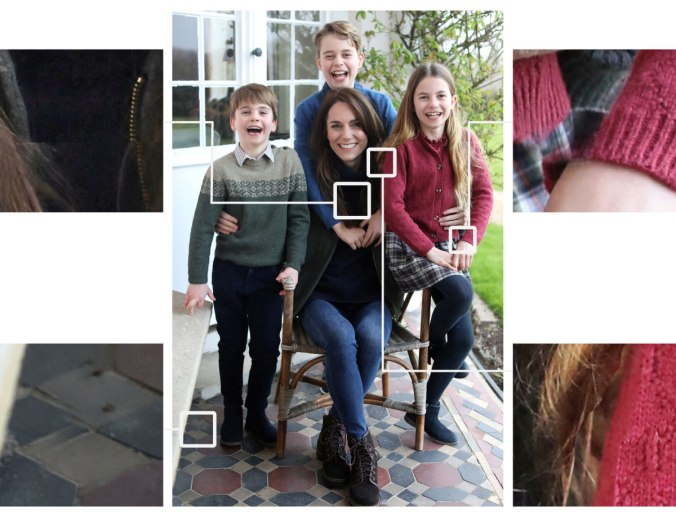
My gut reaction to the latest Royal scandal in Great Britain was dismissive: so a snapshot of Princess Catherine was photoshopped: the Horror. But this was just a bi-product of my long-standing lack of interest in the UK’s peculiar institution and a hangover from so many of my female acquaintances reacting to the death of Princess Diana as if their own families had suffered the equivalent of the Cheshire home invasion. The current episode is important for the ethics lesson it teaches, although you would think that this particular lesson would have been learned by the Windsors a long time ago. Did the royal family not watch “The Crown”?

The Prince and Princess of Windsor released the first official photo of Catherine since her abdominal surgery two months ago, a Mother’s Day snapshot allagedly taken by Prince William. Somehow the couple didn’t consider the modern reality that digital sleuths are everywhere, and quickly those annoying common troublemakers discovered that tell-tale signs of photo manipulation were afoot. You can see the various smoking guns above.

Continue reading

Speaking of Wills (I’m Searching for One Now)…”The Ethicist” Wants a Word

Well, the world here at Westminster Place is getting grimmer and more desperate by the second, so I’m escaping to my office for a nonce to see if a break helps. As it happens, our old friend “The Ethicist,” Kwame Anthony Appiah, had a recent exchange involving death-related matters, and I didn’t care much for his analysis.

But what do I know? I couldn’t even figure out that my wife needed to go to the hospital regardless of what her protestations when in fact she was dying…

But I digress. A questioner asked the Times Magazine’s resident ethics advice columnist (and the fourth to hold The Ethicist title) whether his plan of “giving half of my inheritance to my brother without telling him of his exclusion from [their father’s] will, sparing him any additional hurt feelings,” would be ethical. Mad Dad is 90, the inquiring son is the executor of the father’s will, and he has seen that his brother has been cut out..

His question concludes, “Would this be ethical, or does the need for truth override my plan? To be clear, I would not lie. This would be more a misdirection by omission.”

Continue reading

How Greedy Parents Pimp Out Their Daughters on the Web

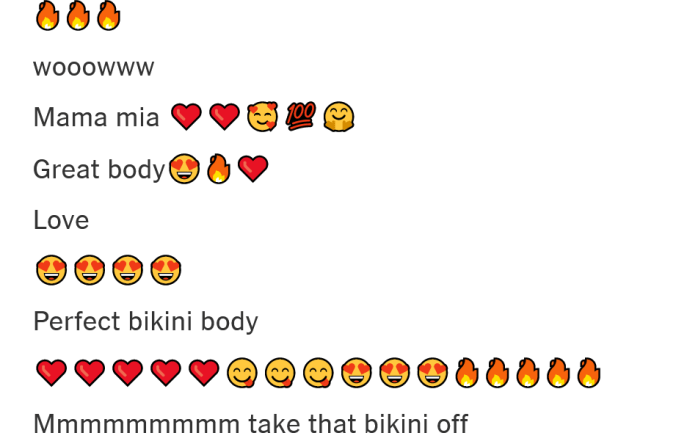
Those are some of the comments that the New York Times found on Instagram in response to the photo of a pretty nine-year-old girl posing in a bikini. Her parents posted the photo to attract attention, and they are not as rare as you might think. In one of the investigative reporting projects that periodically justifies the Times’ existence, the paper found many juvenile “Instagram influencers” whose accounts are managed by their parents. “Although the site prohibits children under 13, parents can open so-called mom-run accounts for them, and they can live on even when the girls become teenagers,” the story reports. “But what often starts as a parent’s effort to jump-start a child’s modeling career, or win favors from clothing brands, can quickly descend into a dark underworld dominated by adult men, many of whom openly admit on other platforms to being sexually attracted to children.”

Ethics Alarms has long taken the position that parents posting revealing, embarrassing or provocative photos of their children on the web without a child’s informed consent (and children cannot give informed consent) is per se unethical, and that was before even considering this disgusting phenomenon.

The Times examined thousands of such accounts with parents operating the sale of their daughters’ photos, exclusive chat sessions and even offering their girls’ worn leotards and cheerleading outfits to followers. It’s profitable, for the parents, and the girls don’t understand the implications of what they have been thrust into. Some customers—pedophiles—- spend thousands of dollars nurturing the underage relationships. A demographics firm hired by the Times found 32 million connections to male followers on the 5,000 accounts examined by the paper.

This is all ethics rot, an unforeseen consequence of the World Wide Web colliding with the same unethical instincts that prompt parents to guide their young children into modeling, acting, gymnastics and other sports for their vicarious pleasure and profits. Here is the worst news in the piece:

“The troubling interactions on Instagram come as social media companies increasingly dominate the cultural landscape and the internet is seen as a career path of its own. Nearly one in three preteens lists influencing as a career goal, and 11 percent of those born in Generation Z, between 1997 and 2012, describe themselves as influencers. The so-called creator economy surpasses $250 billion worldwide, according to Goldman Sachs, with U.S. brands spending more than $5 billion a year on influencers.”

What the Times found is not an internet problem but an irresponsible, incompetent, greedy and abusive parent problem that has been around as long as there have been families. Social media only is giving it a new and revolting place to thrive. I was especially annoyed by the response of one of the mother/pimps whose daughter has been promoted on the web from a young age. “But she’s been doing this so long now,” the mother says. “Her numbers are so big. What do we do? Just stop it and walk away?”

Yes, you stupid, stupid woman. Just stop it.

Do read the whole piece. It is long and horrifying. This link lets you avoid the paywall.