Ethics Quiz: What Was Unethical About ESPN’s Illustration To “What if Michael Vick Were White”?

What if Michael Vick were a hippopotamus?

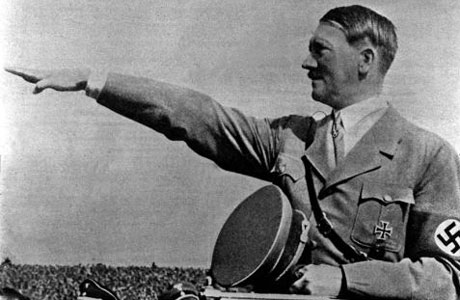
For your first Ethics Alarms Ethics Quiz this September, we revisit ESPN’s controversial article by journalist Touré, who was assigned the task of engaging in the thought experiment,“What would have been different if Michael Vick were white?”

Vick, for all you football-challenged readers, is the current star quarterback of the Philadelphia Eagles who just signed a $100 million contract with the team and another rich deal with Nike. A few short years ago, Vick was in prison, his NFL and endorsement contracts cancelled, his career seemingly over, because of his conviction on multiple counts of animal abuse charges and running a dog-fighting ring. Since his release, Vick has done all the right things in the public rehabilitation of his image, and his remarkable football talents did not erode in jail. When Vick was being prosecuted, a number of journalists and commentators who should have their brains put out to pasture asked if Vick, who was shown to have personally electrocuted and beaten to death some of his dogs, would have been treated less harshly by the law had he been white. The answer was and is no (or perhaps “no, you idiots”), just as it was for O.J. Simpson. Continue reading

The Twins and the Amazing Hockey Shot: the Public Flunks Its Ethics Test…Badly

Lets's face it: twins are trouble.

I am depressed today, for it is increasingly likely that I am wasting my life.

I began writing about ethics on-line after being stunned by the letters to the editor and calls to C-Span, not to mention the articles in the press, regarding President Clinton’s conduct in the Monica Lewinsky affair. The commentary was virtually ethics-free, and I realized that the vast majority of the American public had no idea how to apply ethical analysis to an event or problem. Their judgment regarding who was right and who was wrong appeared to be based entirely on rationalizations, biases, and non-ethical considerations.If they liked Clinton, he did nothing wrong. If they opposed his policies, he was scum. Objectivity and fair analysis only occasionally surfaced in the discussion at all, and the media coverage, if anything, was worse.

Now I’ve been doing this for almost a decade, and the verdict is clear: nothing has changed. In fact, the situation may have worsened. The sad proof at hand is the public’s reaction to The Tale of the One-in-a –Million-Hockey-Shot Scam, a feel-good story from last month that just turned sour. Continue reading

The Ethicist, the Farkel Family, and the Perils of “Maybe”

This photo is completely relevant to this post, but if you are under 50, you probably haven't a clue why. Pity. See below for an explanation.*

One of the reasons I started the Ethics Scoreboard, and continued with Ethics Alarms, was my frustration with the ethics profession’s reluctance to render useful opinions on complex ethical problems…unless, of course, the ethicist was being paid for them. Instead, ethicists are prone to issue obtuse and jargon-filled discussions allowing for every possible eventuality and interpretation, usually concluding with vague, equivocal pablum that allows the ethicist to avoid criticism and accountability. The result of this craven preference for “maybe” as the answer to every dilemma is that ethics are rarely included in public discourse or media coverage, as it solidifies its reputation for being technical, ambiguous, and pointless.

A perfect example of the reticence to make a clear choice occurs in this week’s installment of “The Ethicist,” the New York Times Magazine’s ethics column. An understandably anonymous inquirer writes that he unknowingly fathered a child with a married woman in his neighborhood, who raised the child as the offspring of her and her husband.  The mother asked the biological dad to have no contact with the girl, and he has complied. Now he asks, “Does she have a right to know her true parentage upon reaching adulthood? Sooner? Over the objection of the mother? Only when the husband dies? Who can make these decisions and when?” Continue reading

Ethics Dunce: Somers Point, N.J. Bridal Shop, Here Comes the Bride

Instrumentalities of crime, according to today's Ethics Dunce

In Somers Point, New Jersey, the proprietors of the bridal shop Here Comes the Bride refused to sell a bridal gown to a lesbian woman, saying that it refused to aid and abet “illegal actions.”

Never mind that gay marriages are not “illegal,” but simply are not recognized by the law in many places, which is something completely different. Never mind that Alix Gintner’s marriage is going to be legal, since the ceremony will be in New York.

That is all beside the point. An officious, mean-spirited and brain-wiltingly ignorant woman intentionally ruined what should have been a joyous day for a young woman and her family out of pure bigotry and hate. Continue reading

Ethics Hero: Jennifer McKendrick

My hero.

Jennifer McKendrick is my favorite Ethics Hero of 2011.

An Indiana County freelance photographer of sensitivity, courage and principle, McKendrick engaged in classic ethical behavior—seeing wrongful conduct that harms others, and taking affirmative action to address it. Her conduct is a template for all of us, and not merely regarding the specific problem she decided to confront: online bullying.

McKendrick had been hired to shoot the senior photos of several high school girls, then discovered that they had viciously denigrated other students on Facebook. She sent the girls’ parents this letter:
Continue reading

Texas Gov. Rick Perry: Ethics Hero REVOKED, Integrity Missing

Wow, that was fast.

Rick Perry has Jenny McCarthy's vote back...and that's worth a little more cervical cancer, right Governor?

It didn’t take long for newly-minted GOP presidential contender Rick Perry, now leading in the polls, to tell us what we needed to know about his values and integrity.

He doesn’t have them.

Back in 2007, I awarded Perry an Ethics Hero designation for leading Texas to become the first state in the nation to mandate vaccination of young girls for the human papilloma virus, or HPV, which is sexually transmitted and can cause cervical cancer. “Requiring young girls to get vaccinated before they come into contact with HPV is responsible health and fiscal policy that has the potential to significantly reduce cases of cervical cancer and mitigate future medical costs,” Perry said then in a news release explaining his executive order. Now, however, Perry is declaring what I thought was a courageous decision four years ago “a mistake.”

I hereby revoke his Ethics Hero award. Continue reading

Ethics Bulletin: Payback Is Not Always Unethical

"Sure, honey, take all the photos you want. And if your girlfriend wants to see the birth of our daughter, she's welcome too!"

Washington Post advice columnist Carolyn Hax, as I have noted before, has an almost pitch-perfect ethical sense, and negotiates difficult relationship dilemmas with consistent skill and wisdom. She is too nice sometimes, however, and her recent advice to an expectant mother is a striking example.

The woman wrote Hax about how to handle the request of her AWOL husband, who left her mid-pregnancy to move in with his mistress, to witness the birth of his daughter. He also wants his family to be present. The mother-to-be said that she fully intends to allow her child to have a good relationship with her father, but she does not want either her weasel husband or his family, which hid his affair from her, around when the baby comes. “I don’t want any of them there,” Expectant Mom writes. “Many of them knew about the girlfriend but kept it from me, and I don’t want my husband to have the satisfaction of comforting me when I’m in pain. Do I have the right to tell them this, in some collected, nonconfrontational way?” Continue reading

Ethics Quiz: If This Is Wrong, Why Does It Make Us Cheer?

Robert Harding, post Holly. The Duke would have been proud of her. Should we be?

In Des Moines, a man who told police later that he “likes young girls” tried to lure one into his clutches, and ended up with a black eye and a several bruises. Robert C. Harding attempted to coax Holly Pullen’s 13-year-old daughter into an alley outside the Pullen home.The teen got her mother to go into the alley instead, and when Holly Pullen asked what he wanted, Harding said he wanted to marry and have sex with her daughter. Then he offered to buy her. Holly promptly beat the the snot out of him. (Harding was later tracked down by Pullen’s husband and others, and turned in to the police.)

This was violent, vigilante justice. It was also technically assault and battery. Your Ethics Quiz question is this:

Given all of these reasons why Holly’s conduct was unethical, why do we viscerally approve of it? Continue reading

Ethics Hero and Artistic Champion: Stephen Sondheim, Defending “Porgy and Bess”

Steve has your back, George.

I read with horror last week that the Gershwin estate, lured by the temptation of an increased revenue stream from the works of their more talented forebears, have agreed to allow director Diane Paulus and the playwright Suzan-Lori Parks to mess with ( that is, “improve”) “Porgy and Bess,” the classic 1935 opera that is one of the towering works in the history of American musical theater. This is, of course, vandalism in the name of ego and commerce, and a full-fledged assault on the masterpiece of not one but four great artists: the Gershwins, George and Ira, and the Heywards, Dorothy and DuBose, who wrote the novel and the play the opera was based on.  It is also stunning disrespect and abuse of power, with the living director and adapter wielding the power of celebrity and influence, and the dead artists retaining no power at all (being dead), having unwisely entrusted the protection of their legacies to greedy and tasteless relatives all too willing to sell out their kin for thirty pieces of silver.  Now, as the New York Times reported, the creators of the New Improved Porgy and Bess are readying new scenes, jazzed up dialogue, back-stories for the characters and an upbeat ending.    

This, as you might imagine, struck to the core of my work as an ethicist and in my position as the co-founder and artistic director of a  professional theater devoted to classic 20th Century stage works. I began to prepare a post on the rape of “Porgy and Bess,” but was distracted by other matters, and didn’t get the piece finished.

That was lucky. I should have remembered that Stephen Sondheim, the only musical theater artist alive who can claim the right to be mentioned in the same breath as George Gershwin, had extolled “Porgy and Bess” as the very greatest American musical in his autobiographical work, “Finishing the Hat.”  Needless to say, Sondheim is an authority on these matters, and also an artist who can appreciate what Paulus and Parks are doing to his colleague, peer and fellow geniuses, the Gershwins. On top of that, he has the wit and rhetorical skills to defend the rights of artists and dissect the rationalizations of vandals like few others.

And he did. John Glass of Drama Urge kindly alerted me that Sondheim has written a letter to the New York Times explaining…not arguing, because there is no argument…why the new “Porgy and Bess” is wrong.  Here it is; you just can’t do it better than this: Continue reading

Comment of the Day: “Atlanta Parents’ Verdict: Cheating’s No Big Deal; Grades Are What Matter!”

Is this the current condition of public education?

Michael, a teacher, delivers a powerful but depressing comment in response to the post about Atlanta parents, at least in one school, siding with the cheating teachers and administrators in the school system’s testing scandal. In the original comment he also includes some videos that are amusing, sharp, and illustrative. I didn’t import them here, but you can find them with the original post.

“…I am not positive that the education system can be fixed anymore. The teachers don’t feel that teaching is their job and they are proud of it. In many cases, they feel their noble goal is to teach only the amount of material the slowest student in the class feels like learning. The flip side of their mission is to make sure that no one else in the class learns more than that student. We can’t have people getting all ‘uppity and learnin’ or anything like that. The principals believe this is the way to go, the school boards think everything is hunky-dory, and the parents like the fact that their kids are all getting good grades. Any teacher that actually wants to teach the children is drummed out by the other teachers and the students.

“Our school system stopped using books. Why, you might ask? Because they are only teaching the parts of the subject covered on the state test. They know what will be and what won’t be covered and they just don’t bother teaching what won’t be on the test. They stopped issuing books so no one would get suspicious as to why they were only on chapter 4 of 12 at the end of the year. The attitude this breeds in the children is horrific….

“The terrible thing is that they are ruining these students for life. When you are young, your brain is set up to learn. This becomes harder later on. We waste all their learning years sitting them in a classroom learning nothing. Then they go home, watch reality TV and text. When they are in their late 20′s and they don’t know how to do math, not much can really be done.”