Integrity Check For Obama Supporters: Is This Really How You Want The Campaign To Go?

On the heels of Newark Mayor Corey Booker’s criticism of the Obama campaign’s anti-Bain ad and his subsequent simpering recant, an interesting thing happened: some people actually checked the ad for fairness and accuracy…never mind that it was widely interpreted as an anti-capitalist statement in the world’s most successful capitalist nation. Part of the impetus for the check was loyal Democratic consultant and spin-master Lanny Davis announcing on television that the ad was deceptive in more ways than one.

If you have not seen the spot, here it is:

It tells the story of the demise of  GS Industries through interviews with sad-eyed, salt-of-the-earth workers who accuse Bain of buying their town’s small steel company to destroy it. 30-year steelworker Joe Soptic tells the camera,  “They made as much money off it as they could. And they closed it down, they filed for bankruptcy without any concern for the families or the communities.” Jack Cobb, a another steelworker, calls Bain “a vampire. They came in and sucked the life out of us.” Things were going fine, they all say, until Bain Capital, under the leadership of Mitt Romney, bought the company and soon sold them down the river, laying everyone off and pocketing a huge profit. How that would work…how buying a company and its equipment and then quickly shutting it down would be profitable….is never explained, because actual information is irrelevant to the makers of the ad. The point of the Obama campaign is to contrast the intercut video of Mitt Romney saying he created jobs with the weather-beaten faces of hard-working Americans who say he threw them out of work to funnel money to his rich friends.

Deceit, you’ll recall, is when one uses facts to deceive, usually by omitting other facts that make the revealed facts understandable. Deceit is a form of lying, a very effective and insidious form. President Obama’s anti-Bain ad is, beyond question, deceitful, and deceptive, which means that in this instance at least, so is he. For he, Barack Obama, “approved this message.” Continue reading
Estate Tax Ethics

This was not my father. For one thing, he was shorter.

My sister and I finally settled up the estate of our parents after over a year of paper signing, meetings with accountants, and mind-numbing calculations. The estate, as my folks wanted it, was divided 35%-35%-30%, with the last portion going into a trust for the three grandchildren. The amount of money in the estate was a shock to my sister and me, and a very pleasant surprise, though for all the problems the money will solve, we would have forfeited all of it to have Mom and Dad alive today. Still, being able to give over substantial assets to their children and grandchildren was one of their lifelong goals, and they would have been satisfied and proud that they succeeded so spectacularly.

My sister, a good, reliable liberal, asked me whether I felt guilty about the inheritance. I said yes, in the sense that I wish our parents hadn’t been so resolutely frugal in their retirement, and had spent more of the money they earned and saved on more of their own pleasure and enjoyment rather than squirreling it away for us. But did I feel any pangs of conscience because the money wasn’t going to Uncle Sam’s coffers?

Absolutely not. Continue reading

Ethics Dunce: Mirlande Wilson

"Share? Why should I share?"

Mirlande Wilson was part of a lottery pool formed in the Maryland McDonald’s where she works, and claims that she bought one of the three winning tickets that will split the $640 million dollar Mega Millions jackpot. But Wilson told the New York Post that although she did take part in the pool, she bought the winning ticket on her own and has no intention of splitting the winnings. A co-worker who took part in the pool dispute’s Wilson’s story and says Wilson was given additional money late Friday night to buy extra lottery tickets before the Mega Millions drawing.

Why are people like this? Yes, I know, greed…still: does winning a fortune have to turn people into utter, irredeemable jerks? Continue reading

Greg Smith’s Urgent Ethics Alarm

“Today is my last day at Goldman Sachs. After almost 12 years at the firm — first as a summer intern while at Stanford, then in New York for 10 years, and now in London — I believe I have worked here long enough to understand the trajectory of its culture, its people and its identity. And I can honestly say that the environment now is as toxic and destructive as I have ever seen it”

This, says Greg Smith, is how the leadership of Goldman Sachs sees its clients.

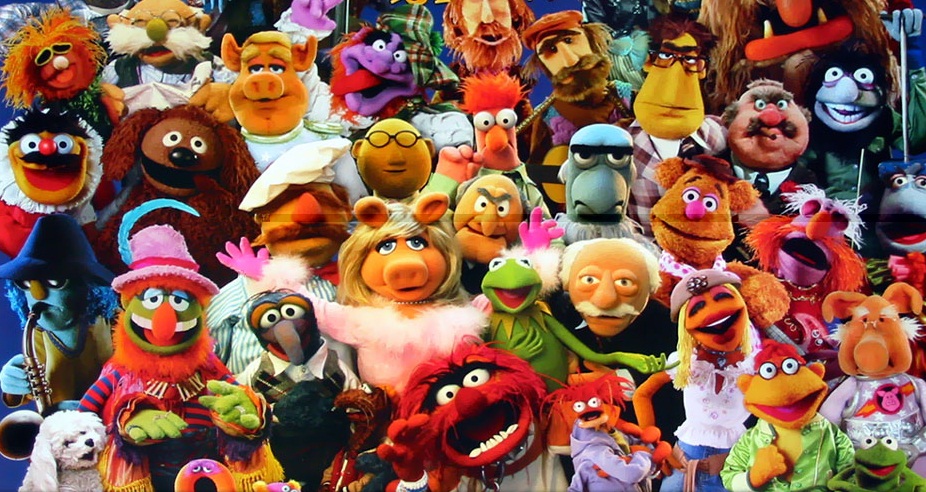
With that, Goldman Sach’s executive Greg Smith began his remarkable op-ed in the New York Times, sending his former employers into crisis mode, panicking investors, and setting the financial, political and journalistic worlds buzzing. Obviously, it was an exposé about ethics as much as anything else.  Smith described a corporation-wide breach of trust with clients, a culture in which leadership openly derided those the company pledged to serve as “muppets,” and apparently, sheep to be sheared:

“It makes me ill how callously people talk about ripping their clients off… I don’t know of any illegal behavior, but will people push the envelope and pitch lucrative and complicated products to clients even if they are not the simplest investments or the ones most directly aligned with the client’s goals? Absolutely. Every day, in fact.”

Smith cites a breakdown in leadership, resulting in a corruption of values: Continue reading

Ethics Hero: Journalist Harris Meyer

Harris Meyer is an Ethics Hero because he won’t let a bad lesson go unchallenged.

Meyer is an award-winning  freelance journalist and a former editor at the Yakima (Wash.) Herald Republic. That was the paper that first broke the story of Gaby Rodriguez last year, which I wrote about here. With the encouragement of her high school principal, Rodriguez, a senior, embarked on some amateur social science research that involved deceiving everyone in her life except her mother, one (of seven) siblings, her boyfriend, and the principal. She pretended that she was pregnant, suing padding. She faked the pregnancy for months, finally announcing the sham in a student assembly. This extended hoax was supposedly designed to expose how pregnant teenagers are treated by their peers and others. It was, by any rational standard, a despicable thing to do—a betrayal and exploitation of her friends,  her boyfriend’s family, her siblings and teachers. Deception on such a scale must be justified, if at all, by both need and necessity. Were there other, less destructive ways to investigate the treatment of pregnant teens? Sure there were; interviews come to mind. Collecting published journals and other accounts. But Gaby’s unethical stunt was in spiritual synchronicity with a reality show-obsessed culture, where fake is entertaining and collateral damage is of no concern.  I wrote: Continue reading

Our Incompetent Broadcast News Media: A Frustrating Morning With Soledad O’Brien

Soledad O’Brien, paving the road to Athens

This morning, on CNN, I managed not to change the channel as I usually do when Soledad O’Brien is on the screen. It was a mistake. The long-time CNN anchor is as low as newscasting can sink short of MSNBC when it comes to smugly-biased commentary, and unlike some of MSNBC’s lefty warriors, O’Brien is just not very bright. This doesn’t keep her from visibly wincing, rolling her eyes or winking at the supposedly simpatico viewer when she thinks her opinion is superior to someone she is interviewing, as unprofessional a habit as I have ever seen. She has a job because, I suppose, she is pleasant to look at and exudes confidence, though it is confidence unsupported by any actual skill, insight or knowledge. Continue reading

Don Cornelius, Suicide…and Ethics Hero?

“Soul Train” creator and pop culture icon Don Cornelius took his own life at 75 yesterday, using a gunshot to the head to do it. Suicide always conjures up feelings of special sadness for the deceased, sometimes mixed with anger. The act can be cruel and devastating to family members and friends; often it leaves behind crushing problems, financial and otherwise, that the living have to deal with. Suicide is stigmatized in our culture as a coward’s way out of earthly problems; many religions consider it a sin, and many legal systems consider suicide a crime. Yet it may be that American culture will have to undergo a major cultural transformation in the matter of taking one’s own life. While morality tends to ossify, ethics is fluid and adaptable. Changing conditions and new realities can, in rare circumstances, cause societies to conclude that what was once considered right is really wrong, and what was once condemned as wrong is in society’s best interests. I think we may reach that point with suicide. Continue reading

Freddie Mac’s Conflict of Interest and the Betrayal Of The American Homeowner

Possible, but expensive.

Though the political implications of this disturbing story, which broke today on NPR, are wide-ranging, this isn’t a political blog.  I will avoid the temptation  to wade into them. That’s fine: the ethical implications are bad enough.

Freddie Mac, the taxpayer-owned mortgage giant, has been doing a Goldman Sachs, betting against the very homeowners it is pledged to serve by making multi-billion-dollar investments that will profit Freddie Mac only if homeowners can’t get out of  expensive mortgages with interest rates well above current rates. Of course, Freddie Mac’s job is supposedly to do the opposite…to help homeowners find cheaper, fairer mortgages. And we were told, by the Obama Administration, that this what it was working to do.

This is called a conflict of interest. And since Freddie Mac, along with its cousin Fannie Mae, is owned by U.S. taxpayers, this is also a massive breach of trust by the Federal government. Freddie and Fannie were bailed out in 2008. The companies insure most home loans in the United States, making banks able to lend at lower risk, and the companies’ rules determine whether homeowners can get refinanced and on what terms. Now we know that Freddie Mac, at least, profits when they fail.  Continue reading

The Corruption Problem

“Maybe, just maybe, the legislative and judicial systems have been corrupted, by, dare I say it, corporations?”

—Ethics Alarms commenter and OWS warrior Jeff Field, in his comment regarding the weekend post, The Marianne Gingrich Ethics Train Wreck

I don’t know how Jeff reaches the conclusion that the judicial system has been corrupted by corporations. Judges, unlike legislators, do not grow rich as a result of their inside knowledge and corporate connections. Judges, unlike revolving-door Congressional staffers and lawyers, do not generally come from corporate backgrounds. The fact that a judicial decision benefits the interests of some corporations, and many do not, does not mean that the decision was not just or was influenced by more than persuasive legal arguments. Those who believe that begin with the biased and untenable position that any decision that benefits a corporation must be, by definition, wrong.

So let me put that dubious assertion aside as the result of excessive reformer’s zeal and crusader’s license, and deal with the general proposition that corporations corrupt the legislative system, and society generally. Well, sure they do, but the statement is misleading, and, I would argue, meaningless because it places disproportional importance on the corrupting influence of this one, admittedly important, societal force.

Yes, corporations can be corrupting influences. So can government, and the lure of public office. The news media is a corrupting influence on the legislature, and upon society generally. Religion corrupts; as does popular culture, with its celebration of empty celebrity, glamor and wealth. Non-profits and charities are corrupted by their tunnel vision of specific worthy objectives to the neglect of others; the civil rights movement corrupts, as does feminism and all other advocacy efforts, which often, if not usually, succumb to an “ends justify the means” ethic, which is unethical. Indeed, freedom corrupts, as does dependence. Cynicism corrupts, and corrupts with a vengeance. Ignorance corrupts; so does the belief, however well-supported, that one knows it all. Ideological certitude and inflexibility corrupts.

Education, and the cost of it, corrupts. Sports, both professional and collegiate, corrupt people, students, and institutions. Science corrupts; technology corrupts. Heaven knows, the internet corrupts. Leisure and success; triumph and defeat; wealth and poverty, love and hate, desperation, patriotism; kindness, loyalty, sex, lust; intellectual superiority, beauty, physical prowess, passion. Talent corrupts. Kindness and sympathy too.

Self-righteousness. Fear. Worry. Envy. Stupidity. Zealotry.

And, as we all know, power and the love of money.

All of these and more corrupt human beings and the institutions, organizations and governments that they make up. If individuals are corruptible, something will corrupt them, as sure as the sun rises and the quinces ripen. To focus upon any one of the limitless and abundant sources of corruption and to say, “This, above all, is the cause of our problems” is naive and unfair. By all means, we must seek ways to limit the opportunities for corruption and the damage it can do, but we must also recognize that the ability to corrupt does not mean that something or someone does not or cannot contribute much good to society as well. Heroes can corrupt, as we saw in the tragedy of Joe Paterno, but we need heroes. Leaders can corrupt, and often do, but we still need leaders.

Ultimately,  the best way to stop people and things from corrupting us is to understand what corruption is and how easy it is to be corrupted. Our inoculation is ethics, understanding right and wrong and how to recognize both, and learning to recognize when we are biased, conflicted, or being guided by non-ethical or unethical motivations. Shifting the blame for corruption away from ourselves is comforting, but intimately counter-productive. We have the power to resist corruption, just as it is within out power to select public servants who are not likely to be corrupted. It is our responsibility to do so.


Dear Banks: This Is Why Nobody Trusts You

I know I’ve been hard on the Occupy movement, but I don’t want to let the protesters think that I’m pals with all of their targets. Take the banks, for example.

The “waiting for the check to clear” scam engaged in by banks has always been annoying, but I now realize, thanks to bitter personal experience, that we have been fools to tolerate it. Once upon a time, before electronic transfers and computers, it really did take a check at least “five business days” to go from one bank to another, but the banks have held on to the fiction that nothing has changed, presumably to give them free use of our money while we patiently wait for the completion of transactions that have already been completed. Running a small business with perpetual cash-flow problems, the Marshalls constantly hectored our bank (then Wachovia, which bought it from American Security Trust, and there may have been another one in there somewhere) about speeding up the process, and in fact they did: our checks from clients often had money available to us within a day or two. That’s right—the bank let us use our own money while telling less long-standing, savvy, or persistent customers that the checks they deposited were taking almost a week to clear. Continue reading