Ethics Heroes: Criminal Defense Lawyers Katie Kizer And Amanda Graham

It's hard to picture Perry in a skirt.

It’s hard to picture Perry in a skirt.

Setting out to change a culture is a daunting challenge, and most of us, given the opportunity to succeed without attempting such a risky task, opt for an easier path. Yet whether it is Jackie Robinson, Danica Patrick, Rosa Parks or Jason Collins, cultures need courageous reformers to keep evolving into more ethical horizons, and fortunately, the heroes eventually come along.

One culture that has been remarkably resistant to change is the practice of law, and the criminal defense bar in particular. Criminal defense is still  overwhelmingly a man’s realm, and a self-perpetuating one. The classic image of the defender of innocent (and guilty) accused criminals has been masculine for centuries, and as a result, few defendants needing a champion are likely to entrust their freedom and perhaps their lives to a defense attorney who looks like one of Clarence Darrow’s young mistresses, Perry Mason’s comely secretary Della Street, or Ann Rutledge. They want Clarence, Perry, or Abe: why take a chance?  Obstructed by such entrenched stereotypes and the need to pay off massive student loans, capable female law grads reasonably choose other legal fields, like family law, where female stereotypes work to their advantage, and avoid criminal law entirely. Consequently, no high-profile criminal trial lawyers with two x chromosomes break through the public’s consciousness, and the bias, the stereotype, and the cycle continues. Continue reading →

Ethics Hero Emeritus: Actress Jean Stapleton (1923-2013)

Edith Bunker, being stifled.

Edith Bunker, being stifled.

Jean Stapleton, the superb character actress best known as “Edith Bunker” from “All in the Family,” has died. She exemplified the actor who, given the chance to use her talents for cultural good beyond mere entertainment, not only did so but did so beyond all reasonable expectations.

Edith Bunker, the submissive, not-too-bright, loving, loyal and thoroughly confused character she played on the 70’s sitcom, always broke my heart. I found Stapleton’s portrayal difficult to watch, even when she was too funny to resist. Edith was an abused spouse who didn’t realize she was being abused. I think many women who were similarly abused resolved to change the course of their lives because watching Stapleton accept being “stifled” and insulted by the man she loved made them recognize the pattern they had accepted too. Yet Edith Bunker, in Stapleton’s hands, made “All in the Family” more than the portrait of a redneck bigot and his enabling wife, broadcast to be mocked by smugly liberal viewers reveling in their intellectual and moral superiority. We felt Archie was redeemable—as indeed the show slowly revealed that he was—-beyond his hard-wired prejudices, in part because such a sweet, good woman loved him. (The other parts included the superb writing of the characters and Carroll O’Connor’s nuanced Archie.) What an achievement Stapleton accomplished by playing a negative stereotype in a way that both promoted sympathy, understanding and rejection, while never becoming so ridiculous that the audience stopped caring about her. She deserved every one of her eight Emmy nominations and three awards: in fact, she smoked the competition every year. There wasn’t a better or more important  performance, male or female, on TV while “All in the Family” was on the air.

That’s not why Jean Stapleton is an Ethics Hero Emeritus, however. Continue reading →

Dear Sincerely Shallow: “It’s True, You’re Horrible. Show Your Fiancé Your Letter, And Go Pimp Yourself Out Like Anna Nicole.”

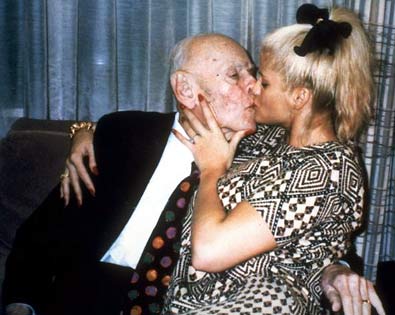
This could be you, SS!

This could be you, “Sincerely Shallow” ! Go for it!

Emily Yoffe is Slate’s stunt advice columnist, who in her “Dear Prudence” column answers questions reminiscent of the freak-show howlers they used to concoct for the “Penthouse Forum” (or so I’ve heard.) Sometimes Emily’s advice has me convinced she is the consort of Pazuzu, and other times her advice is measured and wise. This time, she sided with the demon, and I’m about finished with her.

Here is the query sent by “Sincerely Shallow” in its entirety. I’m sure it’s viral by now:

Dear Prudence,
I’m recently engaged to the most honest, thoughtful, and loving man I’ve ever met. He has supported me through many hard times, including losing my job and being assaulted. Here’s the but about him: He makes no money. He has ambitions, and he’s smart, but will likely only bring a middle-class income at best. I have an OK job and I’m self-sufficient. Now here’s the but about me: I’m really, really pretty. My whole life people have told me I could get any man I want, meaning a rich man, and are shocked that I’m engaged to my fiancé, nice though he is. I’ve never dated a rich man, but it does make me curious. So part of me thinks I’m squandering my good looks on this poor man, and the other part of me thinks that I’m so shallow that I don’t even deserve him or anyone else. Am I a fool for thinking that a poor man can make me happy, or an idiot for believing a sexist fantasy?

You can read “Prudence’s” annoying answer here, which concludes with this: Continue reading →

Renée Richards, Fallon Fox, and Déjà Vu: Transgender Ethics In Sports

MMA-Fighter-Fallon

I think I’ve seen this movie before.

On May 24, Mixed Martial Arts fighter Fallon Fox moved to 3-0 in her MMA career, beating Allana Jones and earning a spot in the finals of the Championship Fighting Alliance’s featherweight tournament.  Her victory was accompanied by a chorus of jeers. Why? Fallon Fox is a transgendered male, now fully female—except for the unremovable Y chromosome—thanks to gender realignment surgery. Her rise through the female martial arts ranks has been greeted by a mixture of horror, ridicule and revulsion. When she came out for her most recent bout, some wit had the Aerosmith song “Dude Looks Like a Lady” blaring  over the loudspeakers. Some of her MMA competitors have declared that they will not fight her, and here’s sports commentator/pundit/personality Joe Rogan opining on her qualifications to compete:

“You can’t fight women. That’s fucking crazy. I don’t know why she thinks that she’s going to be able to do that. If you want to be a woman in the bedroom and you know you want to play house and all of that other shit and you feel like you have, your body is really a woman’s body trapped inside a man’s frame and so you got a operation, that’s all good in the hood. But you can’t fight chicks. Get the fuck out of here. You’re out of your mind. You need to fight men, you know? Period. You need to fight men your size because you’re a man. You’re a man without a dick.”

How quickly they forget. Continue reading →

James Lipton: Proud To Be A Pimp

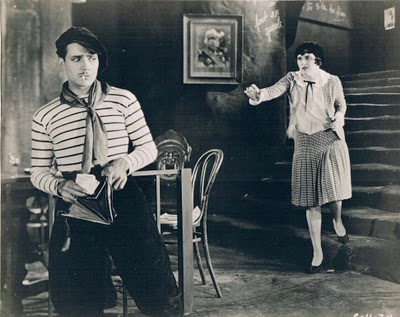
James Lipton, circa. 1951

James Lipton, circa. 1951

James Lipton, he of the most pompous interview show in the universe, Inside the Actor’s Studio, has decided to celebrate that franchise’s 250th episode by cheerily revealing that he worked as a pimp in Paris in the 1950’s. This was apparently legal there and then, and Lipton, he tells us, was out of a job, so why not earn your money by recruiting desperate women into accepting cash to have sex with strangers, and take a cut of their proceeds for your trouble?

Lipton tells Parade:

“I had to be okayed by the underworld; otherwise they would’ve found me floating in the Seine.The great bordellos were still flourishing in those days before the sheriff of Paris, a woman, closed them down. It was a different time.”

Oh…you mean there was a time when dealing with organized crime was good? There was a time when it was admirable to trap innocent young waifs into the sex trade because of their poverty? To facilitate adultery and infidelity? To tell women who they had to have sex with, and accept a percentage of their fees for doing so? There was a time when doing all of this didn’t mean you were an exploitive, venal, amoral, low life?

I don’t think so. I don’t think there has ever been such a time, no matter what France may think. Continue reading →

Comment of the Day: “Ethics Hero: David Blankenhorn, Former Same-Sex Marriage Opponent”

eeyore1

In many ways, I love this post. I love it because it is passionate and serious, and from the heart, and because I am certain that it reflects what many Americans, especially those of a certain age, feel with frustration and a little fear and anger.  I also agree with much of what it concerns, the lack of respect for accumulated wisdom in many aspects of the culture, and the rush to discard old standards not because they have failed us, but just because they are old. The comment comes from a regular commentator, Eeyoure (not his real name, you’ll be relieved to learn, and yes, we both know how to spell the A.A. Milne character he honors) who is educated, decent, smart and articulate.

But regarding his lament’s  applicability to the controversy at issue, gay marriage, he is absolutely, utterly, tragically wrong. The conventional wisdom is that we should just try to ignore Americans who feel similarly to Eeyoure, because demographics are relentlessly removing them from the scene. As the politically active public becomes younger, the support for equal rights for gays, trangendered and bi-sexual citizens will grow into an overwhelming majority.  I think that’s a lazy and obnoxious way to win an argument, even when you are right. Smart but misguided people, like Eeyoure in this matter, should be able to evolve, learn, and realize when what they once thought was right, isn’t.  Realizing that one aspect of entrenched belief was, upon knowledge and reflection, wrong does not mean the whole foundation of civilized society has to crumble—this is the classic, irrational, self-defeating fallacy of conservatism. Change in the presence of enlightenment and experience is the essence of ethics, which constantly evolves. We should be able to explain what is wrong with this post so that even the poster agrees.

Here is Eeyoure’s Comment of the Day, on the post (and comment thread t0) Ethics Hero: David Blankenhorn, Former Same-Sex Marriage Opponent: Continue reading →

Ethics Dunce: Pop Star Katy Perry

When is a sincere apology unethical? Here’s a good example.

Abused and Abuser. Someone please tell Katy Perry which is which.

Abused and Abuser. Someone please tell Katy Perry which is which.

Pop singing star Katy Perry registered an ethically responsible objection via Twitter regarding the Chief Keef song “Hate Being Sober.” She wrote,

“Just heard a new song on the radio called ‘I hate being sober’ I now have serious doubt for the world.”

Me too, Katy.  The artist responsible for this paean to intoxication, however, took offense, and decided to rebut Katy’s tweet with an obscene, abusive, misogynist attack:

“Dat bitch Katy Perry Can Suck Skin Off Of my Dick Ill Smack The Shit out her”

Thus chastened (or intimidated?), Perry apologized to him, writing that she really liked the song, and wasn’t “a hater”: Continue reading →

Ethics Hero: David Blankenhorn, Former Same-Sex Marriage Opponent

Same sex

In a well-reasoned and sharply written op-ed in the Los Angeles Times, former gay marriage opponent David Blankenship writes eloquently and persuasively about why he has reversed his position. He writes in part:

“In the end, I didn’t change my mind on gay marriage because I stopped believing in the importance of intact biological families. Nor was it because of new studies or additional facts. (Gay marriage still strains biological family bonds, although research also points to the potential stability of gay marriage and family structures.) And I didn’t change my mind because I got tired of being criticized. I changed my opposition to gay marriage because of personal relationships. In my case, it began with the writer Jonathan Rauch, who I’d been publicly debating on the gay marriage issue. But at some point we stopped debating and started talking about our lives, including about my wife, Raina, and his husband, Michael. Did Jonathan’s marriage threaten the idea of marriage? Perhaps in theory. But in real life, was I able to see it? No. In fact, quite the opposite. It may sound trite, but for me the key was the gradual breakthrough of empathy. I found that as friendships develop, empathy becomes at least possible, no longer kept at bay by a wall of fixed belief. Put simply, becoming friends with gay people who were married or wanted to get married led me to realize that I couldn’t in good conscience continue to oppose it.”

Bingo.

_______________________

Pointer: Advice Goddess

Sources: LA Times

Rick Curl, The University Of Maryland, Penn State, and Moral Luck

The Rick Curl case is the ethics alarm that won’t stop ringing.

Could Joe be the rule rather than the exception?

Could Joe be the rule rather than the exception?

I’ve written about it twice, both times focusing on the devil’s deal made by the victim and her family, who allowed Curl, a renowned D.D. area swimming coach, to get away with sexually molesting a 13-year female swimmer under his supervision and escape either official detection or legal punishment for decades, as the victim’s family decided to accept $150,000 in hush money/ extortion/ settlement from the rapist-coach instead. Curl went on his happy coaching, and maybe child-molesting way—we don’t know if there were other victims or other pay-offs—even to the Olympics, until the girl he molested, Kelley Currin, had a belated attack of conscience at 40 and finally told authorities about what a trusted coach in close contact with girls on a daily basis had done to her, leading to Curl’s arrest last year.

Rick Curl was sentenced to seven years in prison for child sexual abuse at a hearing this week. At that hearing, we learned for the first time that the University of Maryland had been informed about the abuse more than 25 years ago, and probably knew about it before that. Continue reading →

Ethics Quiz: The “Breastaurants”

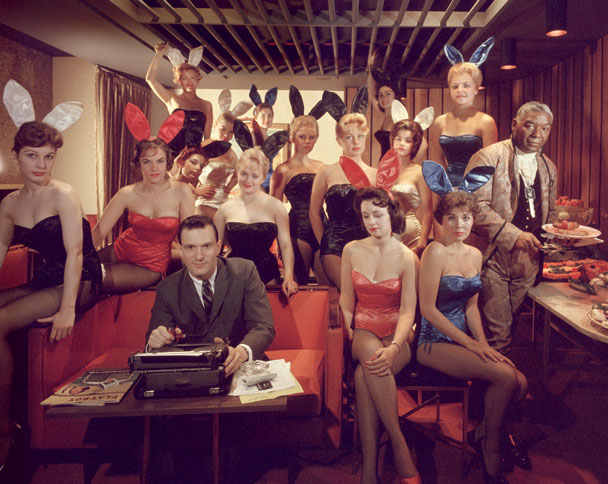
Playboy bunnies

All right, class…put away your books.

This quiz will count toward your final grade in Ethics 101.

Please watch the following video…about the growing culinary trend of so-called “breastaurants,” Hooters wannabe establishments that sell food service and ogling rights.

Now here is your Ethics Alarms Ethics Quiz for today, a multiple choice. Choose as many of the following to describe the trend as you feel is appropriate:

a. This is entertainment, that’s all. Nothing ethically or culturally objectionable at all.


b. If you thought Playboy Clubs and their “Bunnies” were sexist and demeaning to women, you can’t regard these places as harmless. Same thing, different packages, and more unethical now than then, because we supposed  have learned since then.


c. It’s legal and nobody is making the women do anything they don’t want to do. There’s no offense here. If you don’t like it, don’t eat there.


d. Women desperate for a job in a bad market are being forced to debase themselves. They are victims of exploitation and sexism, that is wrong, and anyone who patronizes such a place is encouraging and endorsing unethical conduct.


e.  The very existence of these establishments encourages sexual harassment and discrimination. There is way to legally prevent them, but no ethical person would own or operate such a place.


f. The “Breastaurants” encourage attitudes and conduct that society is trying to discourage, disapprove, and eliminate. They are ethics corrupters.


g. Allowing children in these places is irresponsible.


h. Voluntarily patronizing any of these places is unethical, as it encourages damaging attitudes toward women.


i. All those cheap breast double-entendres in the ABC story were unprofessional and sleazy.


j. Oh, lighten up! Look at movies. Look at TV. Look at cheerleaders. Look at how high school children dress. It’s just sex, that’s all. Weenie!


k. ARRRRRRRRRGHHHHHHHHH!!!!!

Good luck.

—————————————————

Facts:ABC

Graphic: Betseyj