Ethics Dunce, And That’s Not The Half Of It: ESPN Host Sarah Spain

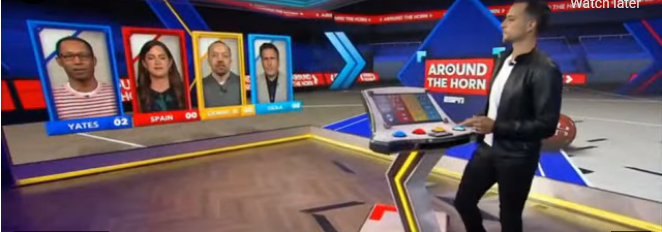
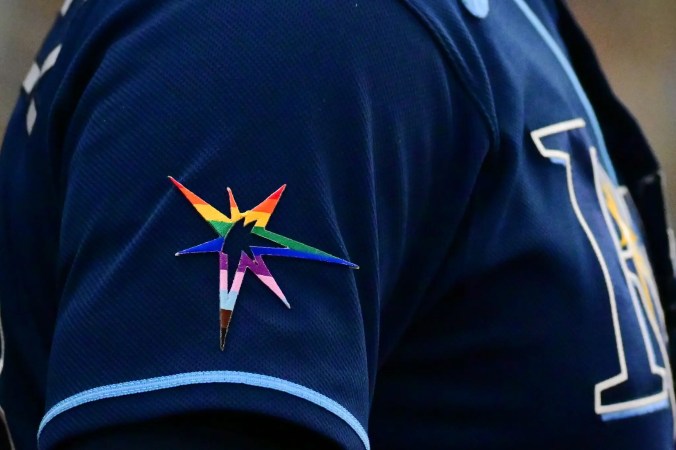
Yesterday, Ethics Alarms noted the fact that the Tampa Bay Rays had decided to brand themselves during “Pride Month” as LGTBQ boosters with yet another rainbow themed patch meant to go on player uniforms, and that five players had chosen to duck the pandering. Around the same time I was writing the post, ESPN hostess (I bet she hates being called that rather than “host.” Tough.) Sarah Spain went on a rant in which she called the Rays players who decided not to go along to get along “bigots.”

Nice. Also Stupid. Also unethical.

“[This] is what tends to happen when frivolous class isn’t affected by things. That religious exemption BS is used in sports and otherwise also allows for people to be denied health care, jobs, apartments, children, prescriptions, all sorts of rights. We have to stop tiptoeing around it because we’re trying to protect people who are trying to be bigoted from asking for them to be exempt from it, when the very people that they are bigoted against are suffering the consequences you say trying to be bigoted.”

Wait, this woman’s a host and the best she can do off-script is that gibberish? I could talk better than that after a closed head injury.

Continue reading

Was There Any Way For The Tampa Bay Rays To Support “Pride Month” On The Field Ethically? Nope!

The Rays, of baseball’s American League, are one of three teams, the others being the National League San Francisco Giants and the Los Angeles Dodgers, to incorporate Pride Month support in their uniforms. Five Rays decided to decline to wear the patch above: Brooks Raley, Jalen Beeks, Jason Adam, Jeffrey Springs and Ryan Thompson. There have been no such defections from their team’s mandated corporate position on the Giants or Dodgers—you know, California. I am willing to bet my head that there are many more than five players on the three squads who resent having to be a walking political statement, but who have calculated, “Well, it’s just a patch.”

The explanation of the spokesman for the five Rays players was weak , but about what I’d expect from a pro athlete. Jason Adam said,

Continue reading

I Think We Can Safely Conclude That This Was Unethical…

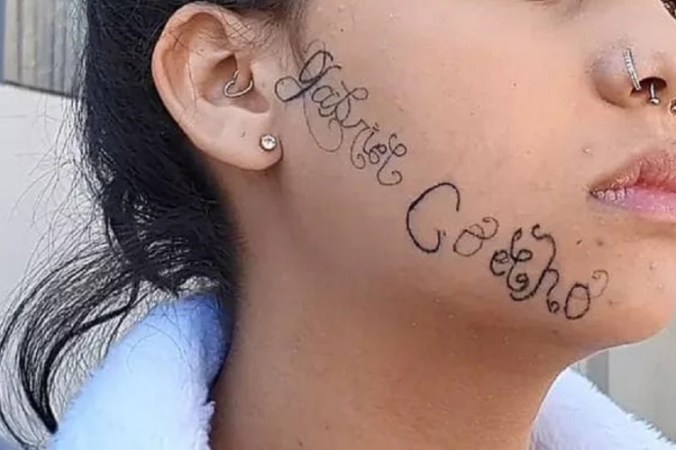
In Brazil, a culture where respect for women is comparable to the U. S. in the early 19th Century, Gabriel Coelho forced Tayane Caldas, his 18-year-old ex-girlfriend, into his car as she was walking home from school.  He drove her to his home, and the 20-year-old Coelho then tattooed his full name on the girl’s face, as you can see above. Coelho claims that Tayane consented.

So I guess she wants to get back together with him…

Actually, that seems unlikely. For one thing, she had requested and received two restraining orders against Coelho, one in 2021 and another this year.  Still, Tayane’s mother had to encourage her daughter to press charges against her ex-boyfriend, as she was initially inclined to simply hide her new face tattoo with make-up. The fact that she even was thinking this way shows how primitive female self-esteem can be in Brazil.

Gabriel Coelho is under arrest, though his father backs his ridiculous defense that she consented to be branded. Of course he does. Men like Gabriel don’t turn out believing women are property without a role model.

“Oh, That Wouldn’t Happen Here!” Wanna Bet?

People always tell me they watch the BBC because it isn’t biased like American broadcast news. It must be the British accents: the BBC is relentlessly, overwhelmingly left-biased. This is a socialist nation that is smothered in political correctness. It’s at least as untrustworthy as any US news source.

Here’s a case in point: the BBC changed the testimony of a rape victim who referred to her alleged rapist as “him.” That was a reasonable choice on her part, because, well, because of the rapist’s “part.” Never mind: Facts Don’t Matter in jolly old England either: the victim’s words were changed to avoid “misgendering” the rapist in an article on the BBC website, which replaced every reference to “he” or “him” with “they” or “them.”

Wait—was it a gang rape? The BBC said in response to the episode was, “Our only intention when deciding on language is to make things as clear as possible for audiences.” Now that’s hilarious! In what universe is calling a single person “them” and “they” clearer than calling a rapist who did the deed with an attached male sex organ “he” and “him”?

Continue reading

On “Correct Pronouns,” Part 2

I began this inquiry two days ago, intending to complete it forthwith, but then a sick, broken, psychopathic teen in Texas murdered his grandmother, children and teachers with an AR-15 with the predictable Ethics Train Wreck gathering steam once again. Let’s finish up before something else goes wrong.

Ann Althouse is at fault: she flagged Roxane Gay’s New York Times advice column “Work Friend,” focusing on this question from the ubiquitous “Anonymous”:

In the past six months, my organization approved the optional inclusion of pronouns in email signatures. I learned that one of my team members uses nonbinary pronouns. In my written communication and conversation about that team member, I now use those pronouns, but I notice that no one else has made the adjustment. As the supervisor of this team, how can I fix this situation?I feel like the longer I wait to address it, the more disrespectful and complicit I’m being. I can’t police people’s language, but I would call someone out for other kinds of behavior I interpreted as disrespectful. (For what it’s worth, I don’t suspect anyone of being intentionally disrespectful by not using their colleague’s preferred pronouns.) The nonbinary colleague has not said anything to me about this being a problem, but I have to assume it feels dismissive. I feel I owe them an apology, but what I really owe them is better leadership. What would you do?

The advice columnist whose record of often obnoxious woke certitude ended up eating the issue sufficiently to require two parts to the intended post, responded,

“Thank you for asking this question. Everyone deserves to be treated with respect and part of that is using people’s correct pronouns.”

“Correct pronouns?” Doesn’t correct mean “factual and true”? The requirement that individuals and groups get to demand and enforce what is correct is, I think, one more manifestation of the Left’s slide into a totalitarian mindset, and the tendency of the easily subjugated, weenies and the “oh. well, if they care so much, why fight it?” crowd to let societal freedom die a death of a thousand cuts. Ann quoted one of Gay’s commenters, who wrote,

I am really curious about this pronoun business in business communication. Who decided that the new law of the land is that everybody gets to pick their pronouns however misaligned they may be to their publicly visibly persona, and everybody else needs to learn this and memorize? Who has time for this?

Of course, it is not a matter of time, but a matter of ethics. It is an ethics conflict, in fact, one that involves a clash of manners, consideration, principles, respect, fairness, responsibility, and the abuse of power. It is ethical—fair, respectful, caring—to agree to call a friend, colleague or acquaintance by whatever name they wish to be called, within reason. Not all names are appropriate in all settings, however: a boss that asked to be called “Love Bug” or “Sex Machine” in the workplace is engaging in sexual harassment. Unethical. Would one have to call someone by her “correct” name if she insisted on the title, “Your Majesty”? That’s getting closer to the issue here. Such demands (a request is a demand if one will encounter negative consequences for rejecting it) are a power play; one relevant ethics question is whether the conduct is justifiable. I object to jumping through hoops on command: Ethics Alarms will capitalize the “b” in Black when the stars turn cold, just as I rejected the abomination “of color” the first time it raised its colorful head.

Writing about the pronouns issue a year ago, Althouse, who has raised the question a lot, ended one post, “Personally, I feel that anyone who feels the need to announce their pronouns is childish and rude, and I treat them as such.” That discussion covered whether requiring/demanding/requesting that someone adopt one’s counter-factual, eccentric or debatable choice of pronouns is forcing others to adopt an ideology they do not share.

Of course it is. That’s the whole point. Continue reading

Comment Of The Day: “You Didn’t Really Think That It Was Only The Catholic Church That Had This Problem, Did You?”

The post about the Southern Baptist Convention’s decades-long cover-up of child sexual abuse within its ranks provoked several illuminating comments.

Here is repeat Comment of the Day author John Paul on “You Didn’t Really Think That It Was Only The Catholic Church That Had This Problem, Did You?”:

***

I am a minister in a Church of Christ. We are non-denominational, but as a whole we share a common belief system that tends to be the same from church to church. For those of you who aren’t familiar with what that means, it means that our core beliefs are the same, but each church operates under a group of people that are native to that church and meet the biblical requirements of elder.

I started my ministry back in 2004. Though I went to a college almost 500 miles from my hometown, I tried to get an internship at a local church that was associated with the Church of Christ in the town I grew up in. It came down to me and another young gentleman and while the church was kind to me, the reason they gave me for not giving me the job is that they did not want a local. Fair enough: I wished them luck and ended up taking a internship in a different state altogether.

I bring this up because less than 1.5 years later I returned to that church with my new wife for the Christmas holiday. The size was almost 1/2 less than I remembered and the general atmosphere was somber. We figured that many of the members were traveling like we were and we didn’t think much of it except at the very end of the service where worship was hi-jacked by the leadership (without letting the visitors know) to take a survey.

Question one: “What do you think we could have done better?” Continue reading

On “Correct Pronouns,” Part I: Roxane Gay

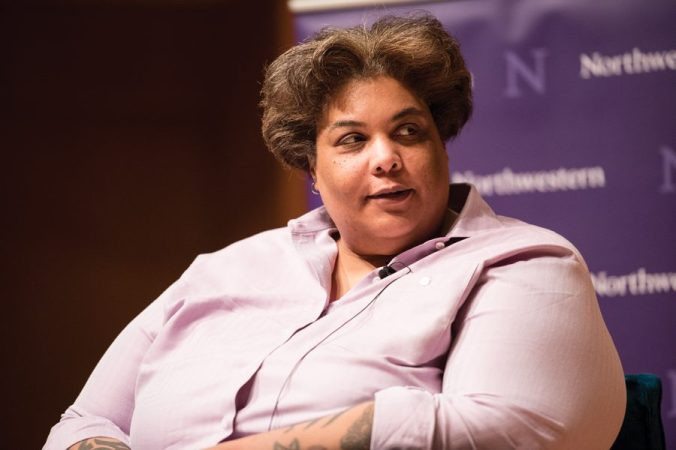
It tells you pretty much all you need to know about the biases of the New York Times that its workplace ethics column, “Work Friend,” is authored by race-obsessed, radical, and combative gay feminist Roxane Gay. No biases there! She has also been described here as a prolific writer of prose and fiction and a visiting professor at Yale, and that’s all accurate too. However, her biases increasingly poison her advice as thoroughly as they poison her opinion columns.

Her last two of those for the Times were a laborious spin job to make Will Smith’s attack on Chris Rock at the Oscars somehow virtuous (“a rare moment when a Black woman was publicly defended”) and a standard issue rant against the likely Supreme Court ruling striking down Roe.

Ugh. I have to pause a bit here because I have concluded that Gay is too often intellectually and rhetorically dishonest because of her ideological mission, and people like that shouldn’t have regular platforms (or advice columns) in the New York Times. Here is a representative line from that second essay: “[W]e should not live in a world where someone who is raped is forced to carry a pregnancy to term because a minority of Americans believe the unborn are more important than the people who give birth to them.”

Continue reading

You Didn’t Really Think That It Was Only The Catholic Church That Had This Problem, Did You?

From the Houston Chronicle:

For 20 years, leaders of the Southern Baptist Convention — including a former president now accused of sexual assault — routinely silenced and disparaged sexual abuse survivors, ignored calls for policies to stop predators, and dismissed reforms that they privately said could protect children but might cost the SBC money if abuse victims later sued…The historic, nearly 400-page report details how a small, insular and influential group of leaders “singularly focused on avoiding liability for the SBC to the exclusion of other considerations” to prevent abuse. The report was published by Guidepost Solutions, an independent firm that conducted 330 interviews and reviewed two decades of internal SBC files in the seven-month investigation….

“Survivors and others who reported abuse were ignored, disbelieved, or met with the constant refrain that the SBC could take no action due to its (structure) — even if it meant that convicted molesters continued in ministry with no notice or warning to their current church or congregation,” Guidepost’s report concluded….

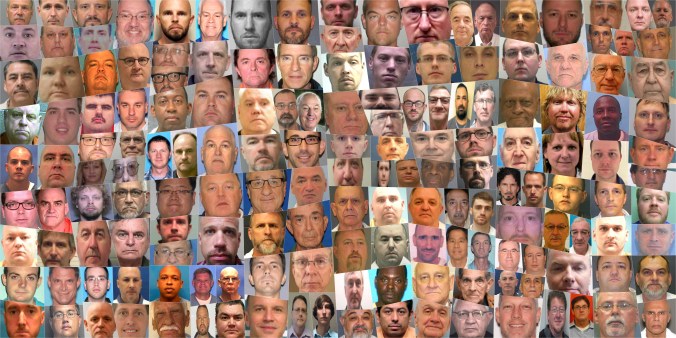
Above are some of the 220 people who, since 1998, worked or volunteered in Southern Baptist churches and were sentenced for sex crimes. Continue reading

Confused Sports Illustrated Raises The Fascinating Question: Can One Be Ethically Unethical?

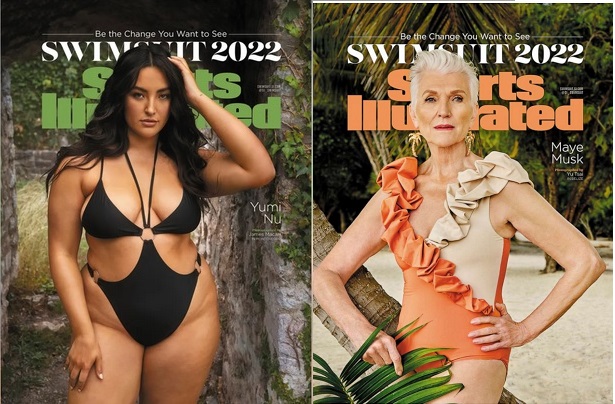
Those are two of Sports Illustrated’s 2022 annual Swimsuit issue covers.

What’s going on here? It’s weird, whatever it is, and, of course, it has kicked off a culture war fight.

Conservative philosopher and pop guru Jordan Peterson tweeted regarding the flabby model on the left, “Sorry. Not beautiful. And no amount of authoritarian tolerance is going to change that.” This got him attacked online as a toxic warrior for white privilege and white supremacy.  Then Peterson lashed back, stating his objection as this:  “It’s a conscious progressive attempt to manipulate & retool the notion of beauty, reliant on the idiot philosophy that such preferences are learned & properly changed by those who know better.”

Conservative sports essayist Jason Whitlock begs to disagree. His take: Continue reading

Morning Ethics Heat-Up, 5/18/2022: More Judicial Review And Lies

Because I was otherwise obsessed, I missed noting yesterday a true landmark in law and ethics. It was that date in 1954 when a unanimous the  Supreme Court handed down the unanimous decision in Brown v. Board of Education of Topeka, ruling that racial segregation in public schools was unconstitutional. Linda Brown, a young African American girl had been denied admission to her local elementary school in Topeka, Kansas, because of the color of her skin.

Written in 1896 as the KKK roamed the South, the SCOTUS ruling in Plessy v. Ferguson held that “separate but equal” accommodations in railroad cars conformed to the 14th Amendment’s guarantee of equal protection. Plessy was interpreted as justifying segregation in everything from buses to water fountains to elementary schools. The white school Brown attempted to attend was far superior to her the segregation-mandated alternative and miles closer to her home, so The National Association for the Advancement of Colored People  took up Linda’s cause. Thurgood Marshall led Brown’s legal team, and on May 17, 1954, Plessy was overturned after 58 years as “the law of the land” despite the siren call of stare decisus. The opinion written by Chief Justice Earl Warren declared that “separate but equal” was an unconstitutional doctrine in ringing terms: “We conclude that, in the field of public education, the doctrine of ‘separate but equal’ has no place. Separate educational facilities are inherently unequal.”  A year later, the Supreme Court published guidelines requiring public school systems to integrate “with all deliberate speed.”

1. Prudent and responsible, if not courageous. Speaking of SCOTUS, newly confirmed Justice-in-Waiting Ketanji Brown Jackson sat for an interview by the Washington Post and was asked about the leak of Justice Alito’s draft opinion in the Dobbs abortion case. Conservative media was triggered by this section:

Q: What was your response when you when you saw the draft leak [of a Supreme Court opinion that would strike down Roe v. Wade]?

A: Everybody who is familiar with the court and the way in which it works was shocked by that. Such a departure from normal order.

Q: Do you think it was a good thing or a bad thing?

A: I can’t answer that.

Q: What do you think about peaceful protests outside of Supreme Court justices’ homes?

A: I don’t have any comment.

Charles Cooke at the National Review writes, “This ranges from somewhere between cowardly and sinister, much like the failure of the justices to issue a joint statement that echoes the chief justice’s condemnation of the leak and statement of determination to identify the leaker, and that condemns the protests, which violate federal law.”

Wrong. SCOTUS justices should not issue opinions on such matters. Her statement that the leak was a breach of the normal order was factual, and breaches of normal order in any institution are unethical. She was right to go no further. As for the demonstrators, some of them may be arrested at some point, and a statement by a Supreme Court Justice regarding their conduct could interfere with a fair trial.

Her responses give me more reason to trust Jackson’s judgment, not less.

Continue reading