Fact Checker Ethics, Part II: Validating Deceit, and Practicing It Too

Et tu, Fact Checker?

In its review of Washington Post “Fact Checker” Glenn Kessler’s shameful refusal to call the Democratic dissembling on Social Security, Ethics Alarms saved the best—which is to say, worst—for last.

Beginning with a statement typical of Obama Administration and Democratic leadership positioning on the subject, Rep. Xavier Becerra’s (D-Calif.) “Social Security has never contributed a dime to the nation’s $14.3 trillion debt…not one penny to our federal budget deficit this year or any year in our nation’s history,” Kessler gives a brief history of Social Security, why it has no more money, and concludes with this nonsense:

“Becerra is sincere in his convictions and his statement is true, so far as it goes. Yes, Social Security in the past has not contributed to the nation’s debt. But it’s basically a meaningless fact and actually distracts from the long-term fiscal problem posed by the retirement of the baby boom generation and the shrinking of the nation’s labor pool.” Continue reading →

Fact Checker Ethics: Alibis For Obama, Part I

The Washington Post “Fact Checker,” Glenn Kessler, is among the most biased of the breed. On the issue of the Obama Administration’s outright dishonesty on Social Security, however, he is embarrassing his paper and the entire Fact-Check community.

Lately, his strategy has been to bury obvious dishonesty by the Obama Administration and Democrats regarding Social Security in technical details, excusing straightforward misrepresentation (how’s that for an oxymoron?) and encouraging readers to shrug, give up, and move on

How nice for the President to have political allies posing as objective truth-tellers. Continue reading →

Barn Doors + Anger + Ignorance + Irresponsible Legislators = “Caylee’s Law”

When someone first mentioned the wave of support for “Caylee’s Law,” proposed legislation so far pending in four states making it a felony for a parent not to report a child’s death within an hour or a missing child within 24 hours, I responded that it “sounded like a good idea.”  Lots of dumb things sound good to me before I think about them. “Caylee’s Law,” is in fact a terrible idea, and about 10 minutes of quality thought illuminates why.

The law is the result of multiple factors more related to human nature than sound law enforcement. When something unpopular and frustrating happens, like the death of Caylee Anthony and her mother’s subsequent acquittal of murder charges, the response is often to try to fix the problem with a law. Such laws are often formulated in the heat of emotion and sentiment rather than careful reasoning and consideration, and the result is  bad laws that cause more problems that they solve.

These laws also embody the Barn Door Fallacy. Society passes broad-based measures to stop an unusual occurrence that has already done its damage, and that may be extremely unlikely to occur again. Nevertheless, society and the public saddle themselves with expensive, inconvenient, often inefficient measures designed to respond to the rare event. One shoe bomber, and millions of passengers have to remove their shoes to go through airport security. One adulterated bottle of Tylenol, and every over-the-counter drug bottle requires a razor blade and the manual dexterity of a piano virtuoso to open. Two sick boys shoot up Columbine, so third graders get suspended for bringing squirt–guns to school. Continue reading →

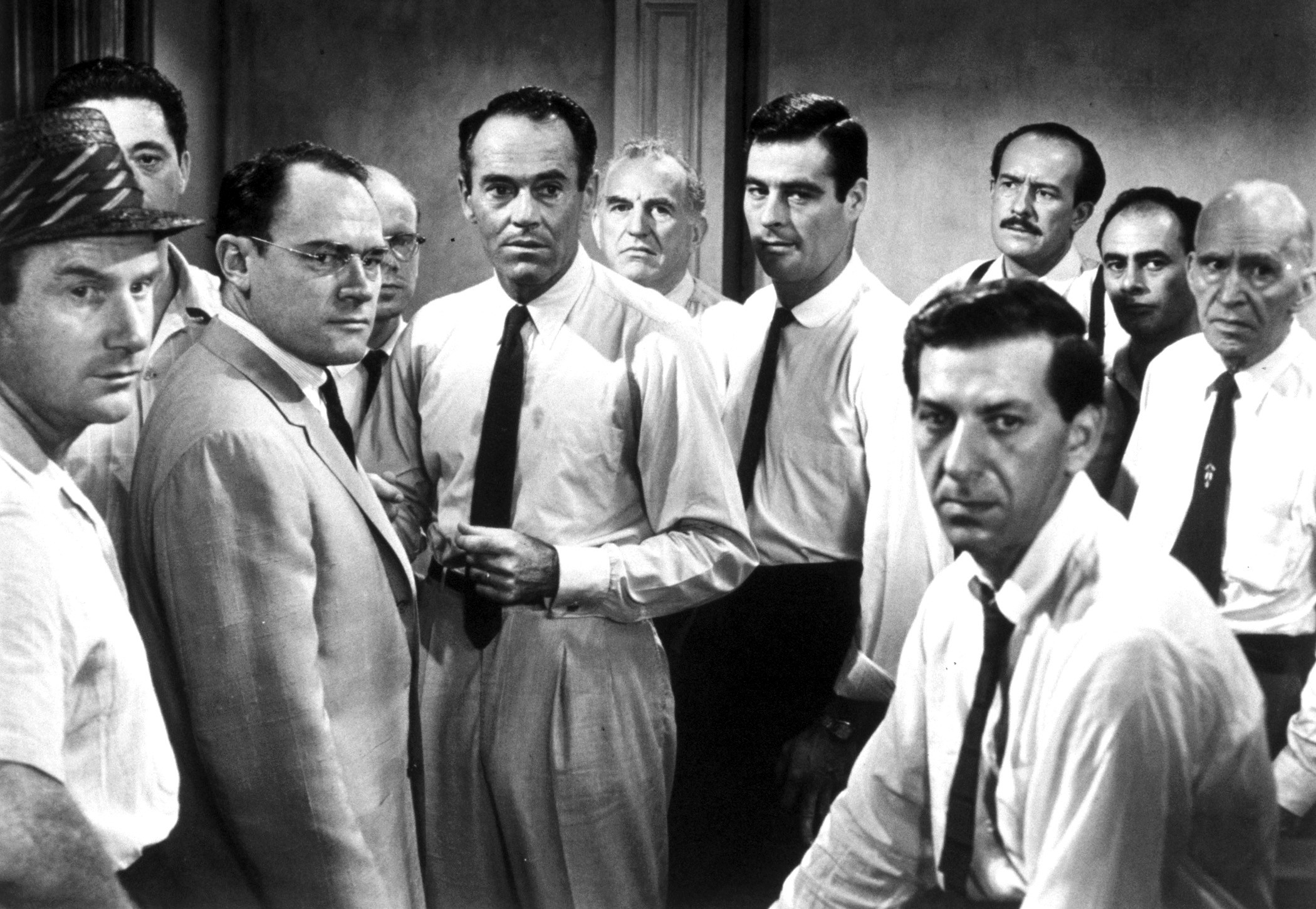
“Twelve Angry Men,” A Million Angry Fools, and the Jury System

Their defendant was probably guilty too.

Ethics Alarms All-Star Lianne Best sent me this link about a member of the Casey Anthony jury who is going into hiding because of all the hate and criticism being directed at jury members and their controversial verdict. Her plight, which must be shared by other members of the much-maligned jury, highlights the unethical, not to mention ignorant, reaction of the public to the Florida ex-mother’s narrow escape from a murder conviction she almost certainly deserved.

The problem begins with publicity. We may need to re-examine the logic behind broadcasting high-profile cases. The combination of live courtroom feeds and quasi-semi-competent commentary gives viewers the mistaken belief that they are qualified to second guess the jury, and they are not. They are not because the jury is in the courtroom, and the viewers aren’t. The jury and TV watchers see different things; individuals communicate different emotions and reactions in person than they do on camera. There is only one fair and sensible way to answer those on-line instant polls that ask, “Do you think Casey Anthony should be found guilty?”, and that is “I don’t know.”

Most of all, the viewers and pundits are not present in the jury room. Continue reading →

Attention FCC: What the News of the World Scandal Reveals About Rupert Murdoch

Rupert Murdoch

Concluding that the News of the World scandal in Great Britain shows that Rupert Murdoch has less than a sufficient reverence for ethics, journalistic or otherwise, is an intellectual achievement well within the powers of Forrest Gump.  Concerns about the integrity of the Australian media magnate have been voiced since he first stuck his kangaroo’s nose in the American media tent. As is too often the case here, legitimate points were minimized by their linkage to political bias: was Murdoch bad for American journalism because he was unethical, or because he was conservative? His most vocal critics, being from the Left, regard the two as the same, which allowed Murdoch to accumulate defenders on the political right who should have been just as wary of his methods and ethical deficit.

Now his flagship tabloid, The News of the World, has folded in the midst of a still-unfolding scandal. You can read details here; the important thing to know is that the tabloid was essentially lawless. Continue reading →

Explain to Me Why We Tolerate Illegal Immigration, Again?

Yes, I'm in a rotten mood today! Wanna make something out of it??

My cranky Saturday continues with an issue that I increasingly find bewildering: the tolerance, denial, and enabling by so many Americans of illegal immigration, although its unethical character cannot be denied or argued away. I know why Democrats support it—pure electoral cynicism—and I know why the business community encourages it—greed. What I don’t comprehend is why anyone else with a modicum of logic, fairness, and common sense isn’t confronting both of these self-serving institutions and demanding real enforcement of anti-illegal immigration measures. Instead, we get outrageous legislation like the Maryland Dream Act, which institutionalizes incentives for aliens to defy our laws. Continue reading →

A Harsh Lesson We Must Learn From Atlanta’s Teachers

There isn’t much enlightening to say about the unfolding Atlanta teacher cheating scandal, but its implications must be faced, as difficult as that is.

Georgia Gov. Nathan Deal revealed this week that award-winning gains by Atlanta students were based on widespread cheating by teachers and principals. The Georgia Bureau of Investigation identified 178 teachers and principals – 82 of whom have confessed – in the biggest cheating scandal in US history. Not the first one, however; there have been a lot of them recently, across the country. The media is pointing to the U.S. education system’s increasing dependence on standardized tests as “the problem.”

I see: the testing made them do it. Continue reading →

Comment of the Day: “New Jersey Lottery Ethics…”

Tom Fuller, who can be perceptive when he isn’t peppering us with the quotations of others (all right, even sometimes when he is) makes a useful distinction in the Comment of the Day, on today’s post about the New Jersey Lottery:

“Don’t get me wrong. I’m no fan of government-sponsored lotteries, and I share all of the concerns about them mentioned above. But a facile slogan like “lotteries are a tax on people who don’t understand math” is, like most facile slogans, too simplistic a way of making the arguments. There are plenty of psychological and economic reasons why even people who understand the math buy lottery tickets that are, quite literally, bad bets. There is lots of research on this; one of the better articles is now 21 years old, but is still cited as a good, brief, and comprehensible overview.”  [You can read it here.]

“Every gamble is a losing bet in the long run; otherwise it wouldn’t be a gamble. The trouble with state-run lotteries is not so much that they exploit those who “don’t get it”; they exploit anyone, even a mathematical genius, who is drawn towards what society generally regards as undesirable actities, thereby sending the same mixed messages as taxes on tobacco and alcohol.”

New Jersey Lottery Ethics…Well, Not Exactly

New Jersey has taken the live drawings for the state lottery off of television and placed it on the internet. Many regular lottery players are upset about this, it seems.

“I like to see them pull it so they don’t have the chance to switch it,” said one eighty-year-old player. “Older people don’t trust the system. We know what happens.” She doesn’t own a computer, nor do her friends, and they all say they won’t play the lottery again until they can watch the drawings on their televisions. Indeed, the New Jersey Lottery is getting many such complaints, and expected them.

Why?

Because the people most likely to play the lottery are poor, badly educated, ill-informed, dumb, or all of the above, that’s why. Continue reading →

Ethics Heroes: The Casey Anthony Jury

America saved Casey Anthony, and we should be glad it did.

A Florida jury pronounced Casey Anthony not guilty of murder, aggravated child abuse or aggravated manslaughter in connection with the 2008 death of her two-year-old daughter, Caylee. It did find that she had lied to investigators and police, which was well-established during the trial.

Did she murder her daughter, as the prosecution claimed? Oh, sure she did; I don’t think any of the jury members will be asking Anthony to babysit for their kids any time soon. But the case against her was circumstantial. She was proven to be a liar, irresponsible, feckless, self-centered, deluded and callous, and the prosecution’s theory made a lot more sense that the defense’s alternative scenario. Still, there was not enough evidence to find Casey Anthony guilty of murder beyond a reasonable doubt. That’s the standard, not “it’s almost certain that she did it.” Despite all the media pundits who said it would be a slam-dunk conviction, despite all the community sentiment to make the party girl mother pay with her life for killing her child, the evidence to meet the intentionally tough standard of American justice just wasn’t there.

Already, reporters and commentators are comparing the verdict to the O.J. Simpson trial. Wrong. Continue reading →