Comment of the Day: “Notes on ‘Misinformation’”

Sarah B. submitted this Comment of the Day over the weekend, and it dovetails neatly with today’s post on the immediate politicizing of the Baltimore bridge disaster. Of course, that most recent incident is but a fractal of the Wuhan Virus Ethics Train Wreck, which saw both misinformation spread by the news media and our supposedly non-partisan, trustworthy health organizations, agencies and institutions, cripple the economy, damage our children, turn large swathes of the population into fearful, mask-clutching weenies, and damage the integrity of a national election. That’s where Sarah’s cautionary tale begins.

Here is Sarah B.’s Comment of the Day on the post, “Notes on ‘Misinformation’”

***

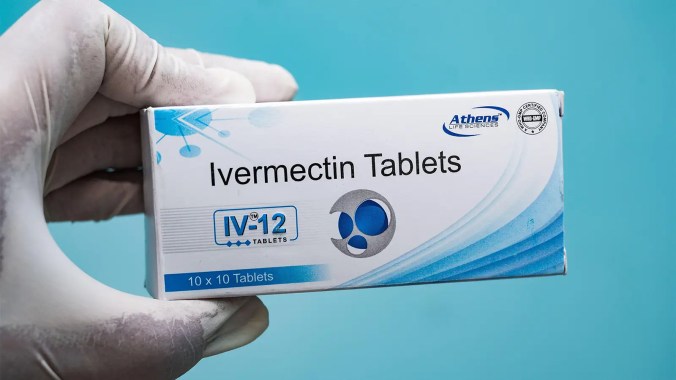
My mother, an RN (and massage therapist) became livid at all her TDS suffering friends and patients repeatedly calling Ivermectin a “horse drug”. She went and got documents discussing the usage of Ivermectin in certain patients with various types of issues, and how the drug was routinely used to treat certain infections.

But despite the high usage of the drug on humans in these papers from reputable medical journals dated over decades, she was told that she was too simple to understand that this was misinformation and that Ivermectin was only a conspiracy theorist’s solution. She was told that she needs to check with people with real medical degrees, not just crunchy folks in massage therapy school. Her bachelors in nursing with decades of experience was ignored in this discussion.

My mother’s insistence that people should look at the evidence lost her friends and clients, many of whom no longer contact her at all and haven’t since 2020, despite being friends for decades prior.

Continue reading

Notes on “Misinformation”

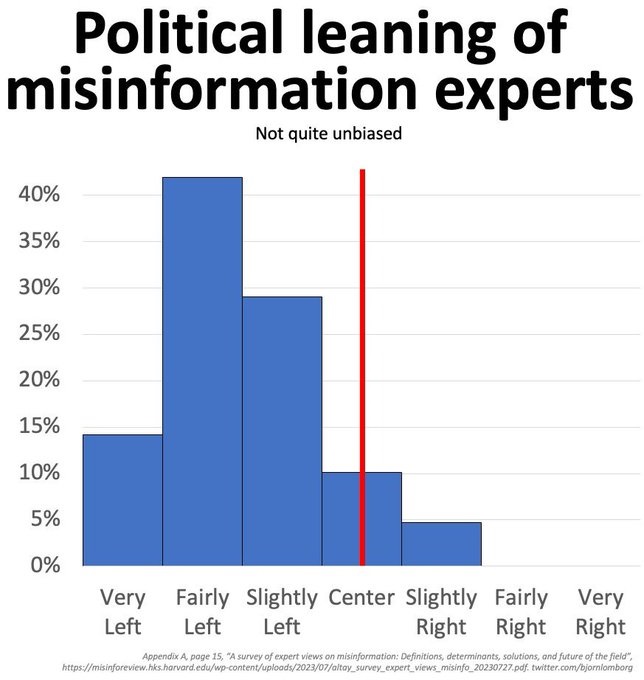
Note #1: See the chart above? Gee, what a surprise. Researchers found that the “factchecking” business is overwhelmingly biased toward progressives, Democrats, and the whole Axis agenda. I suppose research was needed to prove the obvious; so many people denied this because they were a) gullible, b) stupid, or c) lying. Yes, the study is from Harvard, but I think you can trust the rotting university this time.

Continue reading

It’s a Simple Rule: If You Are an Important Public Figure, Don’t Try to Hide a Health Crisis

This has always been true, though some figures have been substantially successful at doing it.

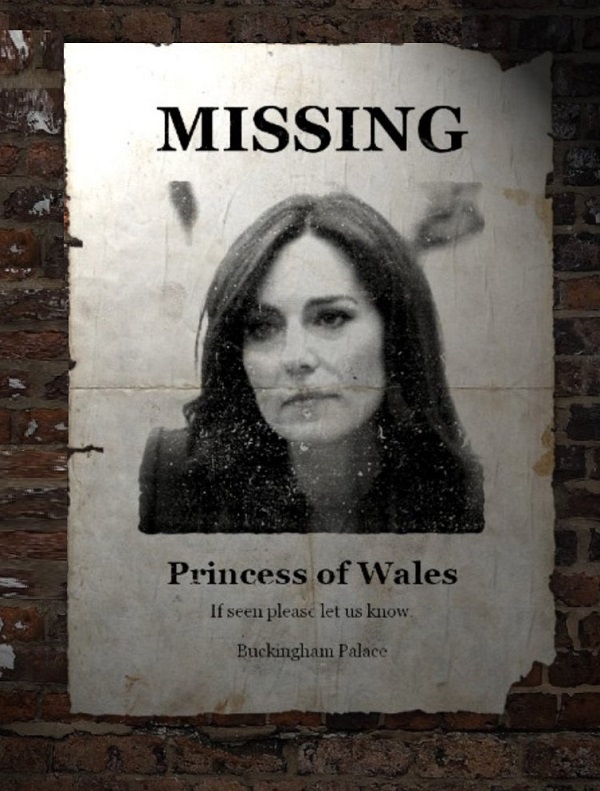
We are reminded of the rule once again as Catherine, Princess of Wales, announced that she was undergoing chemotherapy after a cancer diagnosis in a two-minute video released yesterday. That announcement only came after weeks of wild speculation about Kate’s whereabouts, marriage status and health. It was, therefore, too late—too late to prevent the damage to her reputation and that of the royal family by proving that she and Prince William were capable of avoiding transparency when it suited them. The official excuse was that it had taken “time to explain everything to George, Charlotte and Louis in a way that is appropriate for them,” as she said in the video. As explanations for deceiving the public go, a “think if the children!” strategy is as good as one is liable to find, but even it leaves a scar.

Continue reading

Ethics Quiz: The RBG Awards

This quiz could be fairly paraphrased, if in vulgar fashion, as “Who’s the asshole?

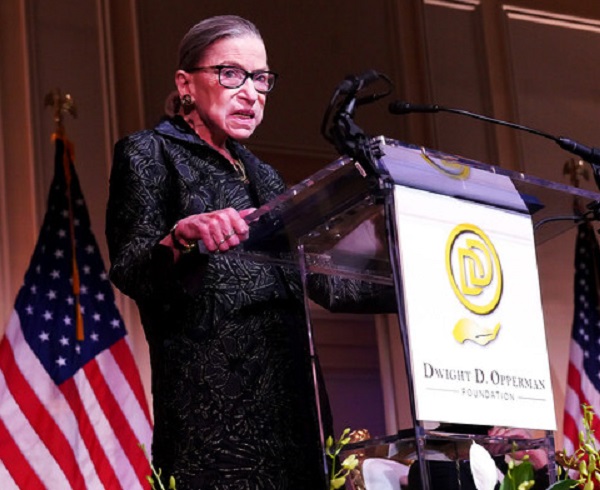
Established in 2019, the RBG Leadership Award is supposed to honor “trailblazing” men and women of distinction, with “distinction” having a rather broad and vaguely defined meaning, as the pronouncements of officials connected with the awards made clear. “Justice Ginsburg became an icon by bravely pursuing her own path and prevailing against the odds,” said Brendan V. Sullivan, Jr., chair of the RBG Award. “The honorees reflect the integrity and achievement that defined Justice Ginsburg’s career and legend.” “Justice Ginsburg was a legal entrepreneur who innovated and took risks in ways that rewarded us all,” said Matthew Umhofer, president of the Dwight D. Opperman Foundation, which administers the awards. “In a world that sought to define and limit her, she found ways to challenge and change the system, armed with nothing more than a brilliant mind and a powerful pen. Her impact transcended the law, and society is better off for it.” “Such is the spirit that defines the honorees of the RBG Award,” adds the award’s website.

This year, it was decided that the awards, which were originally limited to women of distinction (because Ginsburg was an iconic feminist and women’s rights advocate), should be awarded to men as well. “Justice Ginsburg fought not only for women but for everyone,” said Julie Opperman, Chair of the Dwight D. Opperman Foundation. “Going forward, to embrace the fullness of Justice Ginsburg’s legacy, we honor both women and men who have changed the world by doing what they do best.” 

[Can you see what’s coming? Diversity-obsessed progressives were set up to be hoisted on their own petard!]

When this years’ honorees were announced, it is fair to say that the late Justice Ginsburg’s family flipped out. The awards went to…

ELON MUSK – Entrepreneurship
SYLVESTER STALLONE – Cultural Icon
MARTHA STEWART – Industry Leadership 
MICHAEL MILKEN – Philanthropy
RUPERT MURDOCH – Media Mogul

…and the family’s and assorted Ginsburg admirers’ collective heads exploded. Jane C. Ginsburg, a law professor at Columbia University, said the choice of winners this year was “an affront to the memory of our mother.” “The justice’s family wish to make clear that they do not support using their mother’s name to celebrate this year’s slate of awardees, and that the justice’s family has no affiliation with and does not endorse these awards,” she said.

Trevor W. Morrison, a former dean of New York University School of Law and one of the justice’s former law clerks, condemned the choices in a letter addressed to the Dwight D. Opperman Foundation. “Justice Ginsburg had an abiding commitment to careful, rigorous analysis and to fair-minded engagement with people of opposing views,” he said “It is difficult to see how the decision to bestow the R.B.G. Award on this year’s slate reflects any appreciation for — or even awareness of — these dimensions of the justice’s legacy.” Shana Knizhnik, an author of “Notorious RBG: The Life and Times of Ruth Bader Ginsburg, ” spat out, “Honoring Elon Musk, who uses his platform to promote anti-feminist and anti-L.G.B.T.Q. sentiments, and Rupert Murdoch, who has used his immense power to undermine democracy, dishonors what Justice Ginsburg spent her career standing for.”

Your Ethics Alarms Ethics Quiz of the Day is…

Who is being unethical (unfair, disrespectful, incompetent irresponsible and/or breaching trust), the administrators of the awards, the critics of the awards, neither, or both?

Continue reading

The Grandparents’ Betrayal

As often happens, some click-bait headline sucks me in and I find an interesting ethics topic as a result. This time, the headline was “Woman applauded for demanding parents get noses pierced before they can see granddaughter again.” What???

The story behind that unique description was a woman and her husband took her infant daughter to Mexico to visit her parents. The parents gave the one-year-old girl a pair of earrings for her first birthday, and Mom told them that she would hold on to the gift until her daughter was old enough to have her ears pierced. But when the American couple returned from meeting some friends after leaving the girl in the care of Grandma and Grandpa, they were informed that they “didn’t need to wait [until she was old enough] because they had taken her to get her ears pierced” already.

The couple was furious. The girl’s father said that they could never trust the grandparents alone with their daughter, but his wife announced that she would not take her or any future kids to see her parents in Mexico. The family checked out of their hotel and returned to the States.

Continue reading

Ethics Quote of the Week: Holly Mathnerd

“Dishonesty is so normalized that this kind of performative fragmentation—signaling that one believes certain things while acting as if one believes other things—may eventually be recognized as a marker of intelligence and proper preparation for class climbing (or class maintenance, if one starts off in that class).”

—Substacker “Holly Mathnerd,” reviewing a book I haven’t read (“Troubled”) by a writer I never heard of (Rob Henderson), but gleaning from it wisdom that sorely temps me change both conditions.

It is pure coincidence that so soon after this post and this one —and even this one—another dishonesty and hypocrisy assessment presented itself. Something is in the air.

This is a phenomenon that Ethics Alarms has discussed frequently. The “elite classes,” like those who sent my college classmates to a series of prestigious schools, pushed for the legalization and cultural approval of regular pot use which they insisted was harmless. The resulting new social norm has devastated the lower socio-economic reaches that are more likely to abuse the privilege without the means to cope with the results. Support for “illegals”—Joe’s accurate word—via sanctuary cities and bleeding heart rhetoric was adamant until the progressive virtue-signalers in “sanctuary cities” had to deal with the real consequences of an open border policy.

More from Holly:

Continue reading

Life Imitates “Seinfeld”: For Fake Fat-Free Yogurt, Substitute Fake Gluten-Free Doughnuts

The Savory Fig, founded by Michelle Siriana, is a self-proclaimed vegan bakery in Patchogue, New York. Siriana makes and sells vegan scones, cinnamon rolls, cookies, and brownies, but also, amazingly enough, yummy gluten-free, vegan doughnuts. Vegan and gluten-freed doughnuts tend not to taste so good, for reasons you can guess if you’re familiar with how the fatty, buttery morsels are usually made; they also tend not to have the pleasant texture of the Krispy Kreme variety. Siriani’s doughnuts, however, are miraculous, fluffy and light with delectable icing.

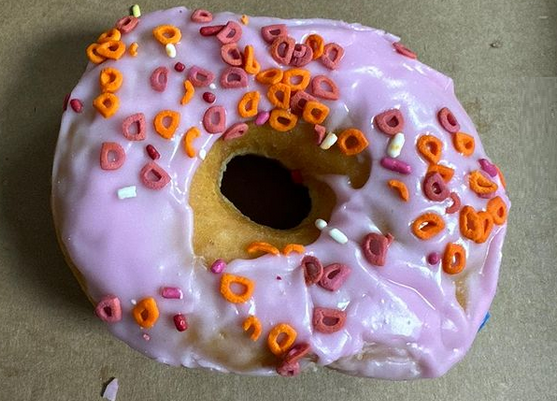
Cindy Snacks, a vegan food market in Long Island, sold The savory Fig’s pastries and sometimes posted photos of the doughnuts on social media as part of its marketing strategy. In an Instagram post on March 3, the store’s proprietor revealed a scandal: an order they received from The Savory Fig contained the this doughnut …

…with pink and orange, D-shaped sprinkles—D, as in “Dunkin’ Donuts.”  Pink and orange, as in Dunkin Donuts. Concerned that the doughnuts she had been buying and selling as vegan and gluten-free were neither, the alarmed owner texted Siriana, “If these are Dunkin’ Donuts the ingredients could kill somebody as we have so many people with severe dairy allergies that shop here. I’m concerned with the donuts this week and am very nervous to put them out.”

Continue reading

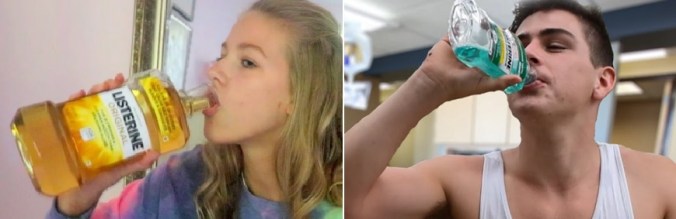
In Memory of Grace: “The Amazing Mouthwash Deception: Helping Alcoholics Relapse For Profit”

When I last re-posted this early Ethics Alarms entry from 2010, I called it, “Since Ethics Alarms Appears To Be The Only Source Trying To Publicize This Problem, Here, For The Third Time.” Not much has changed since then, except that my wife is dead. Listerine played a major role in killing her: Grace’s last major relapse—she battled alcoholism her entire adult life—occurred right before the pandemic when she impulsively drank down an entire jumbo bottle of the vile stuff and shortly thereafter took a nearly fatal fall off a curb outside our home. She never fully recovered from the effects of that fall, though other, less catastrophic relapses involving the mouthwash occurred at regular intervals.

As I explained in an earlier introduction, the original post “raised an important and shamefully under-reported topic, one that despite my exhortations then has yet to be adequately examined in the media.” In 2016, when I googled various combinations of “mouthwash,” “Listerine,”‘alcoholism,” and “alcoholic,” the first result was still my post. [UPDATE: The Ethics Alarms post is now about 100 deep, behind such links as “Should I switch to alcohol-free mouthwash?” Note that since 2016, Google’s algorithm buries EA in its searches because it is insufficiently in tune with the Axis.]

“Most people who are not afflicted with the disease of alcoholism have no idea that mouthwash is a popular stand-in for liquor, or that is used to deceive family members who think an addict is no longer using or intoxicated,” I wrote in the 2016 intro. First I was prompted to re-post the essay after I had been shocked to hear a physician friend who treated alcoholics plead complete ignorance of the links between mouthwash and alcoholism. The last time, it was the surprising reaction of my own physician, who is usually up-to-date on all medical research, and had treated alcoholism sufferers at the VA. He had never heard anything about the problem.

I’m re-posting this time because of Grace. The quote from my 2016 intro is still valid:

“Despite my frustration that what I regard as a true exposé that should have sparked an equivalent article in a more widely read forum has remained relatively unknown, I am encouraged by the effect it has had. Most Ethics Alarms posts have their greatest traffic around the time they are posted, but since 2010, the page views of this article have increased steadily…More importantly, it has drawn comments like this one:

‘Am looking after my twin sister who is a chronic alcoholic. She has been three days sober and then she just walked in and I couldn’t work out what the hell happened. She was in a stupor , but there was no alcohol and I am dispensing the Valium for detox period and she smelt like mint!! Found three bottles of it !!! This is my last big push to help her and she pleaded innocent and no idea it had alcohol in it! Hasn’t had a shower for two days but keeps her mouth fresh and sweet !! Thanks for the information. Much appreciated XXX’

“Most of all, I am revolted that what I increasingly have come to believe is an intentional, profit-motivated deception by manufacturers continues, despite their knowledge that their product is killing alcoholics and destroying families. I know proof would be difficult, but there have been successful class action lawsuits with millions in punitive damage settlements for less despicable conduct. Somewhere, there must be an employee or executive who acknowledges that the makers of mouthwash with alcohol know their product is being swallowed rather than swished, and are happy to profit from it….People are killing themselves right under our noses, and we are being thrown of by the minty smell of their breath.”

Here again is “The Amazing Mouthwash Deception: Helping Alcoholics Relapse For Profit.” Maybe this time it will help someone to avoid Grace’s pain and her ultimate fate.

I’m so, so sorry, my darling, that I couldn’t give you the peace you needed to fight this curse.

*** Continue reading

Ethics Quiz: The Gratuitous Diagnosis

I am 100% on the other side of an ethics question recently raised for the New York Times’ ethics advice maven, “The Ethicist.” You tell me which of us you think is right.

Details aside, the inquirer asked if he should, as a retired neurologist, tell a woman he admittedly barely knows but whom he has been in frequent contact with recently that he believes she has Parkinson’s Disease…

….There’s been no occasion to mention my professional background, and I’m now uncertain about whether I should tell her about it and my clinical impressions. Her disease, at its current stage, is likely to be successfully managed with oral medication. However, it is neither obvious that she will have access to skilled neurological care nor that she will be willing to seek it. And a new diagnosis of Parkinson’s, without prompt treatment, on top of her recent loss and the challenges that have followed, may further overwhelm her. My wife is in favor of my informing her, because treatment would benefit her quality of life. I’m hesitant, as there has been no invitation to become more involved in her personal life, and I cannot provide her with a supportive doctor-patient relationship. What would you recommend?

I’ll tell you which of us ethicists believe what after you’ve formulated your own answer. For now, Your Ethics Alarms Ethics Quiz of the Day is,

What would YOU recommend?

Continue reading

Yes Indeed, Most Presidents Have Had Emotional, Mental or Serious Physical Problems, But That Doesn’t Make Joe Biden Fit to Be One

I’ve been holding on to this post for a while now, waiting for Presidents Day. An old “Psychology Today” article has been dredged up lately by various pundits desperately seeking a way to deny what is now undeniable. President Biden is in the throes of serious mental decline, and allowing him to run again, at an advanced age and when his memory, stamina, and cognitive health are rapidly receding into the fog, is irresponsible—which doesn’t mean that the Axis won’t do it anyway. The argument being mounted to justify such a desperate and stupid course is a version of the #1 rationalization on the list, “Everybody does it!” Joe’s problems are no big deal, you see, because, as Dr. Guy Winch wrote in 2016: “a study by Jonathan Davidson of the Duke University Medical Center and colleagues, who reviewed biographical sources for the first 37 presidents (1776-1974), half of those men had been afflicted by mental illness—and 27% met those criteria while in office, something that could have clearly affected their ability to perform their jobs.”

Whew! Well, that’s a relief!

I hadn’t seen the study, but it was heartwarming, since its findings echoed those of my American Government honors thesis, now deep in the stacks of Widener Library. I hypothesized that being outside the norm emotionally, mentally and physically was among the factors that selected out the extraordinary individuals who become Presidents of the United States. Leaders, to give an even shorter version, are not normal by definition.

Continue reading