Ethics Observations On Pew’s “17 Striking Findings From 2017”

#1Partisan divides dwarf demographic differences on key political values. The average gap between the views of Republicans and Republican-leaning independents and Democrats and Democratic-leaning independents across 10 political values has increased from 15 percentage points in 1994 to 36 points today. Two decades ago, the average partisan differences on these items were only slightly wider than differences by religious attendance or educational attainment, and about as wide as differences across racial lines. Today, the partisan gaps far exceed differences across other key demographics.

I attribute this ominous development to both parties crossing previously observed lines of appropriate political tactics and rhetoric, picking at the seams that hold our society and democracy together. The GOP-advanced Whitewater investigation of the Clintons’ financial shenanigans began the criminalization of politics. President Clinton’s arrogance and recklessness as a sexual predator placed Democrats in the position of defending unethical conduct especially repugnant to conservatives, and the furious (and dishonest) efforts of both Clinton and Democrats to deny the legitimacy of his impeachment drove the parties further apart.

The essentially tied election of 2000 came at the worst possible time, but Democrats made its wounds to public comity worse that they had to be by using the false claim that the election was “stolen” to energize its base for years. The rise of hyper-partisan leaders in the House and Senate—Gingrich, Pelosi, McConnell, and worst of all, Harry Reid—continued to poison discourse.  The Iraq War fiasco, a Republican mistake, and the false Democratic mantra “Bush lied…” in response to it exacerbated the divide. Then the bi-partisan botches that led to the 2008 crash were widely attributed only to Republicans. Spurred by the prospect of a black President, the news media, always heavily tilted leftward, abandoned large portions of its ethical values to be an unapologetic cheerleader for the Democratic candidate, because having a black President elected would be so darn wonderful for everybody. Thus did the media fully embrace “the ends justifies the means” as an operating principle/

The inevitable racist response of a minority—but a vocal one—in conservative and Republican circles to the prospect of a black President caused further division, and Obama’s alliance with an openly racist Reverend Wright caused more racial polarization. Once elected, President Obama could have healed much of the damage since 1994 (as he promised to do) , but instead he chose to leverage divisions among races, genders, ages, classes, gays and straights, and legal and illegal immigrants for political advantage. His supporters, meanwhile, including those in the news media, began using accusations of racism to smother and inhibit legitimate criticism. Obama broke with Presidential tradition by repeatedly blaming his predecessor for problems he proved unable to solve, keeping partisan resentment hot.

Even with all of this, Obama could have healed much of the accumulated partisan antipathy if he had been an effective leader. He wasn’t. In contrast to his predecessor he was an effective (though over-praised) communicator,and in marked contrast to the current POTUS, he played the part beautifully, and that’s not inconsequential. The rest, however, was an ugly combination of misplaced priorities, incompetence, laziness, racial bias and posturing, with awful results. This hastened the divide, because Obama’s core base, the African American community, was inclined to view him uncritically no matter what he did. As other groups called out the President on his failings, that group’s loyalty and bias drove it, and allied groups, into defensive, knee-jerk ideological opposition, as the growing power of social media exacerbated hostility between the ideological polls.

Obama’s divisive administration, rhetoric and poor governing habits begat Donald Trump.

And here we are. Continue reading

A Trigger Warning About A Trigger Warning: Audiences Should Walk Out Of The Movie Theater When This Appears

This is not a joke. This is not The Onion. This is real. And frightening.

At the beginning of “Darkest Hour,” the new film about the wartime heroism and brilliance of  Winston Churchill, this warning appears on the screen:

“The depictions of tobacco smoking contained in this film are based solely on artistic consideration and are not intended to promote tobacco consumption. The surgeon general has determined that there are serious health risks associated with smoking and with secondhand smoke.”

Winston Churchill, you see, smoked cigars. Actually he chain-smoked them, and inhaled. They were among his trademarks. Any adult who doesn’t know that should not have graduated from high school. Interestingly, shooting and bombing people are also serious health risks, so I don’t know why it wasn’t noted that the depictions of warfare contained in this film are based solely on artistic consideration.”

Whatever “based solely on artistic consideration” is supposed to mean…

Of course, showing Churchill smoking cigars is not an “artistic consideration,” but one of historical accuracy and integrity. Does this mean that there was really a debate in the studio about whether or not Churchill should be shown smoking, so as not to trigger good little progressive totalitarians, who believe in changing the past for the greater good of the present? I wonder if they considered making Winston, who was fat, appear slim and ripped, since the surgeon general has determined that there are serious health risks associated with obesity and over-eating. I don’t see why they wouldn’t, if they felt that showing people smoking in the 1930s, when almost everyone smoked,  might be interpreted as promoting smoking today.  Churchill also drank like Bluto in “Animal House.” Why no warning about that? Uh-oh—does this mean that the film, for artistic considerations, only shows Winston sipping soda water and prune juice? Continue reading

Morning Ethics Warm-Up, 12/27/17: Height And Leadership, Among Other Things


Good Morning, all.

1  Fake news update. The news media’s daily efforts to poison public opinion against the President and everything connected to him is so—someone give me a new adjective,please, as I am sick of despicable, unconscionable,  outrageous, unforgivable, even unethical—reprehensible that I feel pulled into the position of having to defend Trump in order to defend basic ethical principles.

Newsweek featured this headline yesterday:

Melania Trump Orders Removal of Near-200-Year-Old Tree From White House

Those monsters! These crude Trumps, with no respect for history or tradition, trash everything they touch–even the famous magnolia Andrew Jackson planted in 1828, in honor of his late wife Rachel, who died before he took office. The Trump Hate Mob picked it up from there, with one tweeter sneering online,

“A rotten dying Iconic White House tree is representative not just of Trump’s brutal attack on Mother Earth & science, but it’s symbolic of everything that Trump has done to our sacred Democracy since taking office.”

The tree had to be removed, as even Newsweek explained if a reader got past the misleading headline, which many readers don’t…

CNN obtained documents from specialists at the United States National Arboretum, which determined the magnolia tree must be removed. The tree is “completely dependent on artificial support,” the document read.

The document said, “Without the extensive cabling system, the tree would have fallen years ago. Presently, and very concerning, the cabling system is failing on the east trunk, as a cable has pulled through the very thin layer of wood that remains. It is difficult to predict when and how many more will fail.”

Moreover, only part of the tree, and not “the tree,” is being removed. From CBS:

A “large portion” of the Jackson Magnolia, a tree that has been a South Lawn fixture since the 1800s, is being removed, the White House says. It had become a safety hazard after decades of decay…A substantial portion of the Jackson Magnolia will be removed …including one tree limb which will be conducted by the National Park Service, CBS News has confirmed.

(Look at the photo above. I bet you can guess which portion is being removed.)

Wait…one tree limb will be conducted? What’s that supposed to mean? And back to the Newsweek headline: what’s a tree doing in the White House anyway? It should have been removed centuries ago.

Fake news.

Also, news copy apparently written by monkeys at a keyboard… Continue reading

From “The Ethics Incompleteness Principle” Files: Memphis, Tennessee’s Confederate Statues

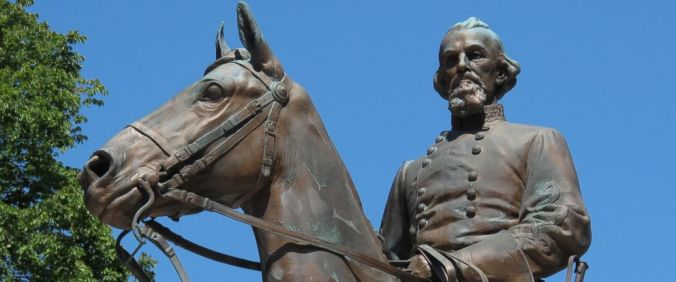
A better application of the Ethics Incompleteness Principle would be difficult to find than the decision by Memphis, Tennessee to remove a huge monument to Jefferson Davis, the president of the Confederacy, and an even larger heroic equestrian statue (above) of Nathan Bedford Forrest, swashbuckling Confederate general and (allegedly) the first Grand Wizard of the Ku Klux Klan,  from two public parks.

As we have discussed here in great detail, I am unalterably opposed to the current mania among our Left-leaning friends and neighbors  of tearing down statues, monuments and memorials honoring  past historical figures because their lives, beliefs and character do not comport with current day standards or political norms.  This primitive exercise in historical censorship has been especially focused on famous and notable figures from the Confederacy, although recent efforts have targeted George Washington, Thomas Jefferson, Andrew Jackson and even Theodore Roosevelt. Of the attacks on memorials to Confederate figures, I wrote,

[ Union veterans]  didn’t think of the former Confederates as traitors, or racists, or slavery advocates. They, like the Union veterans, were just men of their times, caught up in a great political and human rights conflict that came too fast and too furiously for any of them to manage. They were caught in the same, violent maelstrom, and knew it even 50 years earlier. Soldiers on both side wrote how they admired the courage of the enemy combatants they were killing, because they knew they were, in all the ways that mattered, just like them. It was the Golden Rule.  After the war, these soldiers who had faced death at the hands of these same generals, officers and troops, did not begrudge them the honor of their statues and memorials, nor their families pride in the bravery of their loved ones.

Yet now,  self-righteous social justice censors who never took up arms for any cause and in many cases never would, employ their pitifully inadequate knowledge of history to proclaim all the Civil War’s combatants on the losing side as racists and traitors, and decree that they should be hidden from future generations in shame. We have honored men and women for the good that they represent, not the mistakes, sins and misconduct that are usually the product of the times and values in which they lived. In doing so, we leave clues, memories, controversies, differing views, and stories for new generations to consider and better understand their own culture and society, and how it came to be what it is.

Those who want to tear down monuments to the imperfect, whether they know it or not, are impeding knowledge, perspective, wisdom, and understanding. They want only one view of history, because they will only tolerate one that advances their ideology and values—just as the Americans of the past believed in their values. Foolishly, I suppose, they trusted future generations to act on their own ethical enlightenment without corrupting the historical record.

I feel strongly about this, as the tone of that post, far from my first on the subject, shows.

But… Continue reading

Introducing Rationalizations #25B, and #25C: “I’m Just Doing My Job,” and “It’s Policy!”

Here are two  more rationalizations for the list, bringing the grand total to 89.

#25B  The Nuremberg Rationalization, or “I’m Just Doing My Job!”

Amazing: 87 previous rationalizations described, and the word “Nuremberg” did not appear once.

Rationalization # 25. The Coercion Myth, covers the excuse for unethical conduct that the actor “had no choice,” and # 25A. Frederick’s Compulsion or “It’s My Duty!” posits that duty excuses wrongdoing. #25 B follows the theme of denying free will by using the fact of employment to justify or excuse unethical conduct. It embodies the defense of the Nazi officers at the Nuremberg Trials that because they followed the orders of others, they were simply agents, and their horrible crimes against humanity should not bring them punishment…after all, they had no choice. It was their duty to follow orders, because that was their job.

We all need jobs, but we all have a choice whether to remain in a job or not. Sometimes it’s not a very attractive choice, and even a frightening one, in which choosing the ethical course requires personal sacrifice. Nonetheless, when a job requires one to commit unethical acts, the choice is this: quit the job and refuse to perform the unethical act, or commit the unethical act, following orders but accepting the responsibility, accountability and consequences of doing so.

For inspiration, we need look no further than the first admittee to the Ethics Alarms Heroes Hall of Honor, the amazing Henri Salmide.

From the Ethics Alarms post:

In 1944, Salmide was a German officer in the 159th Infantry Division of the German army occupying the French city of Bordeaux, the largest seaport on the west coast. It was August 19, and Allied Forces were spreading out from the beaches at Normandy and taking control of the war. An order came from Berlin calling on the Division to destroy the entire seven miles of port infrastructure before abandoning the city. The port’s destruction was scheduled to occur within a week.

“It fell to me,” Salmide recounted in an interview, because, as head of the bomb disposal unity, he had expertise with explosives. “I couldn’t do it. I knew the war was lost. What was the point of this, I asked myself. People would die and suffer, and the war would still be lost by Germany.”

On  August 22, he filled a bunker at the docks with detonators, plungers, timers and other hardware needed for the planned demolition. But instead of using them to destroy Bordeaux, Salmide blew them up with dynamite, in a terrifying explosion. “It was all I could do,” he said later.

French historians estimate he saved 3,500 lives by refusing to carry out his orders. About fifty Nazi soldiers died in the blast instead. “I could not accept that the port of Bordeaux be wantonly destroyed when the war was clearly lost,” he explained in an interview. “I acted according to my Christian conscience.”

Salmide deserted, and was hunted by both the Gestapo and the French authorities. He hid with the French Resistance for the remainder of the war. Then Salmide adopted a French name, married a local woman, became citizen of France, and raised his family in the very city his conscience had rescued. The Germans regarded him as a traitor, and even the French were reluctant to give him the recognition he deserved, according to his wife.

“No one wanted to admit that he had done it,” Mrs. Salmide told the New York Times. “If he had been French, it would have been easier for him.”  It was not until 2000 that the French government finally awarded him the French Legion of Honor,* and the Bordeaux City Hall said this week that it wants to erect a memorial to Salmide.

His best and most lasting memorial, however, would be for his story to be known around the world, and taught in every school, of every nation. For when any of us finds ourselves being required to act under authority to accomplish unjust and cruel ends—to blindly do our job, knowing that the results would harm others unjustly, and we wonder if it is fair for us to be accountable for our actions when, in reality, we seem to have no choice, we should recall Henri Salmide. His moment of courage should remind us that we are always accountable, and we always have a choice, provided we also have the ethics and courage to take it.

Continue reading

Morning Ethics Warm-Up, 12/20/2017: Maybe It’s The Christmas Tree Lights That Are Putting Me In A Rotten Mood, But This Stuff Isn’t Helping…

(It only looks this way to me…)

Good morning, everyone!

Grrrrrrrr…!

1 Again I ask: how does democracy survive this? It is so discouraging to read about facts that “the public has a right to know,” that are”fit to print,” or that must be revealed if democracy is not to “die in darkness,” and know, know, that they will not be honestly or properly covered by the mainstream news media for purely partisan and ideological purposes. It is doubly discouraging to know that so many Americans are either so brainwashed or without integrity to begin with that they will defend this betrayal…and even attack those who try to let the truth out.

There was  a story published earlier this week by Politico, which is largely left-leaning but a major source of political news on the web. It was thoroughly sourced, and thoroughly shocking.

It described how Obama administration secretly quashed efforts to stop Hezbollah from funding its operations through criminal enterprises in the United States, deliberately sabotaging US law enforcement’s efforts to fight terrorist drug and money laundering operations, by  curtailing long-standing efforts to interdict cocaine shipments in the U.S. by Hezbollah, the terrorist organization closely allied with Iran.

The federal and international effort to root out Hezbollah’s crime network predated the Obama administration:

The campaign, dubbed Project Cassandra, was launched in 2008 after the Drug Enforcement Administration amassed evidence that Hezbollah had transformed itself from a Middle East-focused military and political organization into an international crime syndicate that some investigators believed was collecting $1 billion a year from drug and weapons trafficking, money laundering and other criminal activities.

But President Obama was determined to get his nuclear deal with Iran done in his second term, so this effort was suspended by executive directive. “This was a policy decision, it was a systematic decision,” said Politico’s on-the-record source David Asher, a Defense Department official charged with tracking Hezbollah’s worldwide criminal enterprise “They serially ripped apart this entire effort that was very well supported and resourced, and it was done from the top down.” Continue reading

Plan J From Outer Space, And Related Scary Tales

All right, all right, “Plan J” is not really from outer space.  It’s really from the ever fertile mind of Democrats and the resistance, who are now dedicating their efforts on a new, weird, cultural theory to get rid of Donald Trump, one that has its dark routes in Salem, Massachusetts. Plan J—that’s my name for it, not theirs, as I explained here—isn’t quite as bizarre as the Ed Wood camp classic the headline evokes, “Plan 9 From Outer Space,” (If you’ve never seen it, shame on you: you can become culturally literate here) but it’s a lot scarier.

As it has been recently defined, Plan J holds that if  women, who must be believed, accuses a man of sexual harassment or sexual misconduct, no matter how long ago the alleged offense occurred, whether or not it relates to the accused individual’s current psoition,  whether there is any supporting evidence, whether the alleged incident or incidents were a criminal or a civil violation, regardless of how serious they were and regardless of whether the alleged offender denies the allegations or whether the accusations were known to those who placed him or her in their current position, the targeted individuals must be shunned, punished, and forced into virtual exile, if not erased from the culture entirely.

By establishing the new due process-bypassing, proportion-defying and fairness-erasing  social norm, those who have seen their Plans A through I (also enumerated here) either fail miserably or founder have new hope that they may  yet force the President of The United States to resign, thus bypassing those messy and inconvenient things called “elections.”  In order to set this bold new social norm, every celebrity or powerful person who even vaguely fits a Trumpish template regarding accusations of sexual misconduct must be hounded, attacked, derided or shamed.

It’s really remarkable. Of course, Plan J only became feasible as a result of the Harvey Weinstein scandal, and the subsequent rush of #MeToo-ers to see who they could take down, rightly or wrongly.

There is a certain perverted brilliance to Plan J. Sexual harassment is a filthy, unethical perk of the powerful that had been allowed to harm too many for too long, and was an accepted feature of too many cultures, like government, business, and show business.  Thus the pent-up fury sparked by the revelations about Weinstein was justified. But as with The Terror that followed the French Revolution, the legitimate anger and determination to reform the culture also created a different kind of power that corrupted the reformers. The ability to destroy with a pointed finger is intoxicating.

In many cases, the results have been beneficial: the identification of corrupt cultures and the unmasking of genuine workplace predators like Weinstein, Kevin Spacey, and Matt Lauer. In other cases, the fates of the accused have seemed wildly disproportionate to the offenses, although often the reaction of the accused have hastened their demise. The tally of individuals taken down by this frenzy now totals 97 men and one woman—Wait! Make that 98 men: Jerry Richardson, the owner of the NFL’s Carolina Panthers, announced that he was selling his team hours after the NFL announced that it would be investigation sexual misconduct claims against him.  Thus Plan J was born: Hey! Why not President Trump?

If due process and sufficient evidence weren’t required to destroy so many others who once had power and influence, surely Sen Kristin Gillibrand’s insistence that as long as she and enough Trump-hating journalists found his accusers “credible,” the fact that none of the alleged acts were criminal, that they did not occur while he was in office and could not possibly be impeachable, and the fact that he was elected with the public’s full knowledge of the allegations were no longer a bar to an effort to force him to resign.

Plan J!

It

Just

Might

WORK!

There are logical and ethical problems that have to be steamrolled in the process, however, if “the resistance’s” dream is to come true. For the principle that any alleged sexual misconduct that a elected official may have engaged in before being elected to become the rule, a lot of lesser figures have to be sacrificed, along with a lot of tenets of basic fairness. For example: Continue reading

Unethical Quote Of The Month, And A Bonus Kaboom: The New York Times Editors

“But if your man is really innocent, what’s the worry?”

The New York Times in an editorial, “Fox News v. Robert Mueller”

Yes, the New York Times really printed that, under its banner.

Well,

KABOOM!

There goes my head.

As much as I have learned to distrust the objectivity and motives of the New York Times, I did not expect the traditionally liberal paper to make a sinister argument typically associated with totalitarian regimes. This is nothing but a  rephrasing of the traditional “nothing to hide” rationalization for obtrusive state surveillance, as well as illegal police searches and abusive prosecutorial methods.

“If you’ve got nothing to hide, you’ve got nothing to fear” is such a cliché of oppressive state action that it has its own Wikipedia entry. It is often attributed to Joseph Goebbels or “1984,” though there is no documentation for either. It was uttered by villain Pius Thicknesse in “Harry Potter and the Deathly Hallows”:

“As your new Minister for Magic, I promise to restore this temple of tolerance to its former glory. Therefore, beginning today, each employee will submit themselves… for evaluation. But know this: you have nothing to fear if you have nothing to hide.”

In the film version of the novel, the actor (Guy Henry) playing Pius was cast to evoke Goebbels. (above).

Progressive writer Upton Sinclair used an inverted version in 1918 in “The Profits of Religion: An Essay in Economic Interpretation” (1918):

“Not merely was my own mail opened, but the mail of all my relatives and friends—people residing in places as far apart as California and Florida. I recall the bland smile of a government official to whom I complained about this matter: ‘If you have nothing to hide you have nothing to fear.'”

The statement adopted by the Times editors as well as the attitude behind constitute a rejection of democratic values and an endorsement of state sponsored fear and subjugation of individual rights. “It you are innocent, why worry?” literally stands for the proposition that one is guilty until proven innocent, which is an accurate description of the position of the Times, the mainstream media and “the resistance” regarding the baseless allegation of  “collusion” with Russia to steal the election from Hillary Clinton. In the context of the editorial, which dismisses legitimate questions about the objectivity and conflicts of interest among Special Counsel Robert Mueller’s team, the argument is especially disingenuous. If one is innocent, one shouldn’t worry if a biased team of lawyers is trying to find a way to make you look guilty? Continue reading

“The Popeye,” From The Ethics Alarms Ethics Estoppel Files: I Can Say The Republican Party Is Rotting, Democrats, But You Can’t

“That’s all I can stands, ’cause I can’t stands no more!”

—Popeye the Sailor, when he felt like I did while so many of my progressive friends were posting this op-ed by David Brooks.

Democratic posturing and moral outrage over Roy Moore’s support by Republicans is too much to bear. The hypocrisy and historical amnesia their caterwauling requires is truly nauseating. I could not believe that David Brooks of the Times would write about how the REPUBLICAN PARTY is rotting while the Democratic Party was wildly oscillating between defending a Congressman who had apparently harassed multiple staff members while in office because he was an “icon,” to playing the race card against its own Senator because he had been accused of conduct he denied years before he was elected, to dispensing with due process to demand that another Democratic Congressman resign, to forcing the Senator to resign (but probably only because their party controlled that State House), to forcing a vote on a shamefully contrived impeachment resolution, to all but guaranteeing the election of Moore because of revelations of the astounding sexual hypocrisy of their core allies among the news media, their key donors and their mouthpieces in Hollywood, while their bitter, losing Presidential candidate’s claim of a conspiracy to excuse her inexcusable defeat became less and less tenable as the investigation it spawned revealed itself to be incompetent and conflicted.

But the Republican Party is rotting.

Now, Ethics Alarms, unlike Brooks, unlike the Times, unlike MSNBC , unlike Hillary Clinton and unlike the Democratic party and any citizen so devoid of integrity to align with such a crew, can say the Republican Party is rotting. In fact, like Mr. Kimball would say on “Green Acres,” I will say it: the Republican Party is rotting. I can say it now because I said two years ago that it would commence rotting if it could not and would not stop Donald Trump from getting its nomination, something the party leaders had the power to do but neither the will nor the integrity. I said this, in various ways and with assorted provocation, right up to the convention.

Roy Moore? He’s minor rot, comparatively, and the Democrats don’t even honestly or competently argue what is most rotten about him. They want to concentrate on his “Deliverance,” hillbilly, low-life, dating preferences enabled by ignorant Alabama mothers forty years ago, when the man  today thinks he can defy the Supreme Court and the Constitution, thinks America was at its best under slavery, thinks women should be kept barefoot and pregnant, would love to see gays stoned to death, and wants a Christian theocracy to rule the land.

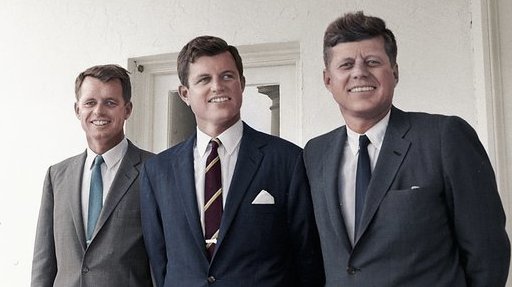
But that’s quibbling: Moore is certainly rotten, and the GOP doing anything but declaring him a human pathogen for the Senate and democracy is certainly proof of rot. Until, however, Republicans make Moore the keynote speaker in a future convention dedicated to condemning a “war on children,” I’ll handle the rot assessments, thanks, along with any other commentators, academics and citizens who didn’t spend the last, oh, half century or so extolling the likes of Jack Kennedy, Bobby Kennedy, Teddy Kennedy, and the Clintons.

The Democratic Party has happily celebrated, covered up and profited from rot. As Obi Wan would say, “The Rot is Strong Within Them.” Thus they are estopped from calling out rot anywhere. Continue reading

Morning Ethics Warm-Up, 12/7/17: Al Franken’s Day That Will Live In Infamy [UPDATED]

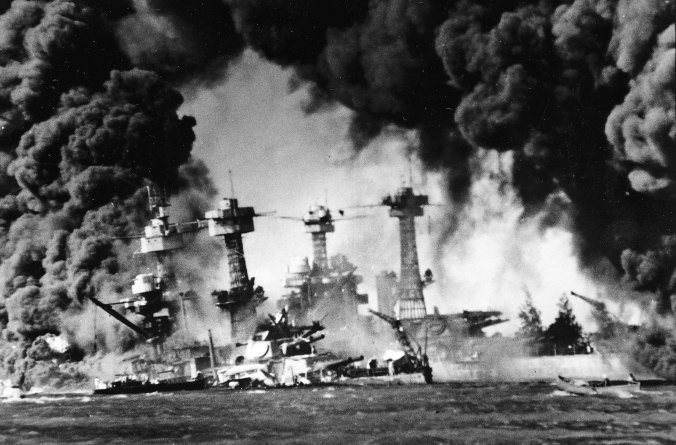
Battleship USS West Virginia sunk and burning at Pearl Harbor on Dec. 7, 1941. In background is the battleship USS Tennessee.

Good Morning, Bad Memories…

1 The duty to remember…The most amazing thing about Pearl Harbor was perhaps how lucky the United States was that the sneak attack by Japan, as devastating as it was, didn’t permanently cripple our ability to defend ourselves. Two links lead to explanations why. Here is a letter written by Admiral Nimitz, then in his eightieth year. to Admiral David L. McDonald, the present Chief of Naval Operations. The National Review provides the tale of how a forgotten Georgia Congressman, Democrat Carl Vinson saved the country and probably the world.  An excerpt:

For nearly a decade before Pearl Harbor, Vinson had schemed and politicked in brilliant fashion to ensure that America was building a two-ocean navy larger than all the major navies of the world combined. Vinson had assumed in the mid-1930s that fascist Japan and Germany posed existential threats to the United States. For America to survive, he saw that America would need mastery of the seas to transport its armies across the Pacific and Atlantic.

This is Thank You Carl Day. Read it all.

2. ‘I wasn’t good enough, I wasn’t smart enough, and doggone it, nobody likes me!’ This appears to be the end for Senator Al Franken. If it’s not, the end is near and inevitable. His seventh new accuser was the tipping point, for some reason, though her story Franken denies—especially the part where the anonymous woman claims that after she ducked his attempt at a spontaneous kiss in 2006, he  protested, “It’s my right as an entertainer! ” The soon-to-be-former Senator told Politico,

“This allegation is categorically not true and the idea that I would claim this as my right as an entertainer is preposterous. I look forward to fully cooperating with the ongoing ethics committee investigation.”

That “It’s my right” comment sounds to me like a desperate attempt to save face by making a joke out of an awkward situation, not a serious claim. If I’m right, then Franken’s statement is deceit: he’s saying that he would never claim such a right, but he isn’t saying that those words never came out of his mouth. Al’s slippery, mealy-mouthed, not-quite apologies are a large part of why he’s in this mess, as I wrote here. 

Still, no one should be presumed guilty or face negative consequences for a public accusation by an accuser who refuses to go on the record. This is basic fairness and due process. Never mind: the Democratic women in the U.S. Senate are less interested in due process and fairness than grandstanding and standing for the proposition that women must be believed in cases of sexual assault, unless they were assaulted by Bill Clinton. I think that’s the rule, right?

They led a coordinated attack on Franken yesterday by 16 U.S. Senators, including Sen. Kirsten Gillibrand of New York—you know, the one who championed “Mattress Girl”?–who  wrote in a 650-word statement,”While Senator Franken is entitled to have the Ethics Committee conclude its review, I believe it would be better for our country if he sent a clear message that any kind of mistreatment of women in our society isn’t acceptable by stepping aside to let someone else serve.”

That’s right, Senator, it’s better to send the message that due process is just a sham to make doing what you want to do look fair.

For example, how do you like this (from Politico):

Two former colleagues of the woman independently corroborated her version of events, including Franken telling her he had the right to try to kiss her because he was “an entertainer.” The first former colleague interviewed by POLITICO said she was told of the incident in 2006, shortly after it happened. The second former co-worker said she was made aware of the encounter sometime in 2009 or 2010.

What? Those women didn’t corroborate the the accuser’s “version of events”! How can any journalist write such junk? How could an editor let it pass? All they can do is corroborate that the woman said this happened, not that her account is accurate or true.

But again, never mind. This is The Terror. Al’s a man, Democrats have been caught in the web of hypocrisy they started spinning when Clinton was President, and his metaphorical blood must cleanse them. Continue reading