Comment of the Day: “Who Are You Calling A Nut?” And Other Ethics Issues In The Community College Shooting Aftermath (Continued)”

GunsBad-copy

Ethics Alarms’ eccentric philosopher Michael Ejercito, who excels in asking provocative questions, ends his Comment of the Day regarding the attack on gun ownership with the query, “Why do people use such discredited arguments?”

There’s certainly a lot of discredited arguments in the air. A writer named Michael Pusitan wrote a risible post (inspiring a very funny Animal House referenced take-town by the Instapundit) about getting rid of his guns, ending with this passage:

Last week, I sat in a hotel room and watched the President talk about the latest mass shooting and how they had become routine and the concern that nothing would change. I started to shrug it off and pretend in my mind that there was nothing I could do. But the idea that gun culture doesn’t bear some responsibility for these killings didn’t make sense to me. I didn’t want to be a part of gun culture anymore.

I was never going to use these guns for self-defense, they were safely locked and out of reach. I don’t hunt. I don’t shoot clays. There are no dangerous animals where I live. There are no zombies. I’m not a police officer or soldier. I am not part of a well regulated militia. There’s no reason for me to have them.

So I got rid of them. Firearms are no longer a hobby of mine.

This well-exposes the logical disconnect of virtually all the “WE GOTTA DO SOMETHING!” rants from political exploiters of the recent shootings, where the tragedy is used to insist on measures that will have no effect on preventing the tragedies at issue. Pusitan getting rid of his guns is grandstanding, that’s all. His action won’t save a single life, and if he snapped and decided to go shoot up a church he’d still be able to buy the guns to do it. Meanwhile, the statement “I didn’t want to be a part of gun culture anymore” is pure, distilled ignorance. It’s not the gun culture, you fool, it’s the culture, and unless you want to book a slow boat to China, you’re part of it whether you like it or not, because you live here, and derive the good and the bad from the uniquely vital and productive individual initiative and freedom-based culture that is the United States of America.

(Instapundit’s joke quotes Otter: THESE TIMES CALL FOR A REALLY STUPID, FUTILE GESTURE. And he’s just the guy who can do it.)

The answers to Michael’s question are many: because they don’t know what they are talking about, because they have no good, honest proposals, just bad, dishonest ones, because they are preaching to the choir and not really interested in changing anyone’s mind, because the whole debate is framed by emotion, not facts.

Here is Michael Ejercito‘s Comment of the Day on the post, “Who Are You Calling A Nut?” And Other Ethics Issues In The Community College Shooting Aftermath (Continued)”

A column from George Skelton on this issue, and my response.

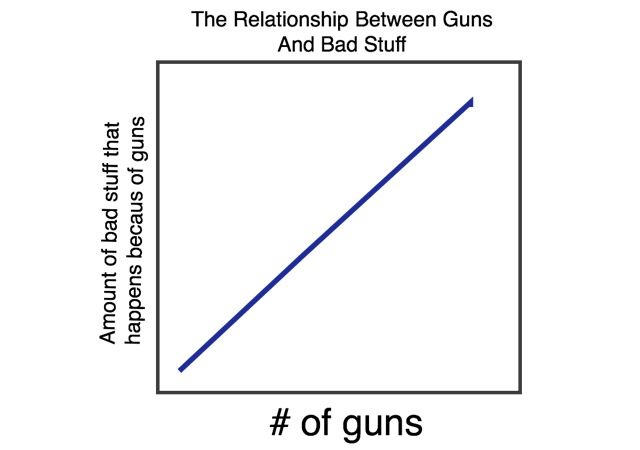
It is really quite simple: Guns are designed for killing. The more guns there are, the more people get killed. That’s not just simple logic. It’s simple fact.

The same thing have been argued with regards to alcohol- or black people.

And no other developed nation comes close to us in firearms fatalities. We’re at 10-plus per 100,000 people. One third are homicides, two thirds are suicides.

I wonder if George Skelton even heard that California has legalized assisted suicide. The state thus declared that suicide is a good thing. Continue reading

Facebook Grammar, Lincoln Chafee, USA Today, and Confirmation Bias

The smartest supporters of all!

He has the smartest supporters of all!

USA Today once was a mediocre newspaper that had one virtue: it was convenient for travelers, and sadly more useful for following non-locale news development than all but a handful of city publications. Now it isn’t a newspaper at all, but some hybrid monstrosity that is laid out like a website, has articles too short to be complete or helpful, and a product pandering to those with small vocabularies and attention spans that have been destroyed by the internet. But it’s often free, so on my latest (horrible, miserable, disaster-filled) seminar tour around Virginia, I had the pleasure of opening an edition and seeing what immediately struck me as the kind of feature no respectable journalistic enterprise would tolerate.

USA Today political writer Paul Singer thought newsworthy a ridiculous exercise that could only have sprung from a toxic mix of bias and silliness. It’s objective: let’s either prove that Republicans and conservatives are dumber than their Democrat, liberal counterparts, or prove that an accepted way of measuring intelligence is inaccurate for the purpose, because it doesn’t prove that Republicans are morons, and we all know they are. The feature was called “Democrats crush Republicans in grammar; Chafee on top.”

This is yet another self-rebutting exercise, as proven by the headline. Lincoln Chafee is a well-established boob, as they will tell you, if you ask, in his home base of Rhode Island. The man announced his Presidential run citing his primary cause as getting the U.S. to adopt the metric system. This immediately places him in the long and amusing line of wacko candidates, including…

Homer Aubrey Tomlinson, who was a New York City preacher that ran for the presidency under the banner of the Theocratic Party in five elections, from 1952 until his death in 1968. He wanted to replace taxation with tithing and promised to create a new cabinet post: Secretary of Righteousness. Later, Tomlinson declared himself King of the World and staged coronation ceremonies in 101 different countries, in which he appeared wearing a gold-plated crown, an inflatable globe and a folding chair as his throne. And…

California congressman John G. Schmitz, who was the American Independent Party candidate for president in 1972. He was expelled from the John Birch Society for “extremism,” which sort of says it all. Schmitz also endorsed the return of segregated schools, and later announced that he was rooting for a military coup. Mary Kay Letourneau is his daughter. Then there is…

HRM Caesar St. Augustine de Buonaparte, who is running now as The Absolute Dictator Party’s candidate. He says that all the major politicians are “niggers” and so is everyone else “because we all die on our death bed and watch our offspring fight over our money.” He pledges to replace any government employee who does not have an IQ of at least 150.

So if Chafee has the followers with the most facility with the language, what does it tell us about the usefulness of that factor in assessing, well, anything? It tells me that this was an inquiry designed to embarrass Republicans that failed, but USA Today decided to publish it anyway with big color graphics using up about half a page in a paper that typically has only a couple of pages as substance.

The stunt was the brainchild of some Marketing flack at Grammarly, a writing app that thought it might increase the number of people who ever heard of it from five to nineteen. According to a Grammarly release, using the app on the websites of presidential candidates’ Facebook pages showed that Democratic commenters made an average of 4.2 mistakes per 100 words compared to 8.7 mistakes for supporters of Republican candidates. The Democratic supporters also showed a larger vocabulary, using on average 300 unique words per 1,000 words, while Republicans used only 245. Here was the methodology:

We began by taking a large sample of Facebook comments containing at least fifteen words from each candidate’s official page between April, 2015 and August, 2015. Next, we created a set of guidelines to help limit (as much as possible) the subjectivity of categorizing the comments as positive or negative. Since the point of the study was to analyze the writing of each candidate’s supporters, we considered only obviously positive or neutral comments. Obviously negative or critical comments, as well as ambiguous or borderline negative comments, were disqualified.

We then randomly selected at least 180 of these positive and neutral comments (~6,000 words) to analyze for each candidate. Using Grammarly, we identified the errors in the comments, which were then verified and tallied by a team of live proofreaders. For the purposes of this study, we counted only black-and-white mistakes such as misspellings, wrong and missing punctuation, misused or missing words, and subject-verb disagreement. We ignored stylistic variations such as the use of common slang words, serial comma usage, and the use of numerals instead of spelled-out numbers.

Finally, we calculated the average number of mistakes per one hundred words by dividing the total word count of the comments by the total number of mistakes for each candidate.

There are many problems with this, of course, the primary one being “Who cares?,” followed by “How do you know that the same commenters aren’t writing on the walls of multiple candidates?” “Isn’t this another classist, pro-coastal, elitist exercise?” “Since when is Facebook spelling and grammar an accepted measure of anything?” “How about finding out how many supporters of each candidate read USA Today, or worse, trust it?”

Now there’s an intelligence test.

Why would people waste their time writing on campaign Facebook pages, when almost none of the candidates actually look at them? How do we know the smartest Democratic supporters waste their time on Facebook, while only the dumbest Republican supporters use is? But never mind all the problems with the methodology: Grammarly is a lousy app and doesn’t work. Continue reading

“What’s Going On Here?”:The Secret Service’s Vindictive Leak

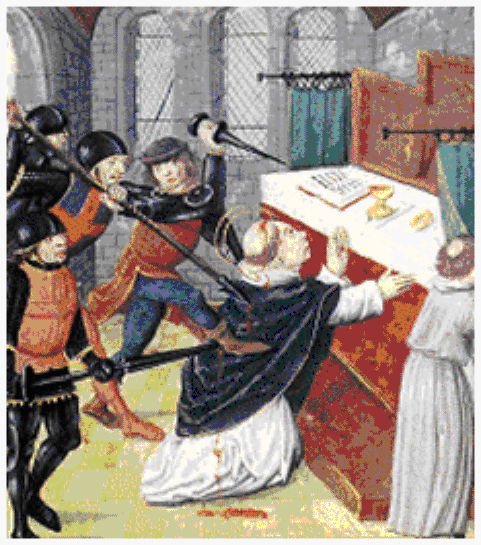
I was going to use another "fish rotting from the head" picture, but Thomas of Beckett's murder---which Henry didn't direct, mind you!---seemed more appropriate.

I was going to use another “fish rotting from the head” picture, but Thomas of Beckett’s murder—which Henry didn’t direct, mind you!—seemed more appropriate.

Last week, we learned that Secret Service Assistant Director Edward Lowery suggested that unflattering information the agency had in its files about a Republican Congressman ­who had been critical of the service—and who hasn’t been?— should be leaked to public as the agency’s revenge. And it was.

“Some information that he might find embarrassing needs to get out,”  Lowry wrote in an e-mail to a fellow director on March 31, commenting on an internal file that was being widely circulated inside the service. “Just to be fair.” Soon an internet source reported that Rep. Jason Chaffetz (R-Utah), chairman of the House Oversight and Government Reform Committee, had applied to be a Secret Service agent in 2003 and was rejected. That information was part of a Chaffetz personnel file stored in a restricted Secret Service database and required by law to remain private.

During an inspector general’s investigation, Lowery denied that he directed anyone to leak the private information about Chaffetz to the press and said his e-mail was simply venting. How Clintonian. No, he didn’t direct anyone to do it: he just said that it should be done, as in Will no one rid me of this troublesome priest?”

So far, this self-evident dodge has been enough to keep Lowery in his job, because as those who are honest and fair know, there is no accountability in the Obama Administration, and if a Republican Congressman is embarrassed, everyone knows the President is smiling about it. Lowry was  promoted to the post of Assistant Director for Training a month ago to help reform the agency after outrageous security lapses that Chaffetz had helped expose and criticize.

That’s some reformer! Continue reading

The Beatles And Plagiarism

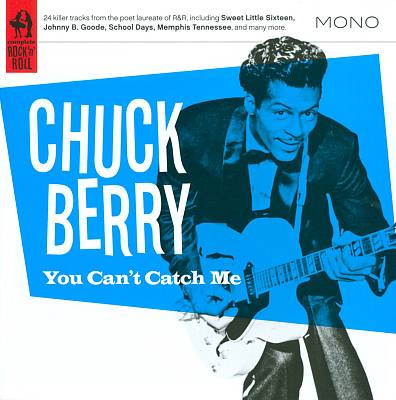
Chuck BerryI knew that Brian Wilson had ripped off Chuck Berry’s “Sweet Little Sixteen” to write “Surfin’ USA,” resulting in Berry owning the copyright to the Beach Boys hit. I knew that George Harrison had stolen the Chiffons’ “He’s So Fine” for his first solo hit “My Sweet Lord,” ultimately resulting in Harrison being found guilty of “subconscious plagiarism” (suuuuuure) and paying $1,599,987 of the earnings from “My Sweet Lord” to Bright Tunes, since songwriter Ronnie Mack had died in 1963, shortly after “He’s So Fine” was released. ( George did not cover himself in glory, telling an interviewer, “As far as I’m concerned, the effect the song has had far exceeds any bitching between copyright people and their greed and jealousy.” You stole the song, George.)

I did not know until this morning, when I had a chance to listen closely to Berry’s “You Can’t Catch Me” on my car radio, that The Beatles had plagiarized it for the opening cut on “Abbey Road,” “Come Together (Over Me.)”

First it was the lyrics that got my attention. I heard Chuck sing..

“I was rollin’ slowly ’cause of drizzlin’ showers
Here come a flat-top, he was movin’ up with me..”

Sounds familiar…where have I heard that before? Oh yeah!

“Here come old flattop, he come grooving up slowly…”

Then there was the melody, which was essentially identical, just differently arranged. Compare:

Continue reading

Boehner, Leadership And The Consequentialism Exception

At the end of John Beohner’s press conference responding to his sudden resignation, there was this exchange:

QUESTION: Can you talk about what you think your legacy is as you’re leaving? What are your most important accomplishments, and what are you going to do on November 1st? Are you moving to Florida?

BOEHNER: I was never in the legacy business. You all heard me say it, I’m a regular guy with a big job. And I never thought I’d be in Congress much less I’d ever be speaker. But people know me as being fair, being honest, being straightforward and trying to do the right thing every day on behalf of the country. I don’t need any more on that.

I will frequently inveigh here against the fallacy of consequentialism, the mistake of believing that whether conduct is ethical or not can be judged by its results. This leads inexorably to an “ends justifies the means” orientation and a misunderstanding of ethics. The ethical nature of an act can only be weighed according to how it was arrived at, its intent, and whether the conduct itself meets the tests of one or more ethical systems. Then moral luck takes over: an ethical decision can have catastrophic consequences and still be ethical, and the most unethical conduct can have wonderful results.

In life, however, and especially in some fields, ethics isn’t enough, and we all know it, or should. This is why consequentialism can’t be snuffed out of our thinking. There are fields of endeavor in which results are the primary standard by which we can—and should— judge whether someone was competent in the role he or she took on for themselves when others could have done the job better. In these fields being ethical isn’t enough, and often is grossly inadequate.  If one is a leader, for example, it cannot be right to lead those behind you to disaster, indeed to fail. In a field that is defined by the successful completion of a task that affects others, failure and ethics are incompatible. A failed leader is a bad leader. The objective in leadership is not just to “do the right thing,” but to succeed at ethical objectives in the right way. Continue reading

“Kill The Messenger” And The CIA Crack Story Ethics Train Wreck

I finally saw the 2014 docudrama “Kill the Messenger,” which completed—I hope—the passenger list for a 30-year-old Ethics Train Wreck.

The film purports to be the true story of Gary Webb, the San Jose Mercury News reporter who wrote the sensational “Dark Alliance” series of investigative reports in 1996. The series attributed the inner city crack cocaine explosion in part to Nicaraguan anti-government Contra rebels in  the 1980s funding their efforts by drug smuggling and sales, all with the knowledge and assistance of the  CIA. The agency, the series claimed, was acting to support the Contras despite Congress rejecting the Reagan administration’s request for aid. Like most Hollywood accounts of anything, the film distorts and misrepresents facts to make a better story. Unfortunately, Webb’s story is made more dramatic by making him out to be a tragic hero and victim of a sinister alliance between the mainstream media and the U.S. Government. That’s not exactly true, fair or accurate, and in this matter, affirmatively harmful.

The fastest way to survey this particular Ethics Train Wreck is to list the distinguished passengers, more or less in order of boarding: Continue reading

Entry For “Unethical Headline Of The Year”: Mother Jones

mother-jones-3

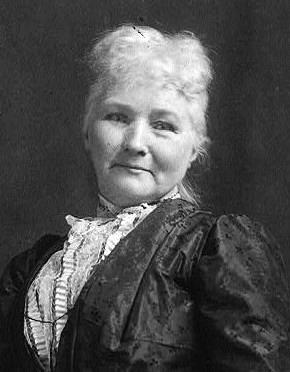
The real “Mother Jones”

A headline is a declarative statement, and ethical headlines are factual—not teases, not bait and switches, not lies, not deceit, but factual. Misleading headlines have become increasingly common on the web (click-bait, you know), and if this one from Mother Jones is any indication, the election season is going to be ugly as well as confusing.

The headline is “Republicans Hate Planned Parenthood but Want to Put One of Its Backers on the $10 Bill,” and it is quite an achievement: almost every word is a lie or intentionally misleading.

Let’s begin with “Republicans,” who, according to the headline, both “hate” Planned Parenthood and “want” to put a Planned Parenthood “backer” on the ten. “Republicans” implies all Republicans. Do all Republicans “hate” Planned Parenthood? Gee, I am married to a Republican who served on the board of the local  organization affiliate. There are many Republicans who oppose one of Planned Parenthood’s signature activities, abortion, but that does not mean all Republicans hate Planned Parenthood. Many headline writers, including the one that wrote this one, are lying, manipulative partisan hacks, but a headline that said, “Headline Writers Are Lying, Manipulative Partisan Hacks” would be unfair and misleading.

As for the second part of the sentence, which states Republicans want to put one of Planned Parenthood’s “backers” on the ten dollar bill, it is even more inaccurate regarding Republicans. The article under the headline refers only to the CNN candidate’s debate, and only to three of the eleven Republicans on the stage. Since eight of the Republicans did NOT choose to place the “backer’s” face on the ten, using the article’s own deceitful employment of the term “Republicans,” the article could also be titled “Republicans Hate Planned Parenthood And Don’t Want to Put One of Its Backers on the $10 Bill.” That, of course, wouldn’t convey the impression that Republicans have no integrity, are hypocritical and ignorant, which was really the purpose of the headline and the article. A headline, however, that is less accurate than the opposite of the headline is a really misleading headline. Res ipsa loquitor! Fairer and more honest still would have been a version of the headline that read “Three Republicans Want to Put One of Planned Parenthood’s Backers On The $10 Bill,” but even that would be misleading.

Oh, I’ve just gotten started, for this is some terrible headline. Continue reading

Unethical Quote of the Week: Donald Trump’s 2nd Amendment Position Paper

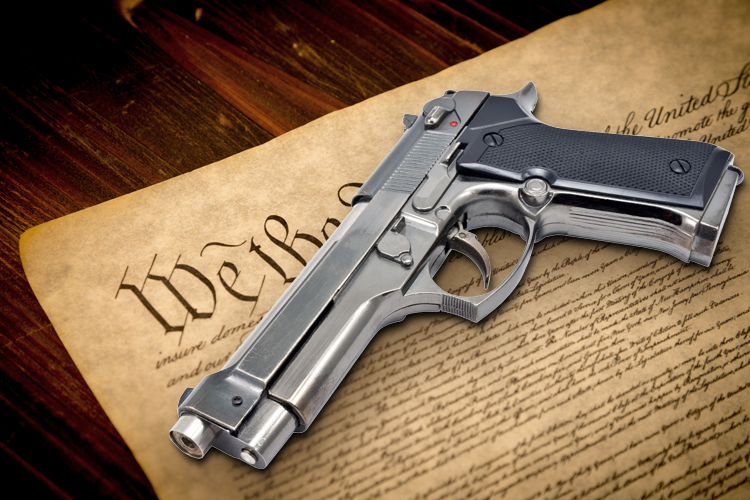
constitution_gun

“The Second Amendment to our Constitution is clear. The right of the people to keep and bear Arms shall not be infringed upon. Period.”

—The first sentence of “Protecting Our Second Amendment Rights Will Make America Great Again ...Donald J. Trump on the Right to Keep and Bear Arms,” released today.

You can debate the various policy ideas in this typically simplistic approach to a complicated problem; that’s not my purpose. My purpose is to point out that a position paper on the Second Amendment that begins by misstating that amendment while saying the amendment is “clear” cannot and should not be taken seriously. Nor should its author.

Is he stupid, and not know that it is ludicrous to state what is not the text of the amendment with the emphatic “Period” ? Is he ignorant, and unaware of the wording of actual amendment that he proceeds to say “is America’s first freedom”? Or is he lying, using a false version of the Second Amendment to mislead his many followers who either haven’t read the Constitution’s Bill of Rights, or can’t read at all?

The Second Amendment may be many things, but clear is one thing nobody with any knowledge of the subject believes it is. It is not clear. It is, by far, the least clear of all the amendments, and that is why it is still controversial after centuries. The fake Second Amendment that Trump’s position paper uses is clear; too bad that’s not the real one. If the Second Amendment read “The right of the people to keep and bear Arms shall not be infringed upon,” it would be clear, and opponents of gun ownership wouldn’t have any argument except to insist that we repeal  it.  The real Amendment, however, reads,

“A well regulated Militia, being necessary to the security of a free State, the right of the people to keep and bear Arms, shall not be infringed.”

That could mean the same thing, or it might not. It would seem it was intended to mean something else, otherwise why wasn’t it worded as in the Trump version? The seas of ink that have been spilled over the interpretation of that strangely constructed sentence could flood Texas, and educated, thoughtful people who are honest, erudite and not simpleminded (unlike Trump) have written provocatively on the subject, often disagreeing, as in.. Continue reading

A Final Post Debate Observation: Cognitive Dissonance And The Welch Effect

Rand Paul23I’m literally the only one writing about this—which is to say that everyone else is wrong— so I might as well wrap it up.

You will recall that I predicted (and hoped) that one of the candidates in the CNN debate on Wednesday would have the wit, historical perspective and guts to prepare a Joseph Welch take-down of Donald Trump, as it is an excellent way of shining harsh light on a bully and ethics miscreant. This is how lawyer Joseph Welch ended the reign of terror of Sen. Joe McCarthy on live TV in the medium’s “Golden Age,” and McCarthy was bigger and more deadly game than The Donald.

I wrote:

Will the same tactic work on Trump? It should: it would have worked in the first debate. Now, it may not, because many Welches will not be as effective as a single one, and I would not be surprised if several of Trump’s competitors will have a Welchism rehearsed. It also won’t work if the wrong Welch jumps in first, or if he blows his delivery. (Welch was quite an actor.) We shall see. If someone doesn’t at least try it, none of these 15 non-Trumps are  smart enough to be President.

Well, the Welch moment came almost immediately, as the first candidate with an opening to deliver it took his shot: Sen. Rand Paul. As I wrote in my follow-up piece yesterday, it wasn’t completely Welch-worthy, but it stung:

The Joseph Welch moment that I predicted occurred, though it was a wan and, as I feared, an incompetent version.  The Welch-wannabe was Rand Paul, and he directly referenced Trump’s “sophomoric” personal attacks, saying…

“Do we want someone with that kind of character, that kind of careless language to be negotiating with Putin? Do we want someone like that to be negotiating with Iran? I think really there is sophomoric a quality that is entertaining about Mr. Trump, but I am worried. I’m very concerned about having him in charge of the nuclear weapons because I think his response, his real response to attack people on their appearance, short, tall, fat, ugly. My goodness, that happened in junior high. Are we not way above that? Would we not all be worried to have someone like that in charge of the nuclear arsenal?”

…First, a Welch retort has to be delivered with withering contempt, not snotty combativeness. Second, the deliverer has to talk directly to the target; this is key. Not “he,” Senator. “YOU.” Third, whether or not the question was about the temperament of the man with his finger on the button, the danger of having a leader who behaves like Trump goes far beyond that….Still, Welch’s tactic worked a bit. Trump’s rejoinder, essentially “You’re ugly, too!”, got what sounded like awkward laughter, and Donald Trump, who is an entertainer, and who, like most experienced performers, can sense what an audience is feeling, was very subdued the rest of the debate.

What happened is that while the whole bucket of water didn’t land on the Wicked Trump, enough splashed on him to slow him down. When Fiorina delivered a mini-Welch later and Trump simpered his submissive “she’s got a beautiful face, and she’s a beautiful woman” line, he was still melting. She, more than anyone else, jumped in the vacuum left by Trump’s “shrinkage.” Continue reading

Your CNN Republican Presidential Candidate Debate Sneak Preview

Somebody is going to do this to Donald Trump tonight:

The only question is who, and perhaps how many. It worked before, and it could work again. It may be too late for this strategem, though.

If you don’t recognize the incident, one of the first live TV moments to enter history and have a major impact on national politics, here is the background:

It came at the height of the Cold War, and the fear of Communist Russia was as palpable as it was toxic. Being publicly associated with the Communist Party was a ticket to personal and professional destruction, and many politicians wielded the accusation as a weapon of mass destruction.  The Hollywood Blacklist was the archetype of many such lists that kept many Americans who were socialists or merely liberals virtually unemployable in the military, the State Department, police and businesses. Dark times.

Republican Senator Joseph McCarthy used red-baiting to become the most famous, polarizing, popular, controversial—and powerful— American politician not named Eisenhower.  In 1954, two commercial TV networks broadcast live the hearings investigating McCarthy’s allegations against Army officers, and the counter-allegations that McCarthy and his aide, Roy Cohn, had pressured the Army to give preferential treatment to a Cohn’s  friend, later revealed to be  his  gay lover. (See: “Angels in America”)  80 million Americans watched the first ever  broadcast of Congressional hearings, riveted.

Joseph Welch, a prominent Boston attorney, agreed to serve as the Army’s legal counsel in the hearings. He knew, as the GOP contenders should know, that the only effective way to shame and expose a bully and a miscreant is to do it directly to his face. Welch waited for days, playing the quiet, respectful professional as McCarthy ranted and grandstanded. Then he saw his chance.

On June 9,  1954,  McCarthy declared that Fred Fisher, a young lawyer from Welch’s own law firm, had once been a member of the National Lawyers Guild, a civil rights group that J. Edgar Hoover had called a communist front because its attorneys had represente suspected communists. Welch, choking with emotion, it seemed, indignantly defended his colleague while deriding McCarthy:

“Until this moment, Senator, I think I never really gauged your cruelty or your recklessness. … Let us not assassinate this lad further, Senator. You have done enough. Have you no sense of decency, sir? At long last, have you left no sense of decency?”

The chamber’s audience applauded. The public’s infatuation with McCarthy was shattered, and emboldened by the collapse of public support for him,  McCarthy’s colleagues in the Senate censured him for inappropriate conduct. McCarthy’s power evaporated, and the anti-Communist hysteria joined him in a shadowy corner of U.S. history. Continue reading