Ethics Quiz: Virginia’s Forced Vasectomy

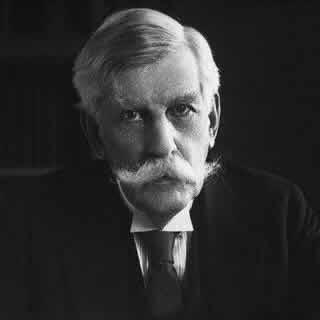
"Well, they can't all be "shouting fire in a crowded theater," Oliver. So you had an off day....it happens.

“Well, they can’t all be “shouting fire in a crowded theater,” Oliver. So you had an off day….it happens.

One of the skeletons in the Old Dominion State’s closet is the 1924 “Virginia Eugenical Sterilization Act,” a  law allowing the sterilization of citizens adjudged to be in a long line of mentally deficient idiots. The law was upheld in the infamous  1927 Supreme Court opinion in Buck v. Bell, in which the great Justice Oliver Wendell Holmes, to his undying shame, wrote,

“It is better for all the world if, instead of waiting to execute degenerate offspring for crime or to let them starve for their imbecility, society can prevent those who are manifestly unfit from continuing their kind…Three generations of imbeciles are enough.”

So approved, Virginia’s eugenics law lasted into the 1970s, allowing the state to sterilize more than 7,000 people in mental institutions. The law was repealed in 1979, and victims are seeking reparations. Now the ghost of that law is hovering over the resolution of a current case.

The only thing Virginian Jessie Lee Herald has done on his 27 years more than get in trouble with the law is have children: so far he has had seven (with six mothers) and his current wife says she wants more. He recently fled the scene of a car crash with his injured 3-year-old son. Herald pleaded guilty to felony child endangerment, felony hit-and-run, and misdemeanor driving on a suspended license. Investigators who went to his home found his child to have been neglected, with, among other things, shards of glass in his diapers.

A Shenandoah County prosecutor, Illona White, proposed a plea deal that would reduce Herald’s prison sentence to just four years: he would have to agree to a vasectomy. He took the deal, which also requires him to pay for the operation.

Your Ethics Alarms Ethics Quiz of the Day:

 Is it ethical for a state to make a convicted felon choose between prison time and sterilization?

Continue reading

Ten Movies For Independence Day Weekend

fireworks

I wasn’t going to do this until I ran across a few lists of “Most Patriotic  Films” that made me fear for the taste and the values of my fellow citizens. “Independence Day” ? “Armageddon”? “Rocky IV”?  When did “patriotic” start meaning “crappy”? “Born on the Fourth of July”? If Oliver Stone is your idea of patriotic fare, you and I are going to have a problem.

Here is my very personal list of ten favorite films that bring a patriotic lump to my throat and a remind me of how lucky I am to be born and raised in the U.S.A. Don’t mind the order: it was hard enough narrowing the list down to ten.

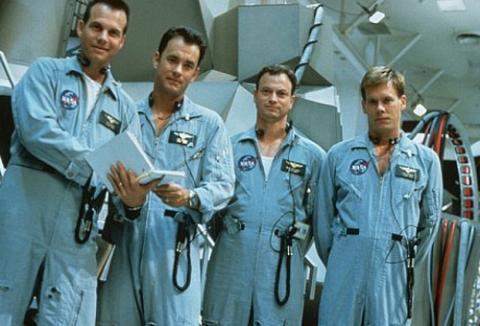
1. Apollo 13  (1995)

The only one of the movies on my list that I saw on the others today. Like many of the films here, it makes me wistful for American boldness and confidence that seem to be in retreat today. When the  Apollo re-emerges from radio silence, and Tom Hanks says, with perfect inflection, “Hello, Houston. This is Odyssey. It’s good to see you again,” I lose it, every time.

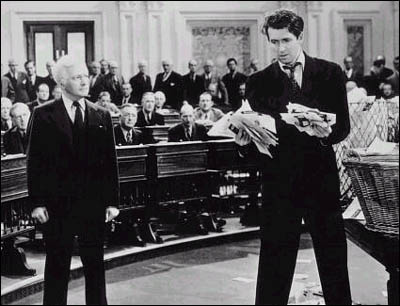
2. Mr. Smith Goes to Washington (1939)

Yes, this is Capra-corn at its corniest, but from Harry Carey Sr.’s sage and heroic Vice -President, to the power of the people triumphing, to the press trying to expose corruption rather than abet it,  this film reminds us of the best ideals of our government. When we get too cynical to enjoy Jefferson Smith’s struggle to make Washington work the way its supposed to, it will be time to pack it in.

3. The Longest Day (1962)

Longest Helm

Yes, it’s not just about Americans, but it is a great film about one of our country’s  finest achievements, all true, and inspiring without a lot of flag waving and sentiment. Best war movie ever—and my Dad’s favorite. Continue reading

Independence Day Ethics: Historian Hype, Liberal Bias, And The Great Punctuation Mystery

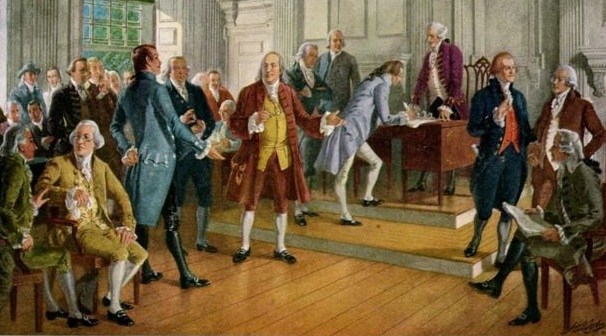
founding-fathers-declaration-of-independence

First, a little background…

I have often found it depressing that historians so often lack the ethical integrity necessary to do their jobs. If there was any profession in which avoiding bias would seem to be paramount, historical research and analysis would seem to be it, but that just isn’t the case. Because historians are academics and scholars, and because academia has become almost exclusively a hot-house of left-ward ideology for more than half a century, too many historians view their duty as using the past to manipulate the present and future.

My introduction to this came early, when I was a fifth grader suddenly fascinated with the U.S. Presidency as the first national election that I could follow approached. I read various assessments of who the greatest of our past POTUSes were, and there was near consensus, it seemed. Washington and Lincoln, naturally, were “the berries,” and they were joined as “greats” by Jefferson, Jackson, Wilson, FDR, and Truman, Democrats all. Teddy Roosevelt was “near great”; Eisenhower was a dud. What a great party this Democratic Party must be! Of course, Jefferson’s racial hypocrisy, Jackson’s lawlessness and persecution of Native Americans, Wilson’s racism and bungling of the peace after World War I and FDR’s complicity in locking loyal Japanese-Americans in prison camps was never mentioned. Over time, I learned that even the most respected American historians were likely to be pursuing partisan agendas. The classic example, of course, was Arthur Schlesinger, Jr., who carefully and unforgivably culled the facts he deemed worthy of revelation in order to add John Fitzgerald Kennedy to that list of brilliant Democratic Presidents. Was I surprised when a large number of prominent American historians signed a petition opposing the impeachment of President Clinton, a Democrat, thus asserting that a degree of dishonesty and lack of trustworthiness that was sufficient in every state in the union to mark a lawyer as unfit to practice was nonetheless not sufficient cause to remove a President from office?

I was not.

This brings us to the Case of the Missing Comma, brought to us by Danielle Allen, a professor at the Institute for Advanced Study in Princeton, N.J., aided and abetted by her left-leaning allies. Allen (who by the purest coincidence has a book out!) claims a major discovery. The iconic sentence in the Declaration of Independence“We hold these truths to be self-evident, that all men are created equal, that they are endowed by their Creator with certain unalienable Rights, that among these are Life, Liberty and the pursuit of Happiness.–”—was not intended to end in a period, as all current quotations and reproductions show, and the official transcript produced by the National Archives and Records Administration indicates.  Allen claims that her extensive research indicates that the period at the end of that phrase almost certainly did not appear on the original parchment version of the Declaration, and was mistakenly included in later versions. Just in time for July 4th (when Allen’s publicist calculated that her “Eureka!” would get maximum exposure) Allen explained to the New York Times that the extra period contributes to a “routine but serious misunderstanding” of the famous document signed by the Second Continental Congress in 1776. Continue reading

Comment Of The Day #2: “Nobody Should Be Cheering The Poll Showing President Obama As Regarded As ‘The Worst President Since World War II’”

Film-ProjectorI had barely posted the first Comment of the Day on the recent post regarding the explosive poll showing President Obama sinking below all previous post-war Chief Executives in the public’s estimation, when another excellent deserving one, by Mark, arrived.

Mark doesn’t comment often, but when he does, his posts are always eloquent and thoughtful. Here is his Comment of the Day on the essay, Nobody Should Be Cheering The Poll Showing President Obama As Regarded As “The Worst President Since World War II”.

I don’t go all the way with you on this one, Jack, but certainly a part of the way. A few years ago I learned about projections – how we project what we want/see/expect onto other people even when, or especially when, the projection has nothing to do with who they really are, and the consequence of not seeing clearly the person in front of us. If nothing else, President Obama has been a victim of that idea.

In 2008, he was a blank screen onto which people projected what they wanted to see after the Bush years and a rapidly tanking economy. He was HOPE, CHANGE, and perhaps worse, we ennobled him with the idea that he was something other than a standard-issue Washington politician. The fact that he was African American only amplified the idea of his actually making a difference in Washington because he was, indeed, so different from any other candidate we had seen since Kennedy and his Roman Catholicism. I think our ultimate projection might have been that if we could do this, elect a black man, then we would bring change to the country simply by “curing” the centuries-old race issues in the US or making a good run at it. Projections are powerful and in the hands of a collective even more so. After a time during the 2008 election, it didn’t matter what he said or did, he WAS hope and change, not a candidate.

And, in the absolute cynicism of American politics, all the pollsters, pundits, and creatures of his campaign knew and exploited this (and they’ll do it again for someone else come 2016).

In the moment he was elected, as an African American, I felt something incredible – a man like me in the White House, a supreme victory after slavery, Jim Crow, and the spilled blood of Till and King. I also felt an unease – could he govern? We knew he could run a crackerjack campaign, but could he replicate that kind of success from the Oval Office? In 2008, I figured only time would tell and to an extent it has. He was neither an outsider to Washington nor a maverick, both projections, not to mention a relative lack of experience compared to other presidents. I will say – and I know you agree – that he did not come to Washington to cause harm, but with a deep love for the country and an expectation that he could do what he had intended and promised. Perhaps those were his own projections upon a system that had no intention of bearing them out. I don’t know.

Like I said – I won’t go all the way with you on this and the points of disagreement are about perception of events and we each have our own. I will not say, either, that he is the worse president since WWII – that is, again, a matter of perception. Where we absolutely agree is a share of this lies with the American people who have not figured out how to counter systems – both political and governmental – that are increasingly cynical, unethical, and devoid of any sense of the common good for our nation. “Have you no sense of decency, Sir?” is truer today than it was in 1954 and should be asked of every politician in Washington from the President on down. In the last eight years everybody of every political stripe has some blood on their hands for this mess. We lay it at his feet because – unfortunately for him – the buck does stop there.

So now we wait for the curtains to part on another blank screen onto which we’ll project our hope for a country that is different from the one we’re living in now. We’ll hear from sincere, well meaning candidates who will tell us what we want to hear rather than what is true and doable, and we’ll buy it. The first woman in the White House is ripe for that, as is the first Hispanic, or a TRUE American Tea Party candidate. They’ll all present themselves and we’ll beam on.

Continue reading

Nobody Should Be Cheering The Poll Showing President Obama As Regarded As “The Worst President Since World War II”

News Item:

“In a new Quinnipiac University Poll, 33% named Barack Obama the worst president since World War II. Only 8% named Obama as the best president.”

Comments:

1. The conservative blogosphere, and I assume conservative radio and Fox News, are crowing about this. That’s revolting. No citizen or patriot should rejoice at a failed Presidency, which this one surely is.

2.The United States desperately needed–and needs—a uniting, skilled, strong and non-ideological leader with the ability to solve problems while maintaining a positive image of his (or her) iconic office and the United States itself.  That a President who promised so much and created such hope has proven to be none of these is no less than a tragedy, and quite possibly a catastrophe.

3. Polls aren’t always meaningless. This one is important, I think, because it shows that the American people are paying attention, and that the incredible covering, bolstering, spinning and enabling efforts by the mainstream media to prop up President Obama and blame others for his inadequacies have failed. This is good news.

4. The bad news, in addition to what I already mentioned above is… Continue reading

Political Correctness Delusions #2: The U.S. Military Naming Its Helicopters After Native American Tribes Is A Slur

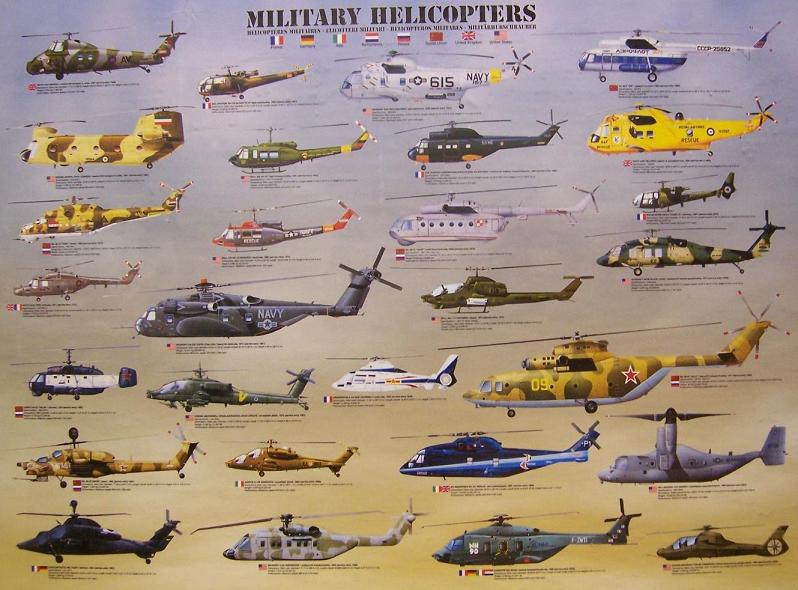
Military Helicopters 0088

The scourge of political correctness causes many kinds of damage, but the most ominous is that it intentionally greases a steep slippery slope. The effort to constrain private and public expression according to an endlessly versatile definition of “offensiveness”  is a desirable weapon for political activists, grievance bullies, censorious and debate-challenged advocates, weenies, and busybodies. Once one specious argument for strangling another small sliver of free speech succeeds, usually after capitulation in the face of relentless vilification and hounding aided and abetted by the press, this ugly and anti-American faction of the progressive movement just moves on to another target. The process  will never end, although it will get more oppressive, restrictive and absurd. That is, it will never end until a backlash and an outbreak of rationality stops it in its tracks.

The Patent Office’s politically motivated (and doomed) attack on the Washington Redskins was an example of political correctness at its worst, and sure enough, here comes another deluded censor with a related and even sillier grievance. Simon Waxman wrote a jaw-dropping op-ed for the Washington Post arguing that the military’s use of Native American names and works on its helicopters and weaponry is a “slur.” Why, you ask? Because the white man cheated and defeated the Indians using superior fire power, that’s why. Yeah, sure, we pretend to honor their bravery now, but that’s just to salve our guilty consciences.  He blathers…

The message carried by the word Apache emblazoned on one of history’s great fighting machines is that the Americans overcame an opponent so powerful and true that we are proud to adopt its name. They tested our mettle, and we proved stronger, so don’t mess with us. In whatever measure it is tribute to the dead, it is in greater measure a boost to our national sense of superiority. And this message of superiority is shared not just with U.S. citizens but with those of the 14 nations whose governments buy the Apache helicopters we sell. It is shared, too, with those who hear the whir of an Apache overhead or find its guns trained on them. Noam Chomsky has clarified the moral stakes in provocative, instructive terms: “We might react differently if the Luftwaffe were to call its fighter planes ‘Jew’ and ‘Gypsy.’ ”

Continue reading

“Print The Legend” Ethics Again: The Cuban Missile Crisis “Blink”

blink map

It is certainly in part a case of tweeking a rival, but the Washington Post and its “Factchecker,” Glenn Kessler, properly exposed a New York Times columnists’ perpetuation of a popular historical misconception, and worse, that paper’s adamant refusal to correct it.

The columnist was Thomas Friedman, one of the Times’ stable of liberal pundits, and the quote was this, in the opening sentence of of one of the many Obama foreign policy reclamation columns that have appeared lately from the President’s journalistic Maginot Line:

“There was a moment at the height of the Cuban missile crisis in October 1962 when Soviet ships approached to within just a few miles of a U.S. naval blockade and then, at the last minute, turned back — prompting then-Secretary of State Dean Rusk to utter one of the most famous lines from the Cold War: ‘We’re eyeball to eyeball, and I think the other fellow just blinked.’”

Kessler gives Friedman a full “four Pinocchios,” for the simple reason that this is untrue, a myth, a proven historical inaccuracy that has been enshrined in film, print, and Kennedy hagiography. He writes… Continue reading

Ethics Hero Emeritus: Senator Howard Baker (1925-2014)

Howard_Baker

Howard H. Baker Jr., a three-term Tennessee Senator whose trademarks were integrity, honesty, and a refusal to allow partisanship get in the way of what he believed was the right thing to do, died today.  The Republican leader of the Senate, Mitch McConnell of Kentucky,  called him “one of the Senate’s most towering figures.” How ironic, or perhaps just insincere. If McConnell understood and admired the qualities that made Baker “towering” he couldn’t possibly be the divisive, petty, ultra-partisan hack that he is. Then again, comparing Baker’s career and character to the scrimy, petty, self-centered and ethics-challenged dwarves that make up all of McConnell’s colleagues  in both Houses and on both sides of the aisle reveals such an obvious disparity that even the sorry likes of McConnell couldn’t deny it.

Howard Baker stands especially tall in my memory as I watch the disgraceful conduct of House Democrats, doing all they could to derail the I.R.S scandal hearings and to prevent the uncovering of facts surrounding the executive branch’s abuse of power, because they have chosen political loyalty and expediency over transparency, fairness, duty to country, and trust. Contrast this horror show with the principled stance of Baker during Watergate, seeking uncomfortable truths rather than throwing obstacles in the way of efforts to uncover them, treating abuse of power and attempted cover-ups from his own party’s President as he would the same from a Democrat, asking the famous question, “What did the President know, and when did he know it?” Continue reading

Unethical Quote of the Month: House Minority Leader Nancy Pelosi

“I don’t think this is our responsibility, but I do think we were irresponsible going into Iraq for a variety of other reasons.”

Rep. Nancy Pelosi, attempting to absolve her party’s government from responsibility and accountability for the catastrophe in Iraq.

It's all HIS fault, when you get right down to it...

It’s all HIS fault, when you get right down to it…

Nancy Pelosi, like her counterpart in the Senate, Harry Reid, is an ethics corrupter of the vilest sort. The problem isn’t her party, ideology, policy positions or political objectives. What makes her an ethics corrupter is that from a place of high esteem, status and presumed trustworthiness, she constantly engages in unapologetic unethical conduct, encourages unethical reasoning and violates ethical values, all as if they are the right thing to do.

This statement is typically despicable. In saying this, she is denying the long-accepted duties of government, the successive acceptance of responsibility that is essential to the continuity of a democratically elected state, and the essence of leadership, thus misinforming the public and making them less civically competent, if that is possible.

When a future administration allows the economy to collapse because it also refuses to make the hard and responsible choices necessary to keep the nation’s debt from suffocating us but there is no more can to kick down the road, its leaders won’t be able to ethically blame Barack Obama or his predecessors. When you accept the role of leader, all problems, crises, and conditions in the nation become your responsibility, because you accepted the job. Failure is yours, not those who contributed to the conditions, seeded the crises or failed to solve the problems before, just as success is yours. Every competent, honorable, honest and fair leader understands and accepts this. President Obama and Nancy Pelosi, among others, do not. Obama always claims the successes (I’m sure there must be one or two) are his alone, and the failures are not his fault, but the fault of others. Continue reading

A New “Don’t Ask, Don’t Tell” For Conservative Politicians? You Wish, Jennifer Rubin…

creationismOne of the Washington Post’s rare conservative columnists has a solution for GOP candidates and office holders whose views on some subjects are likely to make them targets of furious criticism: refuse to express them. She writes in her latest column:

“Not everything is a political issue, nor one on which politicians have any particular insight. Candidates are not asked their views on divorce, for example. Each state has laws on the topic, and one’s religious views aren’t a topic for public debate. It is not (and shouldn’t be) asked of nor answered by politicians…Creationism? Unless you are running for school board and intend to be guided by your religious convictions, it does not matter. Born again? None of my business.

“…[Q]uestions about creationism, gay marriage, the nature of homosexuality and other value-specific questions serve no purpose other than to provide targets for faux outrage. These questions are designed to divide the population into believers and nonbelievers, between those who share the same cultural touchstones and those who differ.

“If a topic has no relevance to public policy or character or fitness to serve, why ask the question and why answer it? We aren’t electing pastors, family counselors or philosophers; we’re electing politicians whose job description and qualifications don’t include a great many topics. If we are heading for a more tolerant society, we have to agree to disagree on some issues and to respect some realm of private opinion and faith. For Republicans running in 2016, I would suggest a simple response to the sort of question intended to provoke divisiveness over irrelevant topics: “I can’t think of a single instance in which [creationism/the origin of homosexuality] would be relevant. I’m not here to sow division or take sides in faith-based debates. Let’s talk about something germane to the presidency.”

Wrong.

Incredibly wrong. Continue reading